-
-
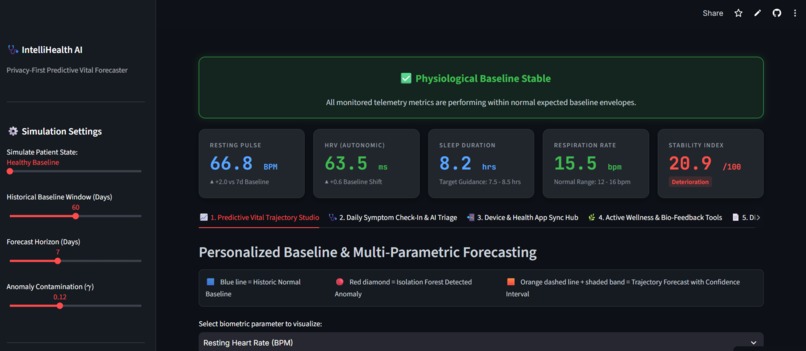
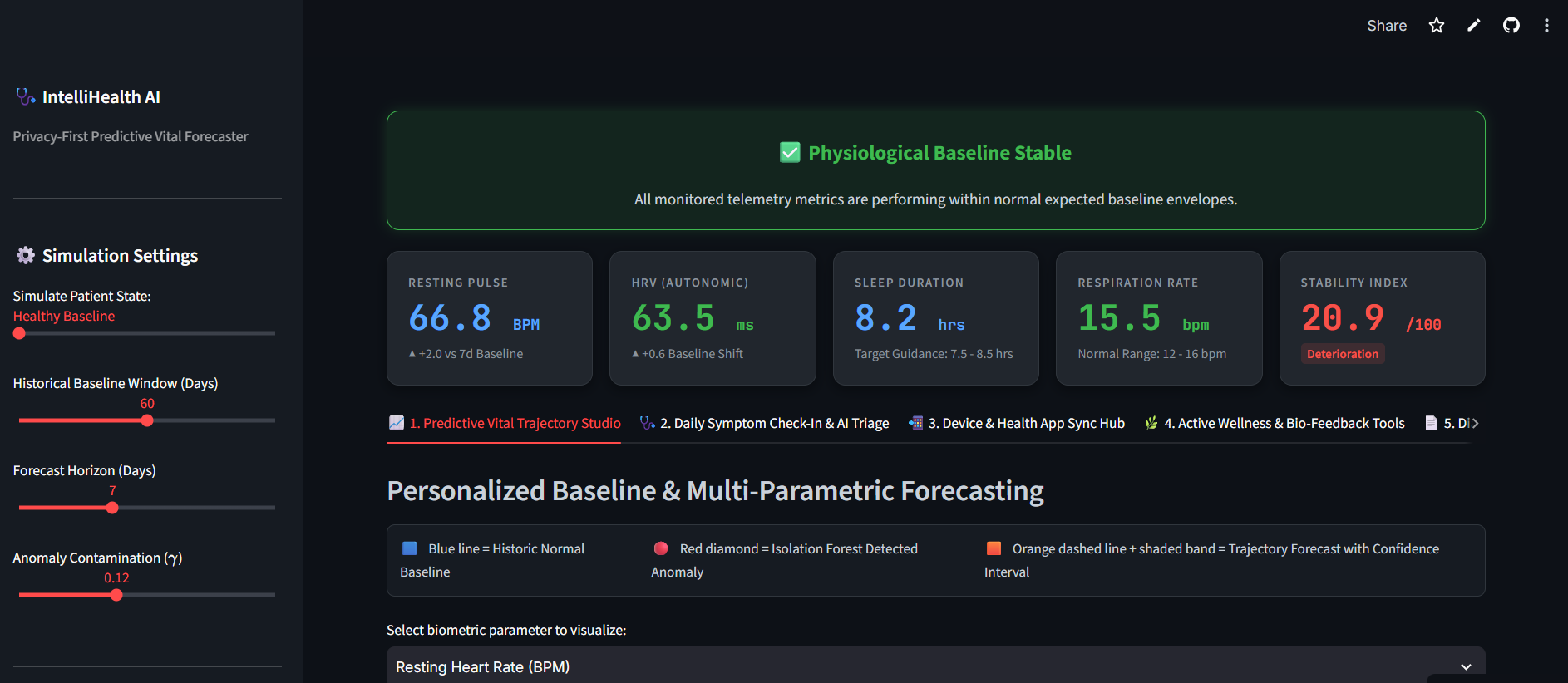
Main Dashboard
-
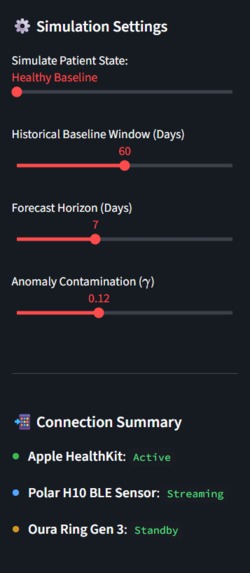
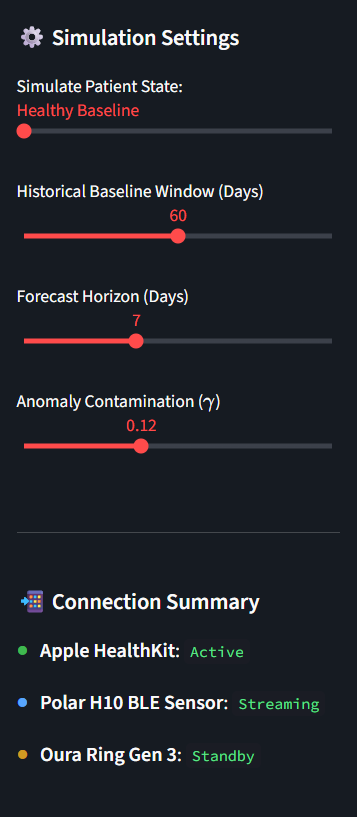
Side bar
-
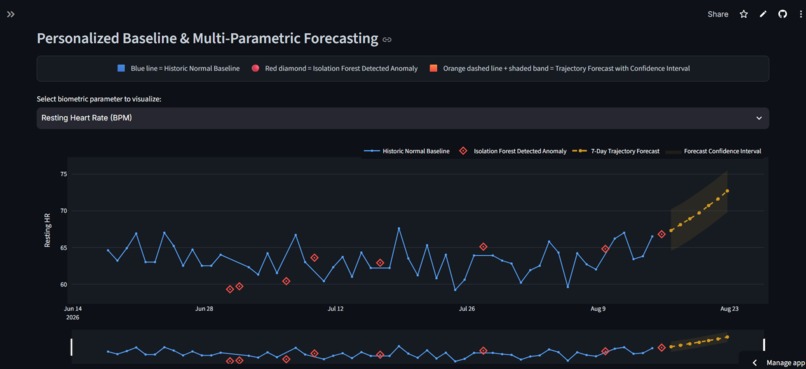
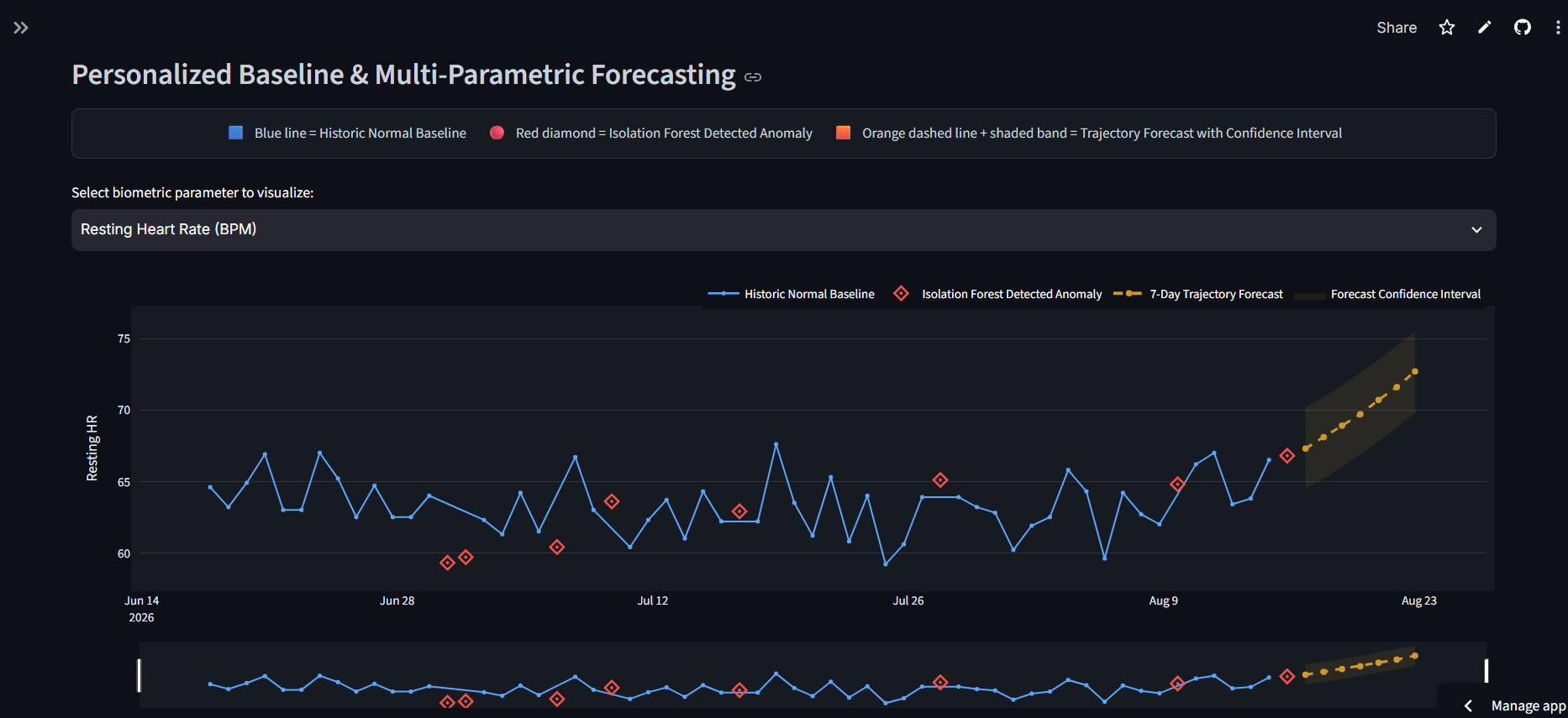
Tab 1: Predictive Vital Trajectory Studio
-
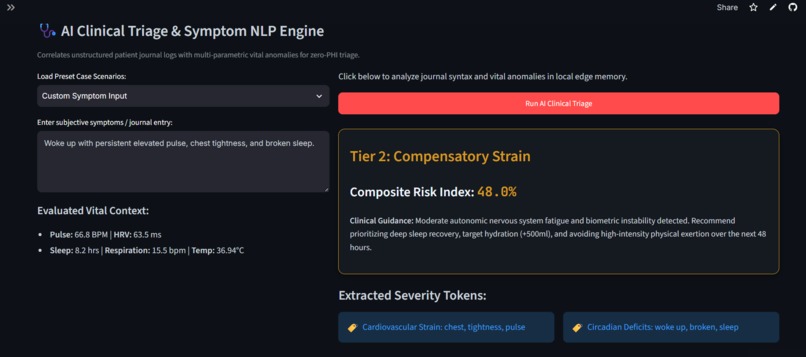
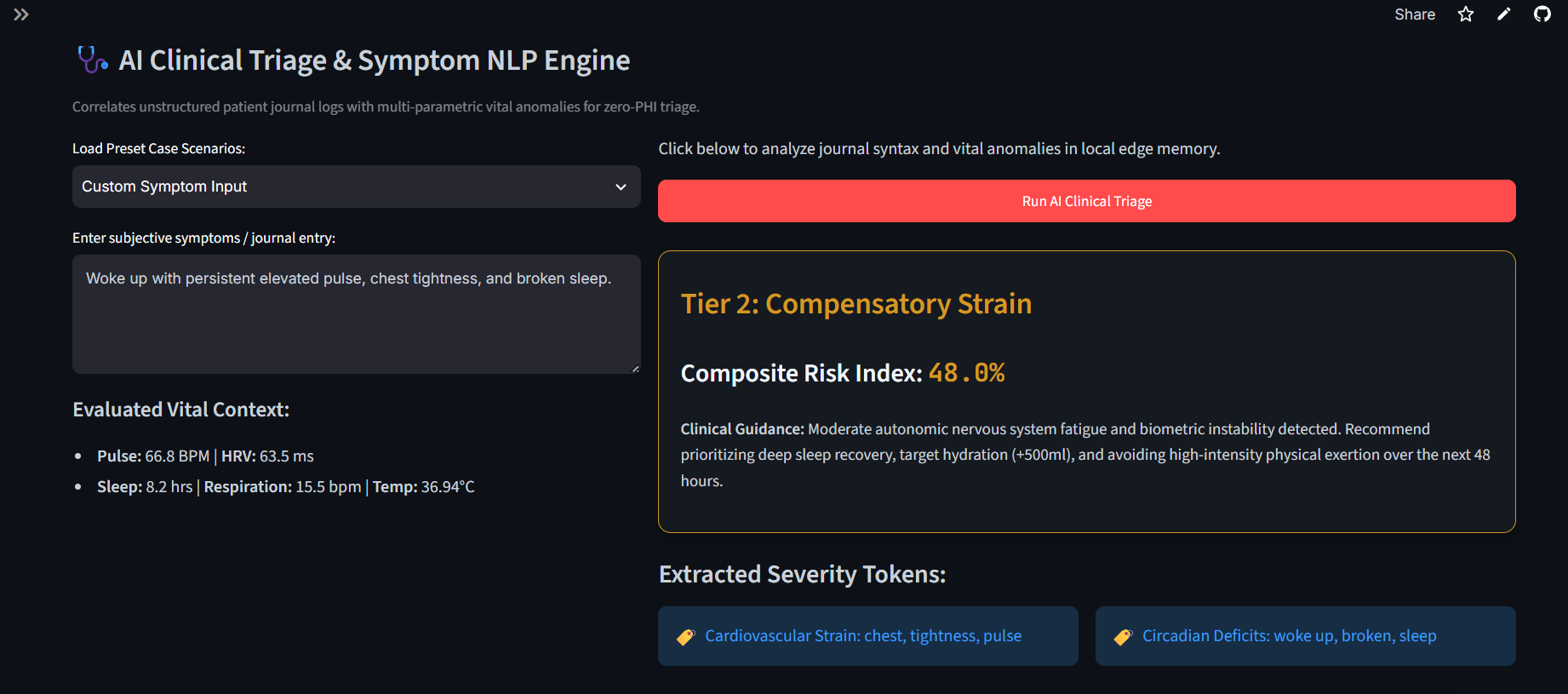
Tab 2: AI Clinical Triage & Symptom NLP
-
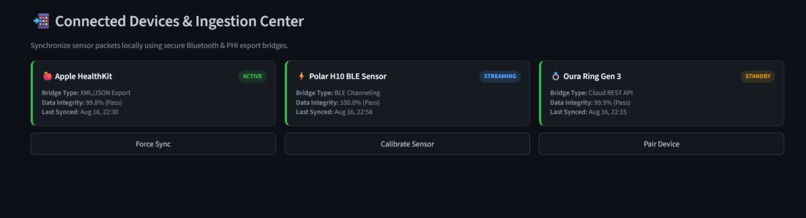
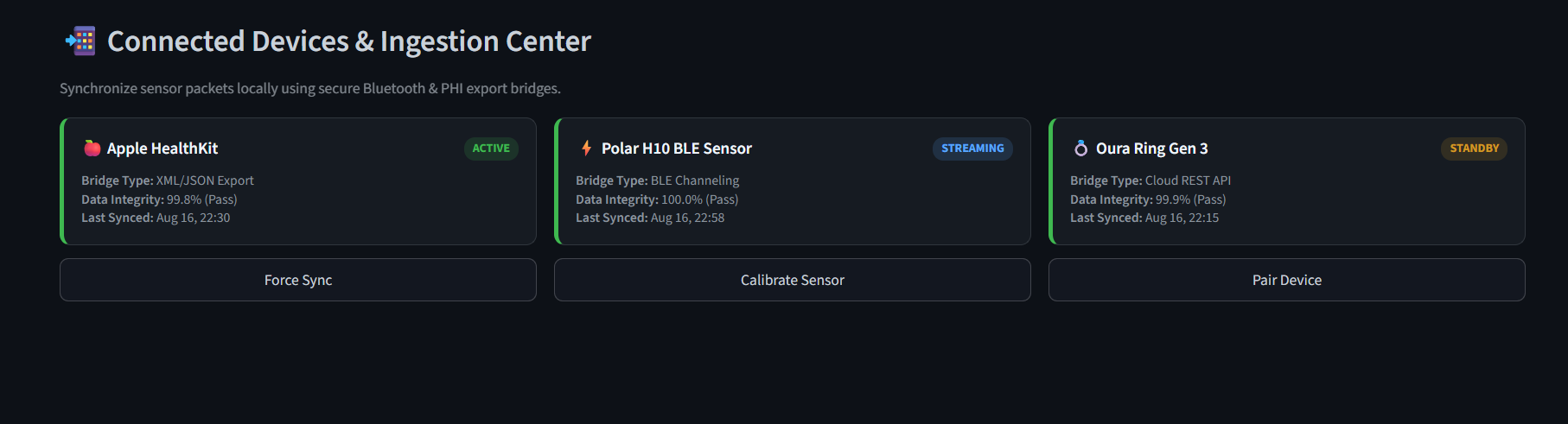
Tab 3: Device Sync
-
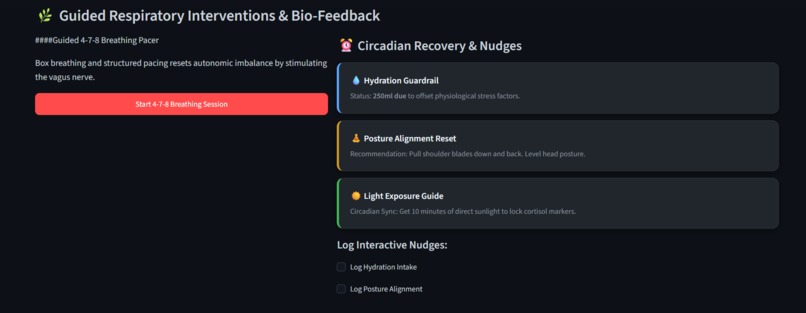
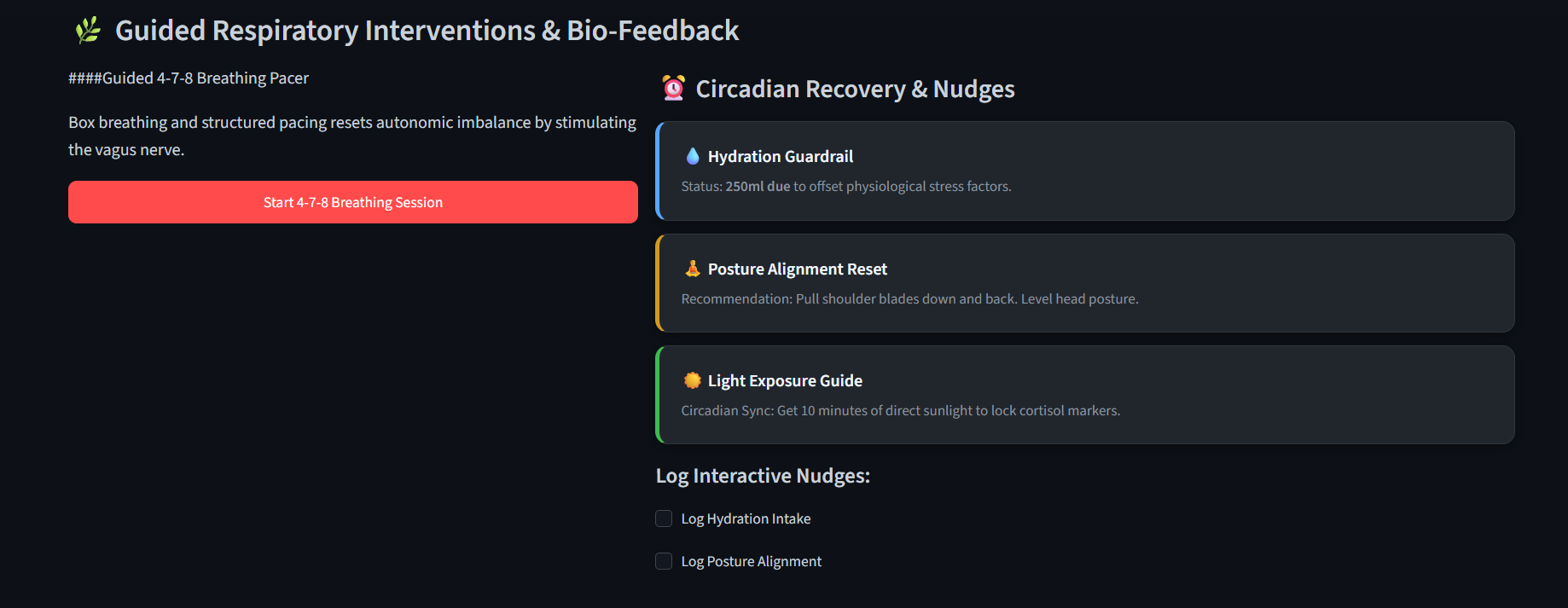
Tab 4: Active Wellness
-
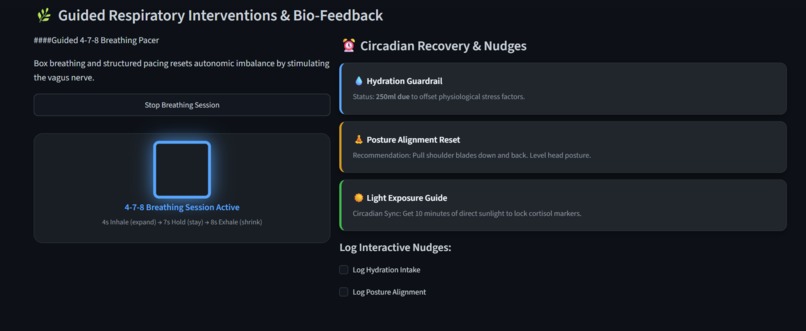
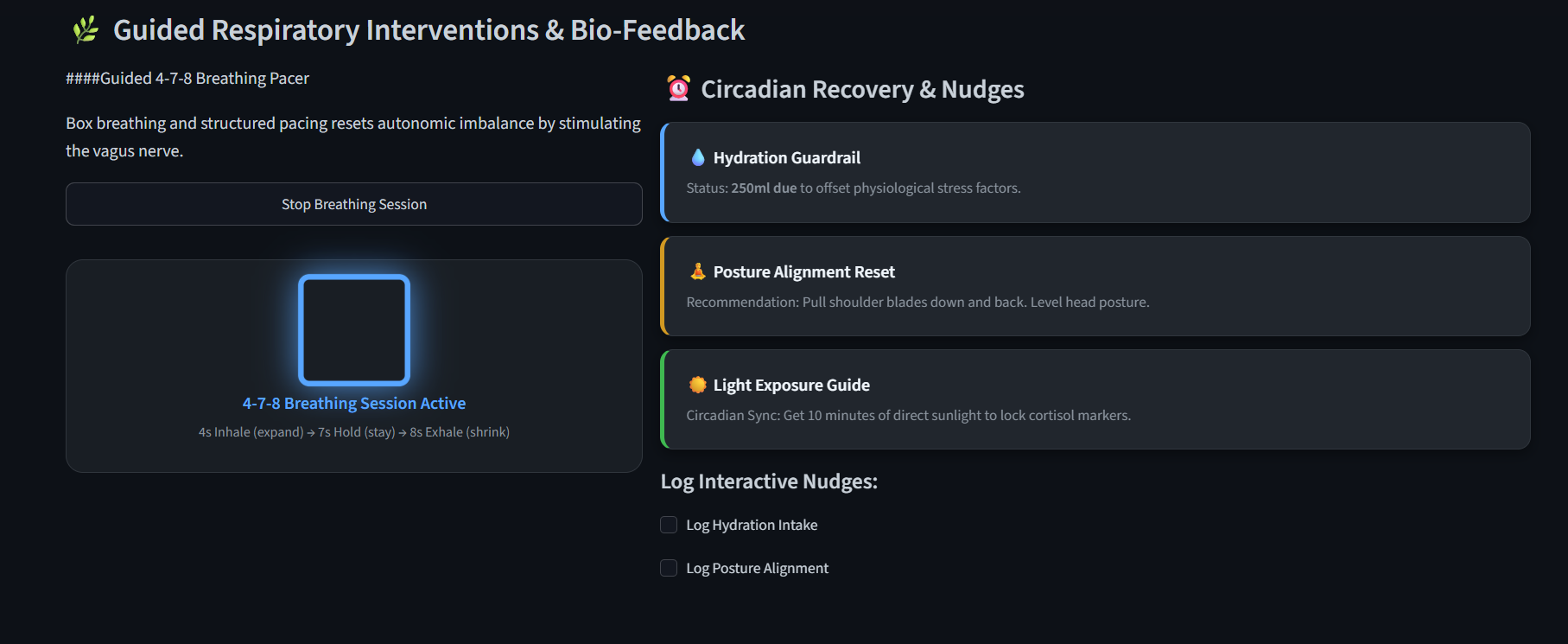
4-7-8 Breathing
-
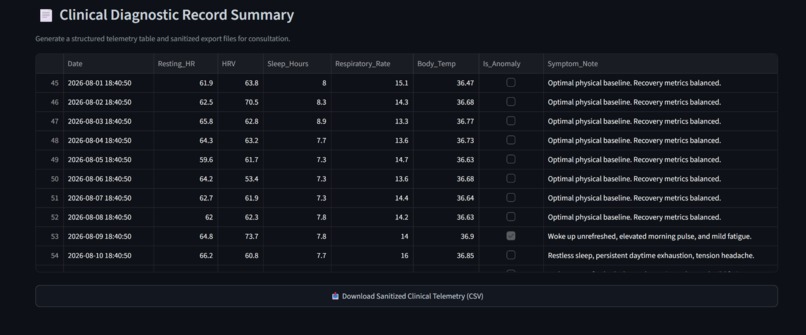
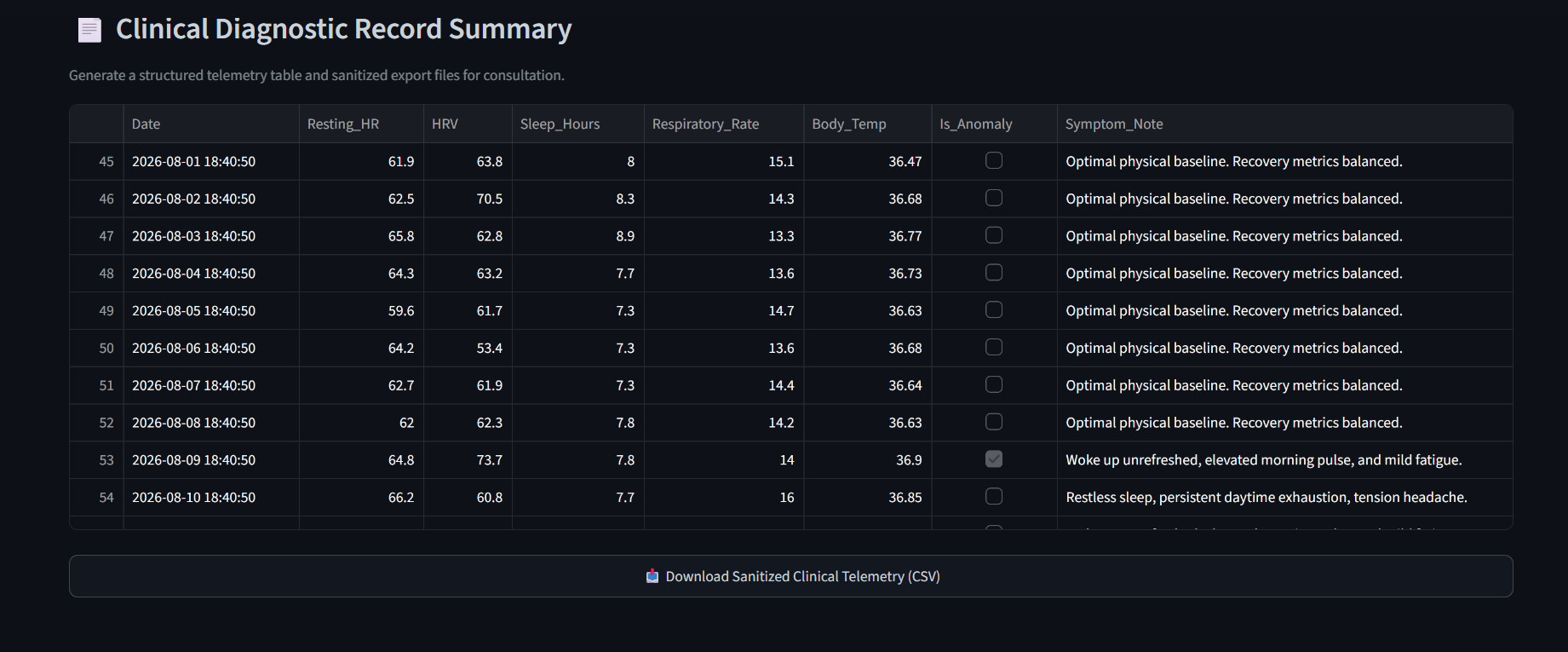
Tab 5: Privacy, Diagnostic Export & Closing
Inspiration
The majority of commercial wearable trackers are Passive, Retrospective Logbooks. They only alert people to a raised resting heart rate, collapsed Heart Rate Variability (HRV) or disrupted sleep pattern once they have reached acute fatigue, systemic illness or autonomic fatigue.
Typical health apps also use absolute static thresholds without consideration of the physiological principles that each person has a unique homeostatic set-point, such as saying that any pulse over 100 BPM is considered "tachycardia". In addition, sending individual physiological data to central cloud servers makes personal physiological data very vulnerable to privacy threats.
The clinical workstation was conceived to address these core challenges — an edge-native, privacy preserving clinical workstation that integrates multi-parametric baseline anomaly detection with 7-14 day vital trajectory forecasting, and on-device symptom triage via NLP.
What it does
IntelliHealth is a privacy preserving clinical intelligence dashboard, which transforms wearable tracking from passive historical recording to proactive physiological forecasting on device. It keeps track of your multi-parametric baseline biometric data and your personal journal entries, and identifies days before you even begin to feel unwell when your body is under physiological stress.
Key Capabilities
Dynamic Multi-Parametric Anomaly Detection: trains an unsupervised Isolation Forest anomaly detection model to understand each user's unique homeostatic baseline in 5 vital parameters – Resting Heart Rate (HR), Heart Rate Variability (HRV), Sleep Duration, Respiration Rate, and Core Body Temperature (CBT). It identifies deviations in the system over time and across the population, but rather than using population-wide cut-off scores, it captures deviations at the individual level as they occur.
- 7-14 Day Predictive Trajectory Forecasting*: Forecasts the future autonomic drift by using polynomial trajectory modelling within 90% uncertainty envelopes, giving a clear visual indication of changes in autonomic trends. Parses journal data in unstructured natural language text from the clinical setting to identify clinical severity tokens and correlates them with objective biometric changes into a 3-tier risk assessment to guide treatment. Supports seamless access to simulated streams from Apple HealthKit, Polar H10 BLE Sensors (ECG) and smart rings (e.g. Oura Ring Gen 3) for continuous multi-source monitoring. Active Wellness & Autonomic Regulation Tools: Provides interactive 4-7-8 resonance breathing pacers, Circadian Reset prompts, and hydration/posture alerts to help restore elevated strain metrics to homeostasis. All of the machine learning inferences, forecasting calculations and NLP tokenizations are performed in-place on the client device without transferring a single Protected Health Information (PHI) to the cloud (HIPAA / DPDP Compliant).
How we built it
IntelliHealth is designed using a high throughput, modular architecture in Python, utilizing edge memory and without sending or streaming Protected Health Information (PHI) to remote servers.
Challenges we ran into
- Physical stress will naturally reverse the metric such as HR and HRV. Because it is difficult for the Isolation Forest to effectively isolate true systemic anomalies while excluding false ones during normal exercise, the hyperparameter of contamination ($gamma$) needed to be calibrated. Heavy LLMs cause memory bottleneck and latency on edge devices:
- Determinative on-device NLP.
- We designed a lightweight and constant time $\mathcal{O}(N)$ tokenization taxonomy that does not affect clinical accuracy.
- Structured Namespace Mapping and Packaging for Zero Path Resolution Errors in Cloud Environments: Cloud environments demand structured mapping and packaging of namespaces to ensure zero path resolution errors, locally within virtual environments and across the Streamlit Community Cloud.
Accomplishments that we're proud of
The entire machine learning inference, trajectory modelling and NLP triage takes place on-device inside edge memory, which complies with HIPAA and DPDP data privacy standards. Implementing predictive forecasting curves and dynamic confidence bands to identify physiological deviations days ahead in an effective way: Proactive Rather Than Reactive Health. Introduced a Unified Multi-Modal Interface (U-MMX) combining qualitative patient logs with quantitative continuous telemetry in one intuitive triage score.
What we learned
- Formulation and implementation of unsupervised anomaly detection models on nonstationary biometric time-series.
- Create clinically appropriate UI/UX that conveys statistical uncertainty envelopes to end-users, without the data clutter.
- Best practices for designing decoupled (no cloud) data architectures for health data applications that involve sensitive data.
What's next for IntelliHealth
- Web-Bluetooth (WebBLE) Direct Streaming: Pairing with commercial monitors (ECG/Pulse Oximeter) at the browser level.
- Federated Anomaly Learning: Privacy-Preserving Federated Learning of User Cohorts with Local on- Device Baseline Calibration.
- FHIR / HL7 Interoperability: Direct connection to provide standardized longitudinal telemetry data summaries to the Electronic Health Record (EHR) system to aid in physician consultation.
Built With
- anomaly-detection
- bio-feedback
- data-visualization
- edge-ai
- edge-computing
- ehr
- healthcare
- healthkit
- hipaa-compliance
- isolation-forest
- machine-learning
- natural-language-processing
- numpy
- pandas
- physiological-modeling
- plotly
- predictive-analytics
- preventive-medicine
- python
- scikit-learn
- streamlit
- telemetry
- time-series-forecasting
- wearables

Log in or sign up for Devpost to join the conversation.