-
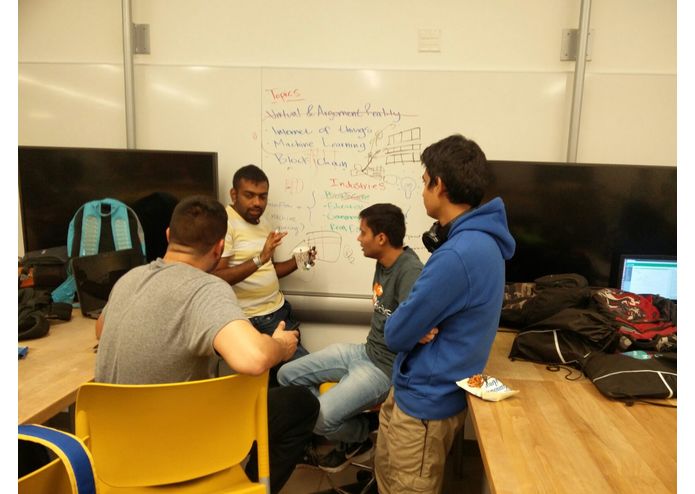
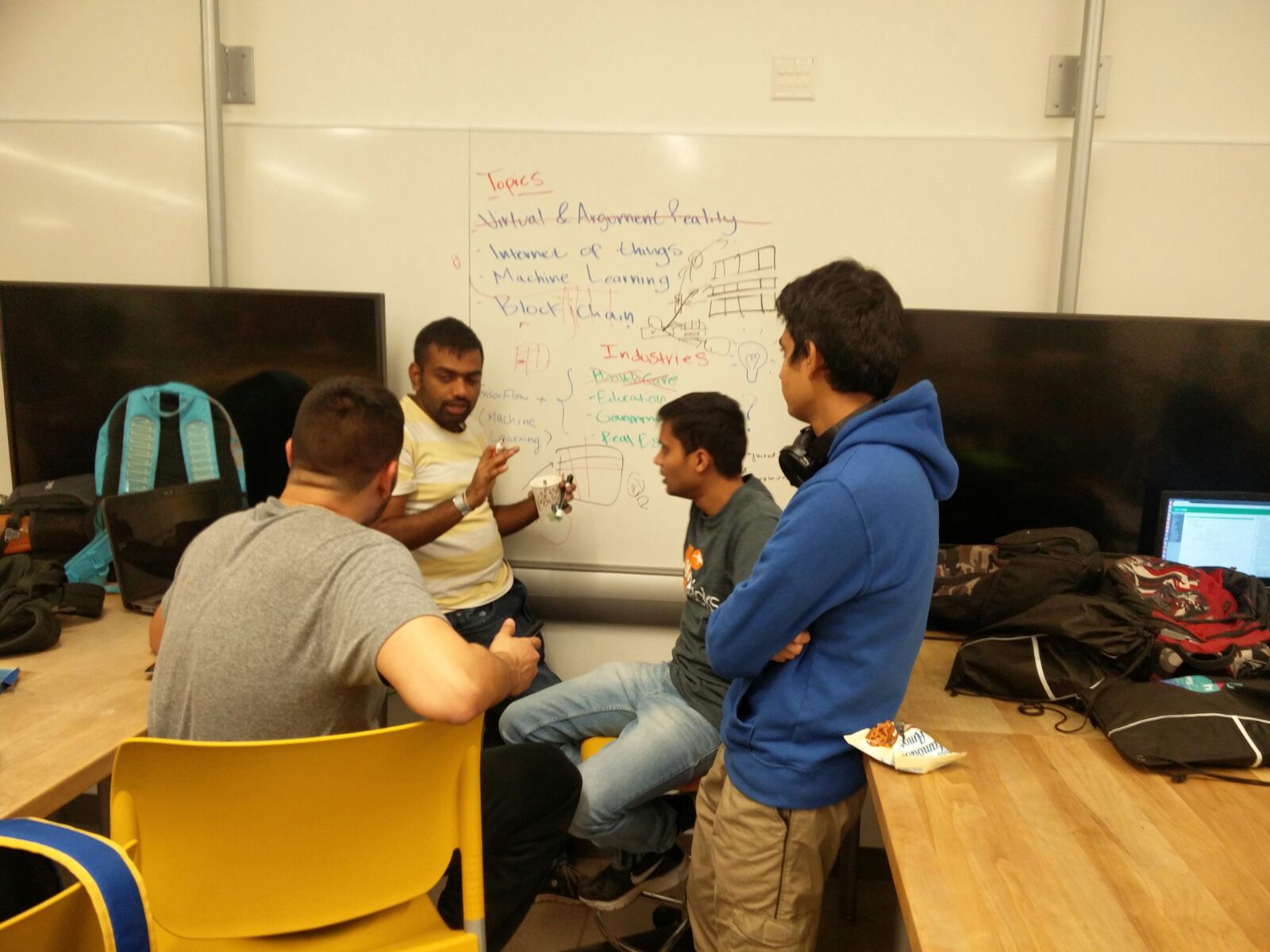
The birth of the idea: Hackers brainstorming
-
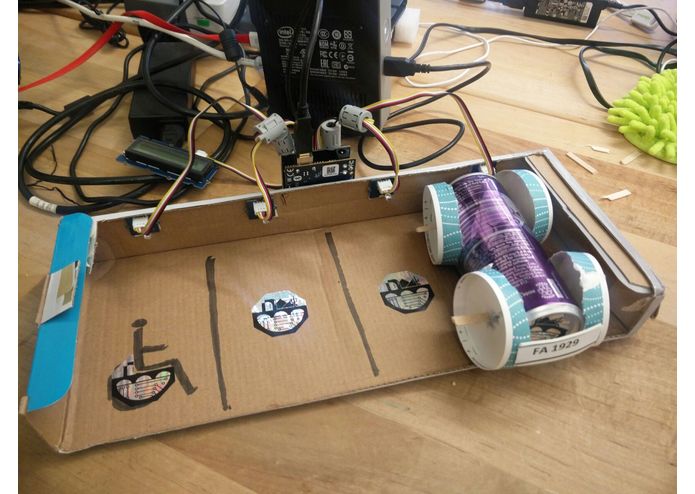
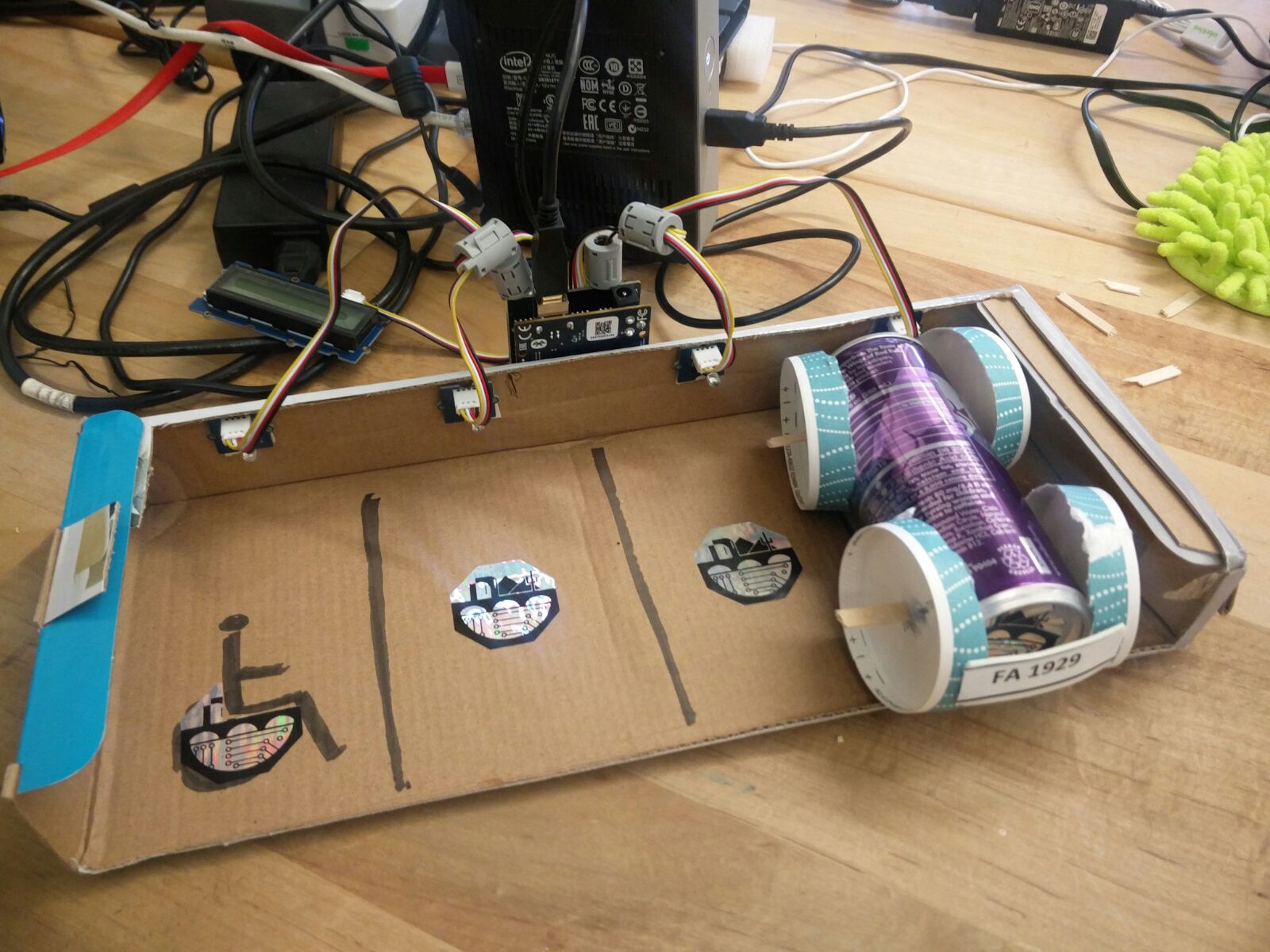
The parking lot! Check out the sweet ride
-
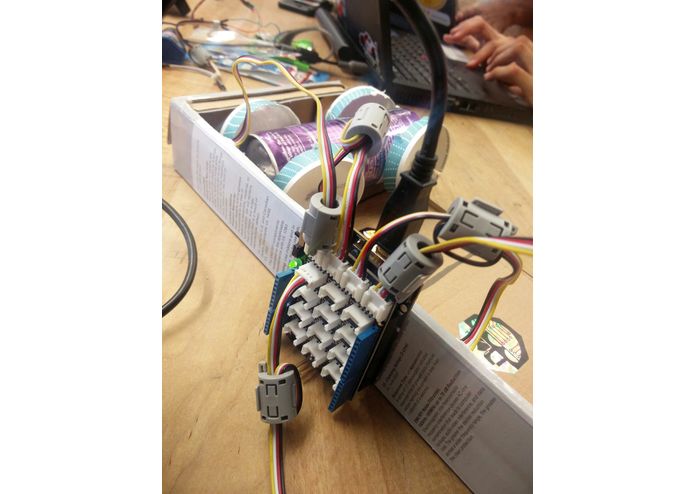
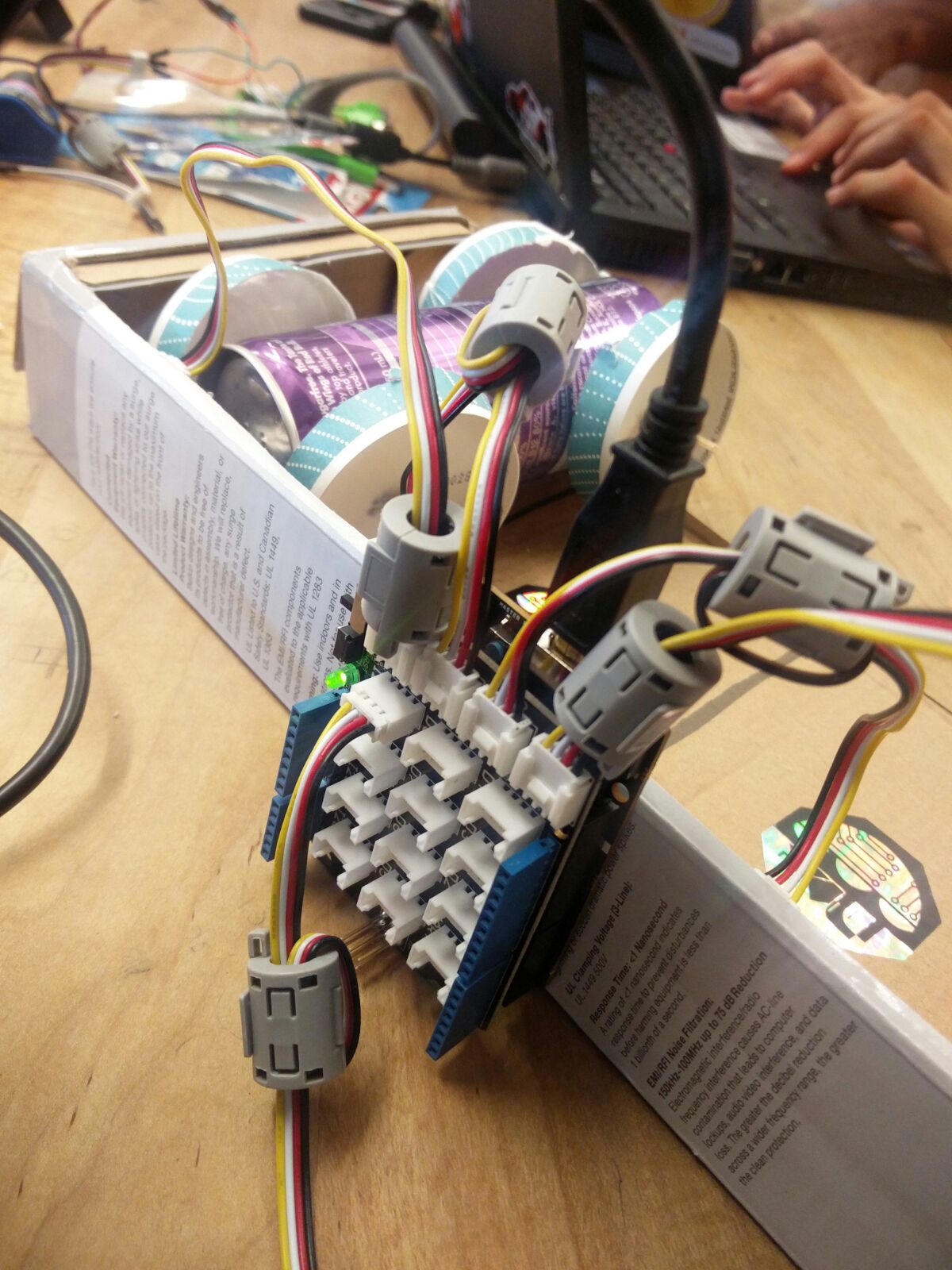
Arduino 101 with the Light Sensors
-
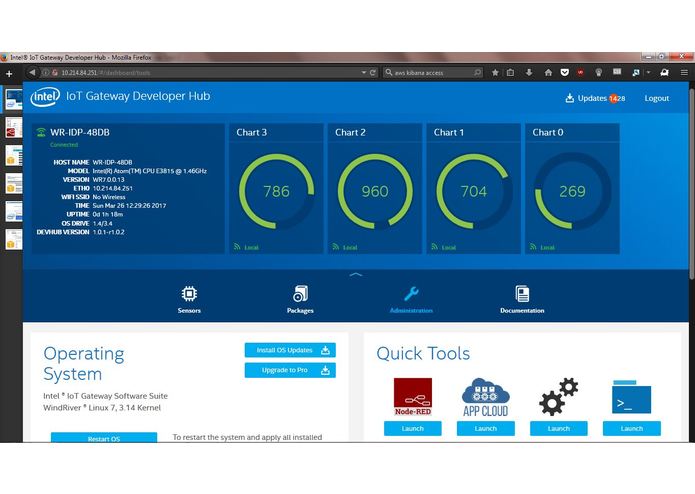
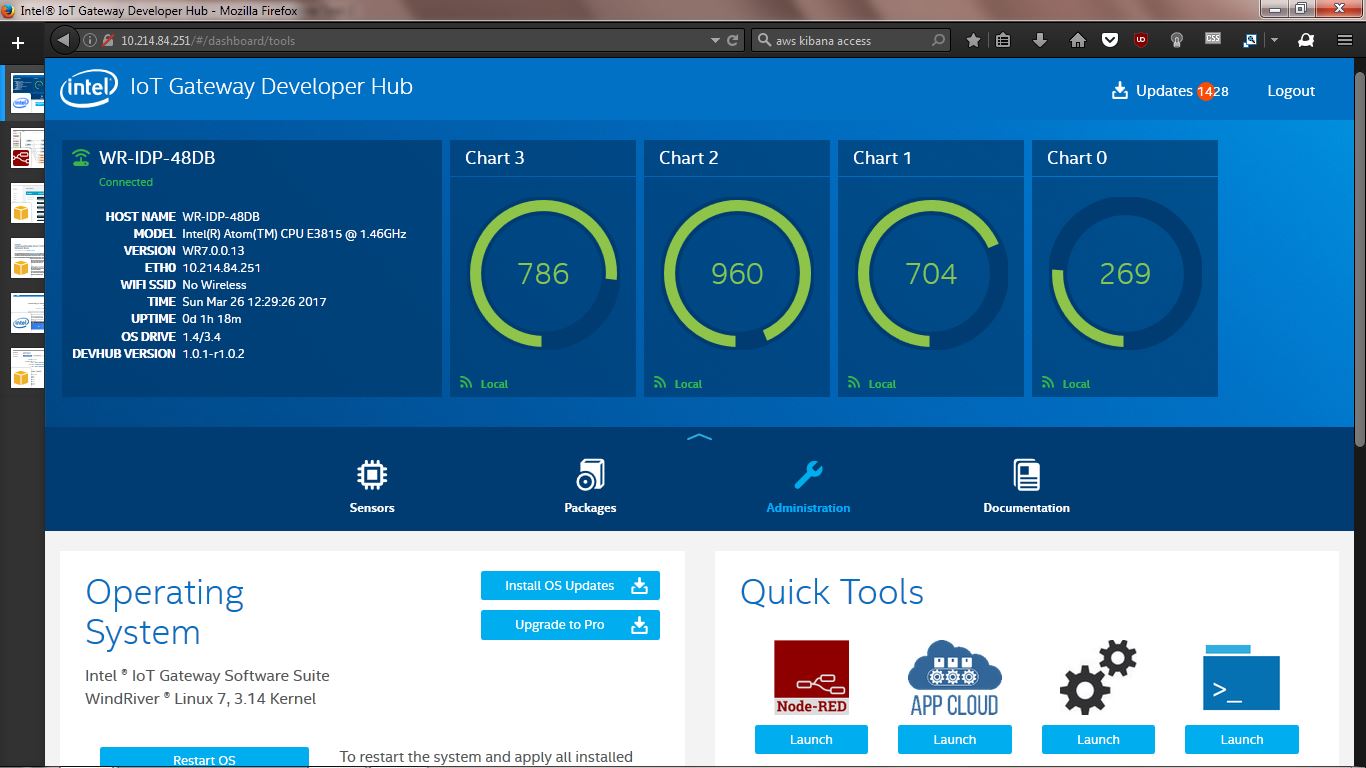
IoT Gateway, with real-time sensing
-
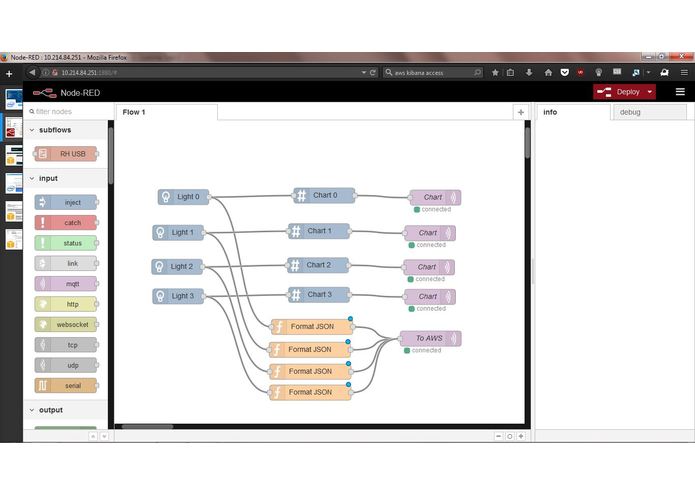
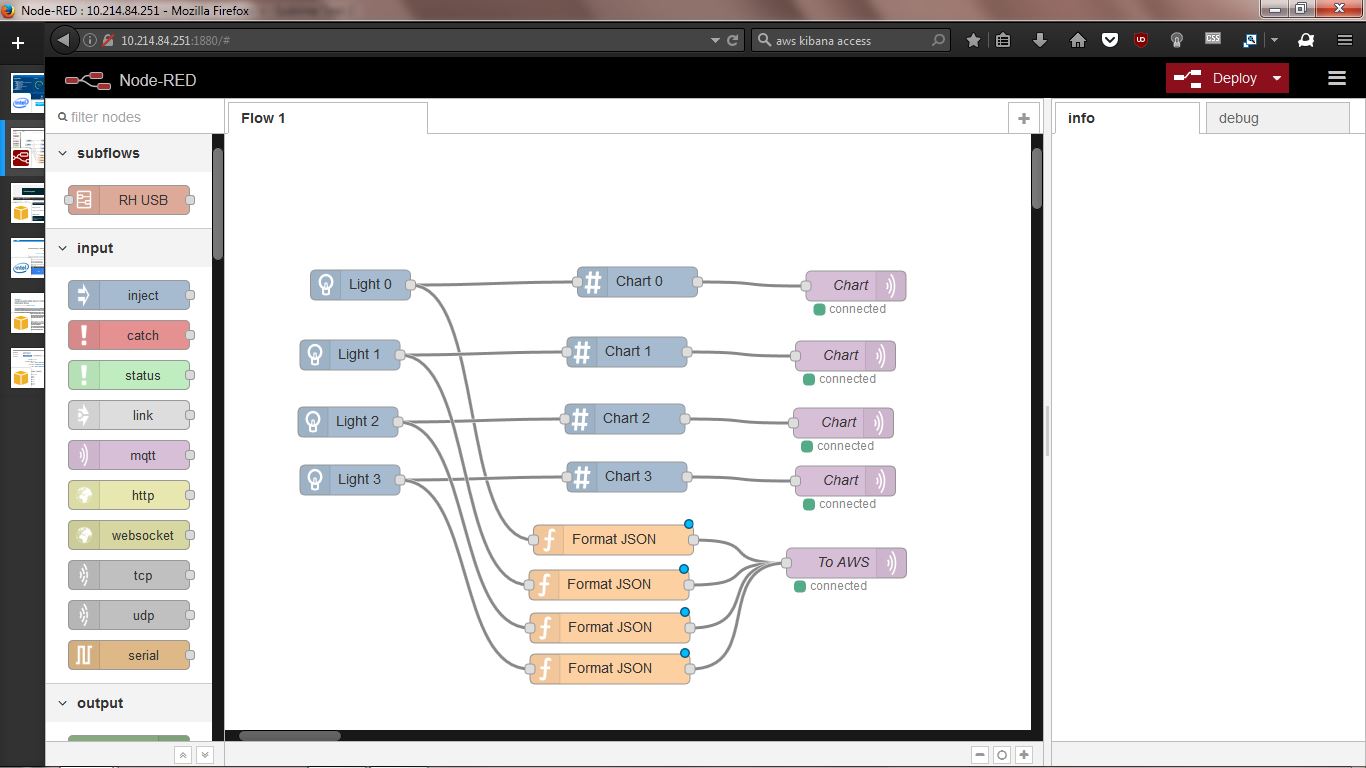
Node RED flow
-
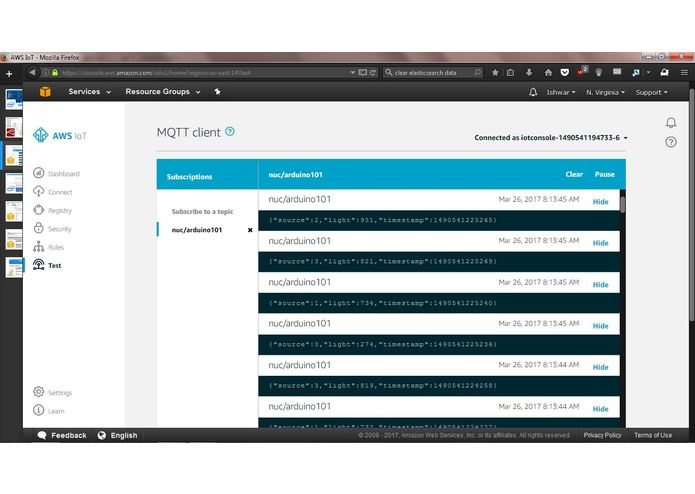
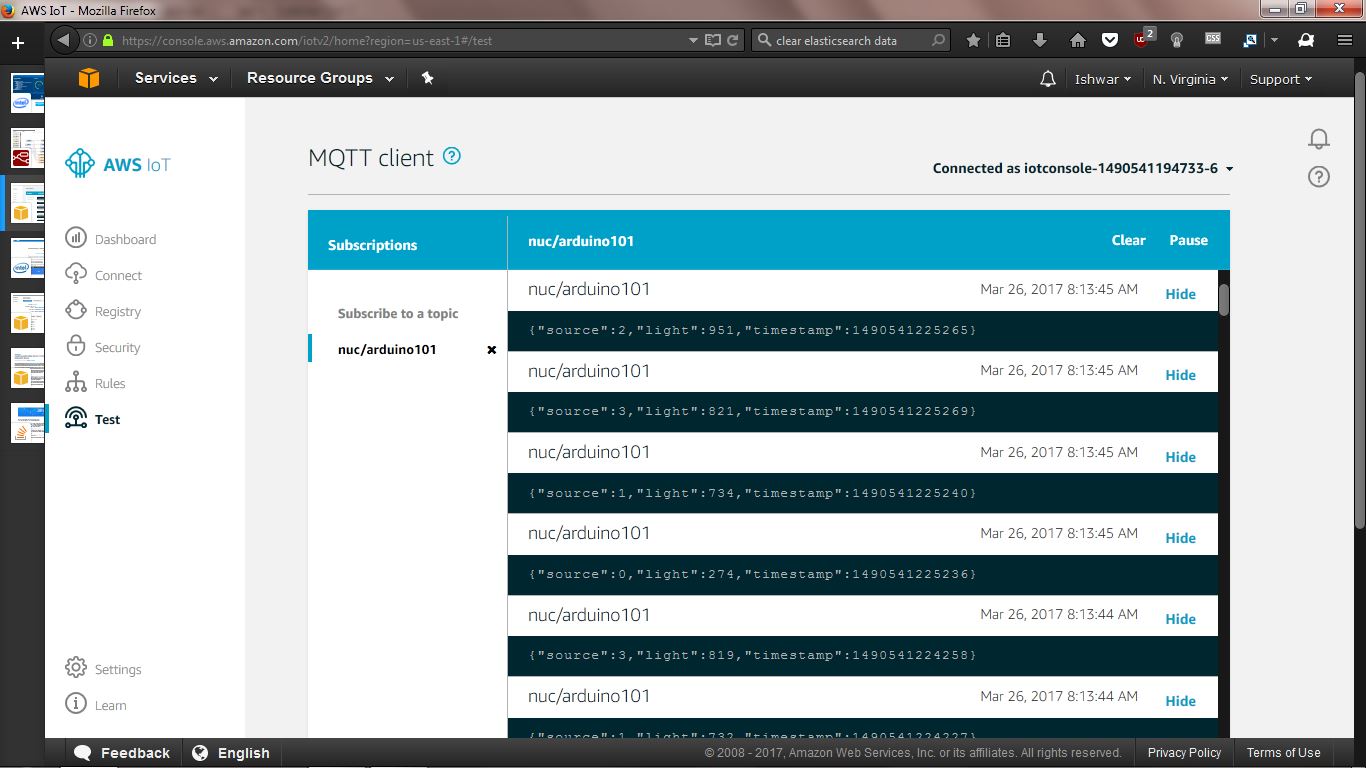
AWS IOT Streaming
-
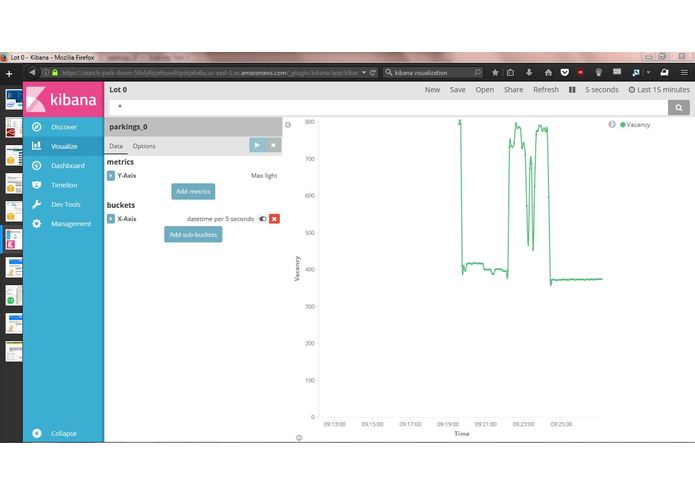
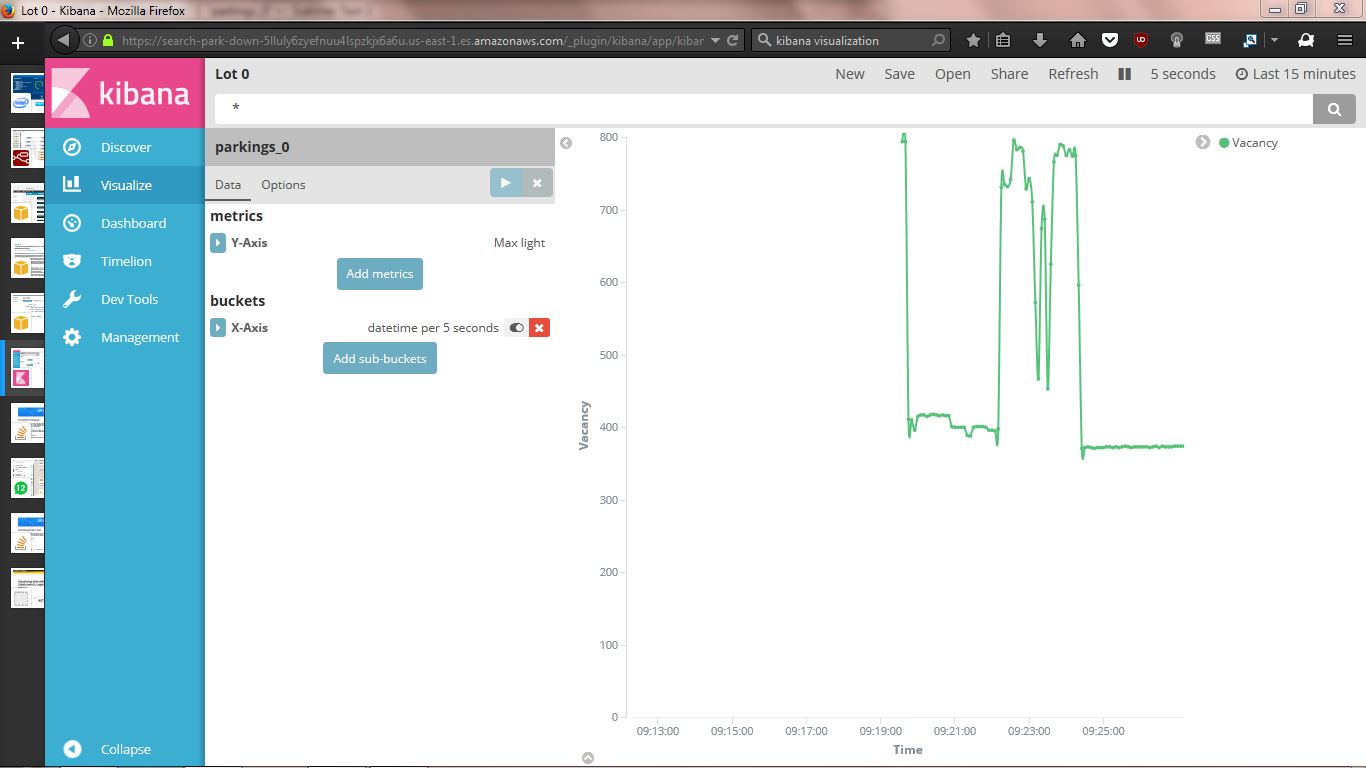
Parking Spot availability: real time plot
Inspiration
Internet Of Things is a vastly underappreciated tool. We decided to utilize this power by interfacing the available hardware with software and develop customer-centric apps.
What it does
Concretely, we have built IoT apps to 1. Determine parking spot availability and prediction and trend analysis (Real Estate), 2. Automatic detection of surgical instruments which could be misplaced inside patients' body (Healthcare)!
How we built it
We started off really simple and incrementally built upon the progress. We began by branching off two ways: one sub team worked on implementing the Intelligent Parking Lot, and the other worked with image detection and object tracking using OpenCV. We also used AWS services like AWS IoT and ElasticSearch, Intel NUC device etc.
Challenges we ran into
Getting the sensors up and working was relatively a piece of cake compared to the meaty stuff like getting the Node RED - AWS IOT interfacing and IOT - ElasticSearch. Since we were all new to the APIs, we had to struggle quite a bit to get the wheels turning together. Things like AWS IoT, using the Intel NUC as the IoT gateway etc are pretty new in the industry, which means while the pleasure of building somethingfrom scratch is great, the struggle is also real.
Accomplishments that we're proud of
Getting an end-to-end connectivity and working is what we dreamt of while we began this hackathon on Friday. We are proud to say that we could really do that. Our apps will be free of charge to the end users. We just gather (anonymized) data in return, which could have great monetary as well as business value.
What we learned
We were exposed to fascinating new technologies, and we could also learn something from all this by building a working product.
What's next for Intelligent Systems for Daily Life
A more user-friendly UI along with a mobile app is the plan.
Rest will shown in the demo. Be sure to drop by!

Log in or sign up for Devpost to join the conversation.