
Inspiration
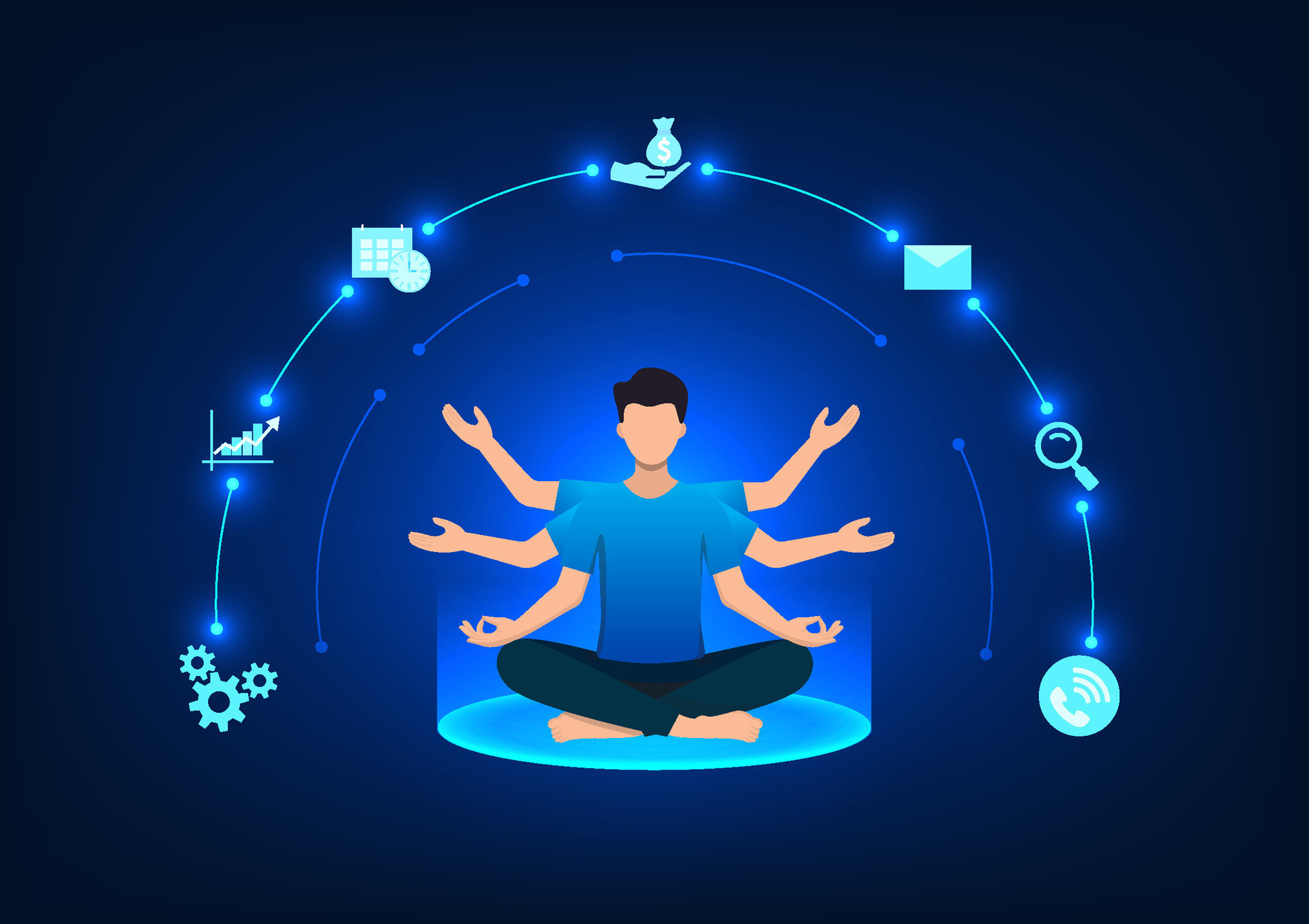
The Inspiration The Octopus is nature's ultimate multitasker—possessing a decentralized nervous system where each tentacle can 'think' for itself while serving a single mission. This biological wonder inspired us to create a hackathon platform that empowers developers to reach across diverse domains simultaneously. We wanted to move beyond static landing pages and create a 'living' mentor that captures the spirit of agile, fluid innovation.
What it does
What We Learned Development taught us that AI isn't just a tool, but a creative partner. We learned how to harness the Gemini 3 Pro model's reasoning to transform vague skillsets into concrete project roadmaps. We also discovered the nuances of 'Dark Mode' accessibility—learning how to balance high-contrast cyan accents with deep-space backgrounds to reduce eye strain during those inevitable 48-hour coding sprints.
How we built it
How It Was Built We utilized React 19 to leverage its latest performance optimizations, ensuring the 'Octo-Mind' AI advisor responds with zero lag. Tailwind CSS allowed us to craft a custom design system centered around glassmorphism and atmospheric lighting. The core logic uses the Google GenAI SDK to perform complex prompt engineering, ensuring every project suggestion is unique, feasible, and aligned with the hackathon's multi-domain requirements.
Challenges we ran into
The Challenges Our primary challenge was the 'blank page syndrome' hackathon participants often face. Designing an interface that feels encouraging rather than overwhelming was a delicate balance. Technically, implementing the complex CSS backdrop filters and ensuring they rendered smoothly across all browsers while maintaining a responsive layout for mobile-first creators required rigorous testing and creative z-index management.
Accomplishments that we're proud of
Accomplishments Proud Of We are incredibly proud of the 'Octo-Mind' AI advisor integration. It doesn't just return text; it returns structured JSON that maps out tech stacks and impact statements. Seeing a complex prompt turn into a viable project roadmap in under two seconds felt like watching the future of development happen in real-time.
What we learned
What's next for Intelligent Multitasking Spirit
What's Next The 'Intelligent Multitasking Spirit' is just getting started. Our roadmap includes an AI-powered team matching system and 'Tentacle Templates'—automated starter code repositories generated based on the AI's project suggestions, moving from ideation directly into the first 'git commit'.
. Abstract & Inspiration The Dendrite Octopus was conceived as a response to the fragmentation of diagnostic tools in modern radiology. Inspired by the cephalopod's decentralized intelligence—where each limb can process information independently while remaining synchronized with the central brain—our platform implements a multi-tentacled AI approach to patient care.
In traditional clinical settings, data is siloed. A radiologist looks at images, a primary care physician looks at history, and a lab tech looks at vitals. Dendrite Octopus fuses these modalities into a single neural nexus.
- Technical Architecture The project utilizes the Gemini-3-Pro and Gemini-2.5-Flash-Image models for reasoning and vision respectively. We define the diagnostic probability $P(D|S, I)$ as:
$$P(D|S, I) = \frac{P(S|D)P(I|D)P(D)}{\sum_{k} P(S|D_k)P(I|D_k)P(D_k)}$$ Where $S$ represents recorded symptoms and $I$ represents the high-dimensional image feature vector extracted by our neural encoder.
- Challenges Faced Data Modality Alignment: Synchronizing voice-to-text symptom logs with radiological image timestamps. Zero-Latency Processing: Implementing a streaming UI that doesn't block while the multi-billion parameter model calculates differential diagnoses. Privacy Barriers: Designing a local-first persistence layer using localStorage to ensure no sensitive PII (Personally Identifiable Information) leaves the client context without encryption.
- Development Roadmap Alpha (Q1 2026) Implementation of multi-modal vision-text encoders for MRI/CT fusion.
Completed Beta (Q2 2026) Edge-device deployment for remote clinics using WebAssembly.
In-Progress Gamma (Q3 2026) Federated Learning nodes for decentralized medical research.
Planned Omega (Q4 2026) Autonomous surgical assistance simulation portal.
Research
Built With
- css
- flash
- framework
- gemini
- react
- tailwind
- typescript

Log in or sign up for Devpost to join the conversation.