-
-
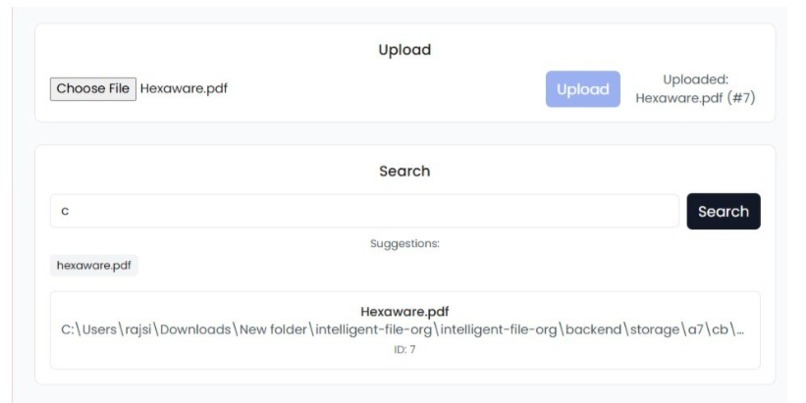
Intelligent File Organization system
Here is a Devpost-ready version in the same format:
Inspiration
Intelligent File Organization System is a smart automation tool designed to organize digital files efficiently without manual effort. The system automatically scans files, analyzes their names, types, metadata, and content, and classifies them into appropriate folders such as documents, images, videos, code, and more. By using intelligent rules and machine learning techniques, it ensures files are stored in a structured and easily accessible manner.
The project helps users reduce digital clutter, save time searching for files, and improve productivity. It supports real-time monitoring, meaning newly added files are instantly sorted into the correct locations. This system is especially useful for students, professionals, and organizations who manage large volumes of data daily. The goal is to provide a faster, smarter, and more reliable way to maintain an organized digital workspace.
What it does
The Intelligent File Organization System automatically detects, classifies, and organizes files into predefined folders based on file type, keywords, and content. It continuously monitors selected directories and instantly moves new files into the correct category. The system reduces manual sorting, improves file accessibility, and ensures a clean and structured file system. It can organize documents, images, videos, audio files, and programming files, making file management faster and more efficient.
How we built it
We built the system using Python as the core programming language. File handling libraries such as os and shutil were used to scan, move, and organize files. We implemented a file monitoring module to detect newly added files in real time. Classification was done using file extensions, naming patterns, and intelligent rules, with optional machine learning integration for smarter categorization. The project was developed and tested in a local desktop environment with a simple and user-friendly interface.
Challenges we ran into
One of the main challenges was handling different file types and ensuring accurate classification without errors. Implementing real-time monitoring while maintaining system performance was also challenging. We had to ensure files were not overwritten or misplaced during the sorting process. Another challenge was designing a flexible system that users could easily customize based on their needs.
Accomplishments that we're proud of
We successfully created a fully functional system that automatically organizes files without manual intervention. The system works in real time and significantly reduces the effort needed to manage files. We also built a scalable and customizable solution that can be extended with AI and additional features in the future.
What we learned
Through this project, we learned about file system automation, real-time file monitoring, and efficient file handling using Python. We also gained experience in designing automation workflows, debugging system-level operations, and improving software reliability and usability.
What's next for Intelligent File Organization System
In the future, we plan to integrate AI-based content recognition for smarter classification, add a graphical user interface (GUI) for easier interaction, and support cloud storage platforms like Google Drive and Dropbox. We also aim to include user-defined rules, duplicate file detection, and cross-platform support to make the system more powerful and widely usable.

Log in or sign up for Devpost to join the conversation.