-
-
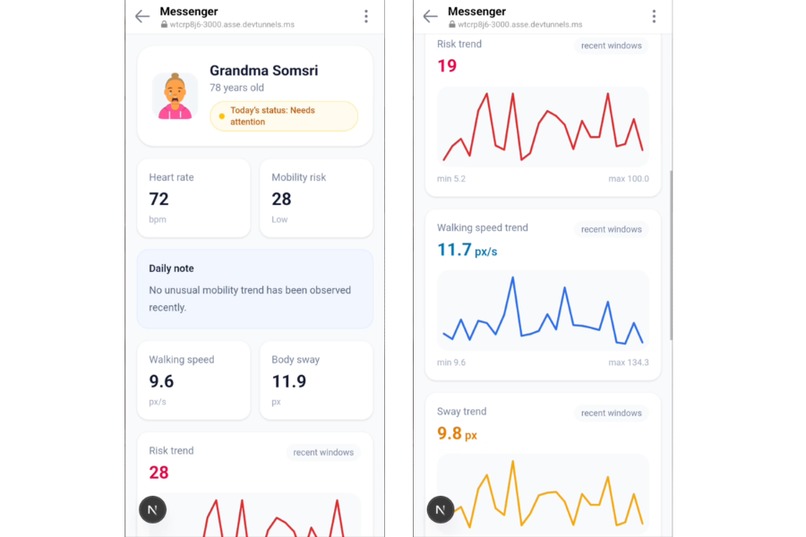
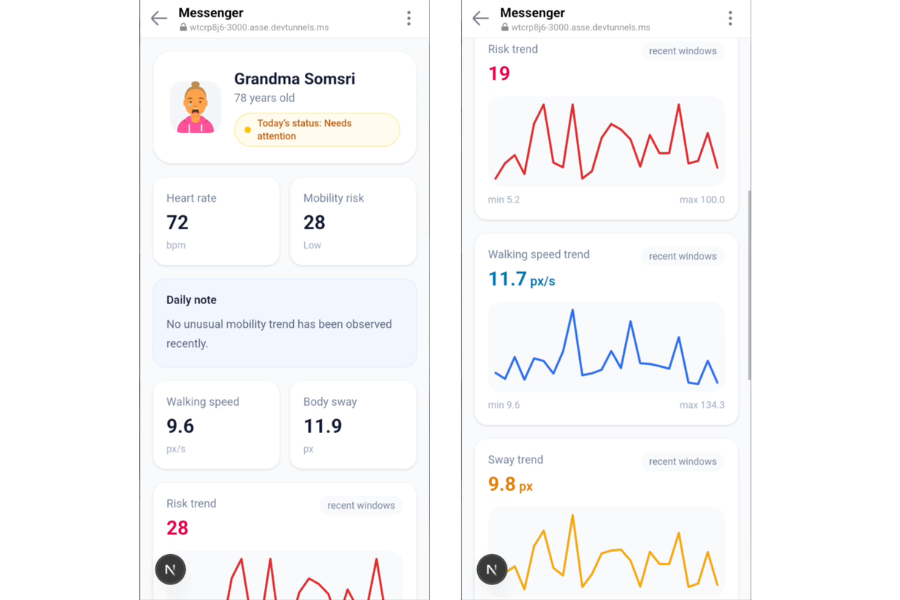
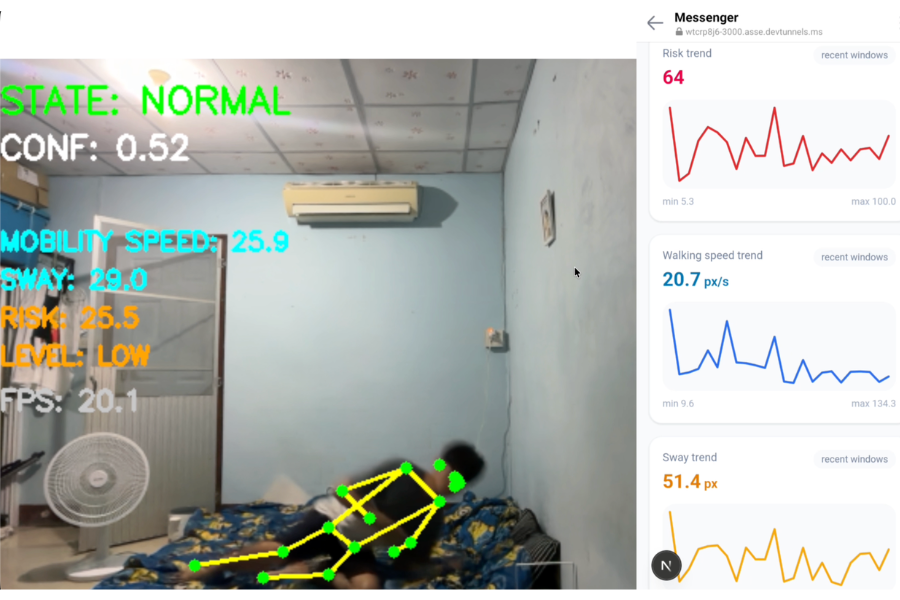
Real-time caregiver dashboard showing health metrics, risk trends, and fall predictions.
-
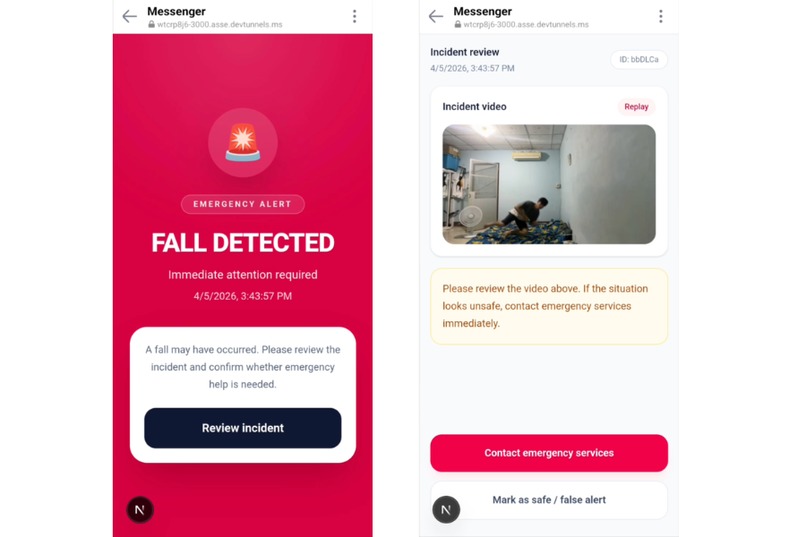
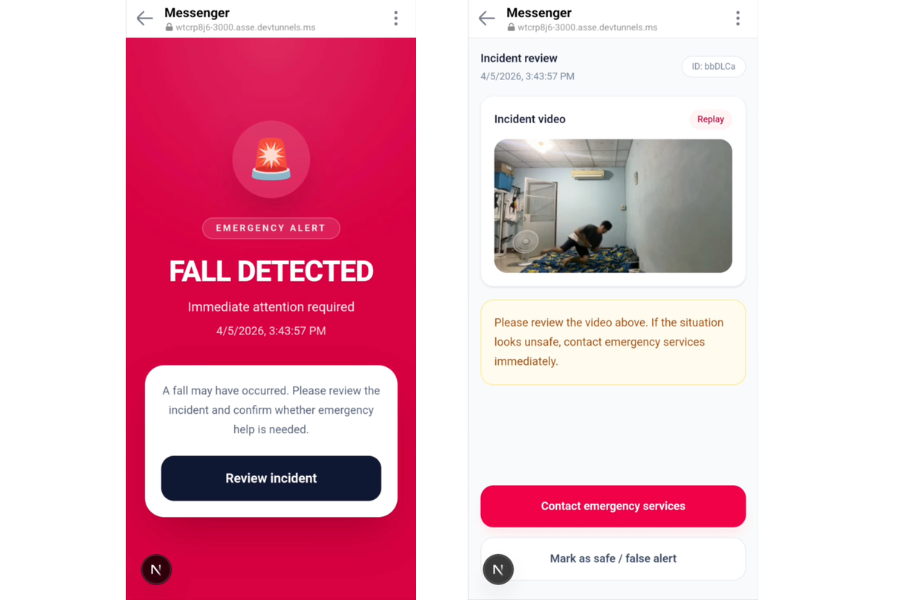
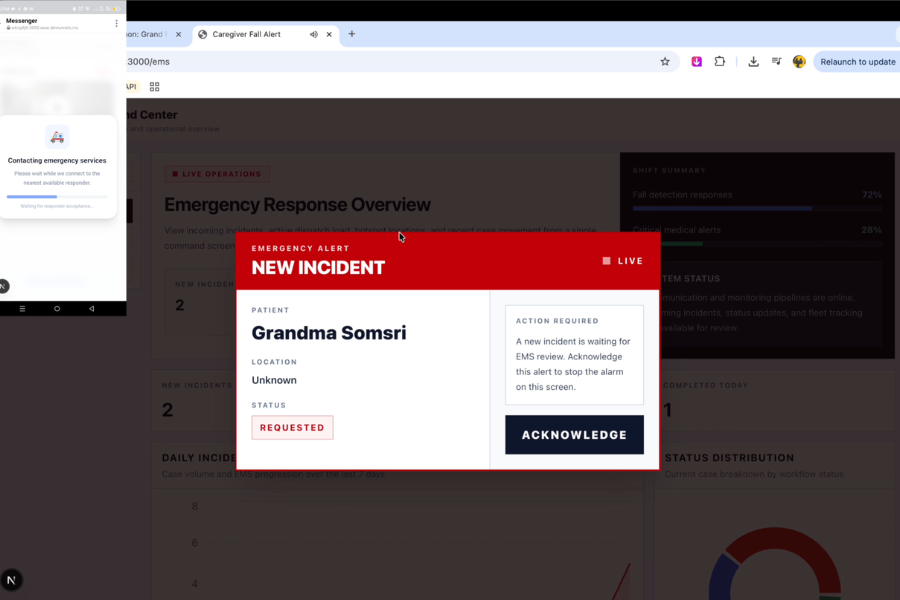
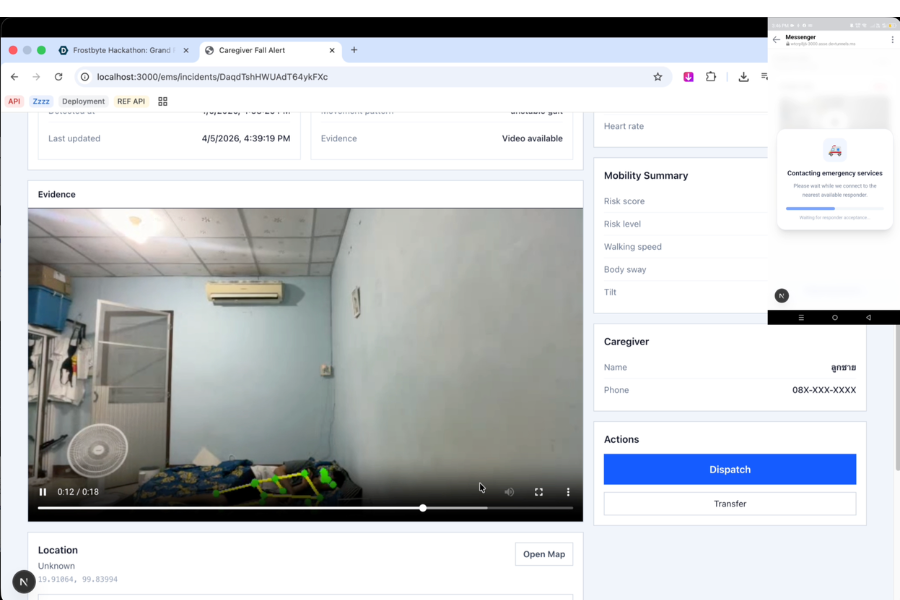
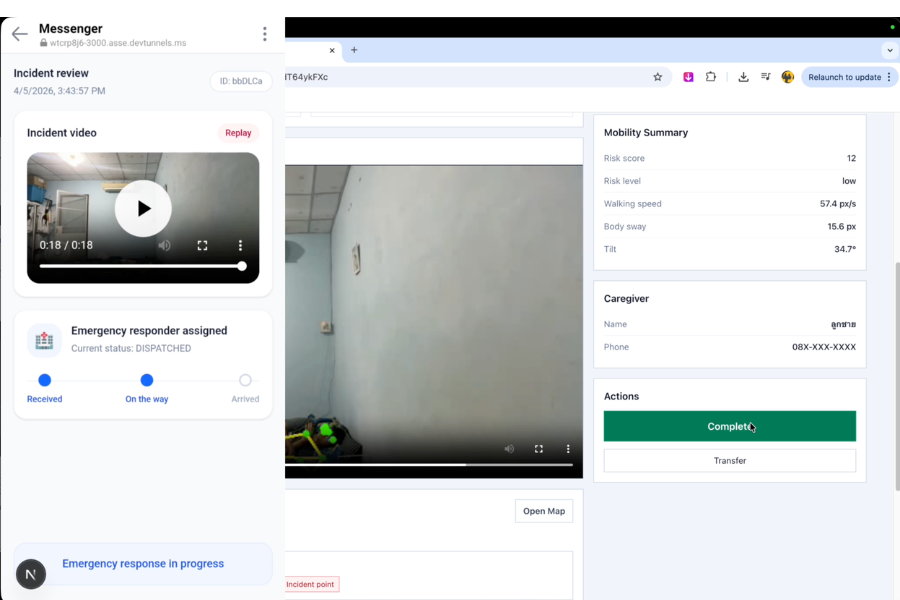
Real-time fall alert with video evidence, enabling immediate response and emergency action.
-
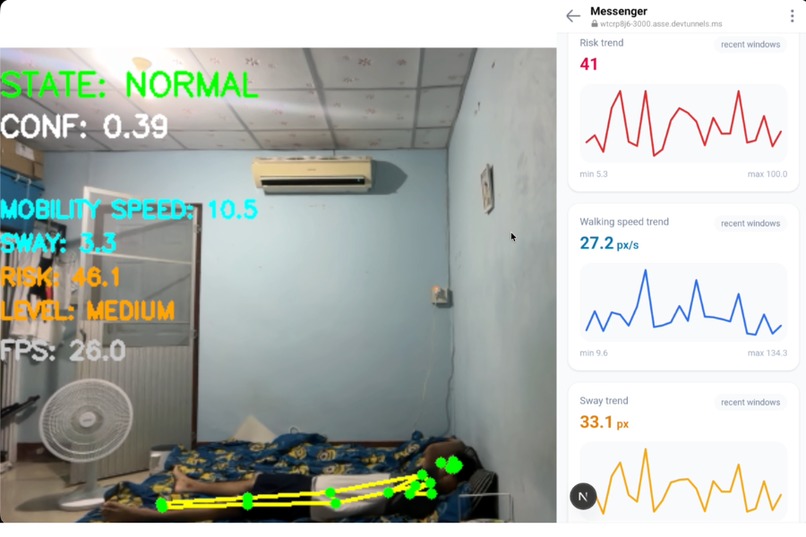
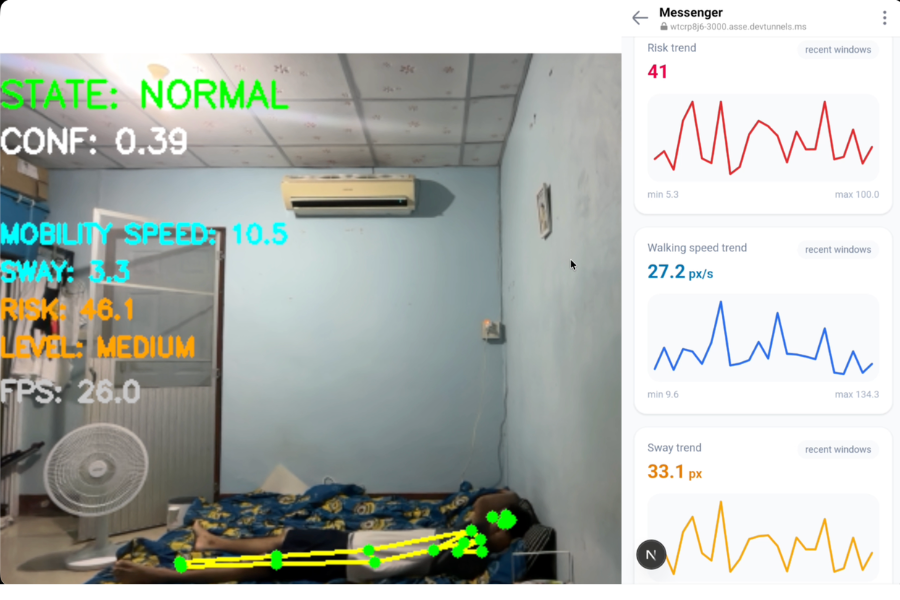
AI detects human pose and movement in real time using computer vision.
-
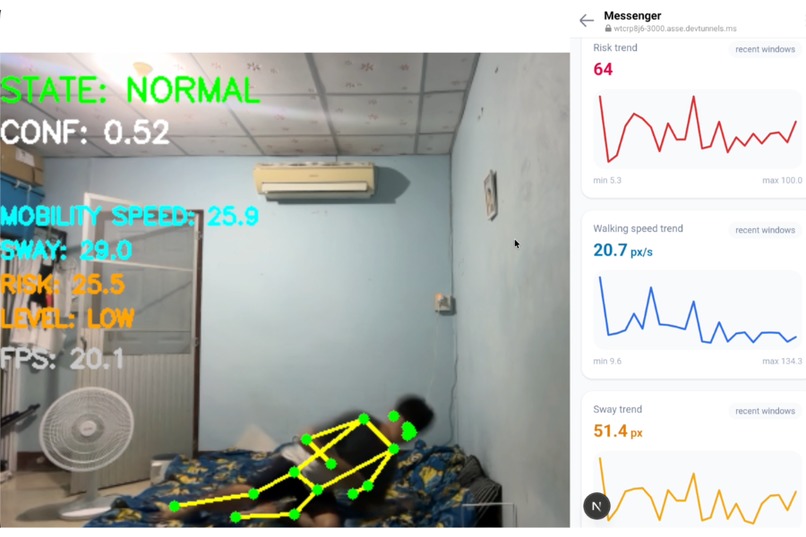
AI detects human pose and movement in real time using computer vision.
-
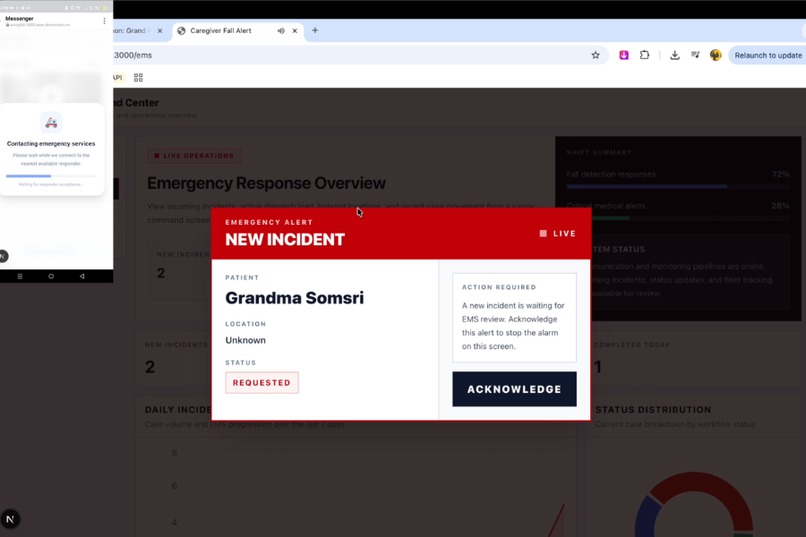
Notification page when a case comes in.
-
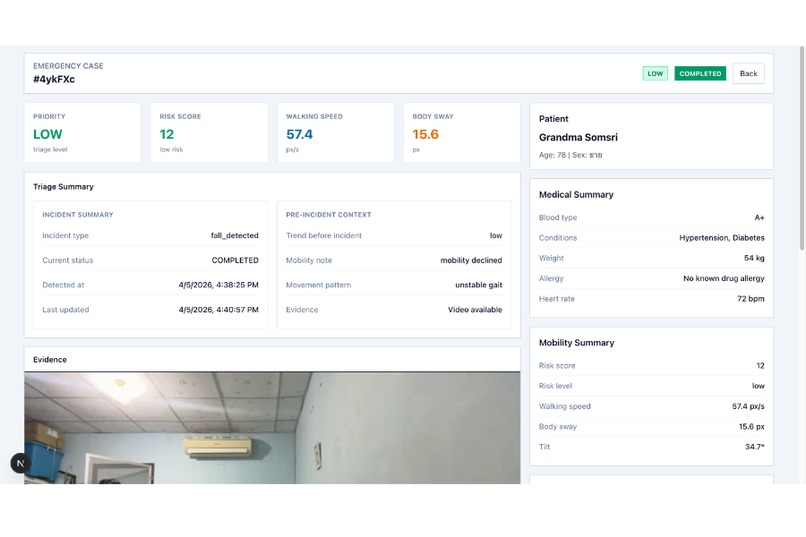
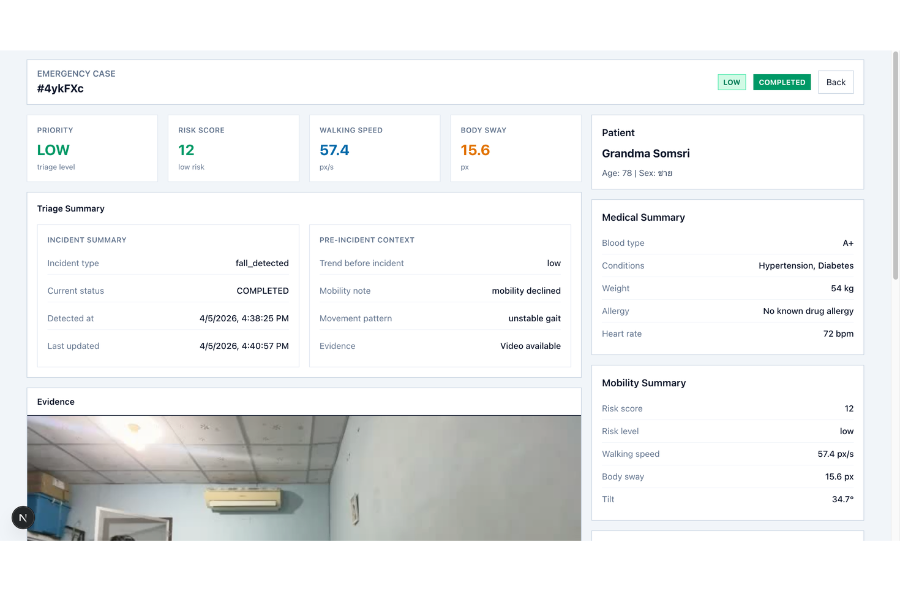
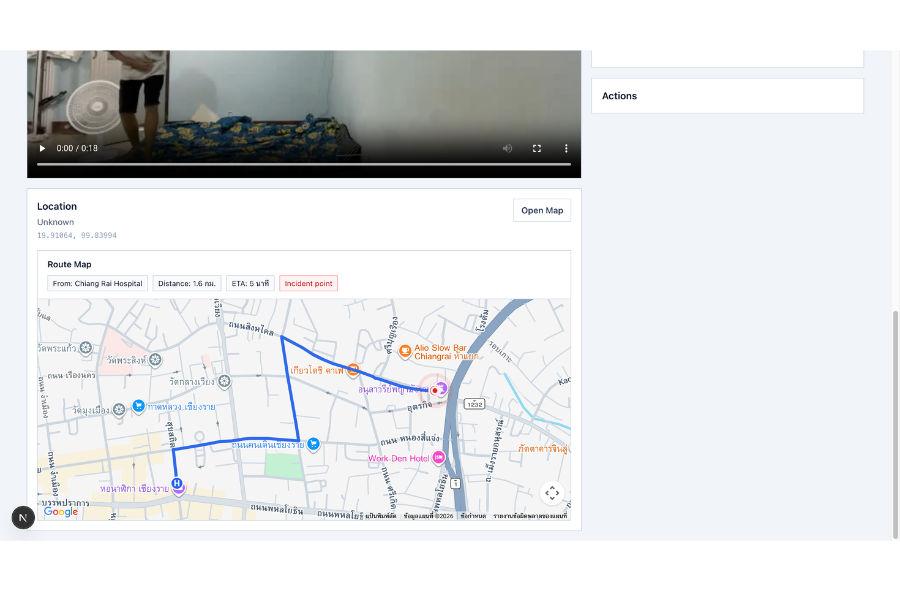
Incident details with video, location, and patient information.
-
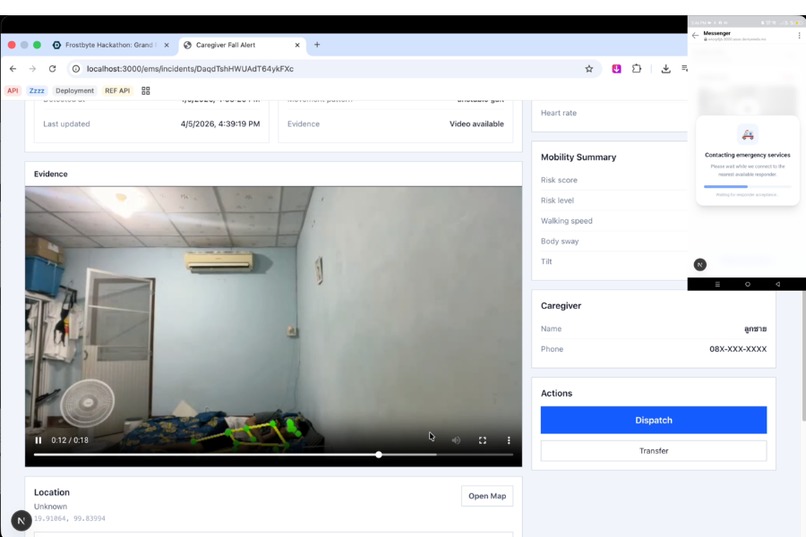
Incident details with video, location, and patient information.
-
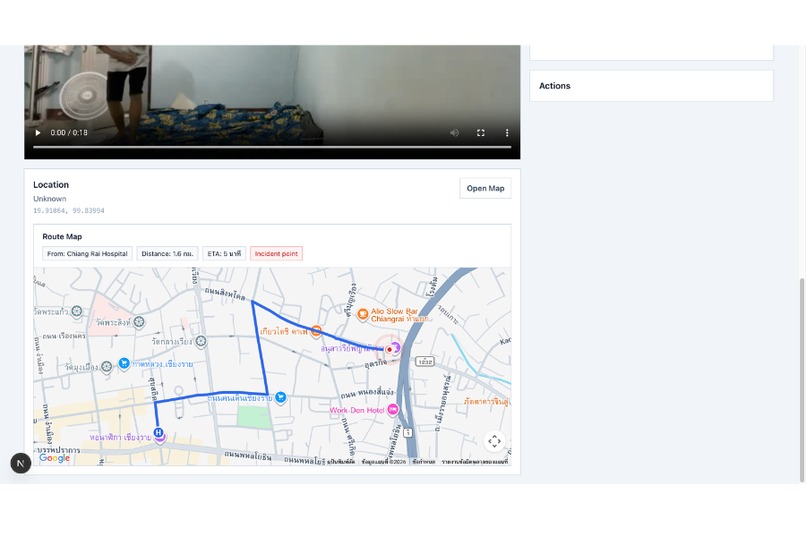
Incident details with video, location, and patient information.
-
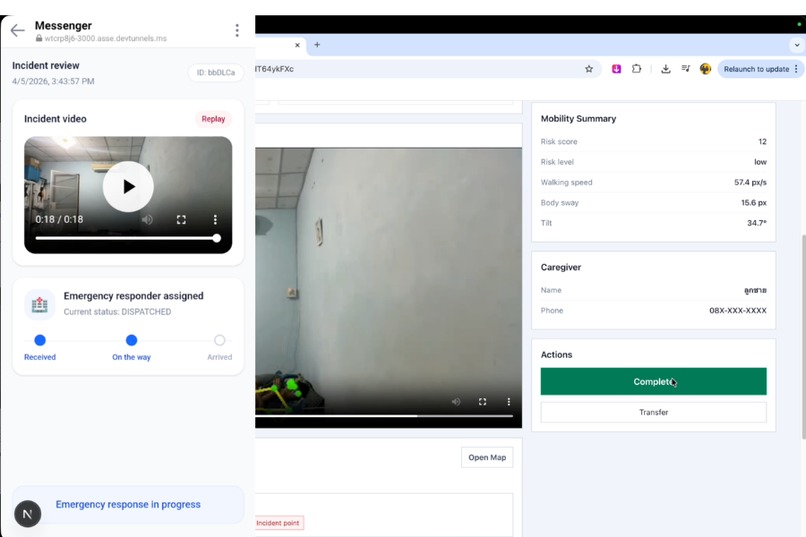
Case acceptance triggers real-time status update for the caregiver.
-
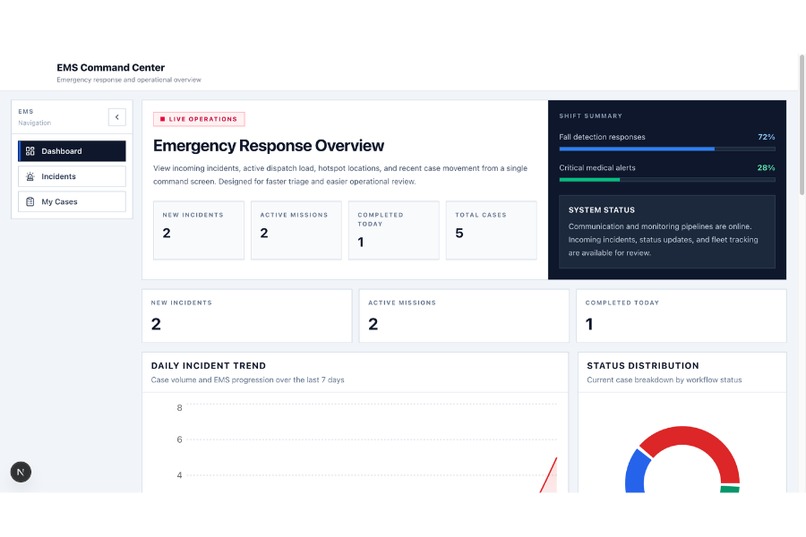
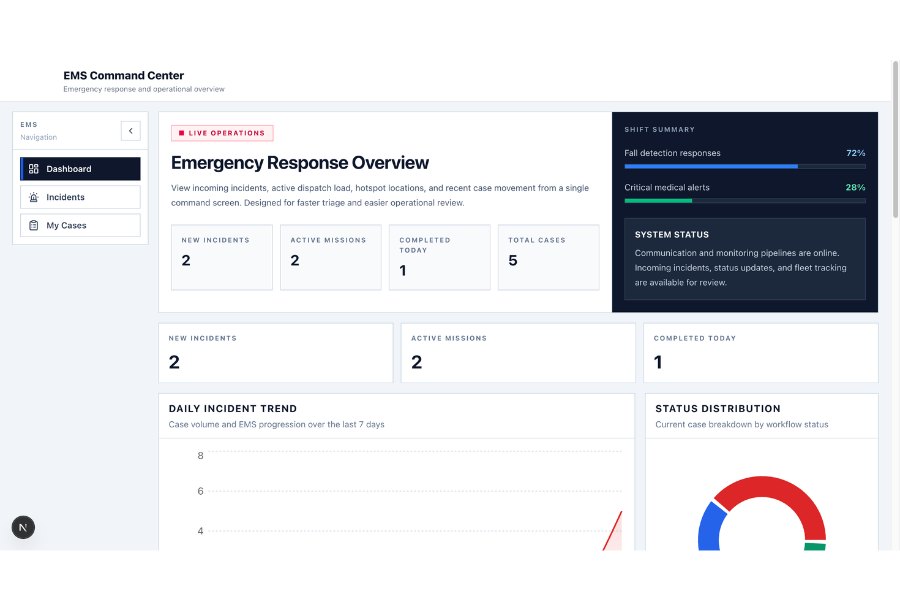
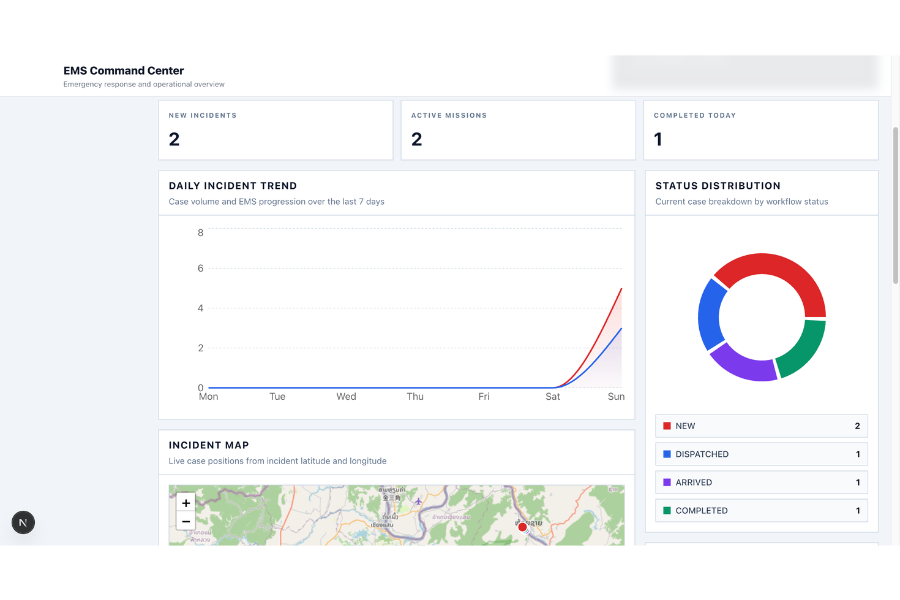
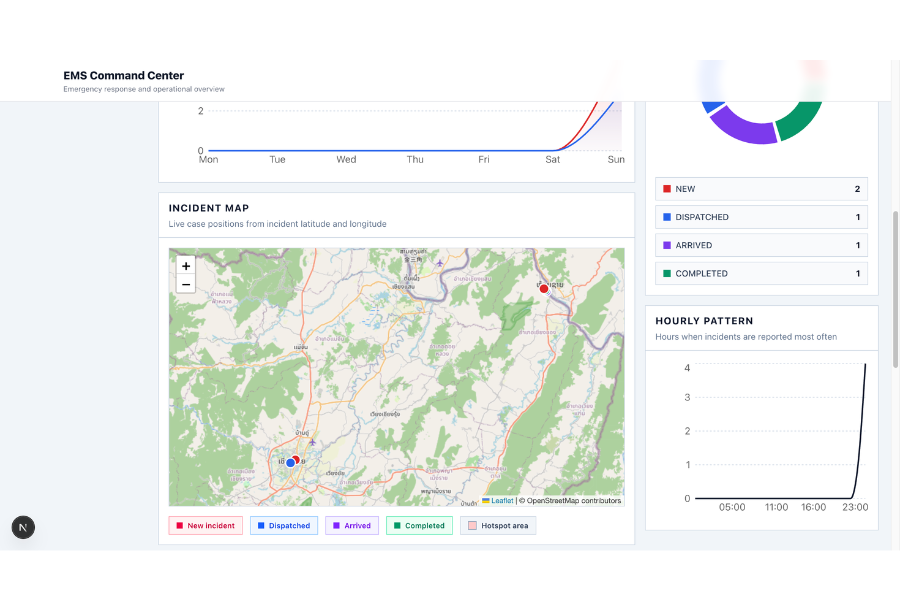
EMS dashboard showing real-time incidents, active missions, and system status.
-
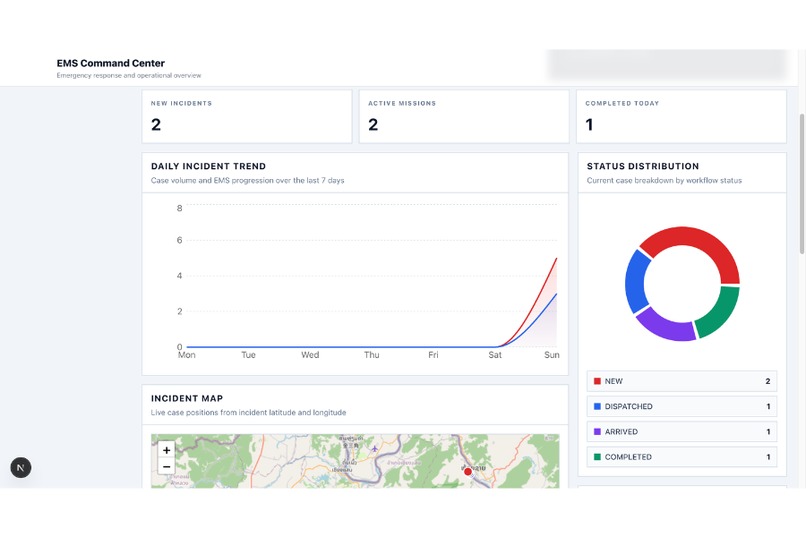
EMS dashboard showing real-time incidents, active missions, and system status.
-
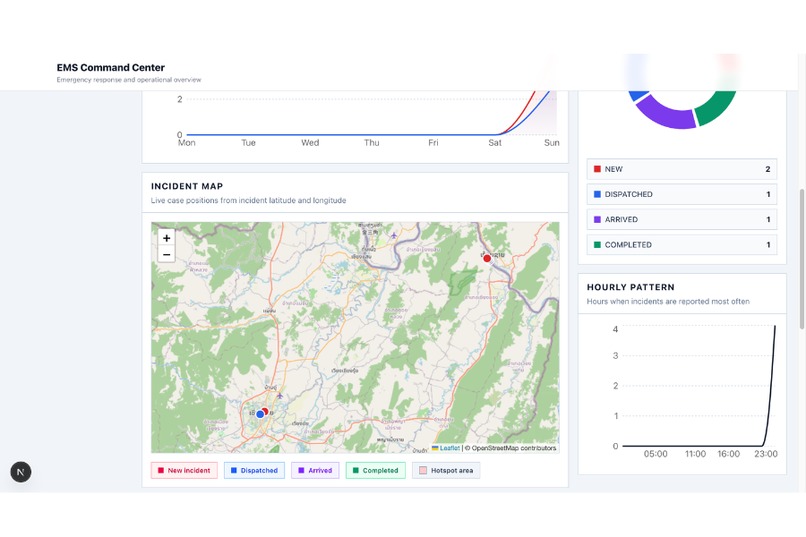
EMS dashboard showing real-time incidents, active missions, and system status.
-
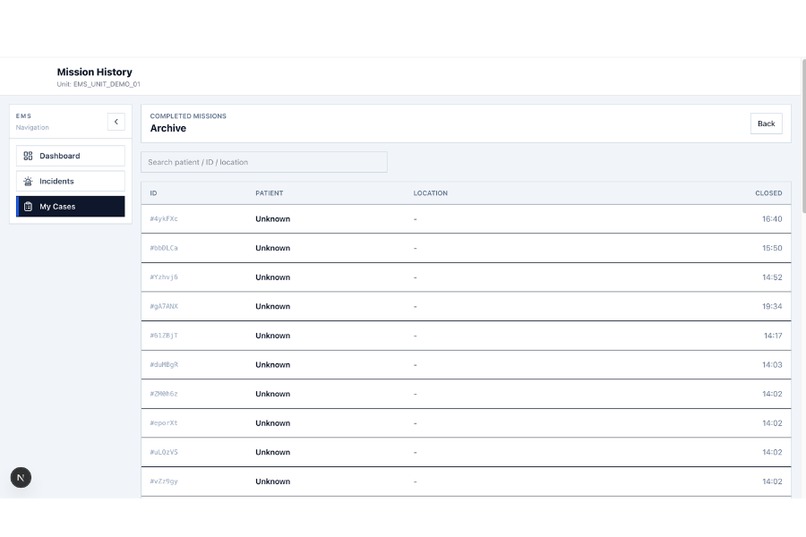
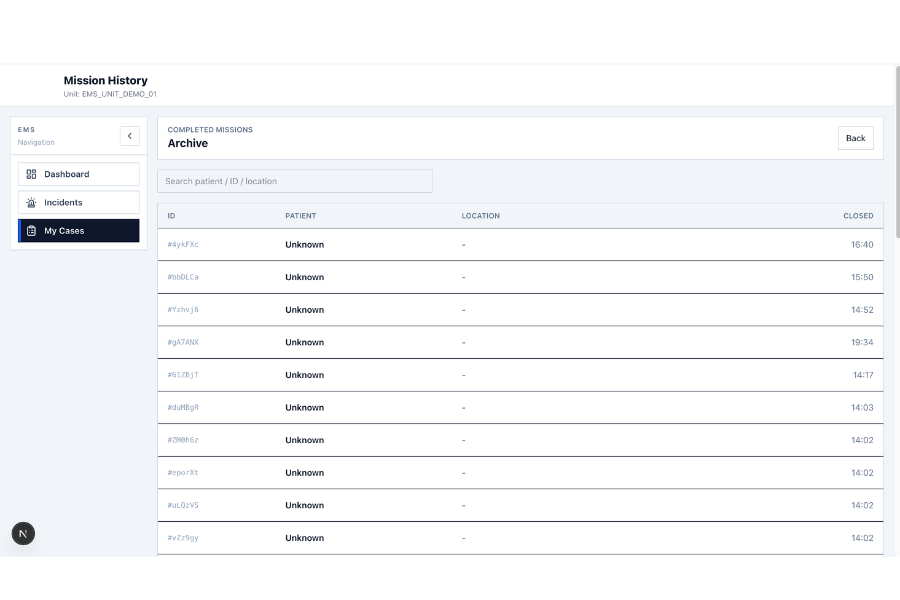
Case history with status and response details.
Inspiration
The inspiration for this project comes from my personal experience. I moved to study at a university far away from my hometown, which means my grandmother has to live alone at home. One day, I found out that she had fallen before, but she never told anyone because she did not want the family to worry. I only learned about it later when we talked about it. This made me realize that if an emergency happened and no one was nearby to help, it could become very dangerous. That is why I wanted to create an AI-based fall detection system that can automatically detect falls and notify caregivers, so elderly people can receive help quickly even when their family members are far away
What it does
Our system is designed to detect falls of elderly people using AI and a camera. When a fall is detected, the system immediately sends a notification to the caregiver, along with a video clip of the incident for review. In addition, the system analyzes movement patterns such as walking speed and body sway to predict fall risk in advance, allowing early warnings before an actual fall happens. If it is an emergency, the caregiver can forward the case to emergency services, where EMS operators receive key information such as the incident video, location, and medical profile, enabling them to respond quickly and provide appropriate assistance.
How we built it
We built this system for CCTV cameras using computer vision and machine learning to detect fall incidents in real time. First, we used YOLOv11n-pose to detect people from CCTV video streams. Then, we analyzed body posture and movement to identify potential fall events. Our model was trained using a public dataset containing around 2,000 fall videos and 2,000 non-fall videos. During processing, the system calculates features such as falling speed and body posture changes to distinguish real falls from normal activities like sitting or lying down. We combined a rule-based method with XGBoost to improve detection accuracy and reduce false alarms. In addition, the system analyzes mobility trends such as walking speed and body sway over time to predict fall risk in advance. The system runs on an Edge AI device connected to a CCTV camera, enabling real-time processing. For the platform, we built a web application using Next.js and used Firebase as the backend to manage incidents, notifications, and emergency coordination.
Challenges we ran into
One of the main challenges was distinguishing real falls from normal activities such as sitting or lying down, as these actions share similar visual patterns in video data. Another challenge was minimizing false positives caused by ambiguous body movements and temporal variations. We addressed this by combining pose-based features with a hybrid approach of rule-based logic and machine learning (XGBoost) to improve classification robustness. Significant effort was spent on hyperparameter tuning and model optimization to enhance accuracy and system reliability. Additionally, balancing detection accuracy with low-latency performance was critical, especially for deployment on resource-constrained edge devices, where real-time processing is required.
Accomplishments that we're proud of
Built a real-time AI-based fall detection system using computer vision. Reduced false alarms by effectively distinguishing falls from normal activities such as sitting or lying down. Integrated AI detection, caregiver alerts, and EMS coordination into a unified system. Designed the system for real-world deployment with CCTV cameras and edge devices. Added risk trend analysis to predict falls before they happen and enable early intervention.
What we learned
I learned how to build an AI-based fall detection system using computer vision. I gained experience in training and tuning machine learning models to detect fall events and reduce false alarms. I learned how to develop a complete system, including AI detection, notification systems, and a web dashboard. I also improved my skills in integrating AI with real-world applications such as CCTV monitoring and emergency response systems.
What's next for Intelligent Fall Detection & Risk Prediction System
We also plan to improve the accuracy of the risk prediction model by using more data and advanced techniques. In addition, we aim to integrate wearable sensors to enhance detection reliability. Finally, we hope to expand the system to support other health-related incidents, such as heart attacks or abnormal behavior.
Model Performance
The fall detection model was trained using a dataset containing: 2000 fall videos 2000 non-fall videos The classifier uses pose-based motion features and an XGBoost model. Performance results: Accuracy: ~91% Precision: ~88% Recall: ~95% The threshold was tuned to prioritize recall, ensuring that fall events are detected reliably while minimizing missed incidents.
Privacy & Emergency Safety
We prioritize user privacy and data security in our system. All video data is processed locally on edge devices, and only essential information is transmitted to the server. Sensitive data is minimized and handled securely. At the same time, the system is designed for emergency reliability. In critical situations, alerts are sent immediately with necessary information such as location and video evidence, ensuring that caregivers and emergency teams can respond quickly and effectively.
Impact
This system helps reduce response time in emergency situations and improves safety for elderly people living alone. By predicting fall risk in advance and enabling early alerts, it can prevent serious injuries and potentially save lives. It also reduces the burden on caregivers and supports faster coordination with emergency services.
Target Users
Elderly people living alone Caregivers and family members Emergency response teams (EMS) Healthcare providers and smart home systems
Innovation
Unlike traditional systems that only detect falls, our system introduces risk trend analysis to predict falls before they happen. It combines AI detection, real-time alerts, and emergency response into one integrated platform. In addition, the use of Edge AI enables real-time processing with improved privacy and lower latency.
Built With
- ai
- computer-vision
- edge-computing
- firebase
- github
- google-maps
- machine-learning
- next.js
- opencv
- python
- react
- rest-api
- we-aim-to-integrate-wearable-sensors-to-enhance-detection-reliability.-finally
- we-hope-to-expand-the-system-to-support-other-health-related-incidents
- xgboost
- yolov11n-pose

Log in or sign up for Devpost to join the conversation.