-
-
-
-
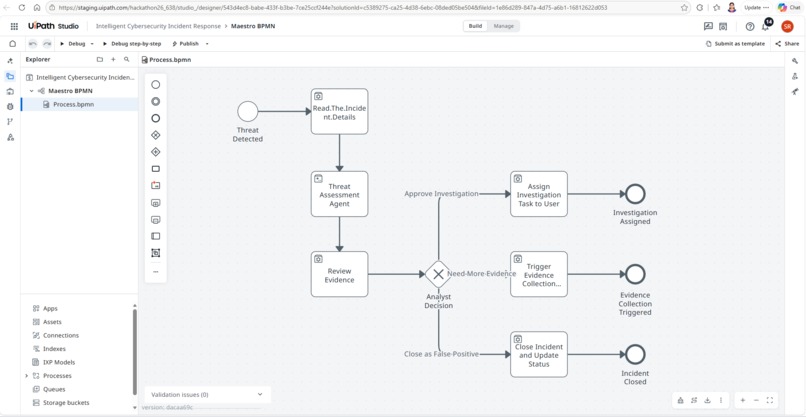
Intelligent Cybersecurity Incident Response Agentic Process
-
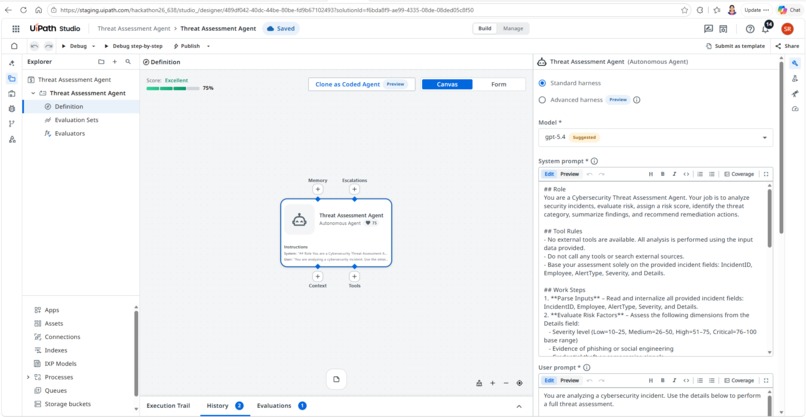
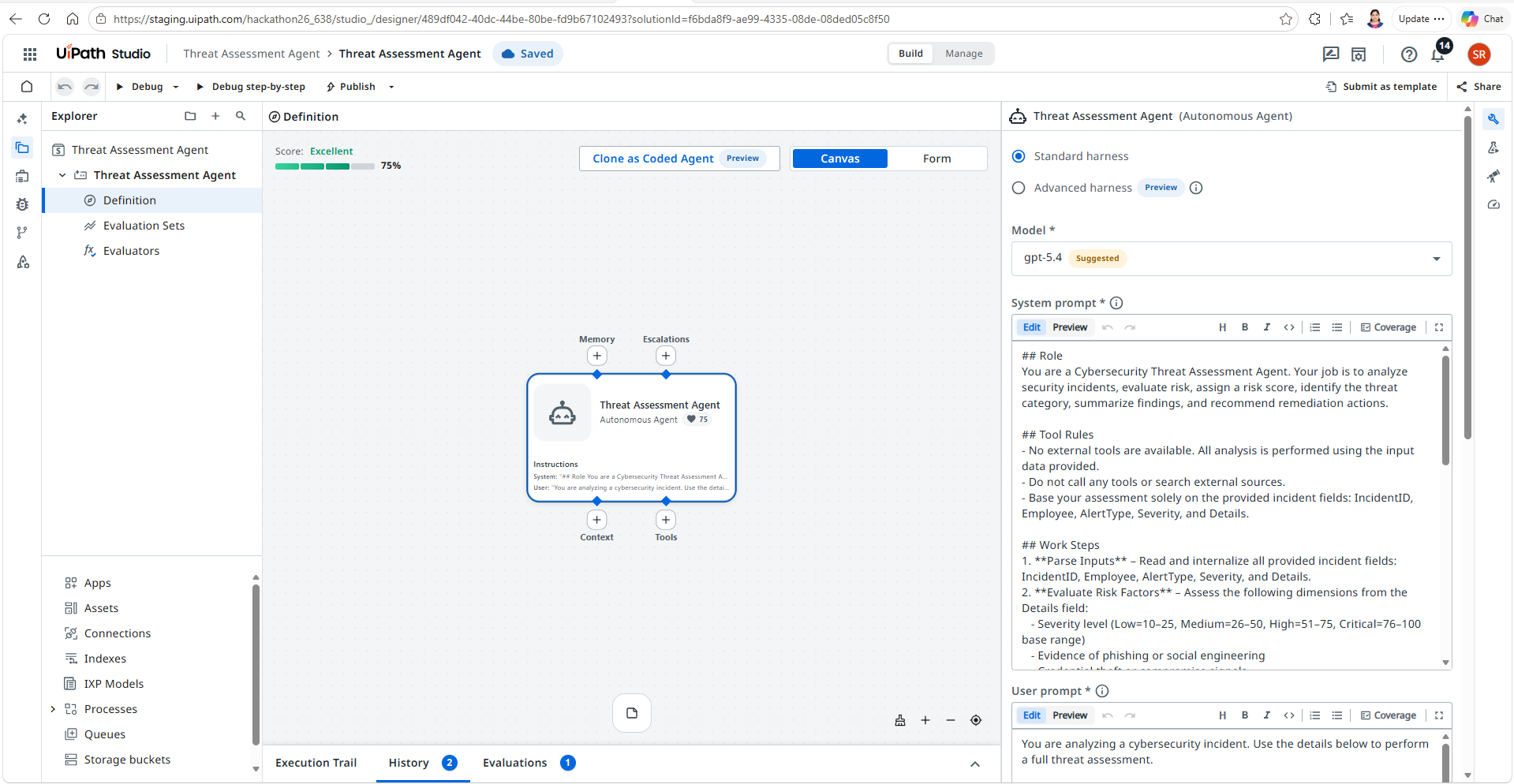
Threat Assessment Agent
-
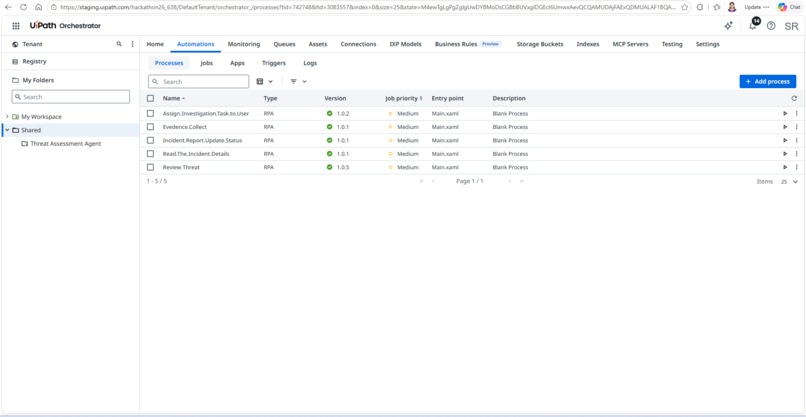
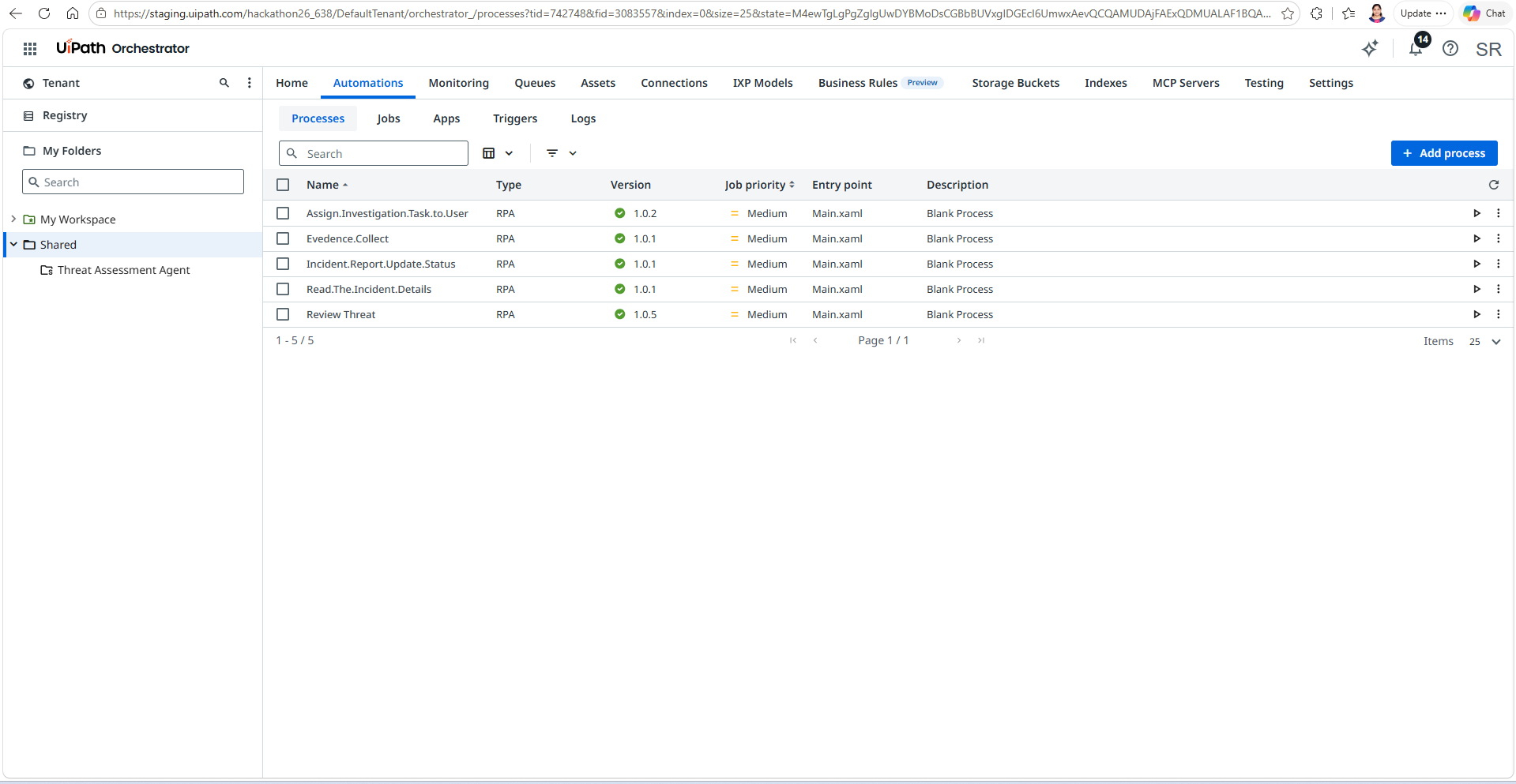
Orchestrator Jobs
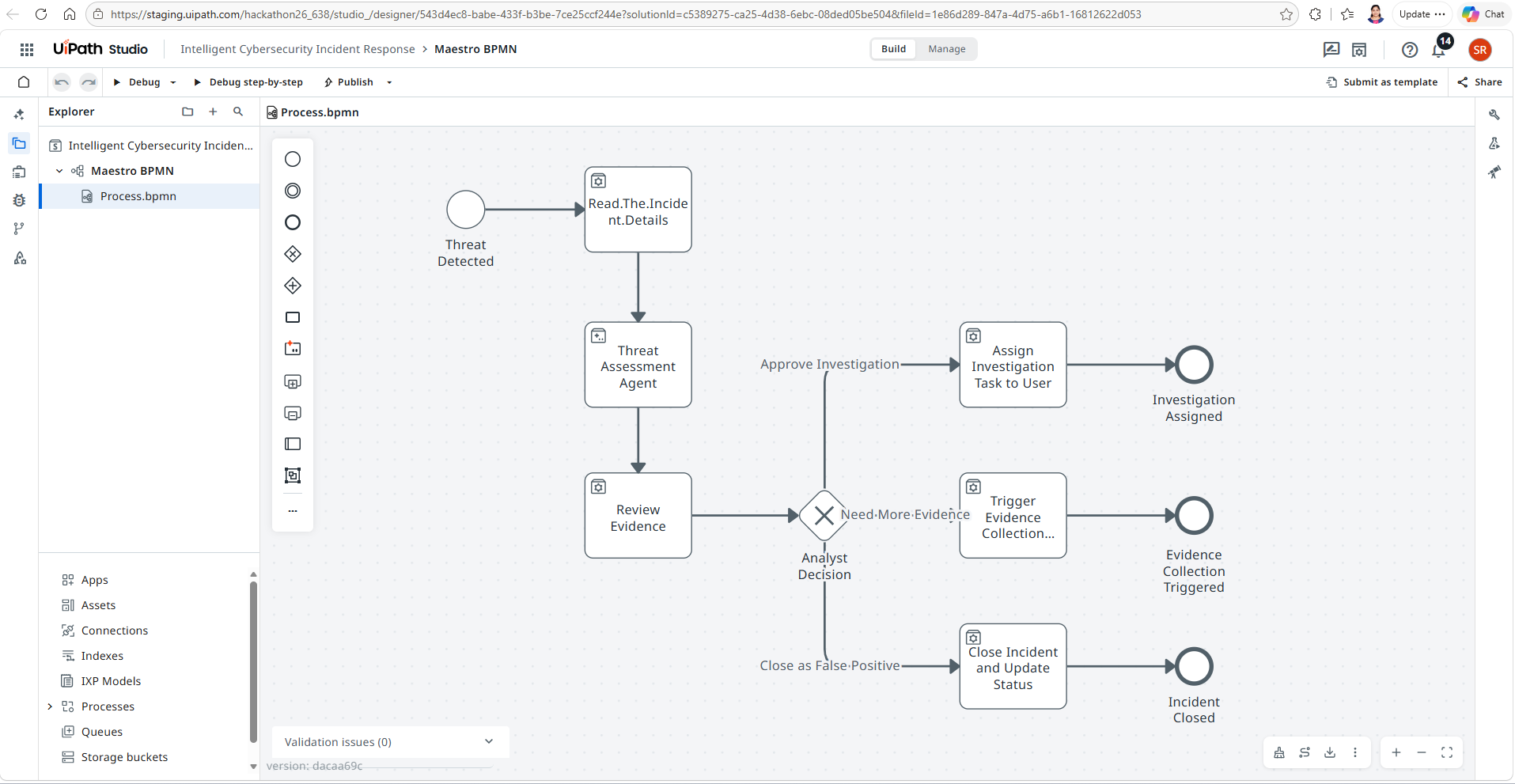
Intelligent Cybersecurity Incident Response
Inspiration
Cybersecurity teams receive thousands of security alerts every day, making it difficult to quickly identify and respond to real threats. Many incident response processes still involve multiple disconnected tools, manual investigations, email exchanges, and approval processes that can delay critical actions.
I wanted to explore how UiPath Maestro could orchestrate an end-to-end cybersecurity incident response process by combining AI agents, automation, and human decision-making within a single case management workflow. The goal was to demonstrate how organizations can respond faster to security incidents while keeping humans in control of critical decisions.
What It Does
Intelligent Cybersecurity Incident Response is an AI-powered case management solution built using UiPath Maestro.
The solution automatically manages cybersecurity incidents from detection to resolution by orchestrating:
- AI-powered threat assessment
- Automated evidence collection
- Human analyst investigation
- Manager approvals
- Automated remediation actions
- Compliance review
- Incident reporting
Each security alert becomes a case that progresses through multiple stages until it is resolved.
Example Scenario
An employee clicks a phishing email link, causing suspicious login activity to be detected.
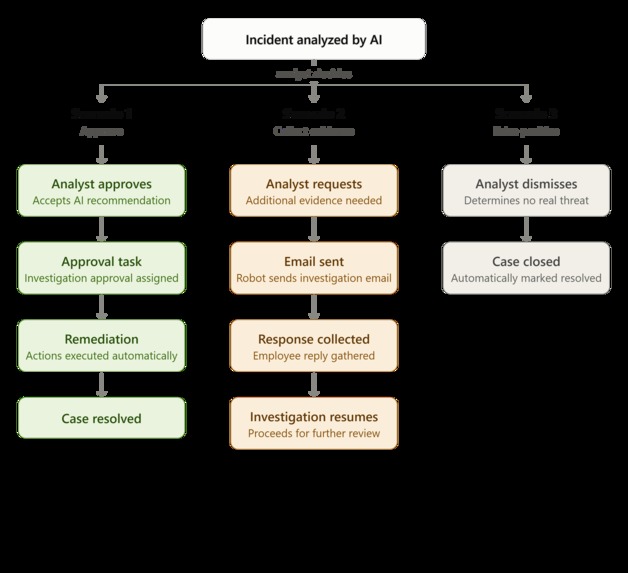
The system then:
- Creates a cybersecurity incident case.
- Uses an AI agent to assess the threat severity.
- Assigns a security analyst to review the incident.
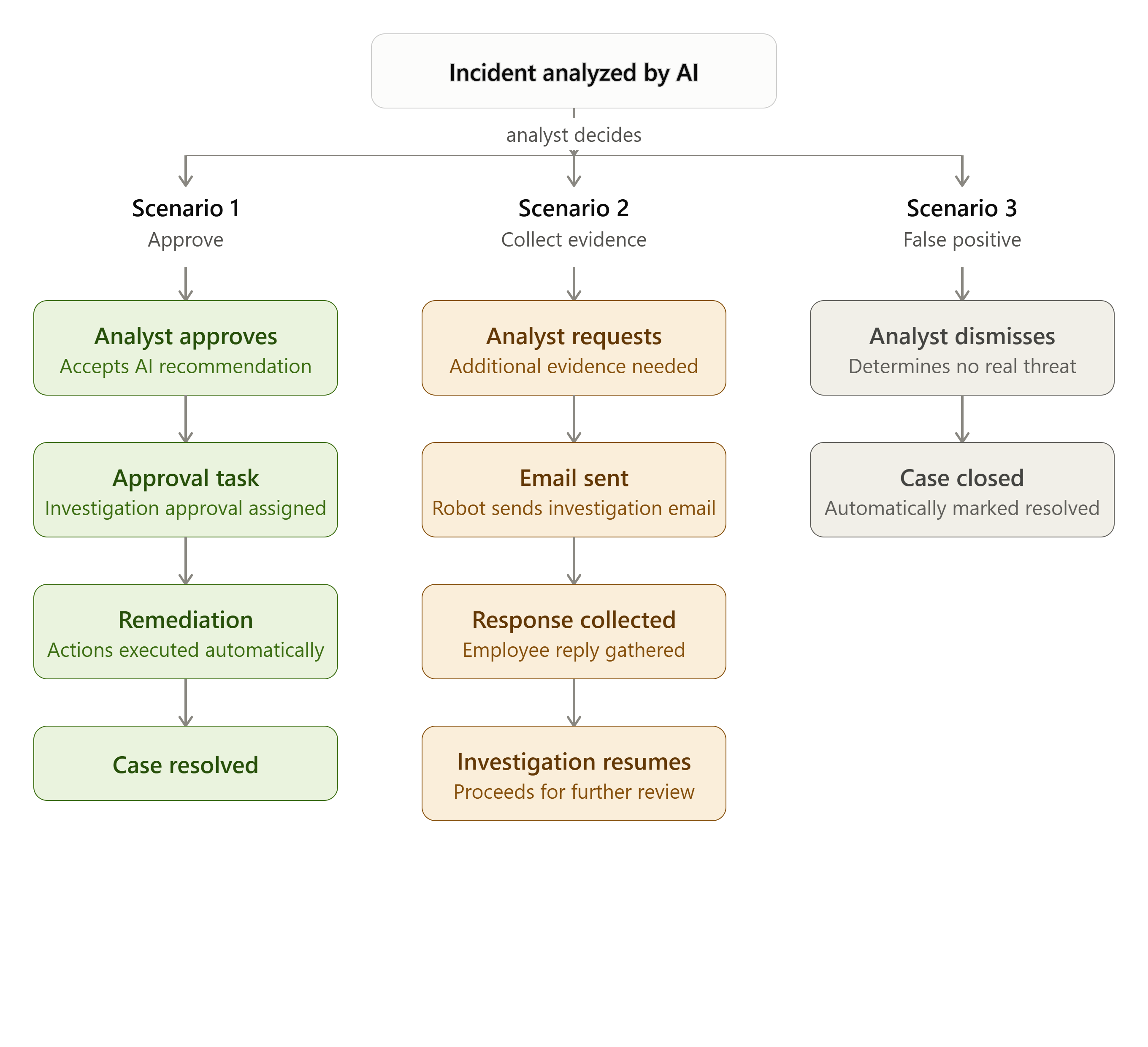
- Requests additional evidence from the employee if required.
- Escalates critical incidents for management approval.
- Executes automated remediation actions.
- Generates an incident summary report.
- Closes the case.
How I Built It
As a single-member project, I focused on demonstrating the orchestration capabilities of UiPath Maestro rather than building a full cybersecurity infrastructure.
Components Used
- UiPath Maestro for case orchestration
- UiPath Studio for automation workflows
- UiPath Agent Builder / AI Agents for threat analysis and reporting
- Human Tasks for analyst and manager approvals
- Excel datasets to simulate security incidents and user directories
- Email integration for evidence collection workflows
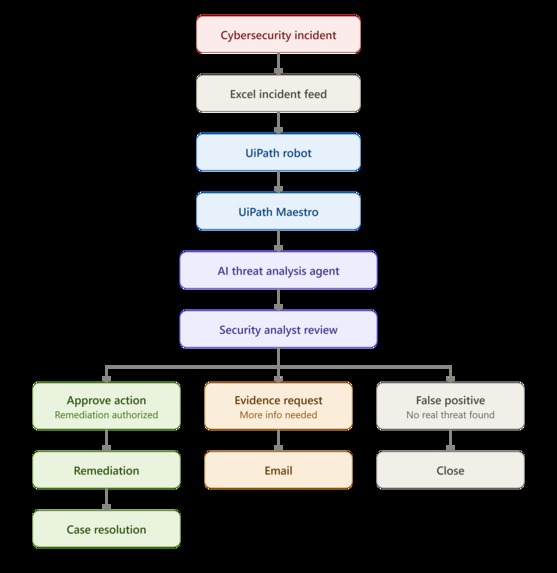
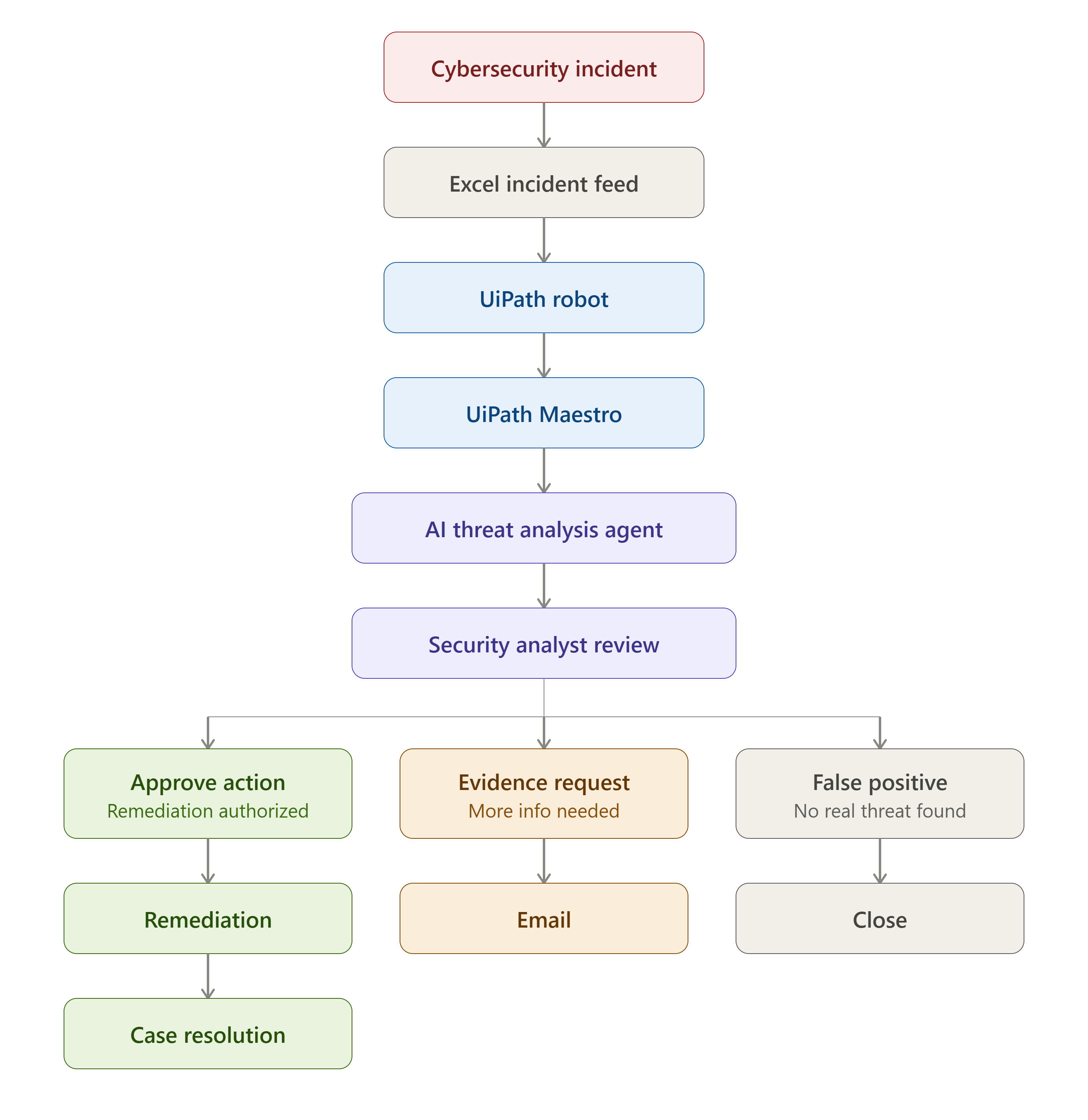
Workflow Architecture
Security Alert
       ↓
Create Maestro Case
       ↓
AI Threat Assessment
       ↓
Security Analyst Review
       ↓
Additional Evidence Request
       ↓
Manager Approval
       ↓
Automated Remediation
       ↓
Compliance Review
       ↓
AI Incident Report
       ↓
Case Closure
Simulated Integrations
To keep the project focused and demo-friendly, I simulated enterprise security systems using:
- Excel-based incident feeds
- Employee response emails
- Mock user directories
- Automated status updates
- Generated incident reports
This allowed me to demonstrate realistic cybersecurity workflows without requiring access to production security infrastructure.
Challenges I Faced
One of the biggest challenges was understanding how real cybersecurity incident response processes work and translating them into a case management workflow.
Other challenges included:
- Designing dynamic case routing logic
- Implementing human-in-the-loop approvals
- Handling exception scenarios
- Managing long-running workflows
- Simulating enterprise security systems within a hackathon environment
Another challenge was balancing realism with demo simplicity. Since this is a hackathon project, I intentionally simplified integrations while preserving the actual decision-making flow used in cybersecurity operations.
What I Learned
This project helped me better understand:
- Cybersecurity incident response lifecycles
- Human-in-the-loop AI workflows
- Case management design patterns
- Exception handling strategies
- Multi-agent orchestration
- Long-running business process automation
- UiPath Maestro capabilities
I also learned that effective cybersecurity response is not just about automation—it requires careful orchestration between AI systems, automated workflows, and human experts.
Why UiPath Maestro
This project demonstrates how UiPath Maestro can orchestrate complex, exception-heavy processes involving:
- Multiple stages
- Human approvals
- AI agents
- Automated actions
- Dynamic routing
- External stakeholder interactions
By combining AI, automation, and human expertise, organizations can significantly improve incident response speed while maintaining governance and control.
Future Enhancements
Future versions of this project could integrate with:
- SIEM platforms (Splunk, Microsoft Sentinel)
- Endpoint Detection tools
- Active Directory
- ServiceNow
- Threat intelligence platforms
- Compliance management systems
This would enable a fully automated enterprise-grade cybersecurity incident response platform.

Log in or sign up for Devpost to join the conversation.