-
-
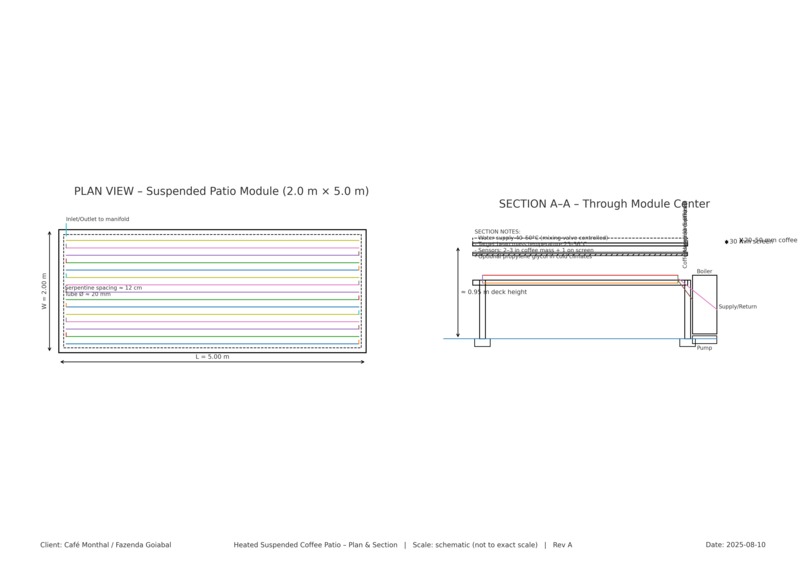
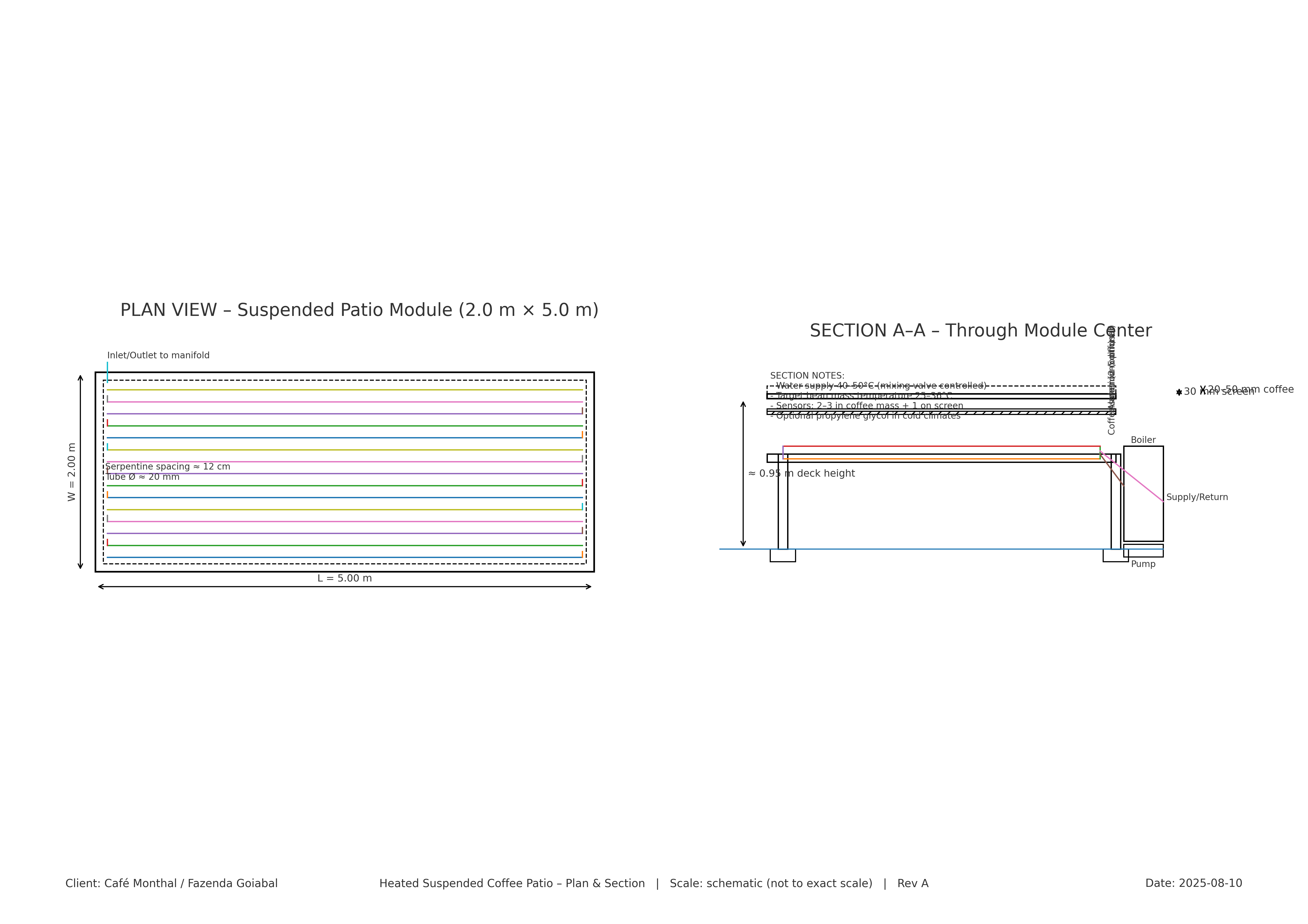
Technical Draw
Inspiration
The inspiration for this project came from a common challenge faced by coffee producers in mountainous and cooler regions — ensuring consistent drying conditions for coffee beans during the night or on cold days. Traditional suspended patios rely entirely on sunlight, making it difficult to maintain the ideal fermentation temperature of 25–36 °C, which is critical for preserving flavor, aroma, and quality.
What We Learned
Through research and prototype testing, we discovered that gentle, stable heating directly beneath the drying surface can maintain optimal temperatures without damaging the beans. We learned how crucial temperature stability is in controlling fermentation, preventing defects, and enhancing cup quality.
How We Built It
We designed a suspended coffee drying platform with an integrated heating system that uses a boiler to circulate warm water through serpentine pipes installed beneath the mesh screen. The heat rises naturally, gently warming the beans. Sensors embedded in the coffee mass and the drying surface feed data to a control unit, which adjusts water flow and temperature to keep conditions stable. The system is built for modularity, allowing producers to scale it to their drying capacity.
Challenges We Faced
Some of the main challenges included:
Designing a heating system that distributes warmth evenly without creating hot spots.
Ensuring food safety and preventing any contamination from the heating system.
Maintaining energy efficiency while operating in open-air conditions.
Balancing the cost of implementation with the expected quality improvements and potential price premiums for the coffee.
By overcoming these challenges, we developed a solution that is practical, efficient, and capable of improving coffee quality in regions with challenging drying conditions.
Built With
- api
- cloud
- esp32
- iot

Log in or sign up for Devpost to join the conversation.