-
-
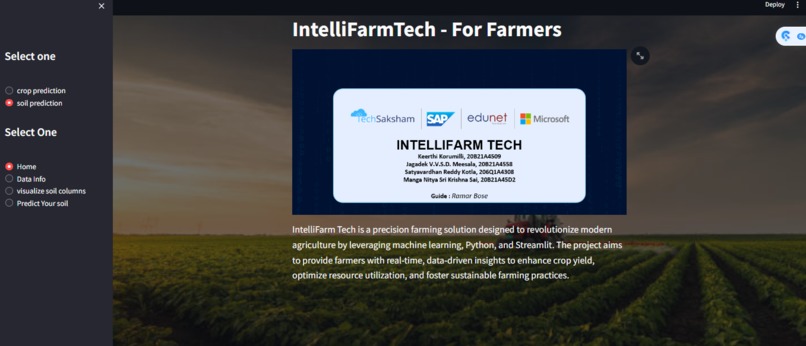
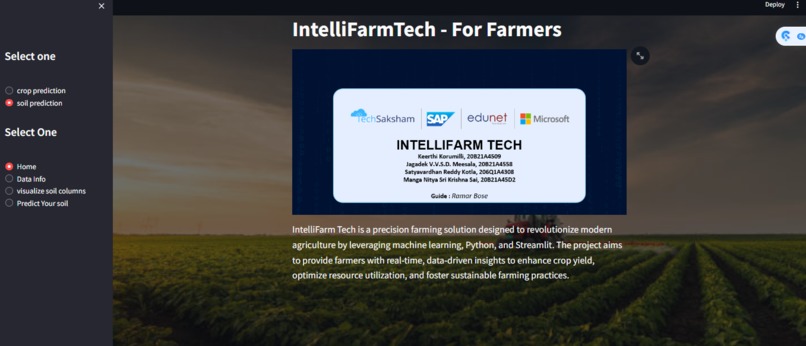
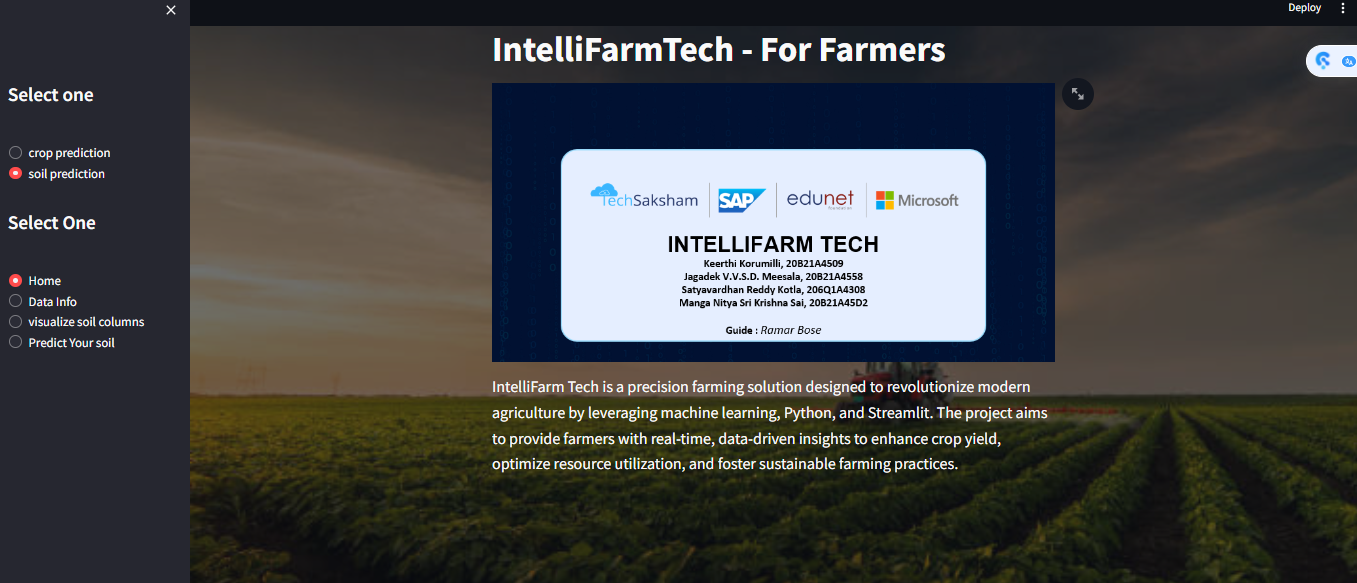
Home Page
-
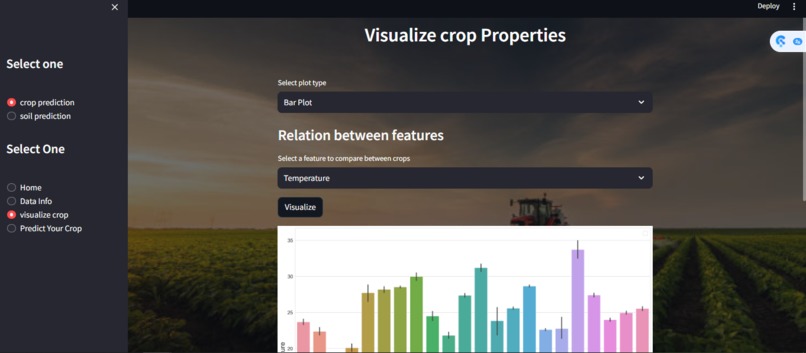
Visualization
-
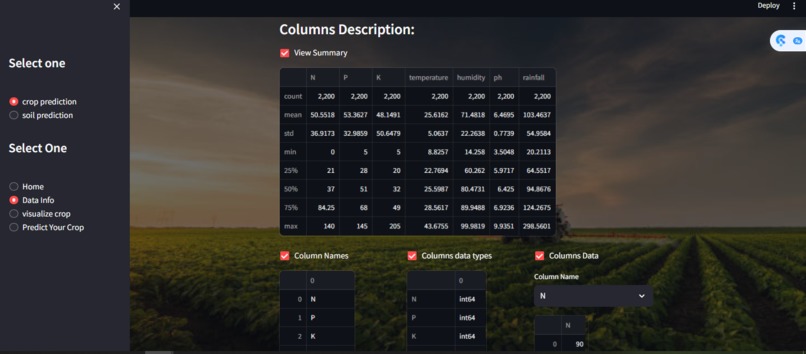
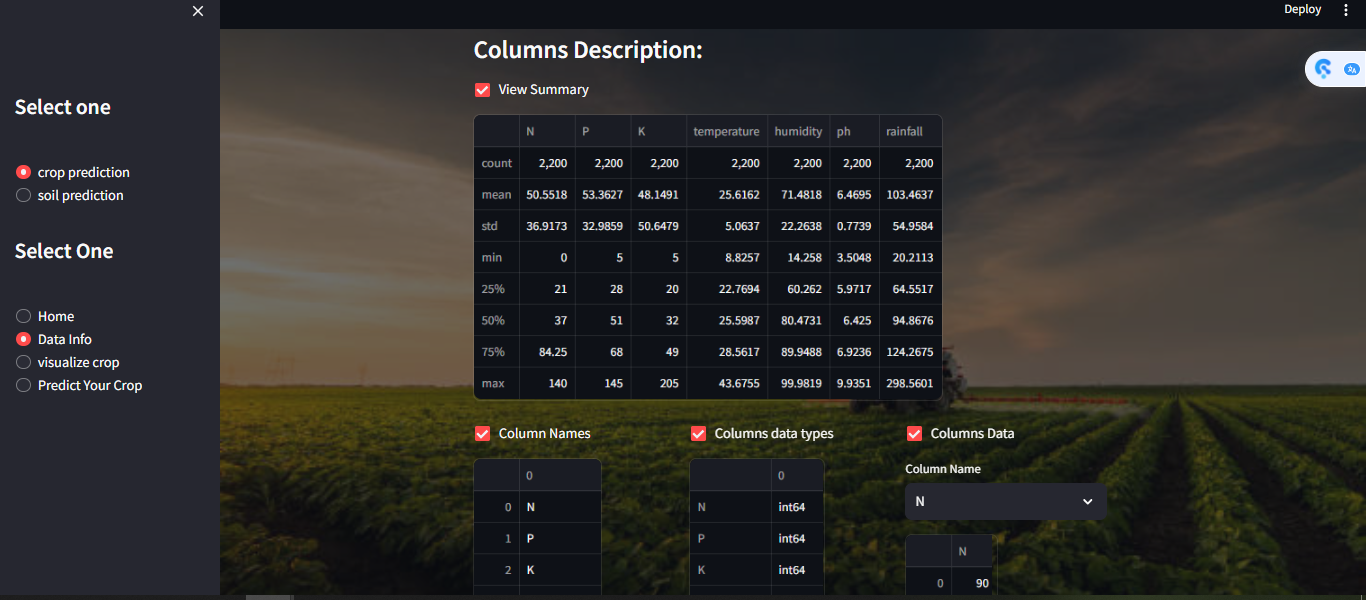
Data Set
-
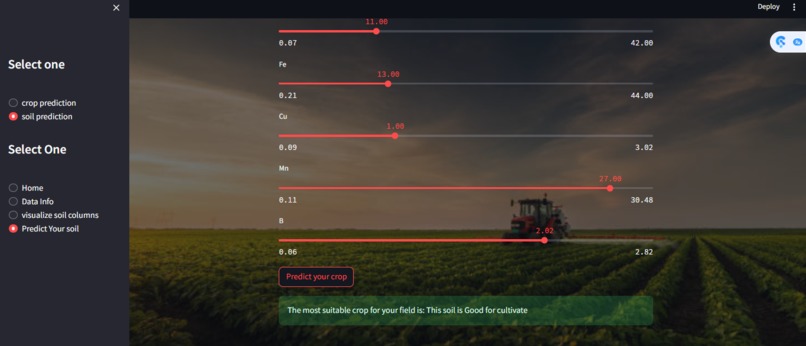
Prediction page
-
All features pages
-
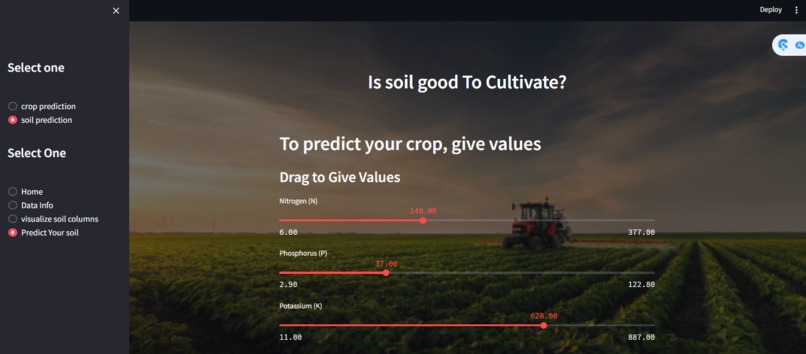
Predictor

IntelliFarmTech: A Smart Farming Solution with AI
Inspiration
Agricultural communities face hurdles such as subpar crop yields, reduced returns on investment, and a lack of informed choices for experienced farmers on viable crops. To tackle these issues, there's an increasing need for assistance from technically adept students well-versed in soil science, climate dynamics, and crop analysis. The imperative lies in creating precision farming solutions that empower farmers with insights and tools for informed decision-making. By doing so, we can revitalize the agricultural sector, ushering in sustainable practices while bolstering yields. These initiatives aim to bridge the gap between traditional farming methods and modern technological advancements, fostering a more resilient and efficient agricultural landscape.
What it does
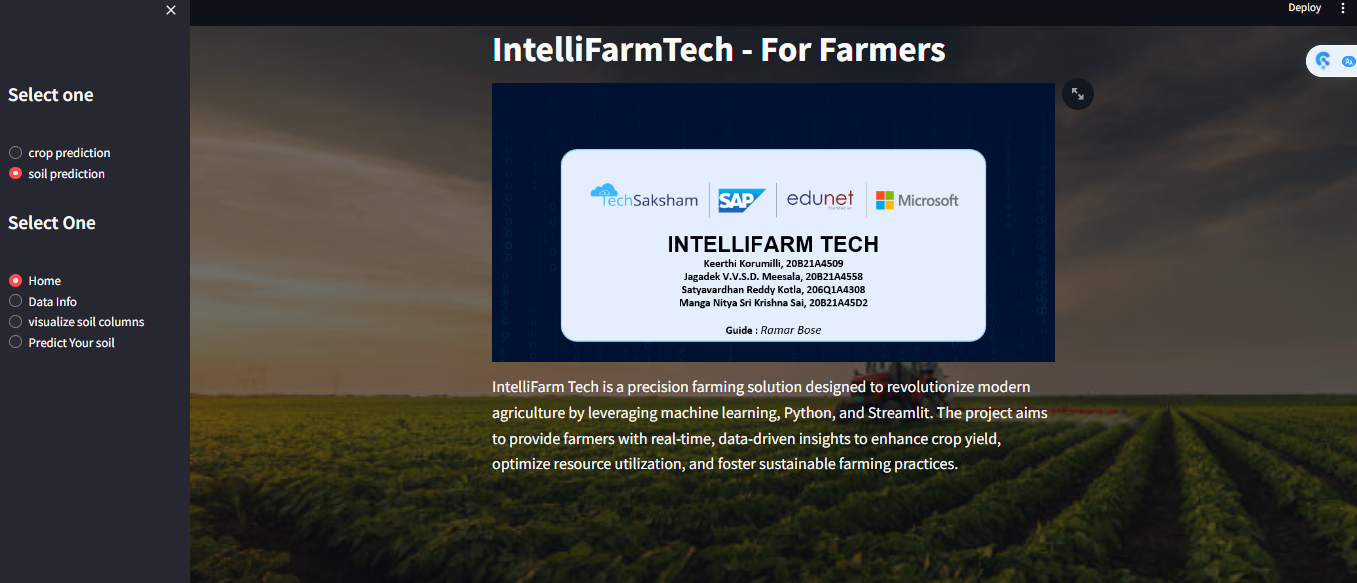
The IntelliFarmTech project is an innovative precision farming solution that integrates machine learning, Python, and Streamlit to revolutionize modern agriculture. Its primary objective is to equip agricultural communities, especially farmers, with real-time, data-driven insights for optimizing crop yield, resource management, and fostering sustainable farming practices. The platform features two main machine learning models: one for predicting suitable crops based on environmental factors, and another for evaluating soil properties to determine land suitability for different crops. Additionally, IntelliFarmTech offers an interactive visualization interface to help users explore agricultural data and make informed decisions.
How we built it
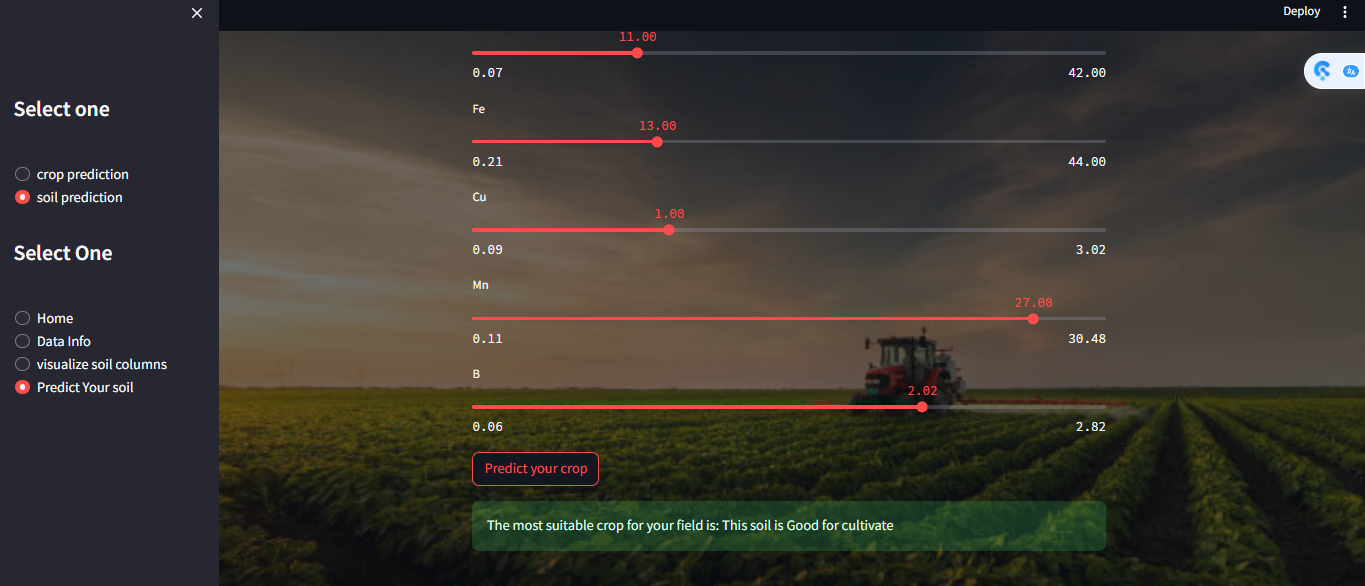
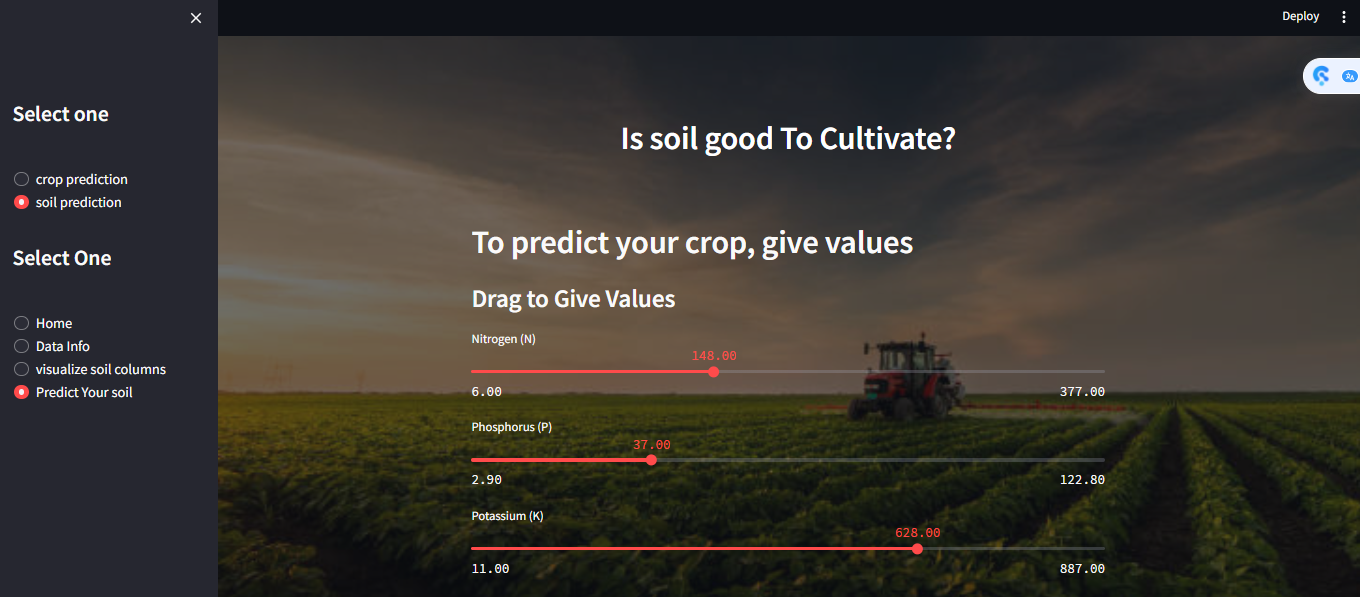
IntelliFarmTech was developed using Python for the backend and machine learning models, and Streamlit for the user interface. The project leverages logistic regression and random forest classifier algorithms, implemented using libraries such as Scikit-learn, Matplotlib, Numpy, and Pandas. The first model predicts suitable crops based on key environmental factors like nitrogen, phosphorus, potassium, temperature, humidity, pH, and rainfall. The second model evaluates soil properties such as nitrogen, phosphorus, pH levels, potassium, electrical conductivity, organic carbon, sulfur, zinc, iron, copper, manganese, and boron.
Challenges we ran into
One of the main challenges was ensuring the accuracy of the machine learning models with diverse and complex agricultural data. Additionally, integrating various data sources and making the platform user-friendly for farmers with varying levels of technical expertise required careful design and extensive testing.
Accomplishments that we're proud of
We are proud of successfully developing a platform that provides actionable insights to farmers, enabling them to make informed decisions about crop selection and land use. The integration of advanced machine learning techniques and interactive data visualization tools has the potential to significantly improve agricultural productivity and sustainability.
What we learned
Through this project, we gained a deep understanding of the challenges faced by the agricultural sector and the potential of technology to address these issues. We also enhanced our skills in machine learning, data analysis, and user interface design, learning how to create solutions that are both technically robust and accessible to non-technical users.
What's next for IntelliFarmTech: A Smart Farming with AI
The next steps for IntelliFarmTech include integrating Internet of Things (IoT) devices to collect real-time data on soil and weather conditions, further improving the accuracy and timeliness of our predictions. We also plan to expand the platform's capabilities to cover a wider range of crops and environmental conditions, and to collaborate with agricultural experts to refine our models and features. Our ultimate goal is to create a comprehensive, farmer-friendly tool that drives sustainable agricultural practices and boosts productivity across diverse farming communities.
Built With
- css
- machine-learning
- numpy
- pandas
- python
- streamlit

Log in or sign up for Devpost to join the conversation.