-
-
IntelliDrive Drowsiness Detector
Inspiration
The rising cases of accidents caused by drowsy driving inspired us to create a solution that could prevent these incidents.
What it does
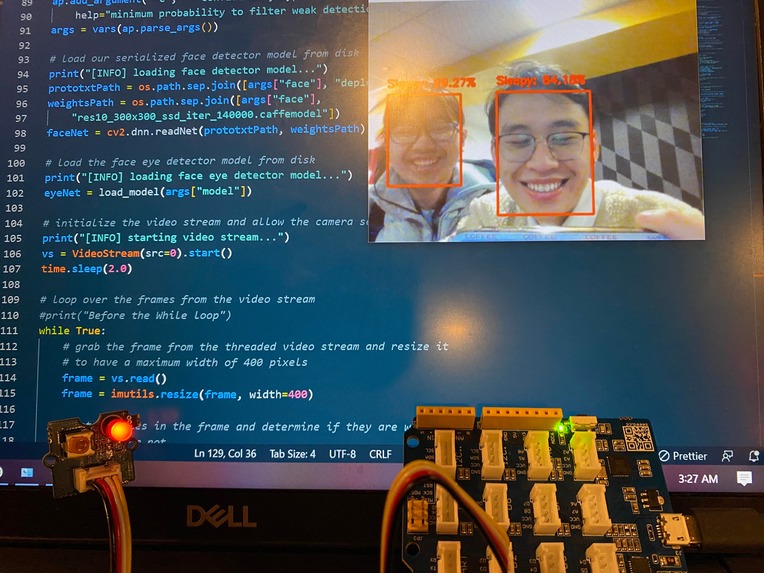
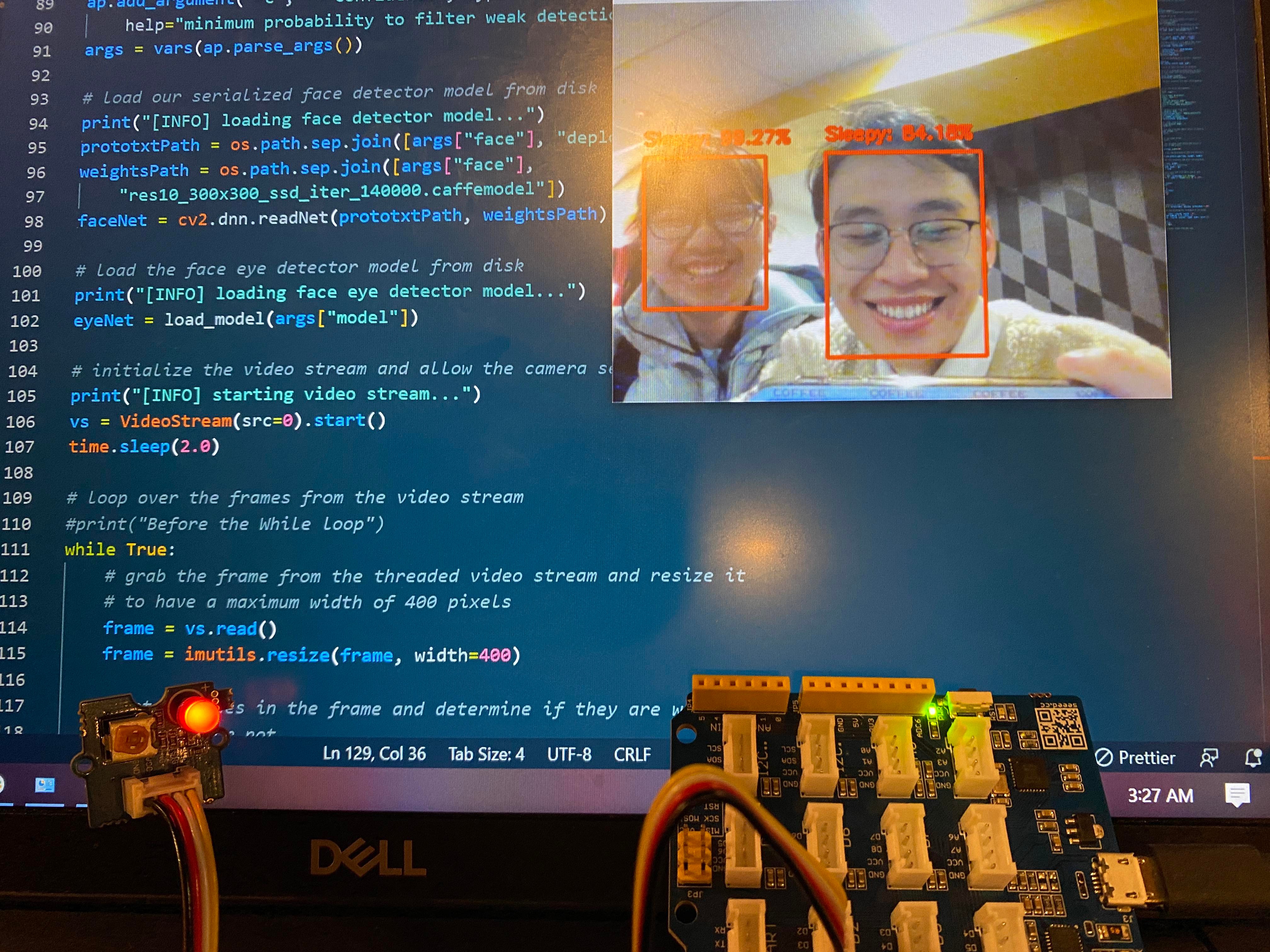
IntelliDrive Drowsiness Detector uses image processing and deep learning to detect signs of drowsiness in drivers. It alerts them by flashing the light for 5 seconds.
How we built it
To build IntelliDrive Drowsiness Detector, we trained a convolutional neural network (CNN) using thousands of images of tired drivers and conscious drivers. We deployed the model in real-time using a camera and microcontroller, and integrated the hardware and software using serial communication.
Challenges we ran into
We faced several challenges while building IntelliDrive Drowsiness Detector. One of the biggest challenges was finding a suitable dataset. Initially, we trained the model using only images of eyes, but it did not perform well when introduced to images of the whole face. We had to retrain the model using a larger dataset of images that included both eyes and face.
Another challenge we encountered was working with serial communication between the microcontroller and the computer. None of us had worked with serial communication before, and it took some time to get the Python code to communicate with the Arduino board.
Real-time detection also made it harder to send data and build an efficient system. We had to optimize the neural network model to process images quickly, while also ensuring that the system could send alerts to the driver in real-time. Despite these challenges, we were able to overcome them and create a functional system that can potentially save lives.
Accomplishments that we're proud of
We are also proud of achieving a high accuracy rate of up to 90% with the images we have. This makes our system highly reliable in detecting signs of drowsiness and preventing accidents caused by drowsy driving. Additionally, the flashing light functions as we intended, providing a clear and effective alert to the driver.
Throughout the development process, we had the opportunity to learn and apply new skills, including working with serial communication and real-time image processing. Despite initial doubts, we were able to successfully overcome challenges and create a functional system that has the potential to save lives.
What we learned
During the development of IntelliDrive Drowsiness Detector, we learned several valuable lessons. Firstly, we learned how to use Git and GitHub to collaborate as a team effectively. This helped us to manage code changes, resolve conflicts, and keep track of progress. Secondly, we gained valuable experience in working with serial communication between the microcontroller and the computer. This helped us to integrate the hardware and software components of the system seamlessly. We also deepened our knowledge of deep learning and the importance of choosing the right dataset for training the neural network model. This helped us to achieve a high accuracy rate and build a robust and reliable system. Moreover, we learned the importance of working well with other people, including understanding their skillsets and picking out suitable projects that cater to their strengths. We also learned the value of having a leap of faith in the process and being open-minded to new ideas and approaches.
What's next for IntelliDrive Drowsiness Detector
For IntelliDrive Drowsiness Detector, we plan to improve the accuracy of the system by addressing some limitations of the current model. One of these limitations is that the model may not detect drowsiness accurately for people from certain races due to the limited dataset we used for training. We plan to collect a more diverse dataset to make the model more inclusive and accurate.
Another limitation we plan to address is the possibility of false detections. While we have successfully avoided blinking from triggering the alarm, other facial expressions such as smiling may still make the model confused. We plan to improve the model's ability to distinguish between different facial expressions by incorporating additional features and data.
Additionally, we plan to make the system more robust by incorporating other sensors, such as heart rate monitors, to provide additional information on the driver's state. We also plan to explore ways to make the system more accessible and affordable, such as by incorporating it into existing car technology or developing a low-cost stand-alone device. Ultimately, our goal is to make IntelliDrive Drowsiness Detector an effective and accessible solution for preventing accidents caused by drowsy driving.


Log in or sign up for Devpost to join the conversation.