Inspiration
The idea for Intellica was born out of a frustration I frequently encountered while conducting competitive analysis—reliable insights were either locked behind paywalls or scattered across disconnected sources. I envisioned a tool that could provide real-time, structured, and contextual insights about any company at the click of a button. This project was my attempt to bring that vision to life, powered by the latest advancements in AI and developer tooling.
What I Built
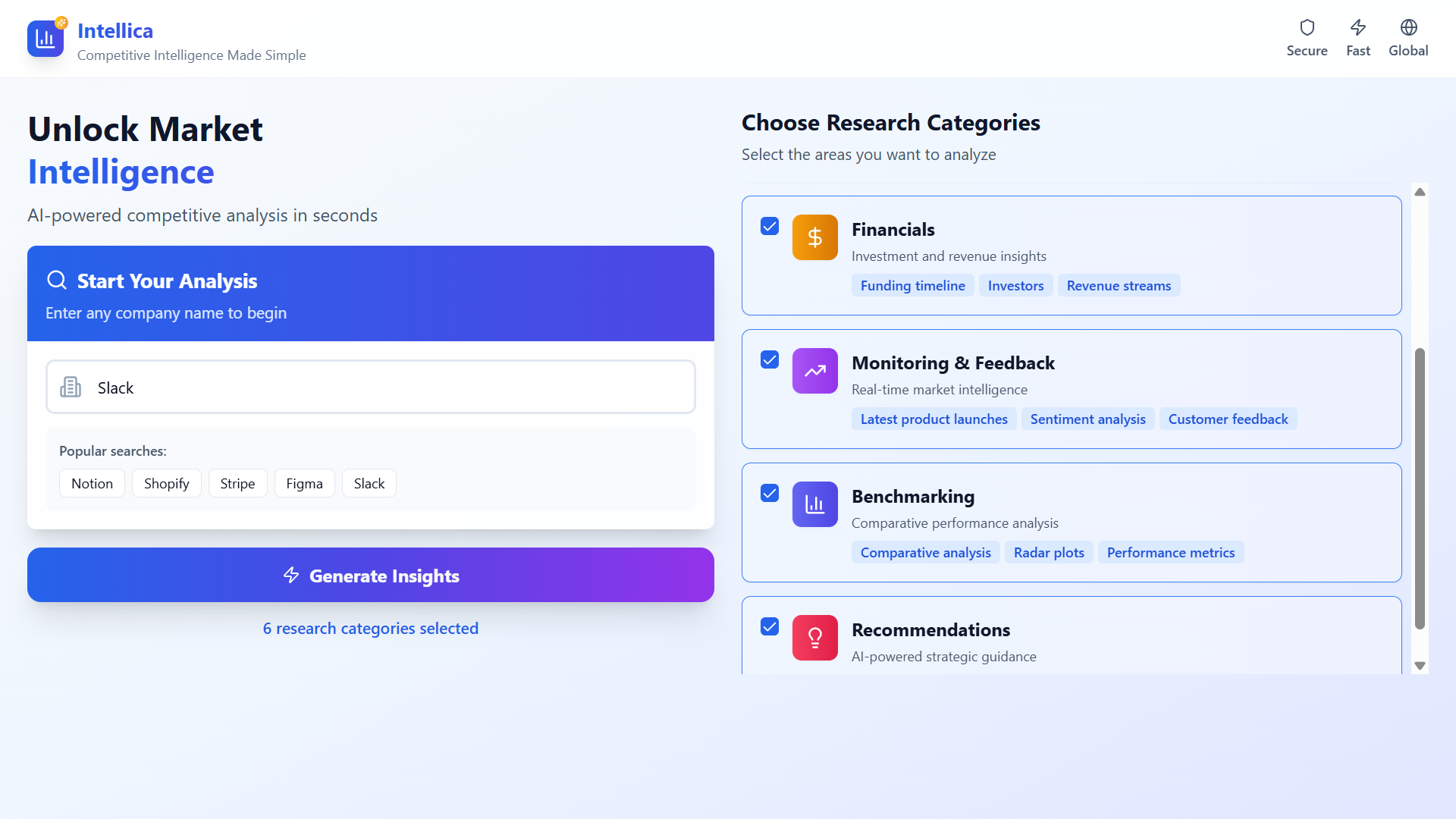
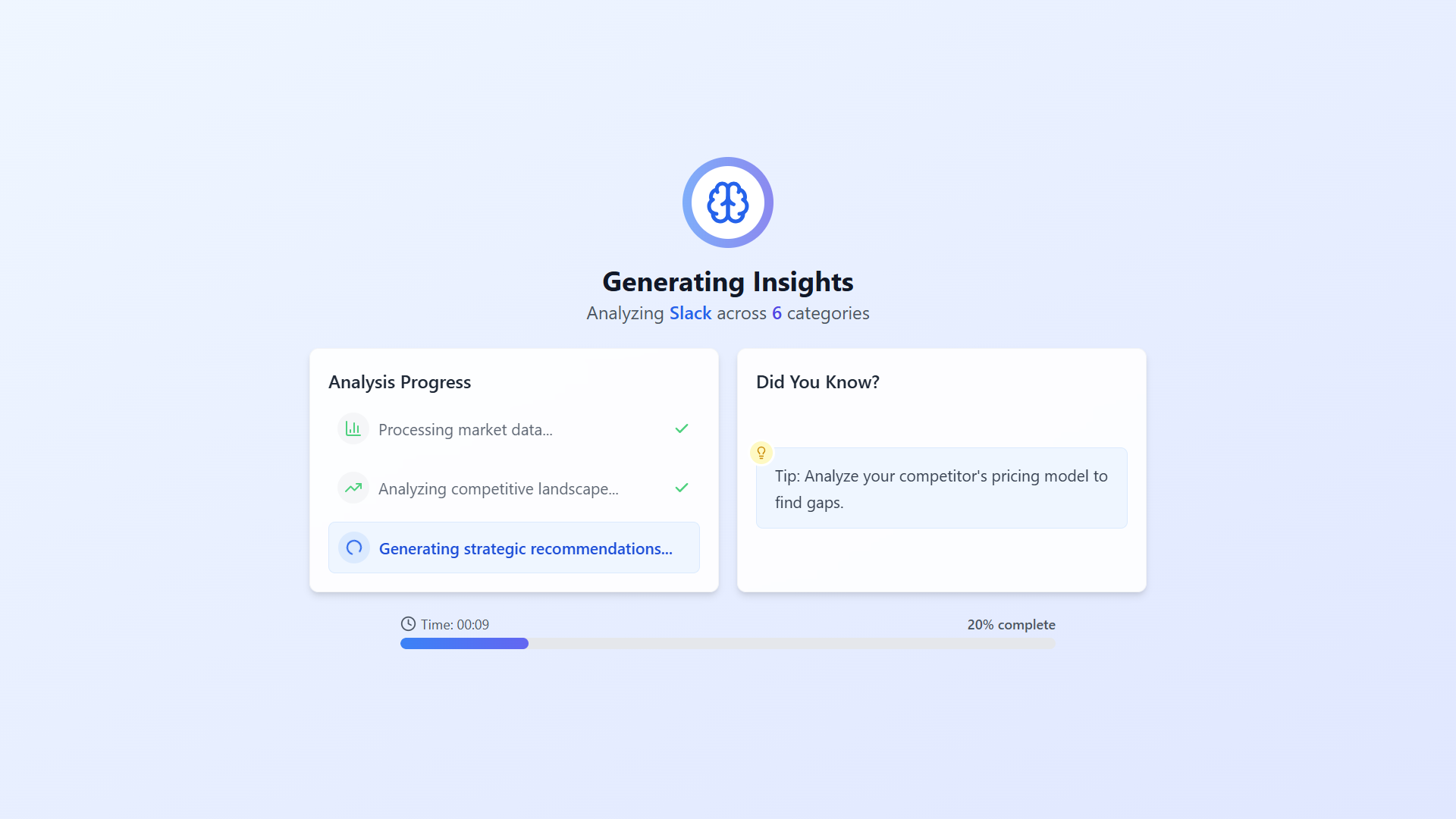
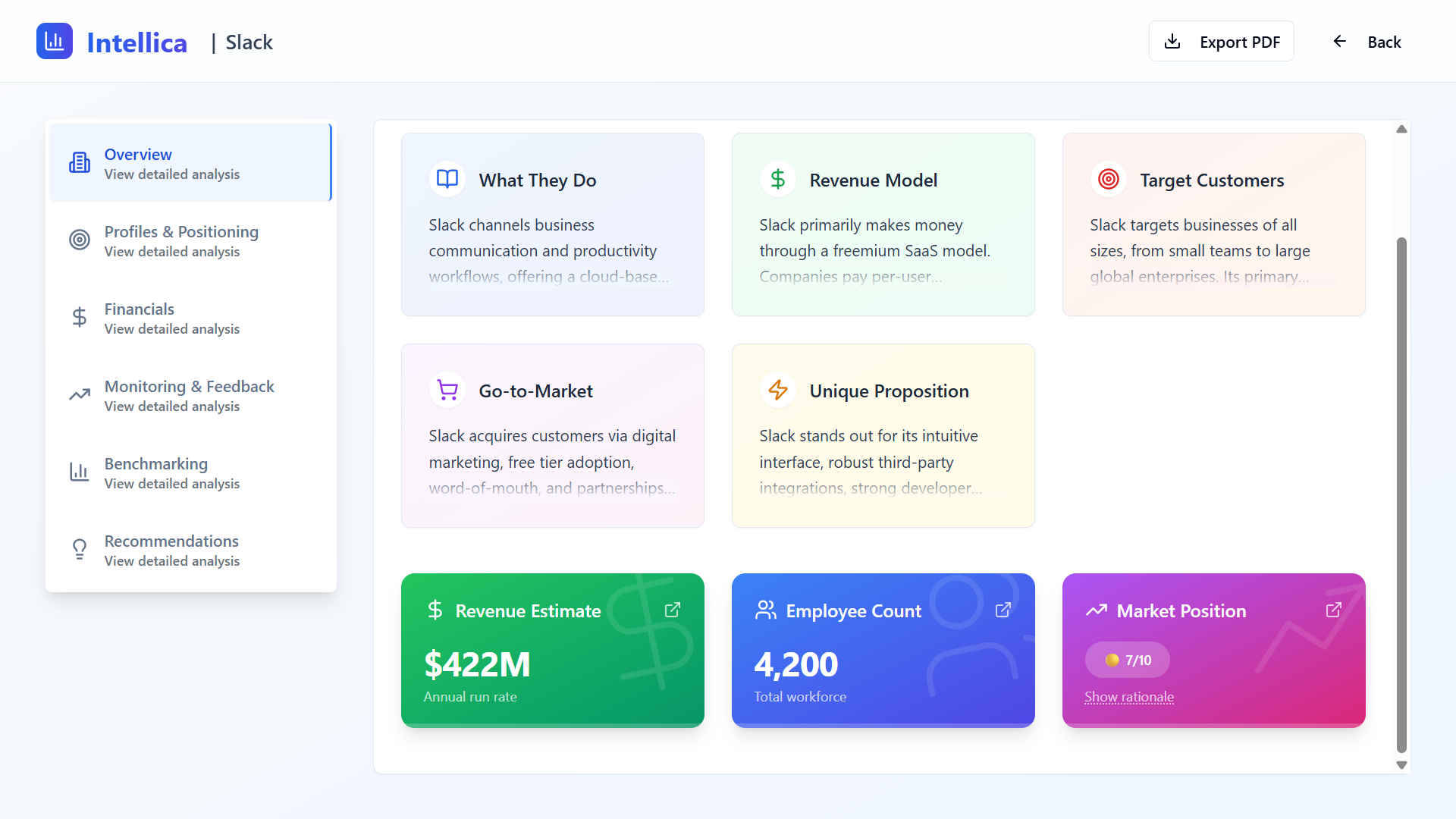
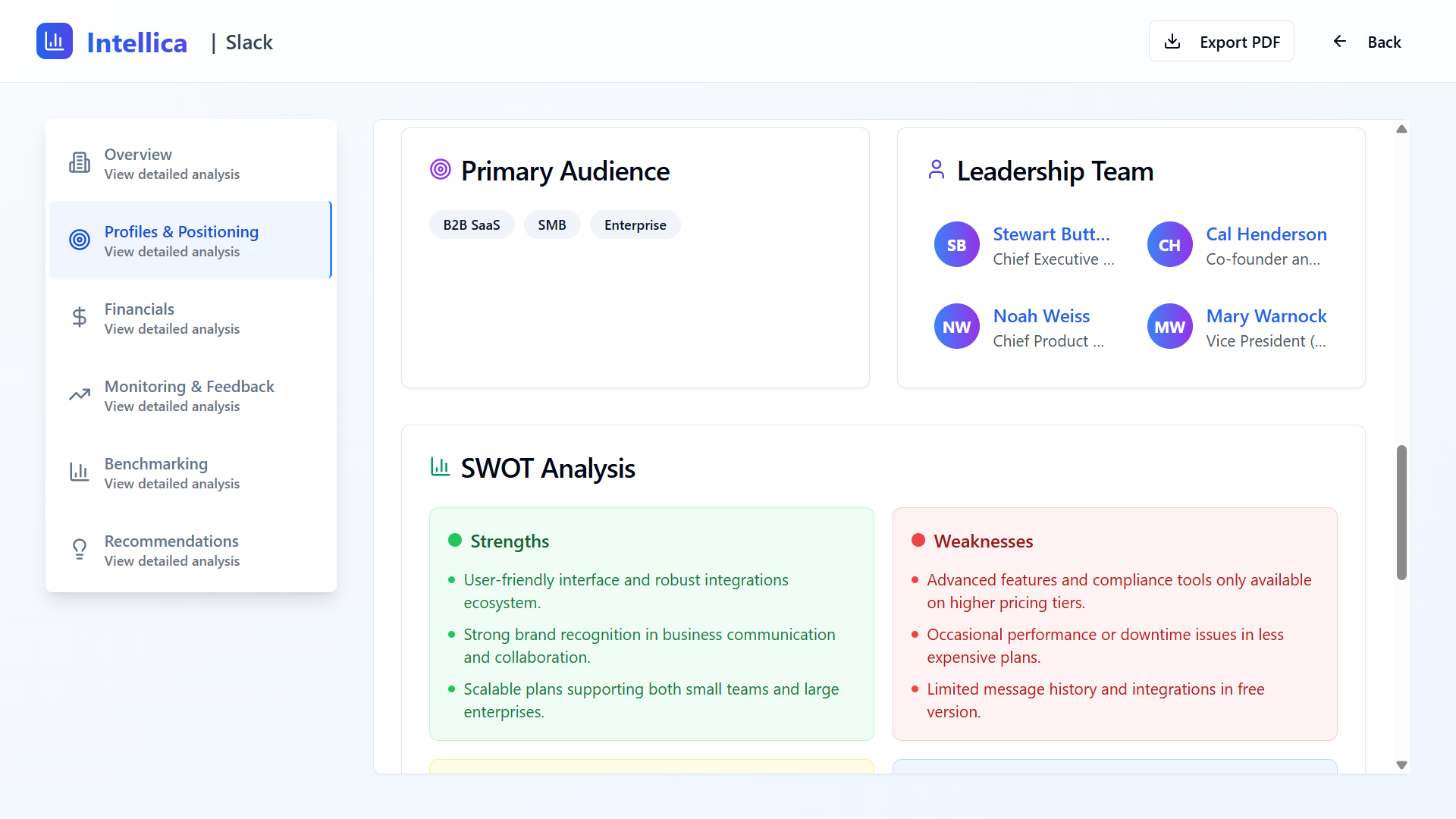
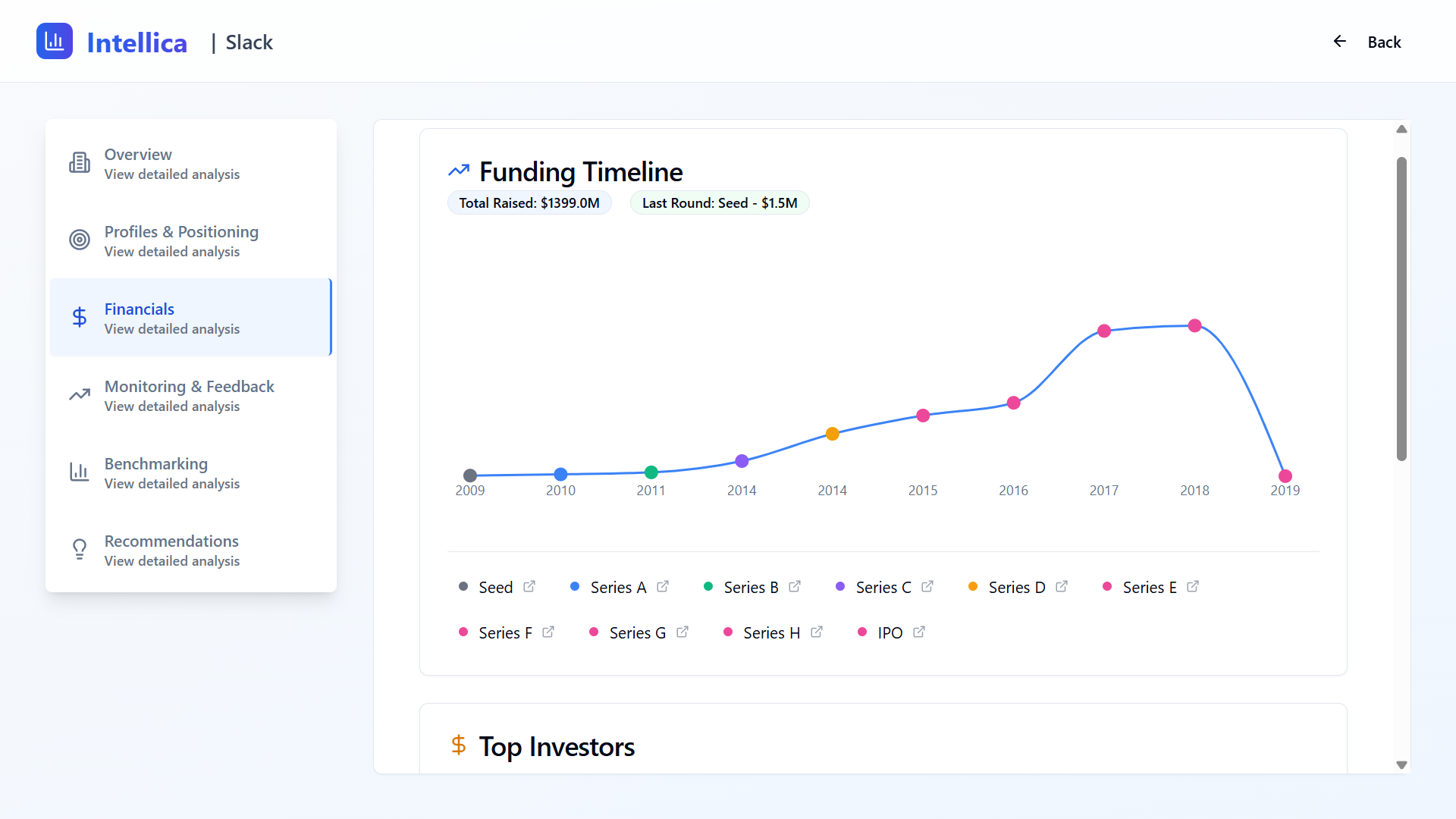
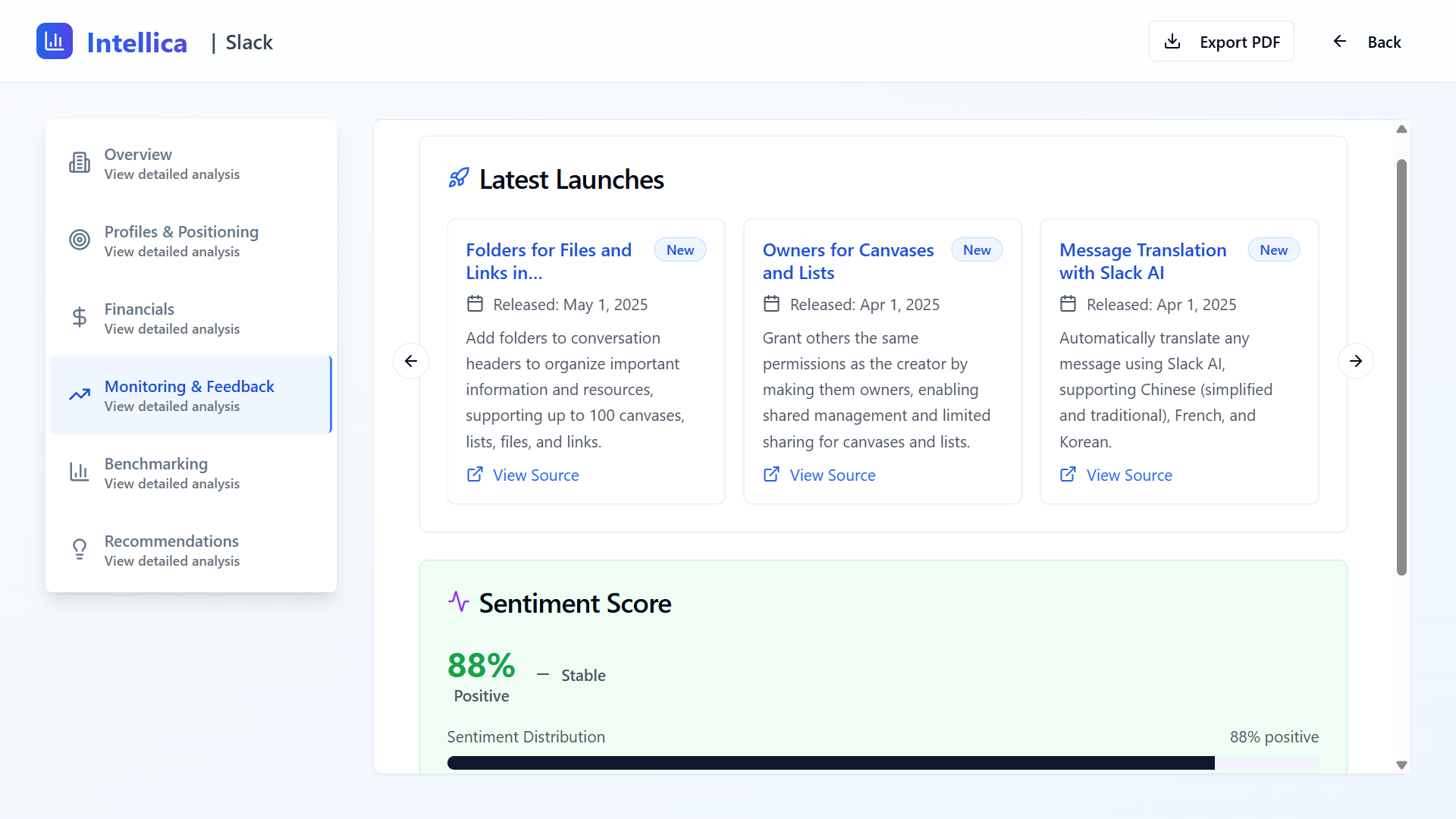
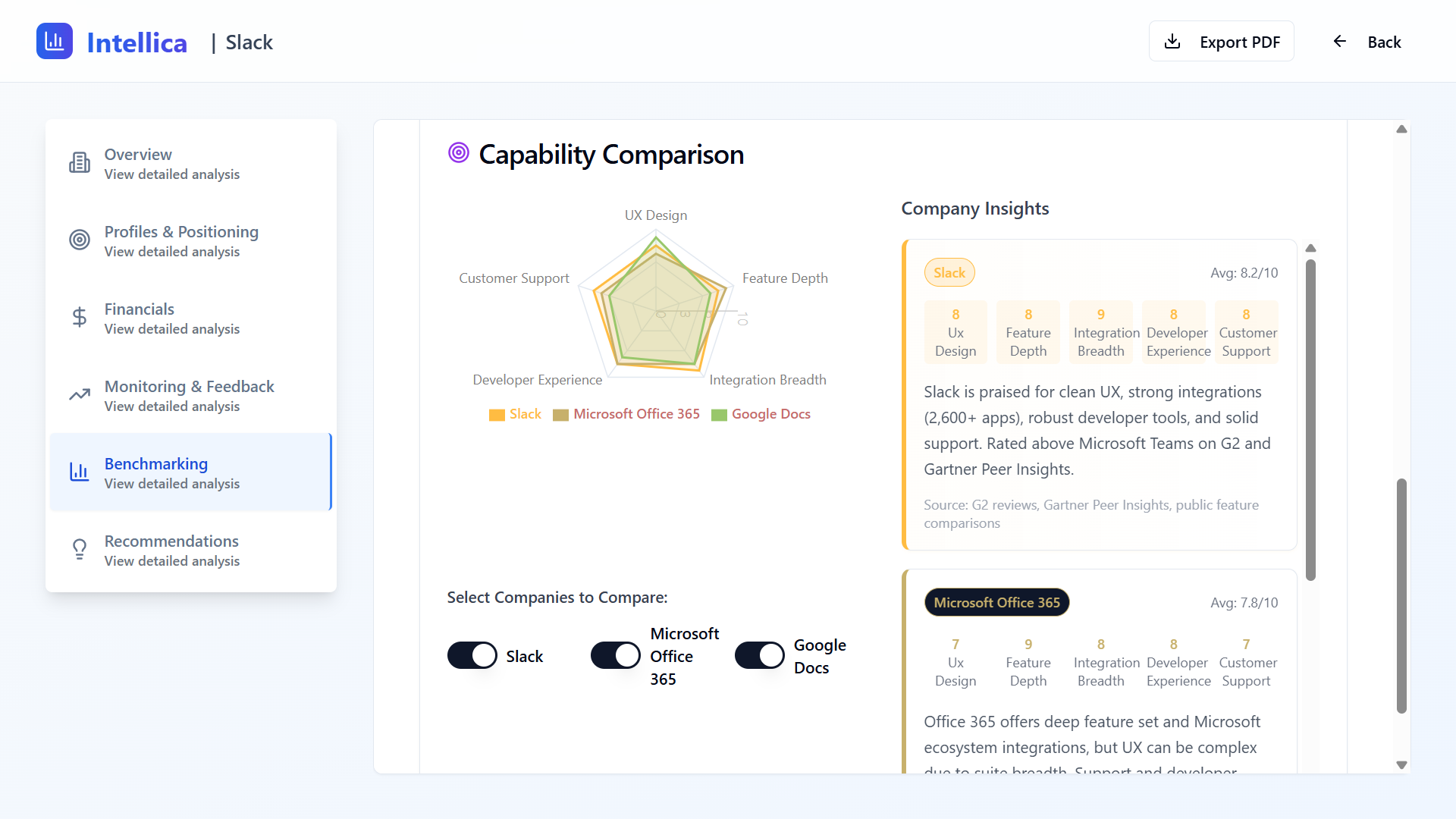
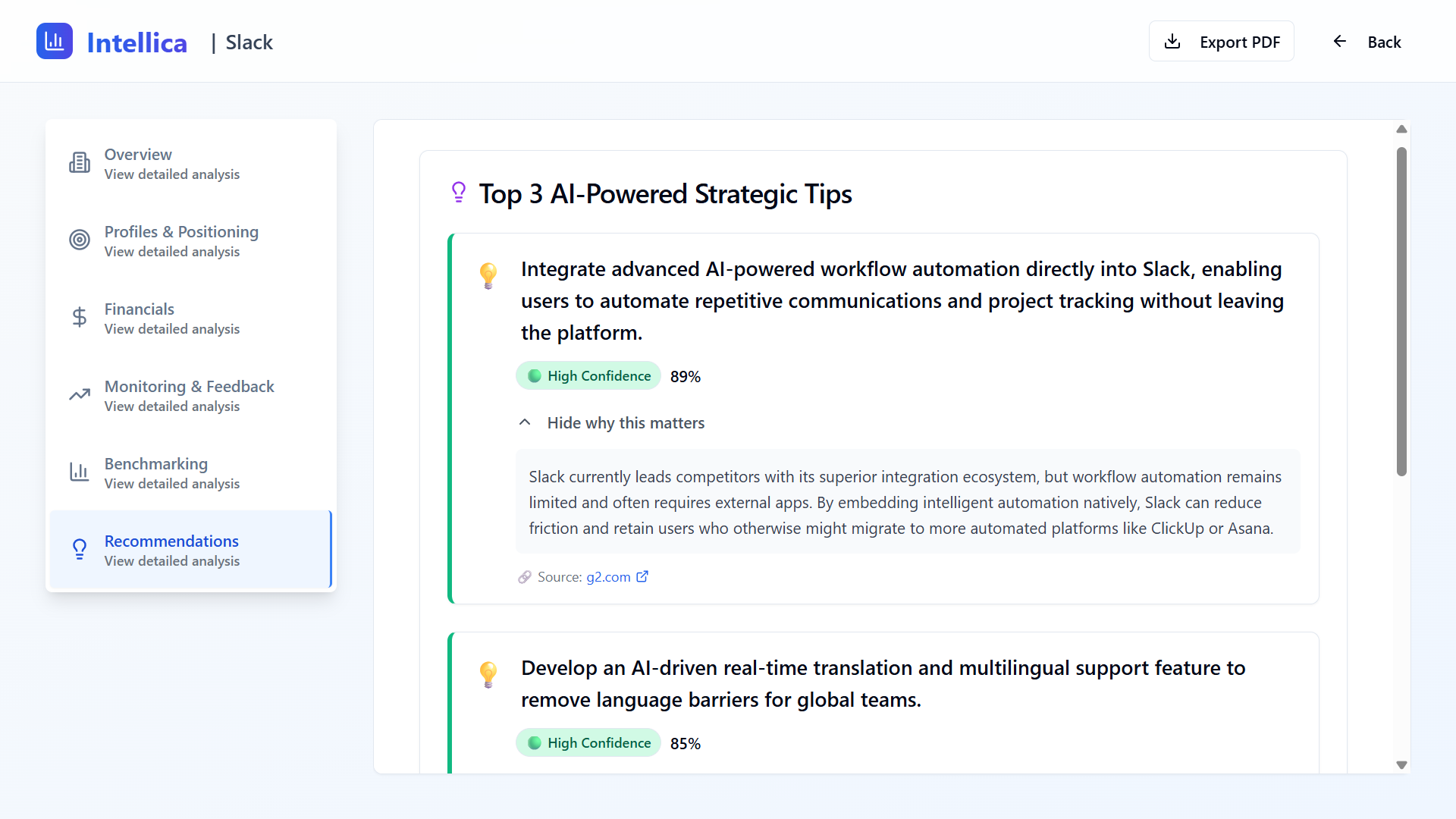
Intellica is a full-stack web application that allows users to input a company name and instantly generate deep insights across various business dimensions—ranging from high-level overviews to benchmarking and financial analysis. The application communicates with the Perplexity Sonar API to fetch real-time intelligence, then organizes the response into a clean, modular interface with tabs for each research category. Users can explore SWOT analyses, product snapshots, leadership profiles, and more—all beautifully formatted and exportable to PDF.
How I Built It
I built this project solo, handling both the frontend and backend architectures.
Frontend: Built with React (TypeScript), styled using Tailwind CSS and Shadcn UI. Zustand handles state management, React Query takes care of async data fetching, and Recharts powers visualizations. PDF export functionality was implemented using
jspdfandhtml-to-image.Backend: Created using Express.js and Node.js with TypeScript. It exposes clean REST APIs that receive user inputs, format prompts for the Perplexity API, handle the responses, and send structured data back to the frontend. I created modular service layers, reusable prompt templates, and schema validators to keep the backend maintainable and robust.
Insight Generation: Prompt templates were carefully crafted to extract specific categories of business intelligence. Based on the user's selected research options, the backend queries Perplexity, parses the responses, and returns a structured result for each section (overview, financials, benchmarking, etc.).
What I Learned
This project was an intense but rewarding exercise in full-stack development, system design, and AI integration. I deepened my understanding of:
- Crafting structured prompts for LLMs
- Designing resilient API interfaces
- Advanced React patterns and performance optimization
- Effective state and data flow management using Zustand and React Query
- Transforming unstructured AI responses into usable business data
It also helped me practice building user experiences that are both functional and intuitive—a skill that's often as important as technical proficiency.
Challenges I Faced
Building Intellica alone meant wearing many hats—from backend architect to UI designer. Some of the main challenges included:
- Prompt tuning: Structuring prompts that consistently generated useful, non-repetitive responses from the LLM across companies and industries
- Response formatting: Mapping open-ended AI responses into structured formats that could be rendered reliably
- Frontend complexity: Managing asynchronous UI states across multiple research sections, especially when users selected all insight types at once
- Exporting to PDF: Preserving layout and visual fidelity during PDF export while handling edge cases like overflow and image conversion
Despite these challenges, seeing the system work end-to-end—turning a simple company name into a detailed, AI-powered business report—was an incredibly fulfilling moment.
Closing Thoughts
Intellica is more than just a project—it's a personal milestone. It taught me how to go from idea to execution, alone, and under pressure. I’m proud of the foundation I’ve built and excited by its potential to evolve into a powerful research assistant for analysts, founders, and strategists alike.


Log in or sign up for Devpost to join the conversation.