
💡 Inspiration💡
Did you know that only 9% of the plastic ever produced has been recycled? Let's face it; Everyone knows recycling is important. We were all taught at a young age about how recycling reduces our carbon footprint, produces less waste, and is more sustainable for the planet.
So why is it that no one does it? Well, recycling is not always that simple. Firstly, it can be confusing to figure out what types of trash can be recycled. We have all stood in front of a trash can in confusion, wondering if our candy wrappers are recyclable or not. Secondly, recycling cans and trash cans are often placed apart, leading to laziness and unwillingness to track down the nearest recycling bin. Lastly, it is easy to forget to recycle at times, the thought completely leaving our head.
Inspired by this dilemma, we wanted to create a product that took all of the tedious decision-making out of your hands. Wouldn't it be nice to be able to mindlessly throw your trash in one place, and let AI handle the sorting for you?
♻️ How does IntelliBin 2.0 work? ♻️
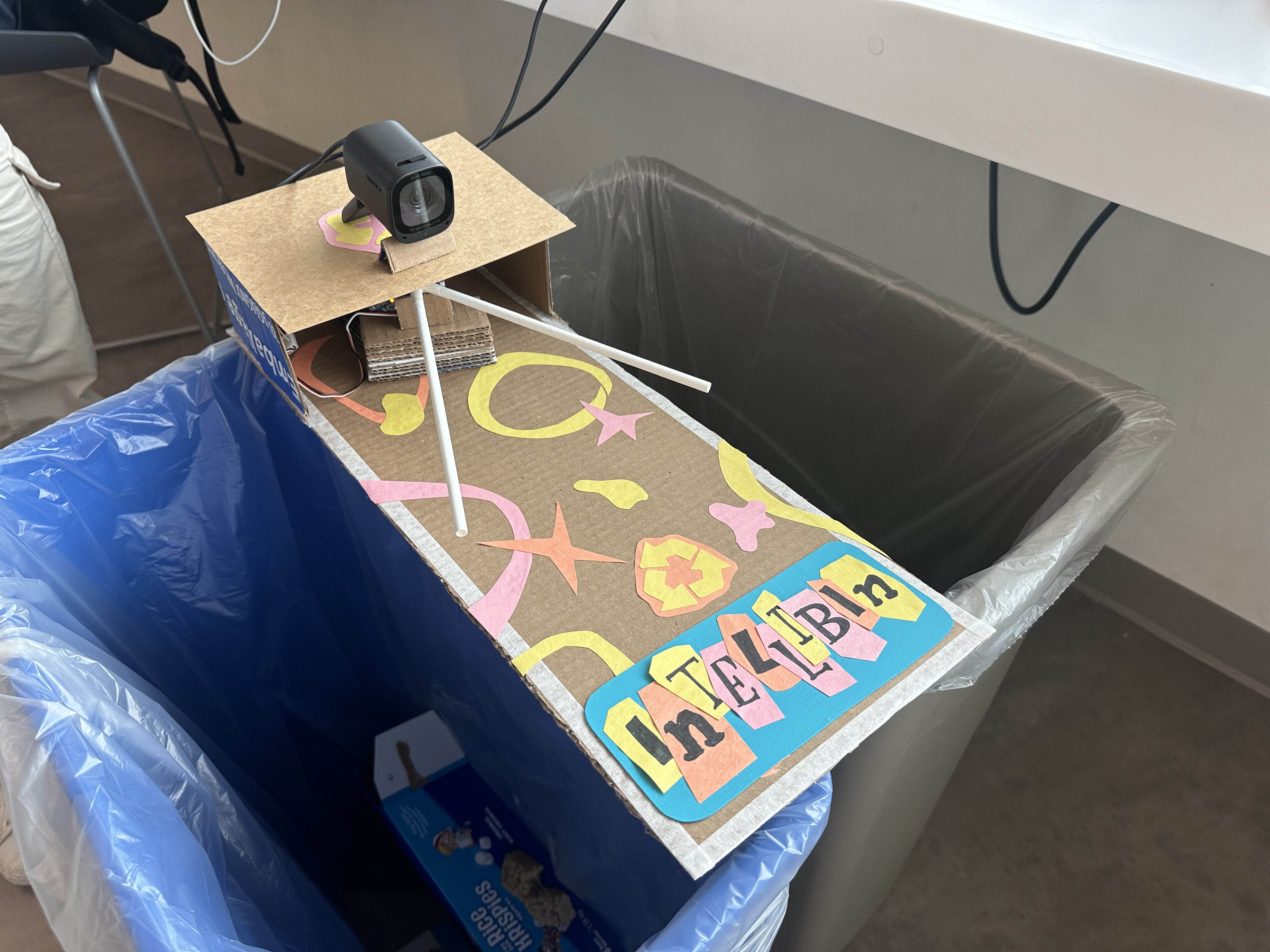
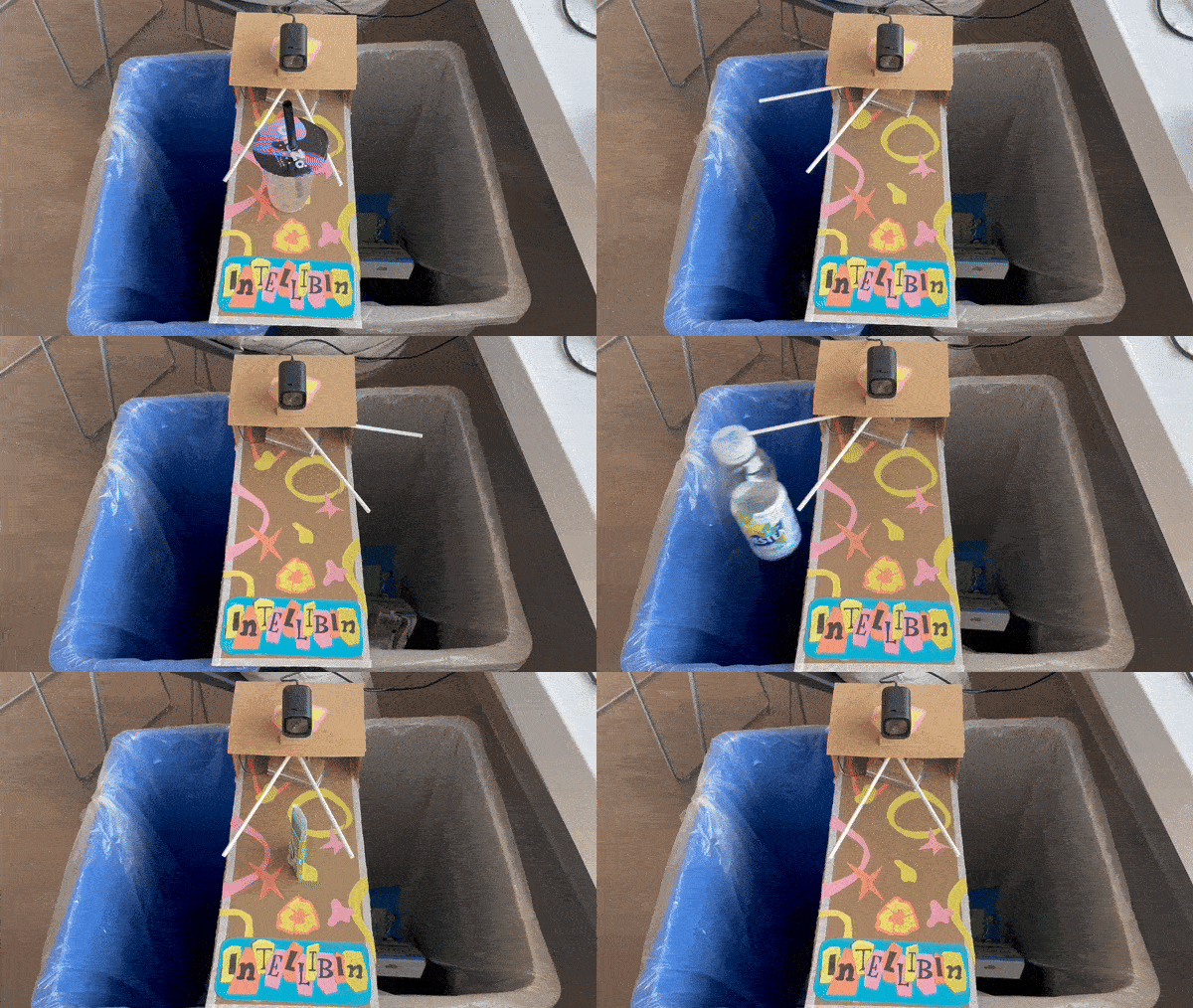
IntelliBin 2.0 uses a servo-motor-controlled arm to sort trash between two recycling bins. First, our webcam detects motion using OpenCV when the user places a piece of trash onto our system platform. Then, a camera is taken of the object, and the type of trash is identified using Google Cloud's Vision API. Next, depending on the type of trash detected, our Arduino activates our servo-motor using C++ code to turn our robot arm left or right, sorting the trash into one of two trashcans.
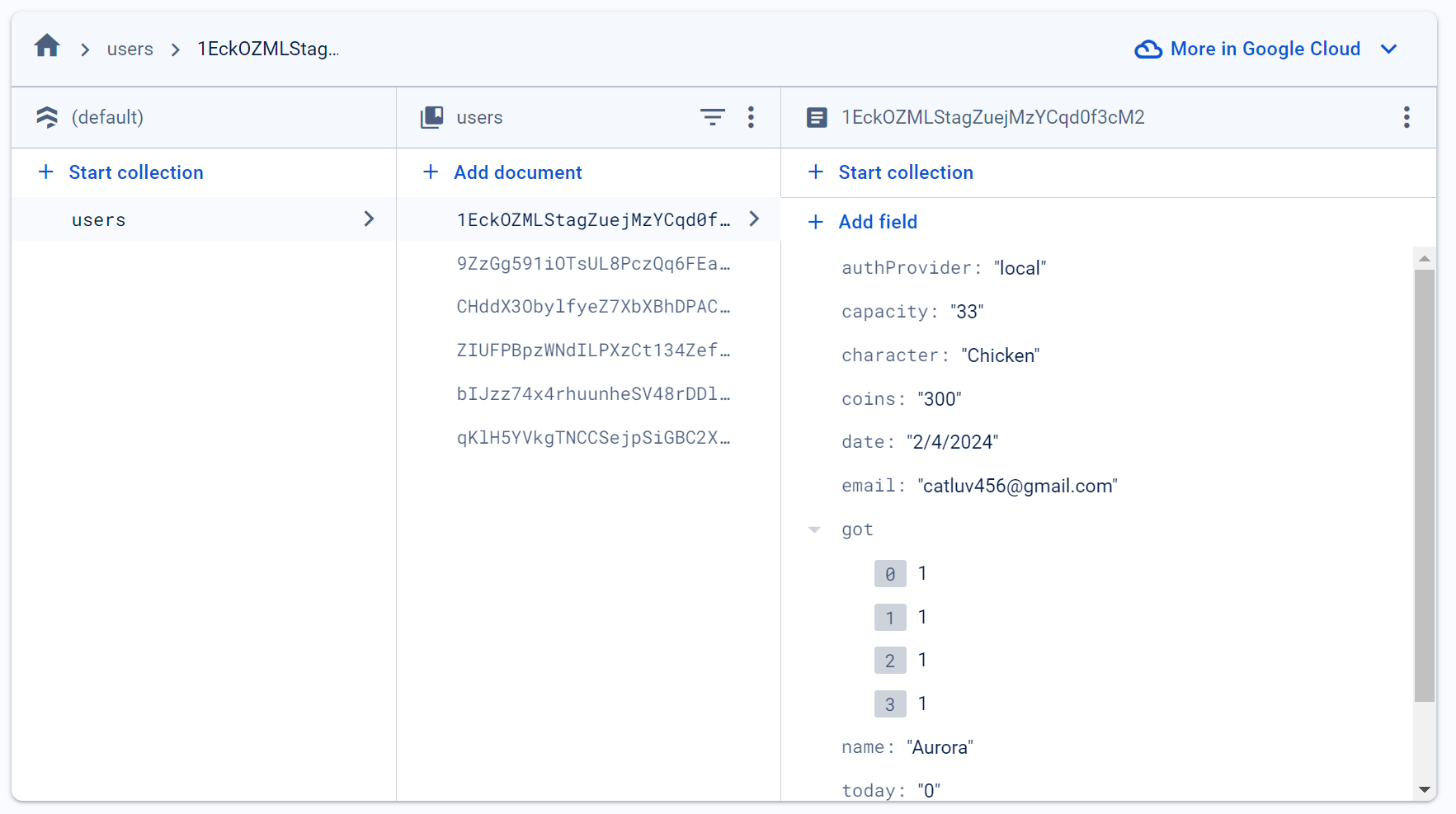
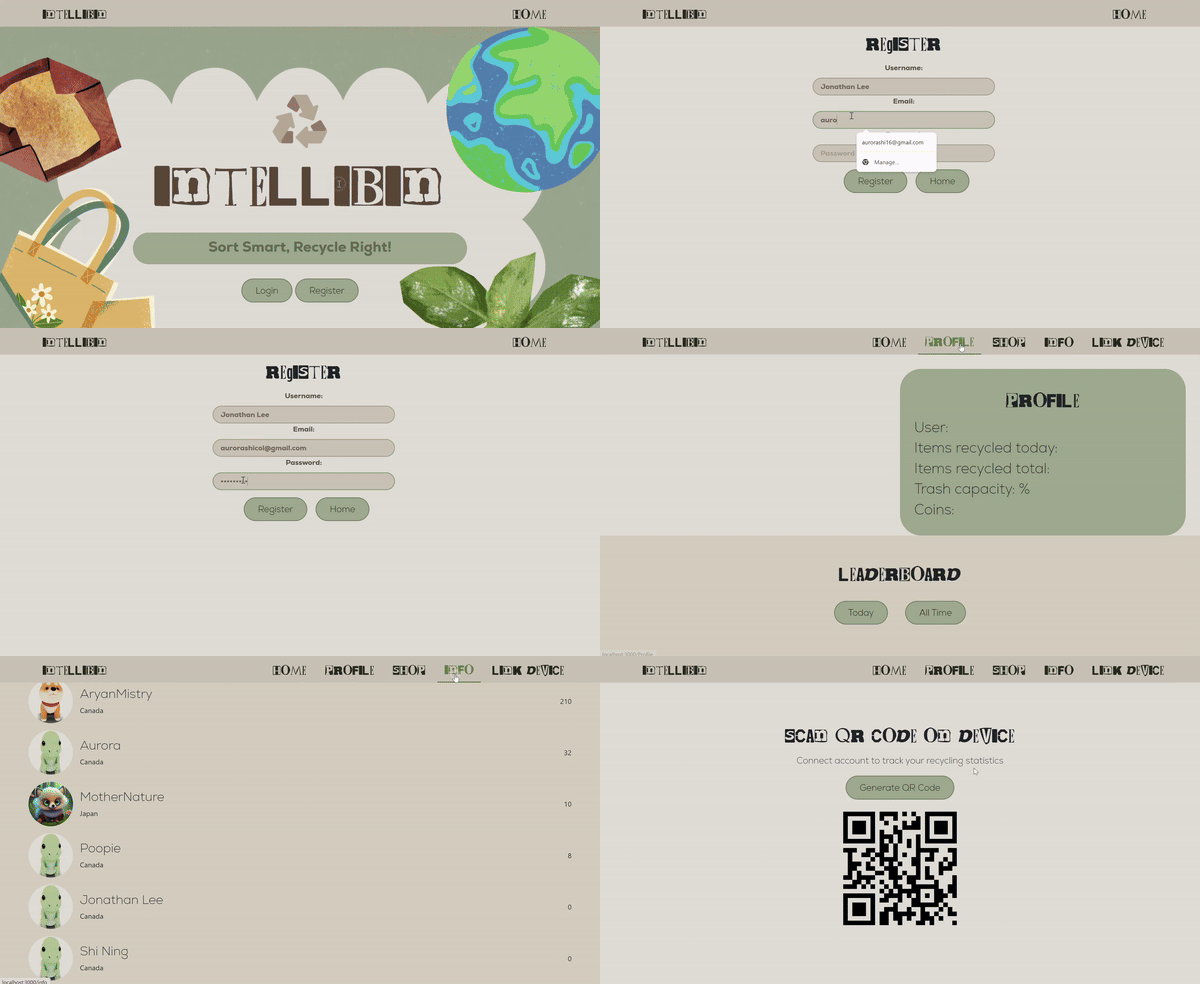
Users can register for an account on our hosted website at https://Intellibin.Tech/. Once logged in, they can generate a custom QR code on our website. Users can connect their IntelliBin with their online account by scanning this QR code on the IntelliBin webcam. Once connected, each time the user recycles a piece of trash, it is recorded and added to their recycling history. On our website, users can view their daily and total recycling statistics, which are stored using Google's Firestore and updated live. Coins are earned by recycling more objects, which can then be used to buy custom avatars. An updated leaderboard is kept to motivate some friendly competition between all users and incentivize recycling.
🛠️ How we built it 🛠️
Arduino/C++ Portion: We used C++ code on the Arduino to control a servo motor based on serial input commands. Importing the servo library allows us to access functions that control the motor. We also used the Serial library in Python to take input from the main program and send it to the Arduino. The Arduino then sent binary data to the servo motor, correctly categorizing garbage items.
Website Portion: We used React.js to build the front end of the website, including a profile section with user stats, a leaderboard, a shop to customize the user's avatar, and an information section. Google Firestore was used to build the user registration and login process, storing usernames, emails, and passwords. User authentication is maintained, and users can even reset their passwords through our website.
Google Vision API: In tandem with computer vision, we were able to take the camera input and feed it through the Vision API to interpret what was in front of us. Using this output, we could tell the servo motor which direction to turn based on whether it was recyclable or not, helping us sort which bins the object would be pushed into.
Python Portion: Our Python code opens and analyzes our webcam stream using OpenCV. When motion is detected, a photo is taken and analyzed with Google Cloud's Vision API. Each time trash is recycled, our Firestore collection is accessed and the document variables are updated live.
⛔ Challenges we ran into ⛔
- Detecting and scanning the QR code using Python
- Building a container for our hardware
- Storing user data on Firestore
- Authenticating user accounts using Firestore
- Deploying our website with Netlify
🎉 Accomplishments that we're proud of 🎉
In a short span of 24 hours, we are proud to:
- Rebuilt our original hardware design with many added features
- Utilise OpenCV to conduct motion-sensing on our webcam
- Authenticate users and store user data on Firestore
- Update user statistics live every time a user recycles an object
🧠 What we learned 🧠
- How to use Firestore to store user data
- Authentication states in Firestore
- Updating document values in Firestore
- Generating QR codes with custom-encoded values
🍀 UN Sustainable Development goals targetted 🍀
Sustainable Cities and Communities: IntelliBin 2.0 can be installed in public locations easily and efficiently. It can be integrated into existing systems simply by placing the platform on top of trashcans. With IntelliBin installed, all trash thrown by citizens can be automatically sorted, eliminating the possibility of recycling contamination or failure.
Responsible Consumption and Production: With Intellibin 2.0 making recycling more user-friendly and efficient, it has the potential to increase recycling rates. By automating the sorting process, Intellibin eliminates the need for users to spend time sorting their waste manually. This convenience encourages more people to participate in recycling efforts. An increase in recycling conserves natural resources by reusing materials, decreases greenhouse gas emissions by not using virgin materials, and reduces the amount of waste sent to landfills.
Climate Action/Protecting Ecosystems: When we recycle, we lessen disruption to the natural world. When we cut down fewer trees and forests, we are preventing harm to animals. By reducing disruption and damage to the natural world, we help preserve ecosystems and wildlife.
Recycling is crucial for environmental sustainability, and IntelliBin 2.0 contributes by making the recycling process more accessible, convenient, and effective through AI-powered sorting technology.
🌱 Protection of Nature Category🌱
Reduction of Marine Pollution: A major portion of ocean pollution originates from land-based sources, including improperly disposed of plastic and waste. IntelliBin helps in accurately sorting waste, ensuring that recyclables are separated from non-recyclables. This reduces the amount of waste that can potentially enter waterways and, eventually, the oceans, thus decreasing marine pollution.
Protection of Marine Life: Plastic waste in the oceans is a critical threat to marine life, leading to ingestion, entanglement, and habitat disruption for countless marine species. By enhancing waste management through efficient sorting, IntelliBin contributes to the reduction of plastic that ends up in the oceans, protecting marine ecosystems and biodiversity. Prevention of Habitat Destruction: Improper waste disposal can lead to habitat destruction on land. Waste can alter natural landscapes, pollute soil and water sources, and harm wildlife. IntelliBin's efficient sorting mechanism ensures that waste is managed in a way that minimizes its impact on natural habitats, helping to preserve biodiversity on land.
Promotion of Sustainable Land Use: Effective waste sorting and management can reduce the need for landfills, which take up valuable space and can harm local ecosystems through leachate and methane emissions. By improving recycling rates, IntelliBin helps in reducing the footprint of landfills, promoting more sustainable land use and conservation of natural areas.
Enhancement of Ecological Restoration: By diverting waste from landfills and reducing pollution, IntelliBin indirectly supports efforts to restore degraded land and ecosystems. This restoration work is crucial for bringing back native species, enhancing biodiversity, and improving ecosystem services, such as soil fertility and water purification.


Log in or sign up for Devpost to join the conversation.