About the project
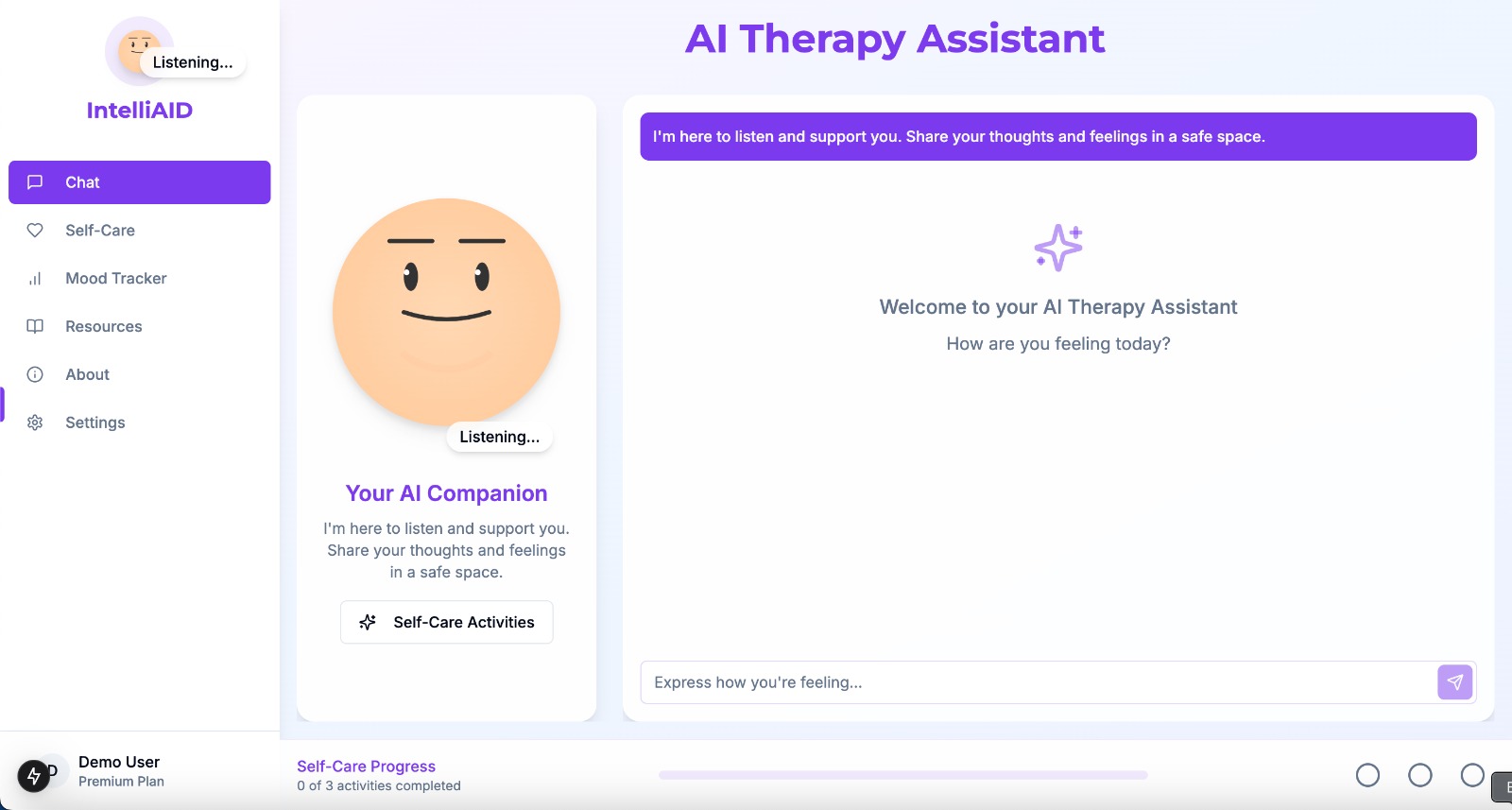
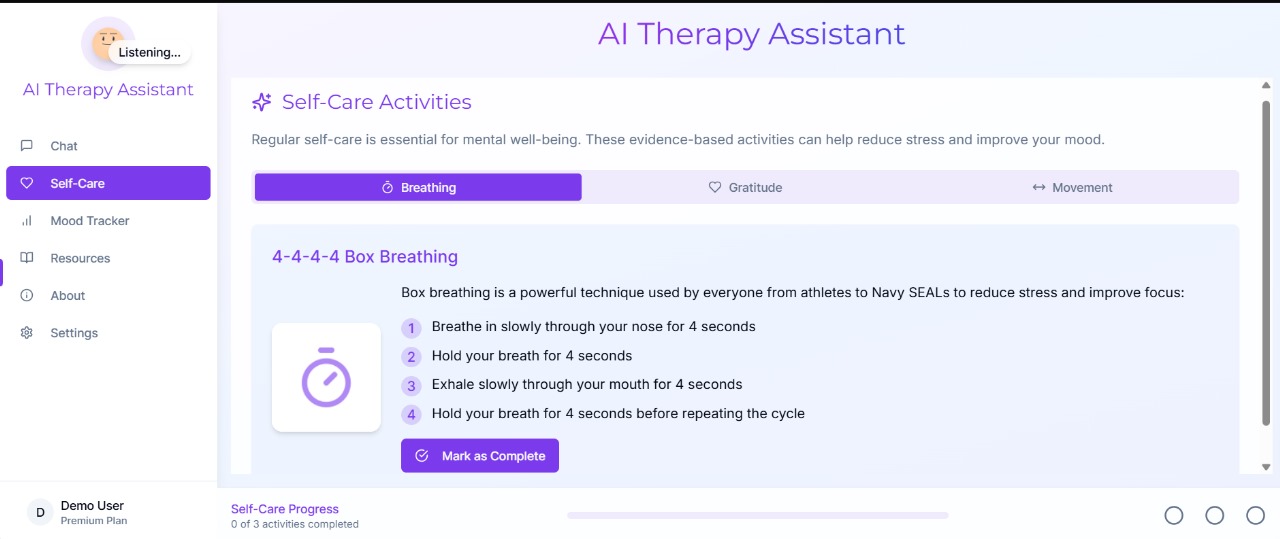
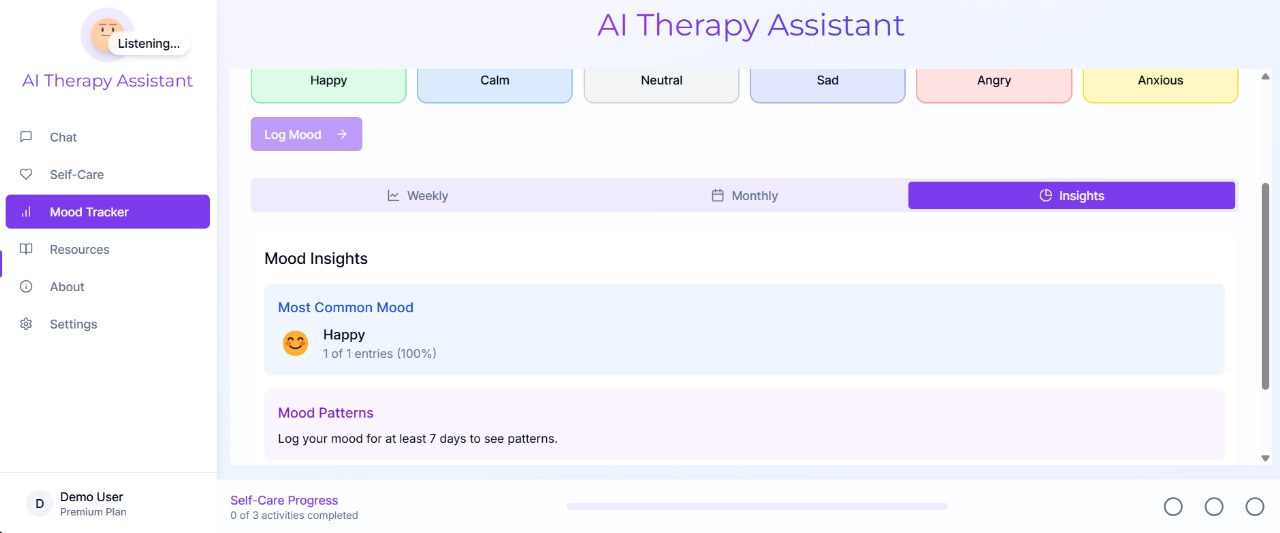
IntelliAID is a minimal viable product (MVP) built to provide a simple, text-based conversational AI that offers emotional support. Our team of four: a frontend developer, two backend developers, and an AI specialist; created this app in just 18 hours to demonstrate the potential of AI in mental health support while addressing the constraints of a tight timeline due to technical difficulties.
Inspiration
The inspiration for this project came from the growing need for accessible mental health resources. We wanted to explore how AI could provide a safe, non-judgmental space for users to express their feelings, especially for those who may not have immediate access to professional therapy. The idea of combining a conversational AI with a simple animated face to convey empathy was particularly exciting, as it could make interactions feel more human and comforting. We were also motivated by the challenge of building a functional app in such a short timeframe, pushing us to prioritize efficiency and collaboration.
What We Learned
This project taught us the importance of rapid prototyping and ruthless prioritization. With only 18 hours, we learned to focus on core functionality—text-based chat with a basic AI and a simple animated face—while deferring features like voice input/output and advanced security. We also gained valuable experience in integrating frontend and backend systems in real-time using WebSockets, a new technology for some team members. Overall, we improved our ability to work as a cohesive unit, dividing tasks efficiently and communicating effectively to meet the deadline.
How We Built the Project
We started by breaking down the 18-hour timeline into manageable tasks, assigning roles based on each team member’s strengths. The frontend developer set up a React.js project with Chakra UI for styling and created a basic chat UI with a 2D animated face (using CSS for expressions like happy, sad, and neutral).
The backend team used FastAPI to build a minimal server with a /chat endpoint, later adding WebSocket support for real-time communication. The AI specialist integrated a pre-trained DialoGPT model, adding basic sentiment mapping and crisis keyword detection to ensure safe interactions. We deployed the backend on Heroku and the frontend on Vercel for simplicity, avoiding complex setups like Docker due to time constraints. Each component was tested minimally to ensure functionality, with the team collaborating in the final hours to integrate and deploy the app.
Challenges We Faced
The biggest challenge was the extremely limited timeframe of 18 hours for the entire team, which forced us to make tough decisions about scope. We had to cut features like speech-to-text, text-to-speech, and advanced security measures (e.g., JWT authentication), focusing instead on text-based chat. Integrating the WebSocket for real-time communication between the frontend and backend was tricky, as we encountered initial connection issues that required quick debugging. The AI model also posed challenges—without time to fine-tune it extensively, some responses were generic, and our sentiment mapping was rudimentary. Finally, coordinating across the team under such tight deadlines required constant communication to ensure alignment, especially during the final integration and deployment phase.
Built With
- fast-api
- grok
- ngrok
- openai
- postgresql
- python
- react
- redis
- tensor
- typescript
- websocket

Log in or sign up for Devpost to join the conversation.