-
-
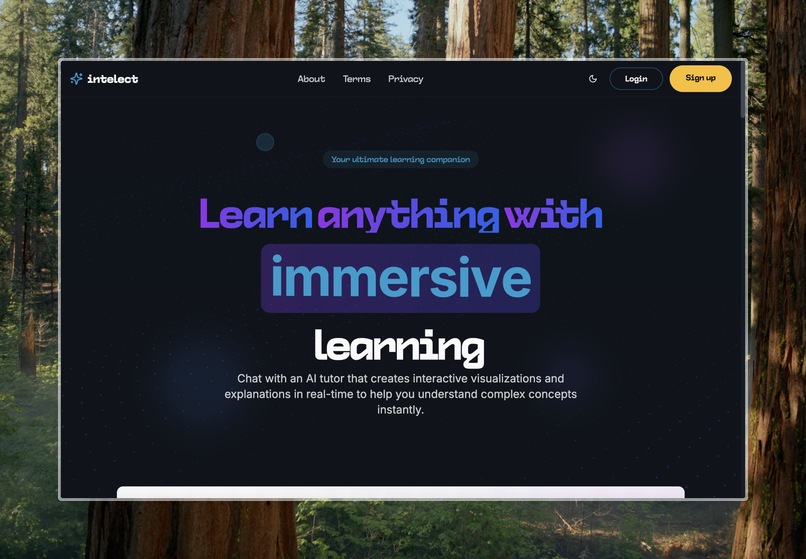
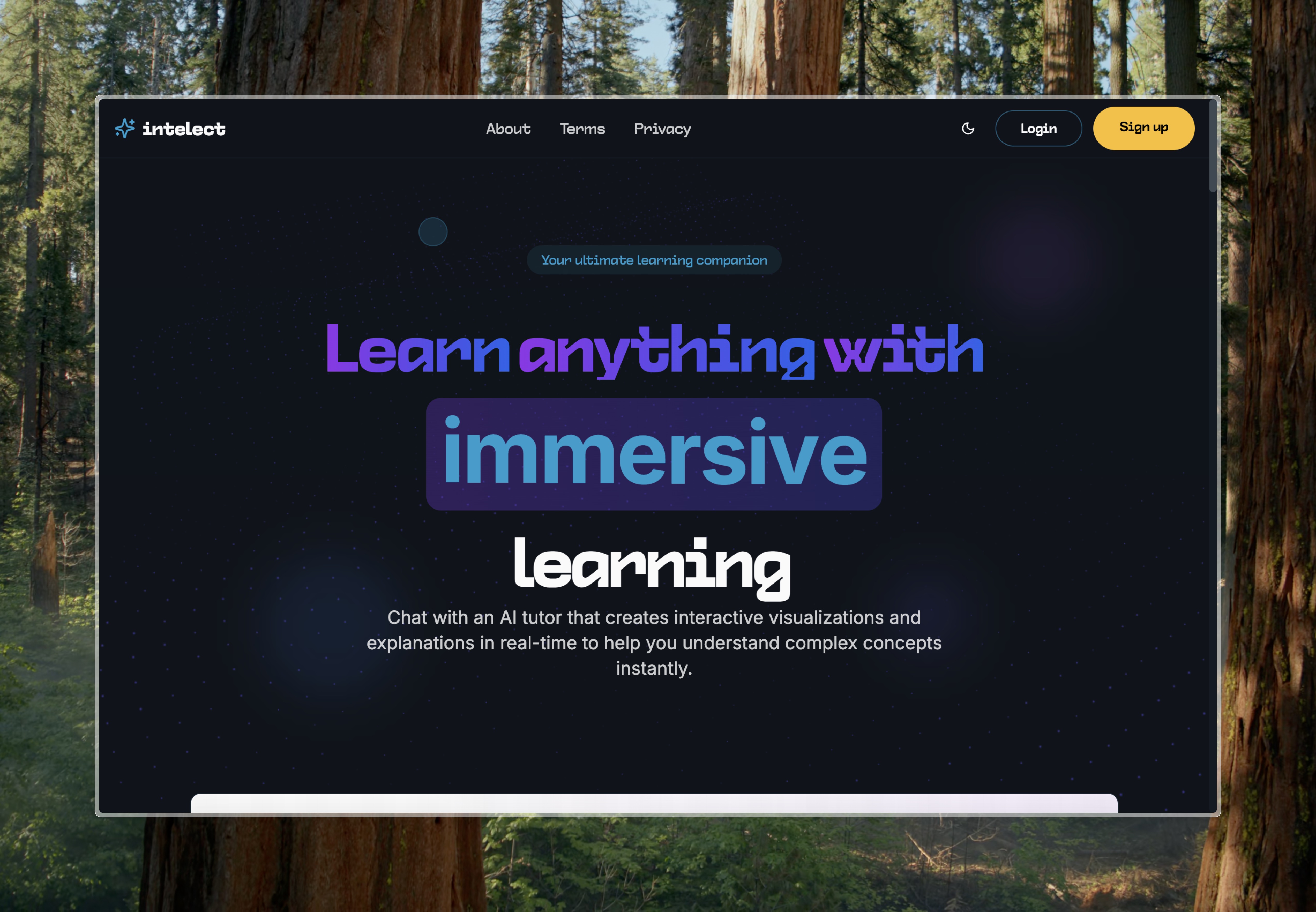
Landing Page
-
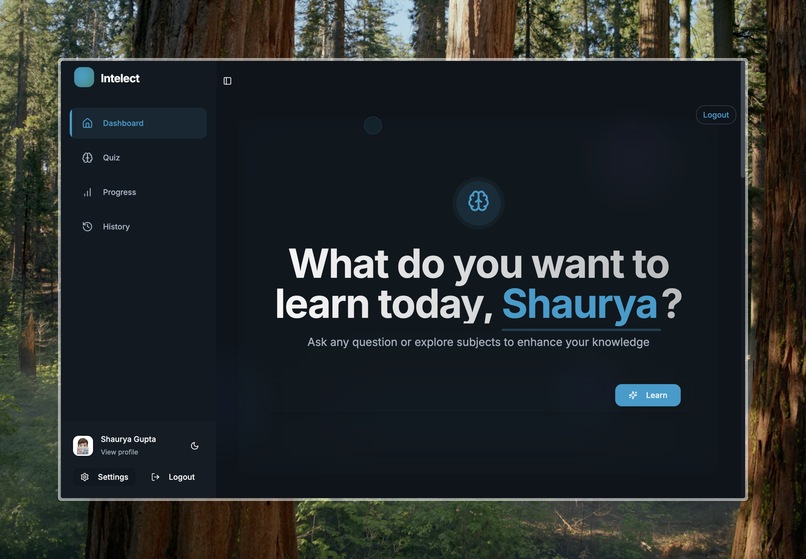
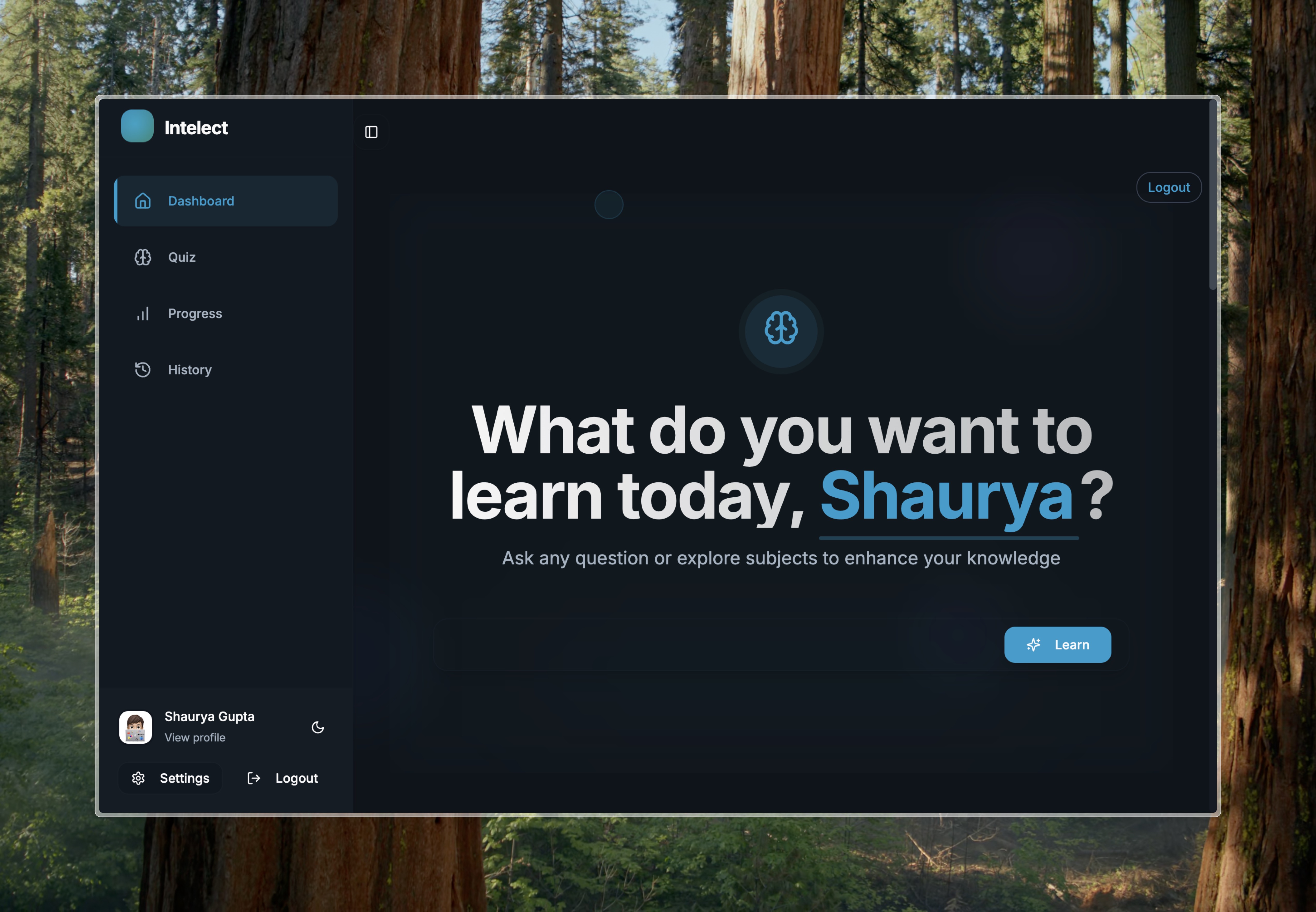
Dashboard
-
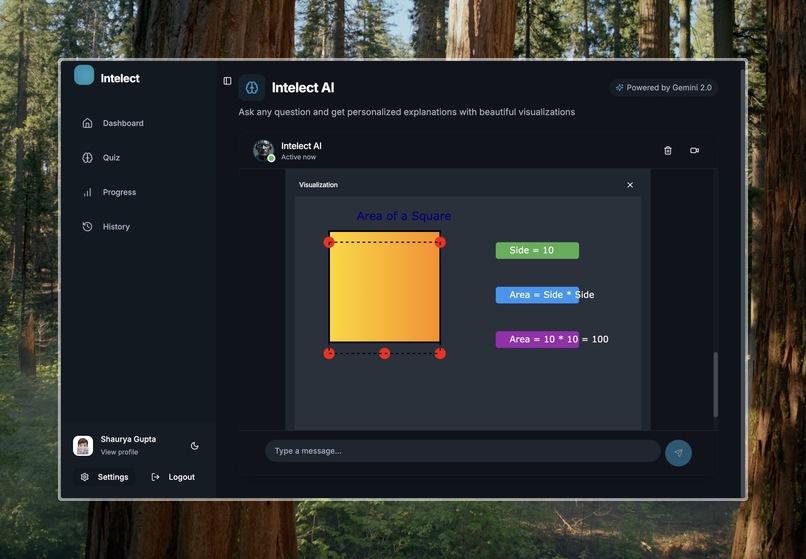
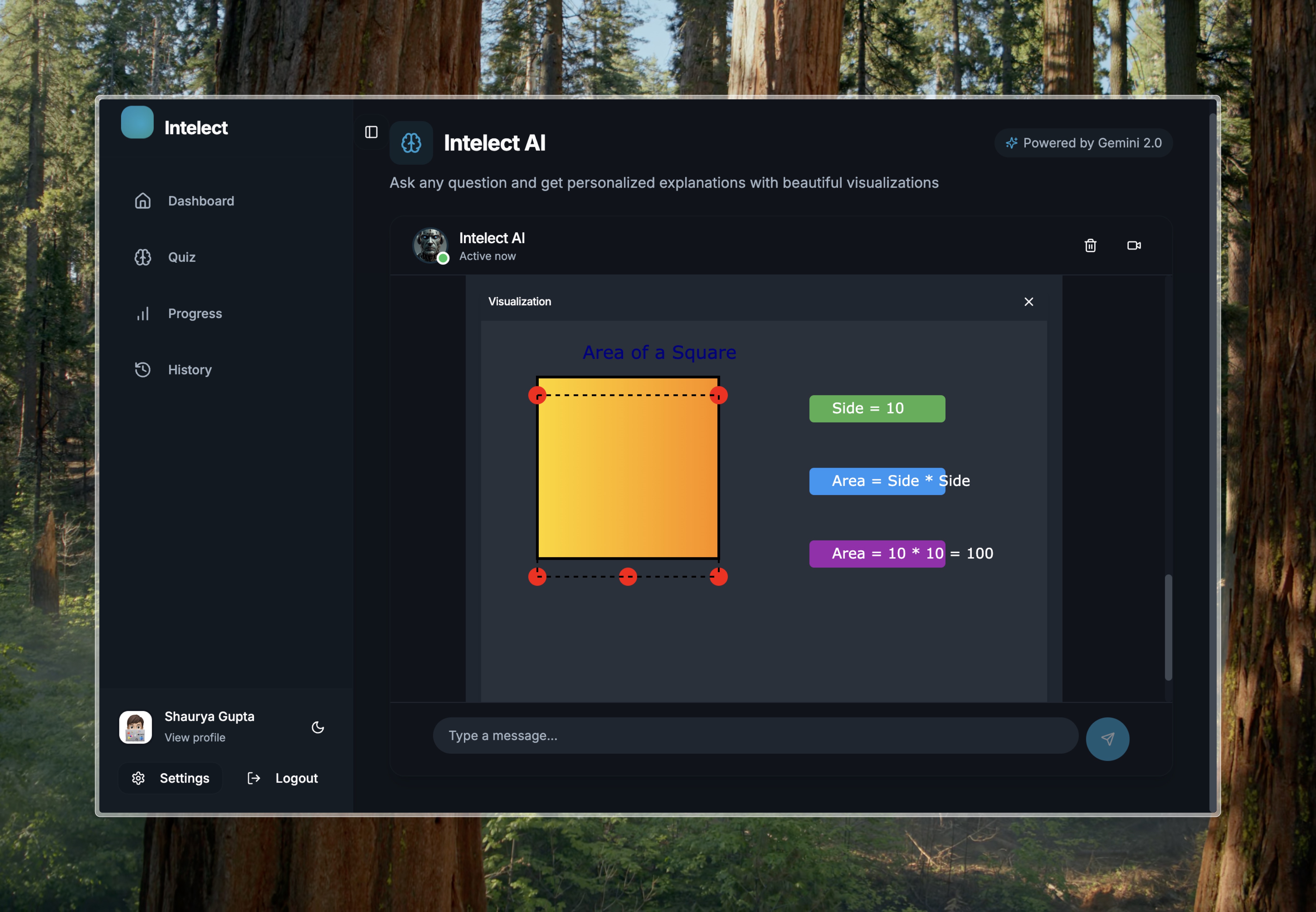
Chat SVG feature
-
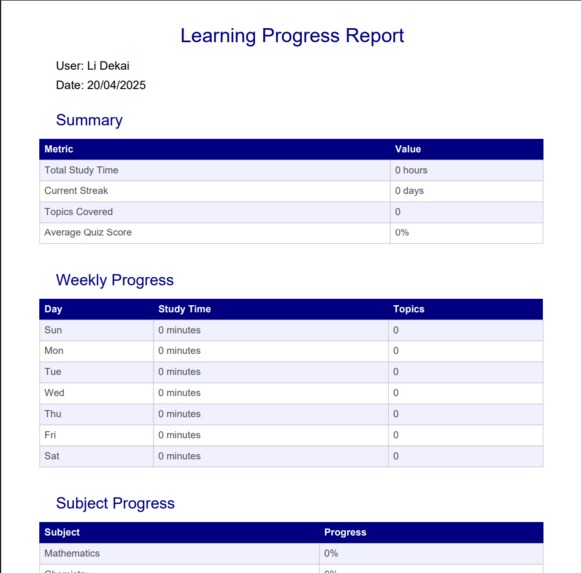
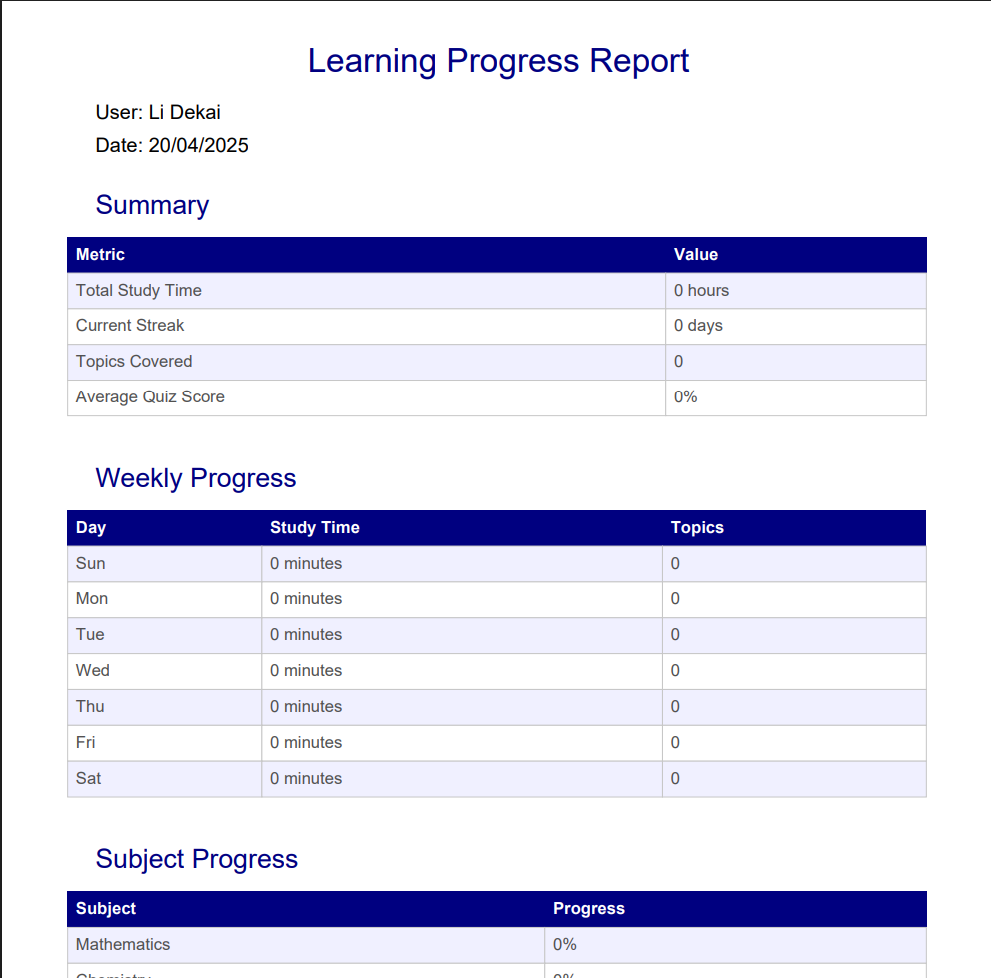
generated report
Inspiration
We wanted to reimagine how people learn—something more interactive, more visual, and way more personal. Instead of just Googling questions or passively watching videos, what if you could talk to an AI tutor that actually understands what you're struggling with and gives you dynamic visuals, videos, and simulations to help? That idea became Intellect—a smarter, more interactive learning assistant built to make understanding click faster.
What it does
Intellect is a personalized learning assistant that you can chat with in real time. Ask it a question, and it doesn’t just reply with text—it can generate custom SVG diagrams or even short video explanations (with more interactive simulations coming soon!). Whether you’re a visual learner or just stuck on a tough concept, Intellect adapts to your style and brings the explanation to life.
How we built it
We built Intellect using Next.js App Router for the frontend, Supabase for user auth and storage, and both OpenAI and Gemini models for generating responses and assets. The SVG generation happens dynamically from the AI's output, and we’re using video APIs to generate short visual explainers based on user questions. All wrapped up in a clean UI that makes learning feel natural and fun.
Full Tech Stack:

Challenges we ran into
Time was the biggest challenge—our vision for Intellect was super ambitious. We wanted to include live simulations and more dynamic interactivity, but we ran out of time before we could fully build them out. Also, figuring out how to parse and render AI-generated SVGs in a safe, useful way was more complicated than we expected. Coordinating between different AI APIs and handling errors gracefully was also a fun (but chaotic) ride.
Accomplishments that we're proud of
We’re super proud of the fact that Intellect actually works—SVGs get generated and rendered based on user queries, and videos can be created and shown right inside the chat flow. The UX is clean, smooth, and feels way more polished than what we thought we could do in the hackathon timeframe. Also proud of the teamwork—both of us jumped across frontend/backend/AI tasks constantly, and it all came together.
What we learned
We learned a lot about orchestrating multiple AI services and dealing with their quirks, plus how to quickly prototype generative UI elements like SVGs and videos. We also got a crash course in time management during a hackathon (spoiler: it’s hard). Oh, and we now fully appreciate how hard it is to balance good UX with powerful AI outputs.
What's next for Intellect
Next up, we want to bring in interactive simulations (like draggable graphs or physics experiments), improve the video generation quality, and fine-tune the AI prompts so the assistant is even more accurate and helpful. Long term, we’d love to turn Intellect into a full learning platform—where students can track progress, get smarter over time, and maybe even have the assistant teach them a whole course.
Built With
- auth0
- css
- gemini
- html
- javascript
- nextjs
- node.js
- pdf-generator
- python
- react
- supabase
- typescrip


Log in or sign up for Devpost to join the conversation.