Inspiration
Garbage production is an integral part of society. Our faculty is no exception. Therefore, it is in our own interest to dispose of waste properly, efficiently and responsibly so that we minimize the generation of additional waste. Current technologies allow us to streamline these processes and thus save time and waste.
What it does
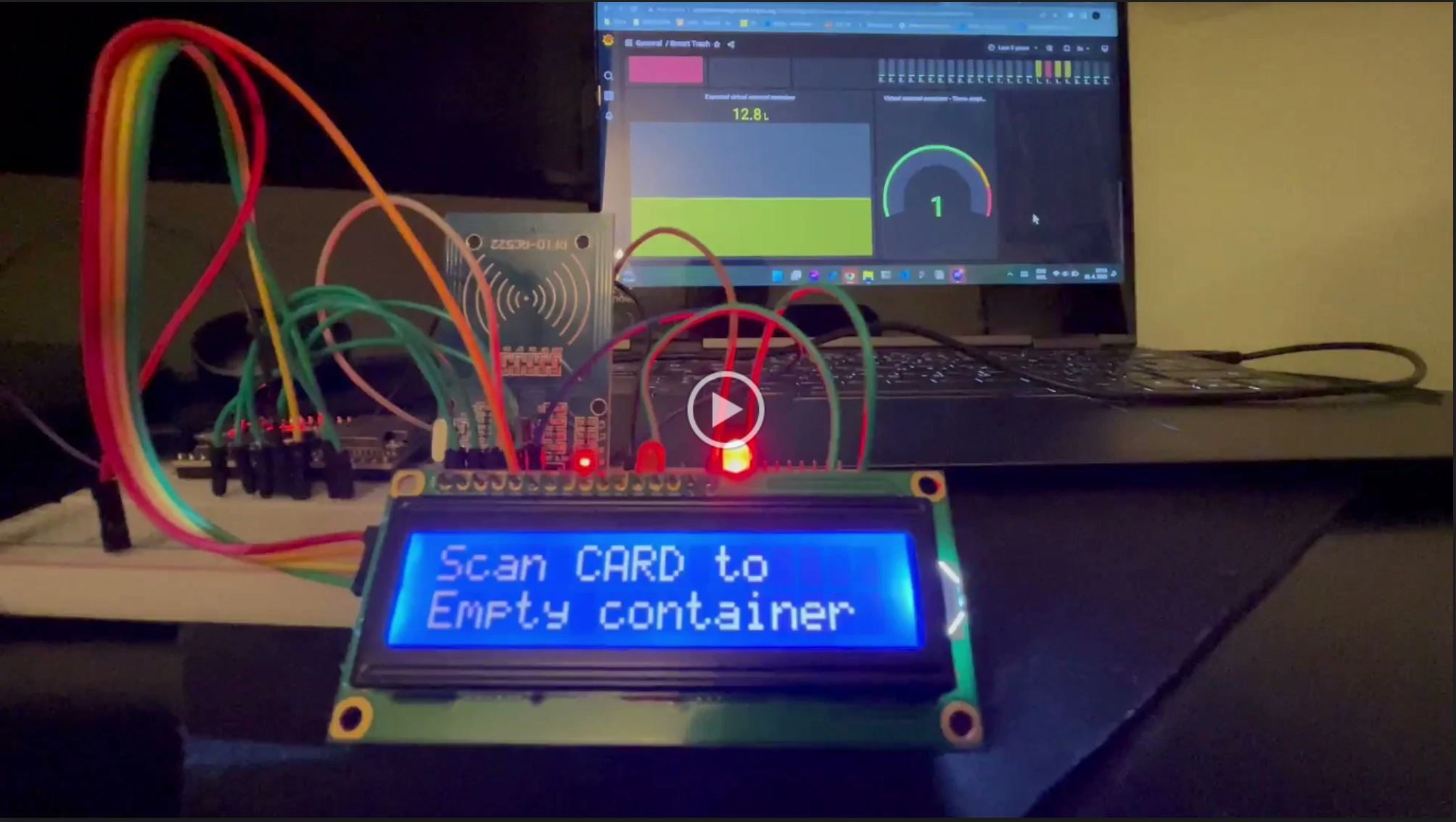
In our project, we divide two main entities. Internal bin and external container. The internal baskets are located all over the faculty, filling up differently depending on the concentration of students in the corridors and classrooms. Waste is taken out at various times, often unnecessarily. In some classes there is little waste, in others the bin is completely full and garbage falls out. Our solution brings intelligence to these ordinary interior bins. Bins send information about their filling and employees can go to empty the bin only when needed - when it is full. We save garbage bags that would otherwise remain half-empty. The external container is a collection point for this garbage, only a faculty employee has access to it. Using an RFID card, this container can be marked as empty.
How we built it
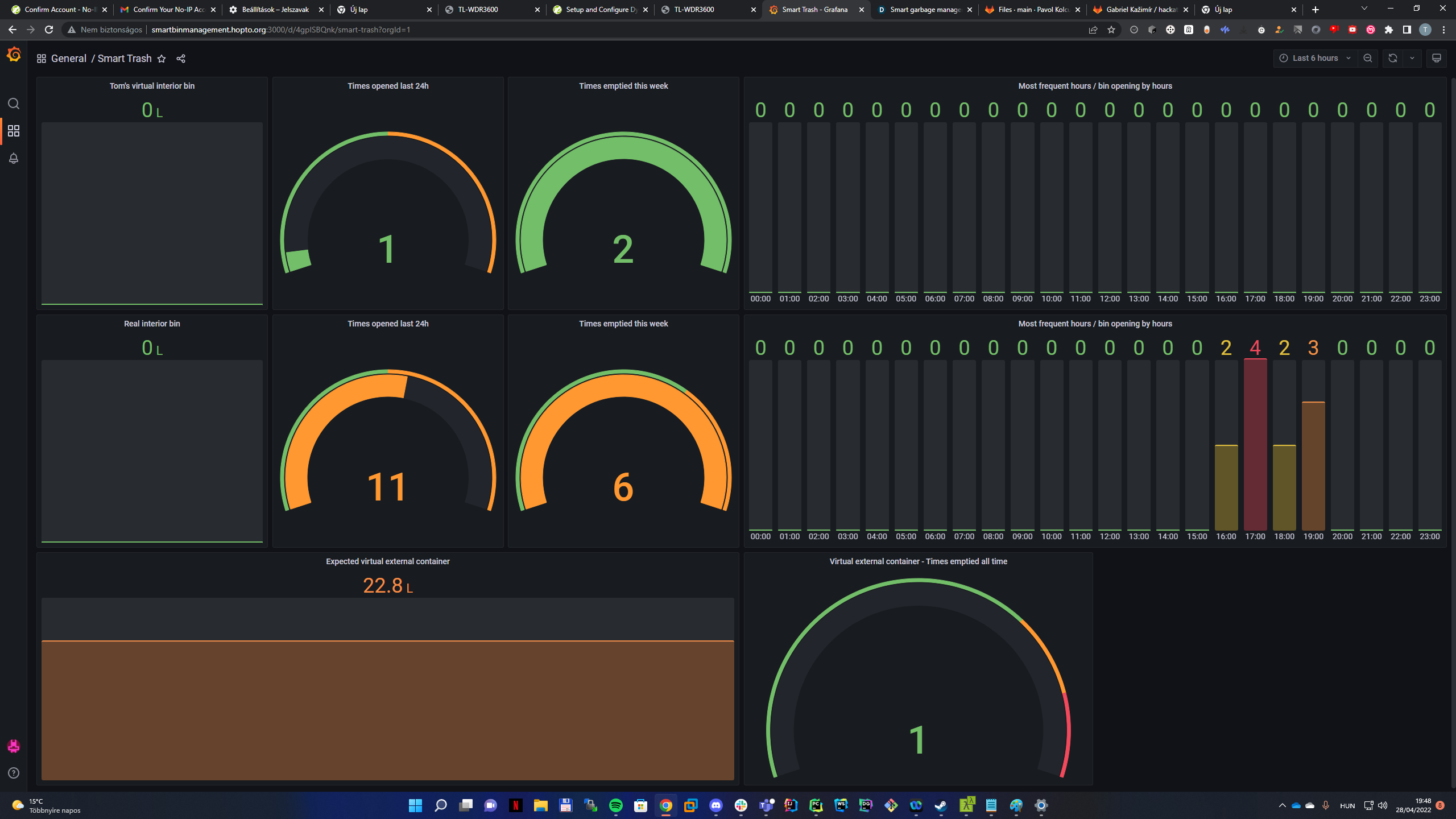
The idea was to create a virtual trash can that you could control. So we created this using python fast api framework. These queries were sent to mqtt topics using node-red. These MQTT queries were loaded into a database [influxdb] using telegraf. For visualization we used grafana. Here we created several diagrams which can be found in the images.
Once we were done with the virtual trash cans, we also created real devices, such as the device that can empty the external trash can. For this we use an RFID sensor, an LCD display and an ESP32. If we use the right card, the sensor will send a signal to a MQTT broker which will invoke a REST-API query.
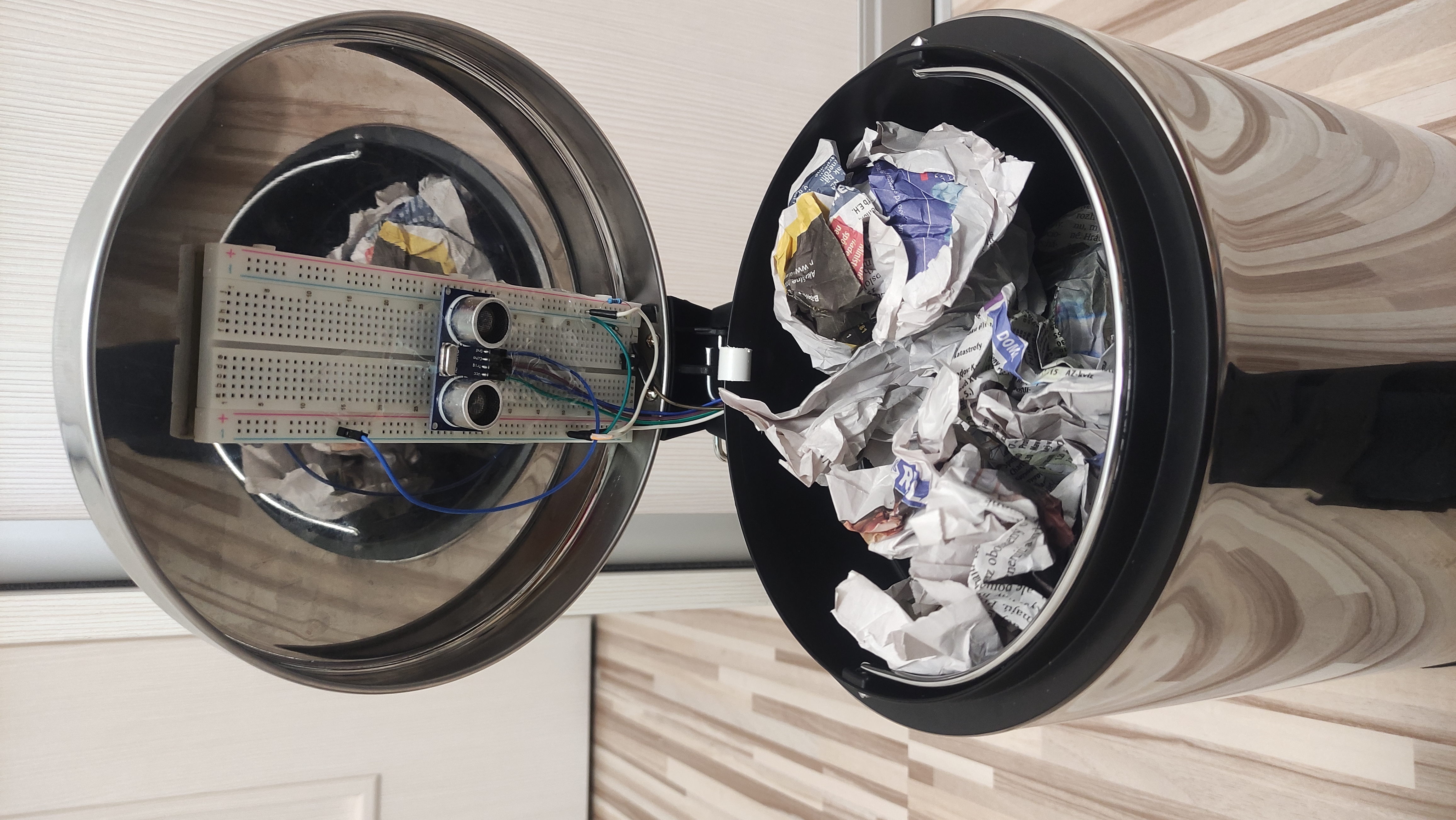
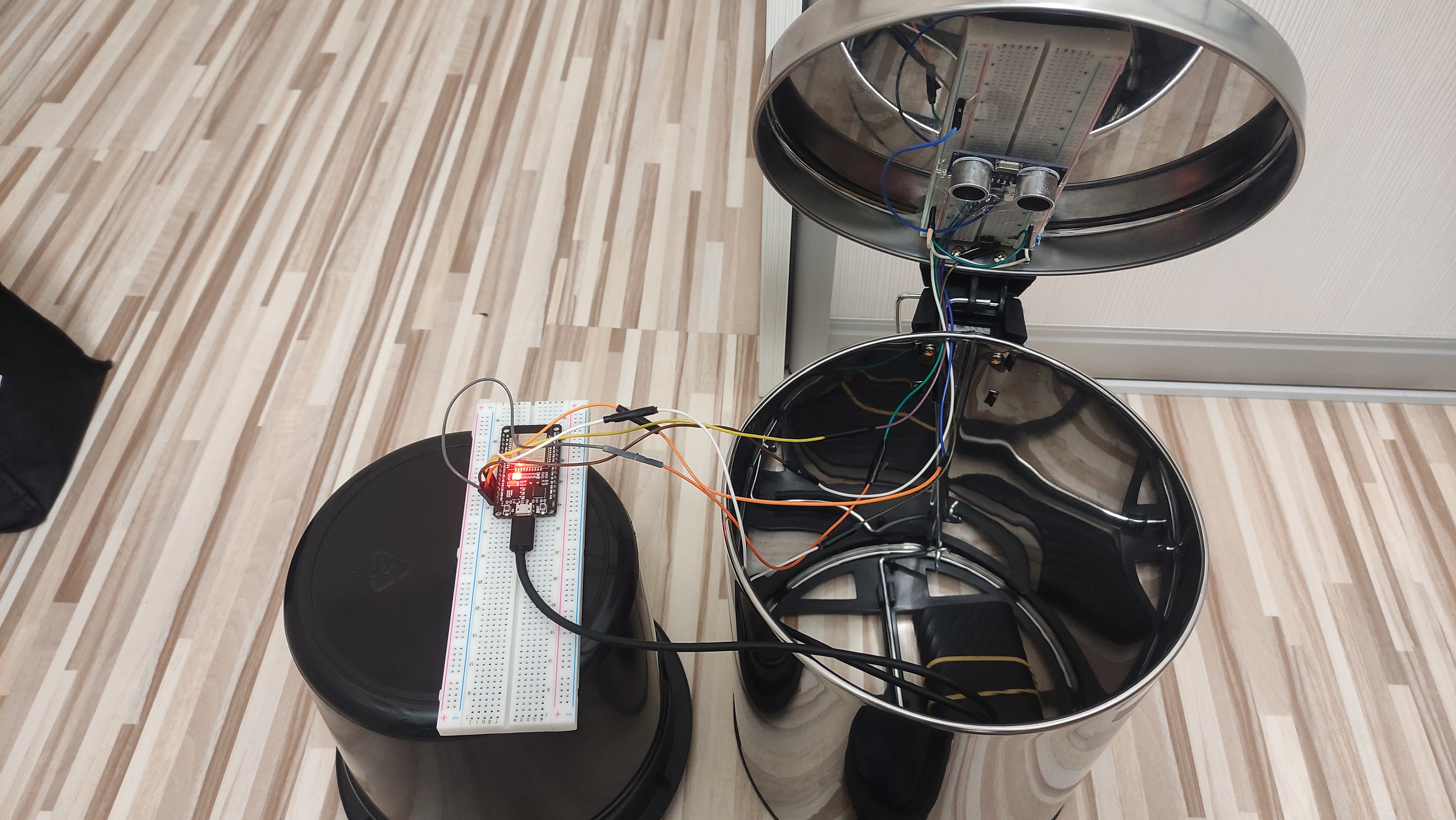
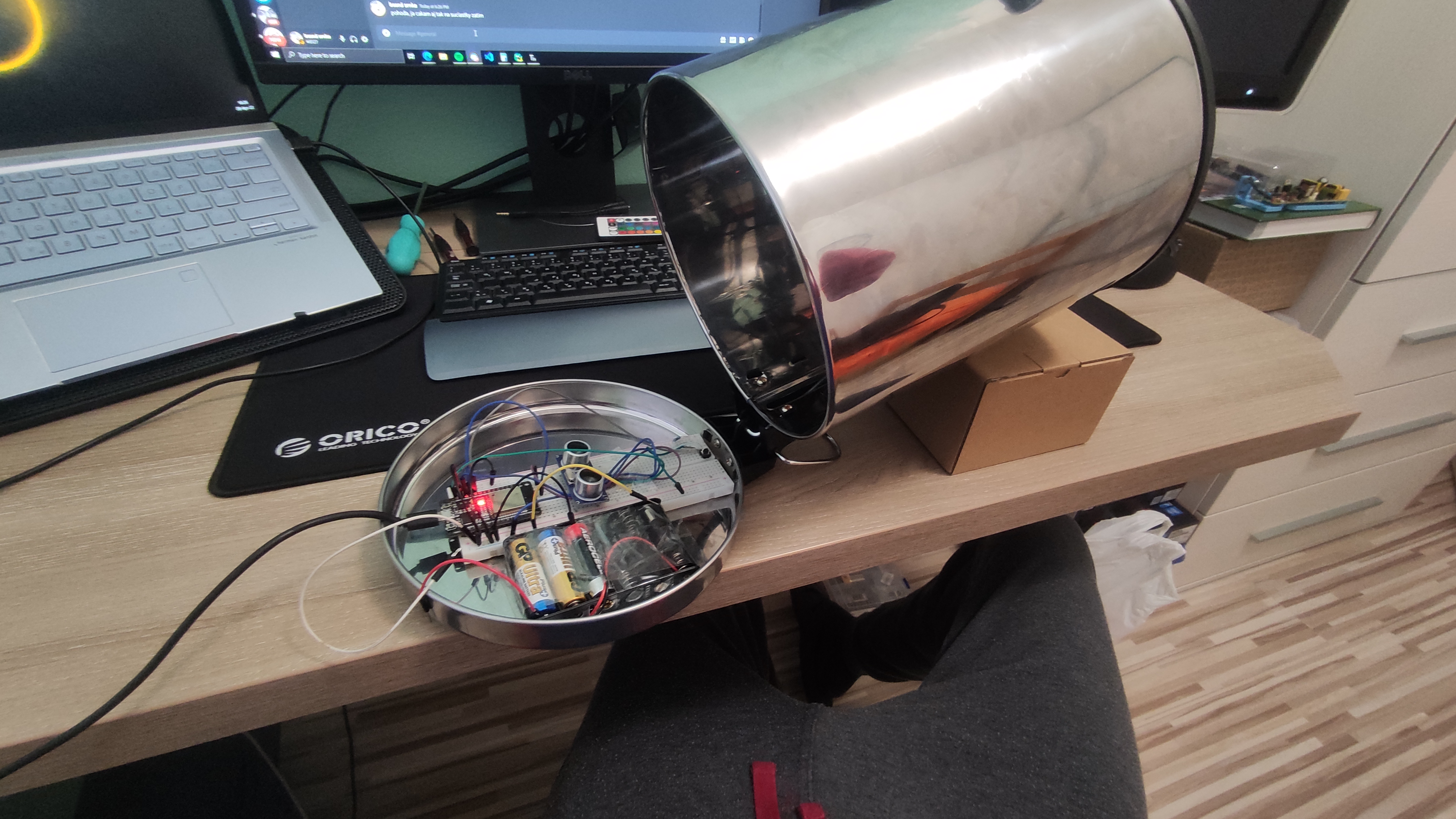
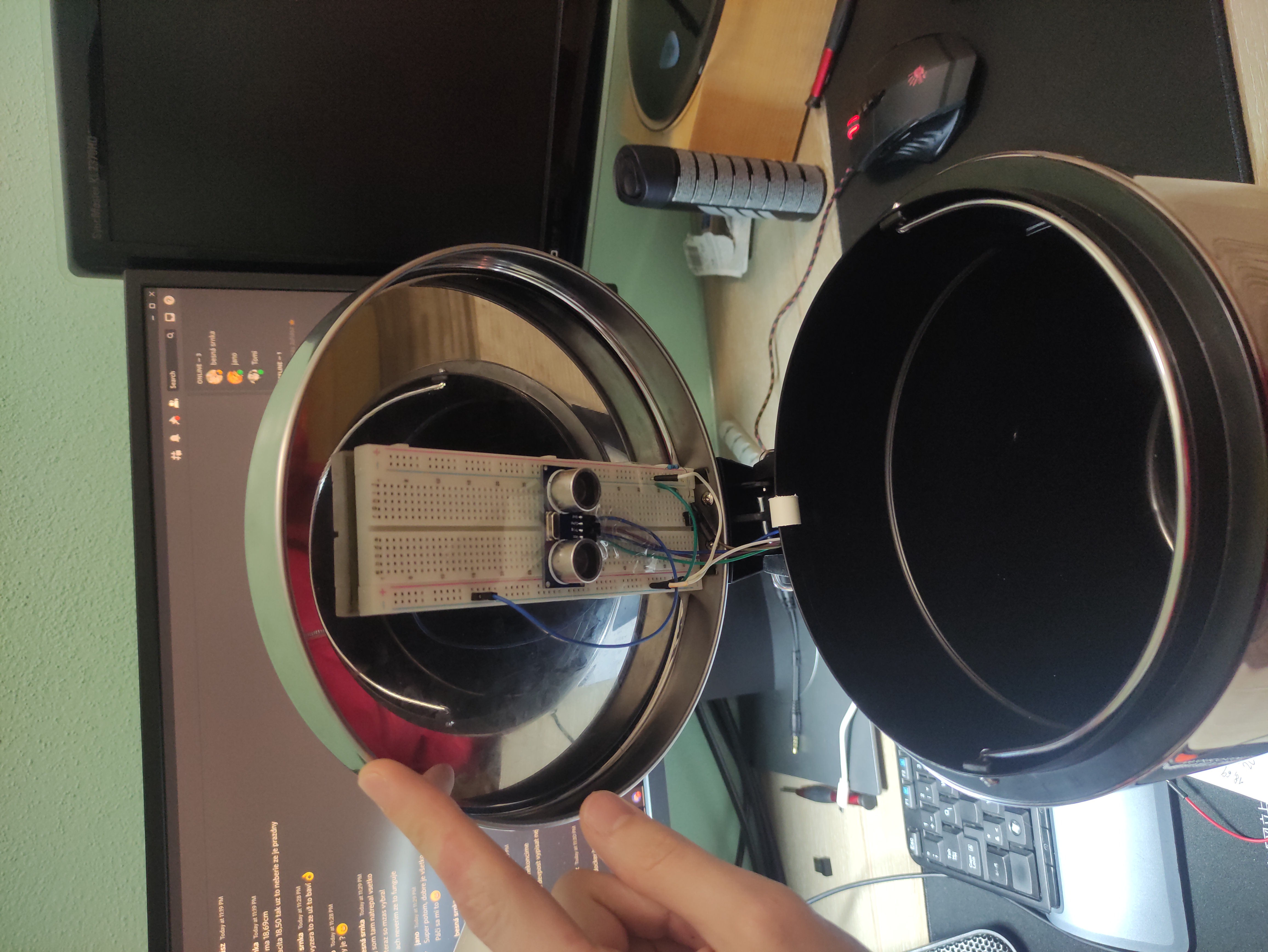
We use ESP32-DEVKIT in cooperation with an ultrasonic sensor to implement the interior bin. Interior bin is measuring distance to garbage from lid, only if the lid has been closed. For implementation it was crucial for the bin to close itself mechanically by gravity. The integration of the trash can was very simple, because every time it closes it sends a signal to an MQTT topic about its current state, which then processes the data in a similar way as for the virtual trash can.
Every time the existing or virtual dumpster is triggered it loads its value into the external container.
Challenges we ran into
Telegraf connection with Influx, device assembling
Accomplishments that we're proud of
TBA
What we learned
Better knowledge in tools like: node-red, fastapi, influxdb, telegraf, docker, docker-compose


Log in or sign up for Devpost to join the conversation.