Integrated Mail
Inspiration
Business communication is scattered across email accounts, collaboration platforms, calendars, and task-management tools. People repeatedly open different applications, identify urgent conversations, understand long threads, draft replies, create follow-up tasks, and remember deadlines manually. Important requests can consequently be delayed or overlooked.
Integrated Mail was created to turn fragmented communication into one intelligent, actionable workspace. Instead of functioning as another email client, it uses AI agents to understand conversations and help move work forward.
What It Does
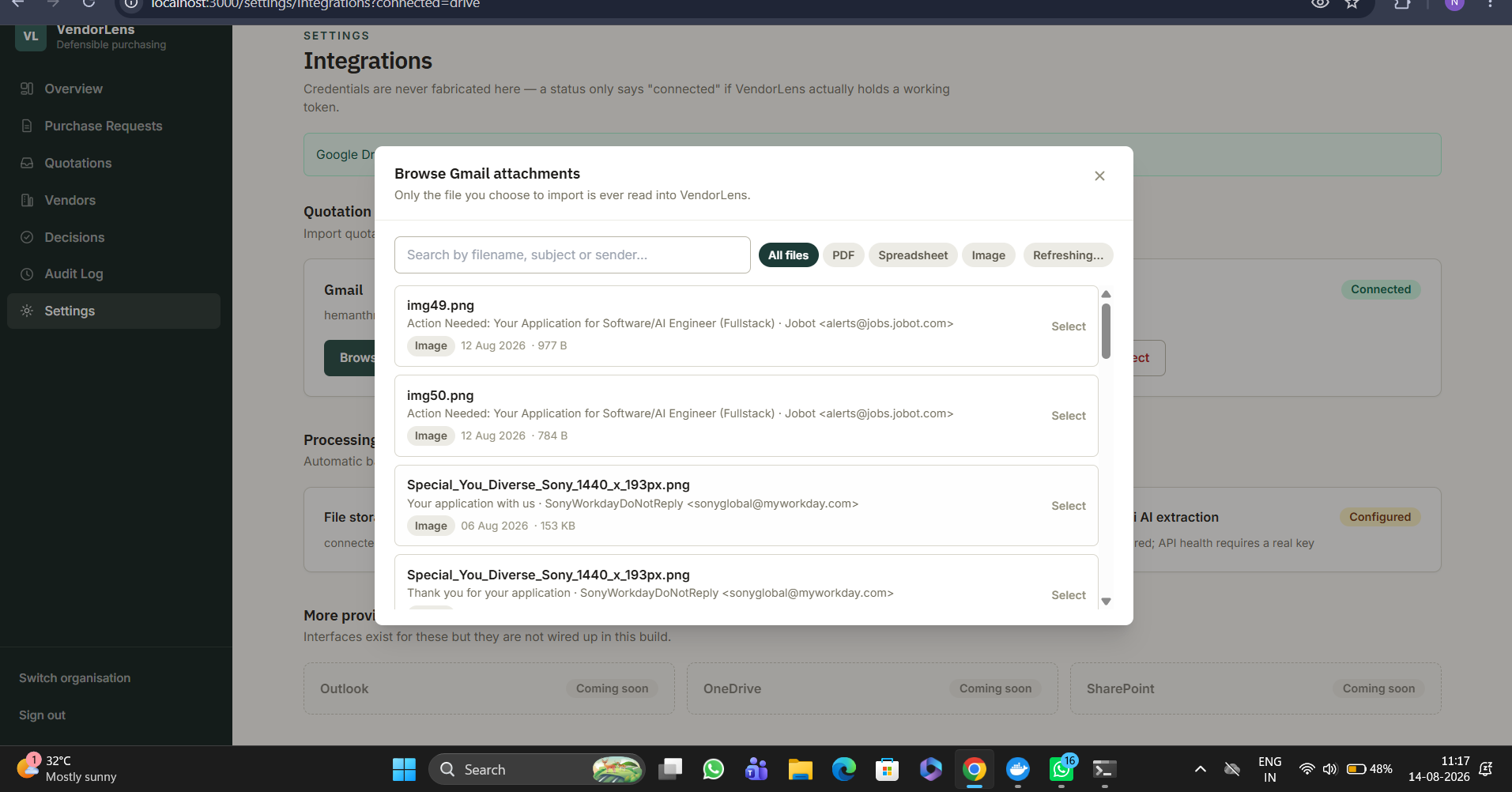
Integrated Mail provides a unified communication layer for individuals, freelancers, and small businesses. The initial working integration focuses on Gmail, while the underlying connector architecture is designed to support additional authorised communication providers.
Its AI-assisted workflow can:
- Import and normalise messages into a unified communication structure.
- Summarise long conversations and extract their essential context.
- Classify messages by intent, urgency, sentiment, and required action.
- Identify customer enquiries, deadlines, support requests, and potential business opportunities.
- Draft context-aware responses using the complete conversation thread.
- Convert conversations into tasks, follow-ups, reminders, and calendar actions.
- Preserve an auditable record of AI recommendations and executed actions.
- Require human approval before sensitive or irreversible communication is sent.
The objective is not merely to generate text. Integrated Mail transforms unstructured conversations into structured business actions.
How We Built It
Integrated Mail uses a typed web interface, an API-driven backend, and a unified database model for communications, connected accounts, tasks, calendar events, and agent activity.
The Gmail connector uses authorised OAuth access rather than collecting users’ passwords. Messages from connected providers are transformed into a common schema so that the application’s agents can process them consistently.
Gemini provides the reasoning layer for message summarisation, classification, contextual drafting, action extraction, and workflow recommendations. The hackathon version is being connected to Google Cloud for application deployment, secure secret management, API execution, and structured agent logging.
Each significant AI decision is designed to produce a structured record containing the triggering message, selected action, confidence, relevant context, approval state, and final outcome. This makes the system observable and allows users to understand what the agents are doing.
AI-Native Operation
Integrated Mail is designed around specialised agents rather than a single general-purpose chatbot:
- Triage Agent: Determines intent, urgency, category, and priority.
- Context Agent: Summarises the conversation and retrieves relevant thread history.
- Response Agent: Produces a grounded reply suited to the user’s preferred tone.
- Action Agent: Creates proposed tasks, reminders, calendar events, and follow-ups.
- Safety Agent: Detects sensitive requests and requires human approval when necessary.
- Operations Agent: Analyses usage and feedback to identify onboarding problems and recurring support needs.
Humans retain control of account connections, business rules, sensitive decisions, and final approval boundaries. AI performs the repetitive interpretation, prioritisation, drafting, and workflow orchestration.
Challenges
One major challenge was designing a common model for communication platforms that represent messages, threads, users, attachments, and permissions differently.
Authentication and privacy were equally important. Communication data is sensitive, so OAuth credentials, access tokens, account separation, revocation, and auditability must be treated as core product requirements rather than later additions.
Another challenge was balancing useful autonomy with user control. Automatically drafting a response is relatively safe, while sending a message, creating an external commitment, or changing a calendar requires stronger validation. This led to a risk-based approval system instead of unrestricted automation.
What We Learned
We learned that building an AI communication product requires much more than connecting an LLM to an inbox. Reliable agentic systems need structured data, constrained outputs, clear permissions, execution logs, failure handling, and human approval boundaries.
We also learned that integrating providers and normalising their data is often more difficult than building the visible interface. A robust connector architecture is therefore essential for expanding the product without rewriting its core intelligence.
Business and Impact
Integrated Mail is intended for freelancers, founders, and small teams that cannot employ dedicated staff to monitor every communication channel. The planned subscription model offers an accessible AI operations layer that helps these businesses respond faster, protect potential leads, and spend less time on repetitive administrative work.
Before the final submission, the project will be deployed, tested with real users, and offered to genuine paying customers. Verified usage, revenue, expenses, customer feedback, and agent-execution evidence will be reported in the final submission.
What’s Next
The immediate priorities are completing the production Gmail workflow, integrating Gemini and Google Cloud services, strengthening security and testing, deploying the application, and onboarding initial customers. Additional authorised communication providers will be introduced after the initial workflow is stable and measurable.

Log in or sign up for Devpost to join the conversation.