Web3 provides users with new ways to engage with applications, financial services, and digital assets but at the same time creates new security challenges. Phishing sites, impersonation, and malicious URLs can mislead users and lead them to interacting with unsafe websites.
We decided to build something simple but effective that would help answer an important question for the user: is this site safe?
This is how we came up with the idea for INTAG... a Web3-focused security platform that makes website security information easily accessible and understandable so that users can make informed decisions about the sites they interact with.
What is INTAG?
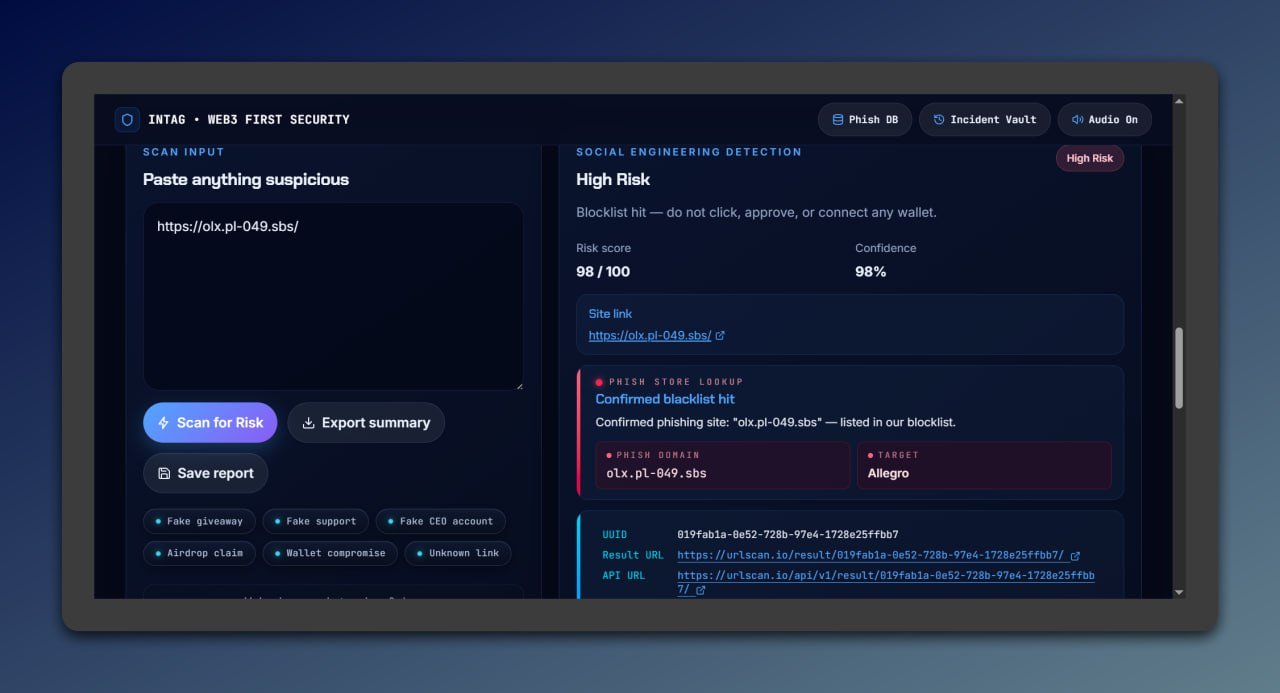
INTAG is a Web3 security platform that allows users to submit a URL via the Scan Input and analyze potential security risks.
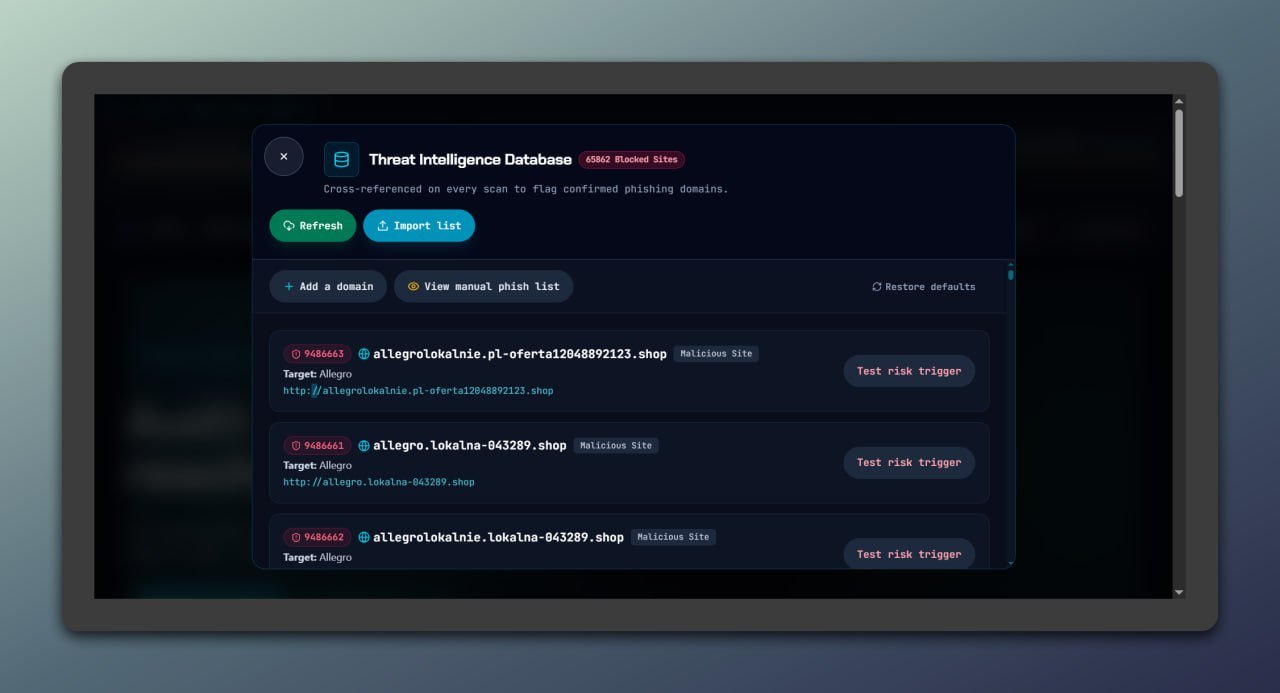
The security information about the analyzed websites is collected from URLScan and PhishTank.
Instead of trying to understand the technical intricacies of the security data, the users rely on the security analysis provided by the INTAG platform to make informed decisions about whether to continue interacting with a website.
The idea behind INTAG is to provide an accessible and easy-to-use interface that allows users to make informed decisions about the websites they visit. We are also working on expanding INTAG’s capabilities to include additional Web3-focused security features such as wallet health and wallet security analysis.
How we built INTAG
INTAG was built as a modern React web application that follows a security-first approach to developing software applications. We built the frontend with React, TypeScript, Vite, and modern CSS. To power the website security analysis, INTAG uses URLScan, PhishTank, and Cloudflare Workers for API and backend-related tasks. We also plan to expand INTAG’s capabilities to include Web3 wallet security analysis features using Reown/WalletConnect, Ethers, OKX Wallet, and MetaMask as the wallets-security ecosystem continues to evolve.
The main idea was to make something simple but effective that would allow users to benefit from the combined power of multiple website and phishing security technologies.
What challenges did we face?
One of the main challenges we faced while building INTAG was designing the application in a way that would allow us to use multiple security technologies while maintaining a simple and intuitive interface.
Security-related technologies often deal with technical information that is not easy to understand for the average user. We had to design the application in a way that would allow users to benefit from the combined power of multiple security technologies without having to deal with technical details.
Another challenge was related to API-related authentication and security, backend security, deployment, and the use of Web3 wallet security technologies. Finally, we also had to deal with the technical challenges related to building a React-based application.
Another challenge was to design INTAG in such a way that it would be able to provide website security information while also being able to expand its capabilities to include additional Web3 security technologies.
What are we most proud of?
We are proud that we were able to actually build something useful out of our idea for a Web3 security platform.
We managed to design and build an application that allows users to submit a URL and analyze its security with the help of powerful security technologies such as URLScan and PhishTank.
We are also proud that we managed to create the foundation for a larger Web3 security platform as opposed to a narrow-purpose website URL scanner.
The application was also designed in such a way that it would be able to expand its capabilities to include additional Web3 security technologies in the future.
What did we learn?
We learned that when it comes to cybersecurity technologies, it is important to focus on empowering the users by providing them with intuitive security information instead of simply trying to collect and store as much data as possible.
We also learned how different security technologies can be combined to build a powerful but intuitive security analysis tool. At the same time, we learned the importance of API key security, frontend and backend separation, and the practical application of cybersecurity-related concepts.
Finally, we learned a lot about React, API development, Cloudflare Workers, and Web3 wallet security technologies and the unique challenges that come with developing applications using these technologies.
Most importantly, we learned that it is possible to build intuitive but powerful security tools that allow users to make informed security-related decisions without having to be cybersecurity experts.
What’s next for INTAG?
INTAG is just getting started, and we have multiple ideas about how the application can be expanded in the future. We plan to expand the application’s capabilities to include additional Web3 security features such as wallet health and wallet security analysis. We also plan to add more powerful AI-driven security analysis tools that would be able to provide users with informative security insights, recommendations, and much more. In the future, we want INTAG to become an essential security layer for interacting with unknown Web3 websites, apps, and wallets.
Built With
- css
- html5
- javascript
- react
- walletconnect
