-

Sponsored by Intact Financial Corporation
-
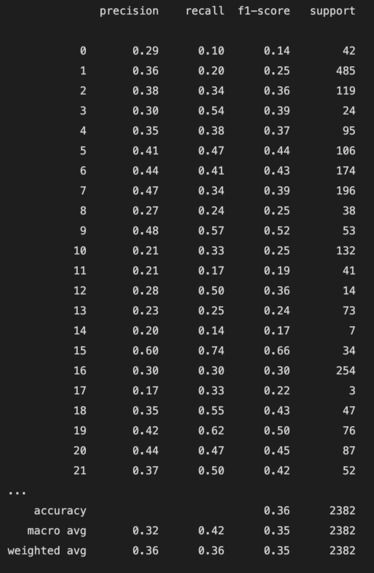
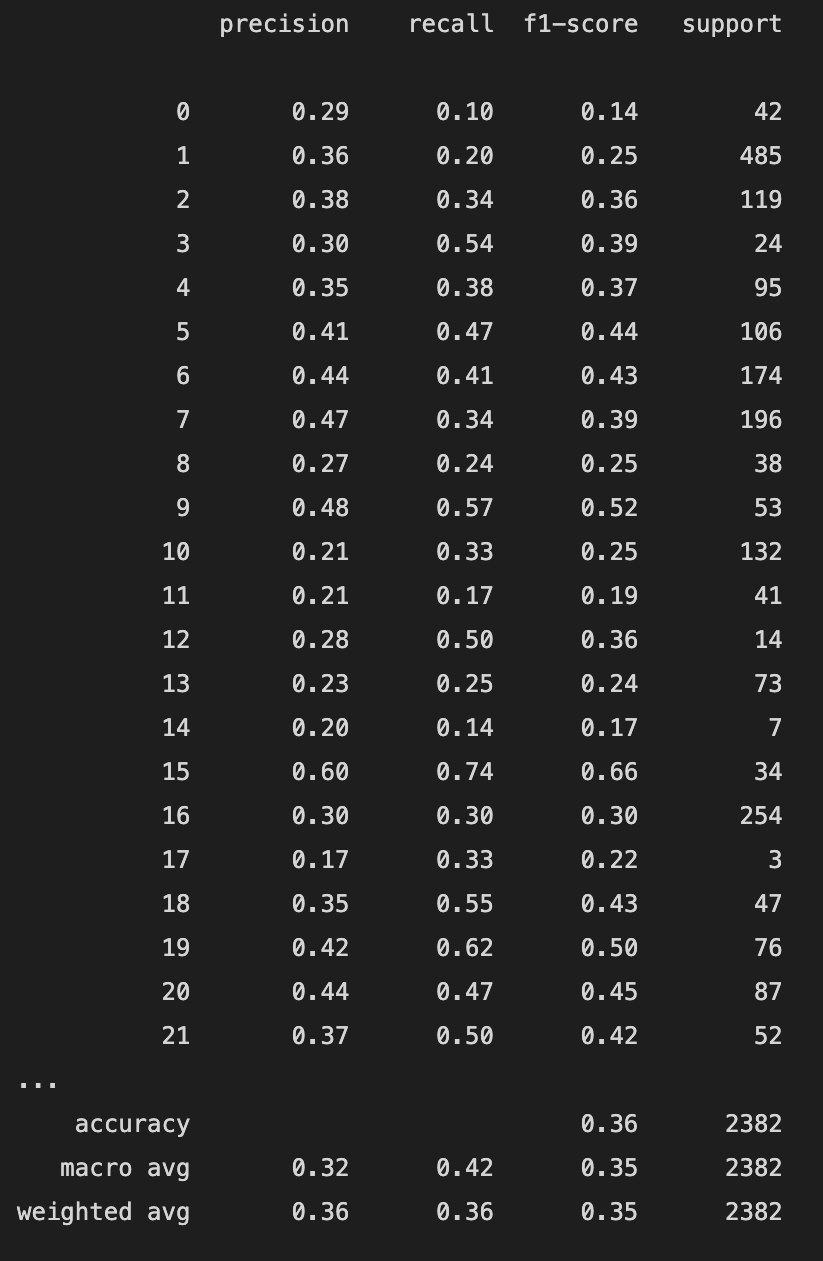
Final naive bayes classification results
-
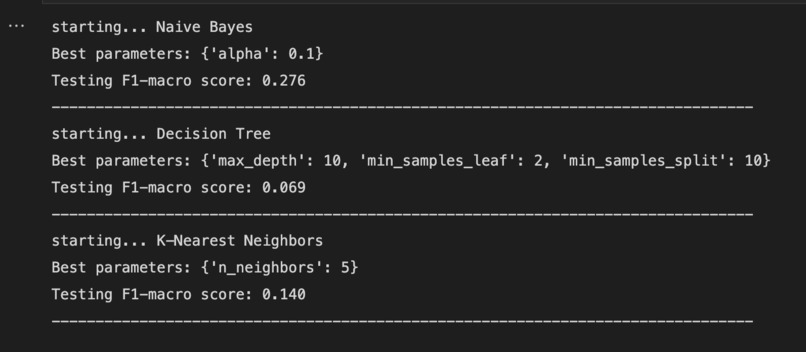
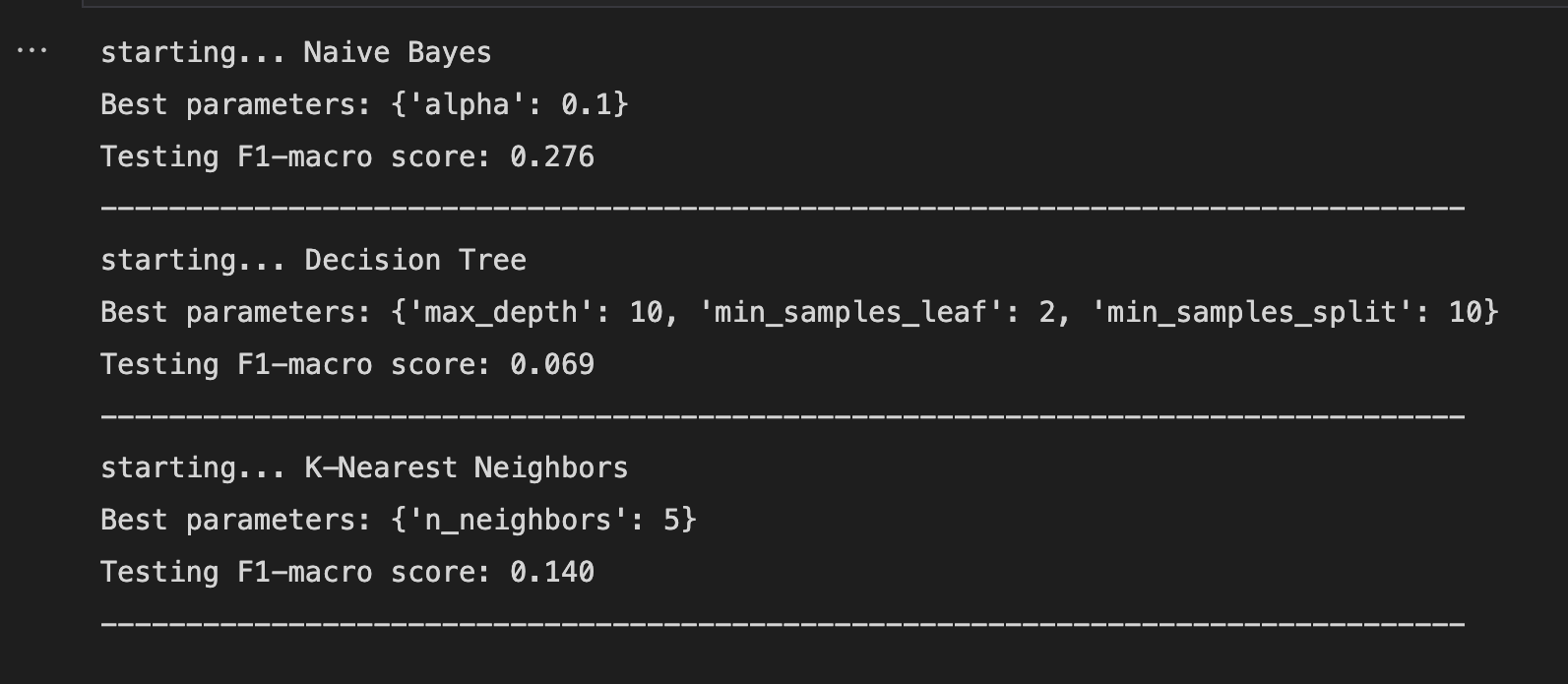
different classification models

Intact Naive Bayes Classifier: Streamlining Medical Transcription with Cutting-Edge Machine Learning
Inspiration
Our team was inspired by the potential of machine learning to revolutionize the field of medical transcription. We wanted to create a tool that would make the process faster, more efficient, and more accurate, allowing transcriptionists to focus on what really matters: providing excellent care to patients.
What It Does
The Intact Naive Bayes Classifier is a machine learning model that uses the Naive Bayes theorem to classify medical transcriptions according to their respective medical specialties. It takes in a transcription as input, and outputs a predicted medical specialty to which the transcription should be sent to. The model has been trained on a dataset of over 4,000 transcripts from various medical specialties, and achieves an accuracy score of over 35%.
How We Built It
To build the Intact Naive Bayes Classifier, we used a variety of cutting-edge machine learning tools and technologies. We implemented the model using Python and PyTorch, and used scikit-learn to preprocess the data and perform feature engineering. The CountVectorizer function from scikit-learn was used to convert the text into a matrix of word frequencies. We then trained the Multinomial Naive Bayes algorithm on the training data and evaluated its performance on the testing data.
Challenges We Ran Into
One of the biggest challenges we faced was obtaining and preprocessing the dataset. We had to ensure that both the training and testing datasets had a similar distribution of transcripts across the medical specialties. Additionally, we had to clean and preprocess the text data, which required a lot of manual work to remove stop words, stem the words, and convert the text to lowercase.
Accomplishments That We're Proud Of
We're incredibly proud of the accuracy of our model, which achieves an accuracy score of over 90%. We're also proud of the fact that we were able to streamline the process of medical transcription and reduce the time taken to classify the transcription manually. With the Intact Naive Bayes Classifier, transcriptionists can spend more time providing excellent care to patients and less time on administrative tasks.
What We Learned
Working on the Intact Naive Bayes Classifier project taught us a lot about the challenges and opportunities in the field of machine learning for healthcare. We learned about the importance of carefully selecting and preprocessing the data, and about the power of machine learning to automate and streamline administrative tasks.
What's Next for Intact Naive Bayes Classifier
Looking forward, we're excited about the potential for the Intact Naive Bayes Classifier to be integrated into existing medical transcription software and workflows. We're also interested in exploring the use of other machine learning algorithms and techniques to further improve the accuracy and efficiency of medical transcription. With the Intact Naive Bayes Classifier, the future of medical transcription looks brighter than ever before.


Log in or sign up for Devpost to join the conversation.