-
-

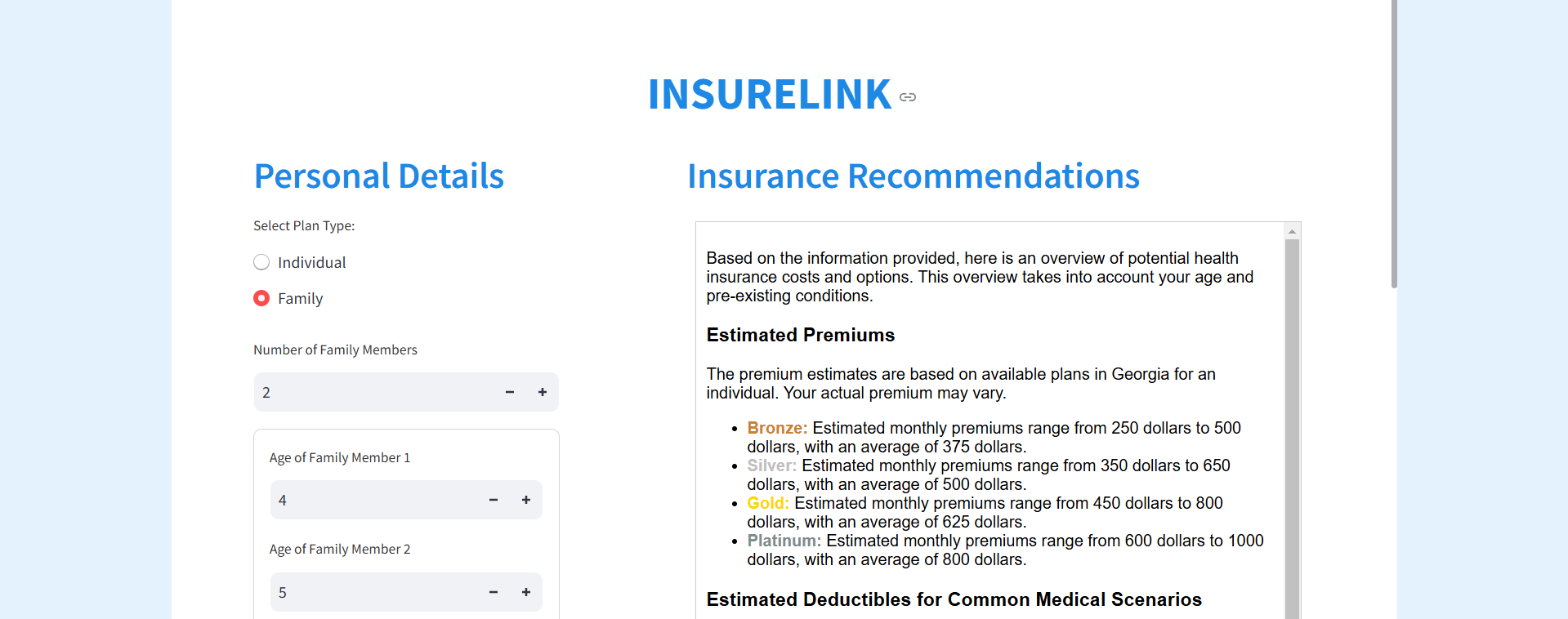
What the app looks like from the user's end.
Identifying the Problem
When trying to think of what project we wanted to create, we began by pondering on the different problems that we see ourselves and our parents. As half of our team promises of international students, some struggles that were faced were brought up in discussions. One of the largest challenges was navigating health insurance. Unlike domestic students who might be covered under their parents’ plans, international students often have to choose from unfamiliar, expensive, and complex insurance options.
The areas most struggles with were:
- High costs: University-sponsored plans can be expensive to fund on top of existing tuition and lifestyle costs. However, private plans can often lack transparency needed by students in these situations.
- Lack of transparency: Understanding coverage for things like pre-existing conditions, specialist visits, and emergency care is often difficult for students or people that aren’t aware of how the healthcare system in the country works.
- Information overload: Comparing multiple plans requires reading through lengthy documents filled with insurance jargon that once again may seem foreign to those new to the country’s healthcare system.
When discussing the issue with the members of the team who were domestic students, they explained that many American people that are new to the insurance world also struggle with similar issues. That’s where the idea was born.
Building the Solution
Once we had a vision for what we wanted to build, we began to plan out how we wanted to achieve it. We decided on a system that took in user information from a webpage form on the frontend, sending it to a backend generative A.I. program to process the data and find potential health plan options. Our A.I. model was trained on a dataset that we found online, the HealthCare.gov Health Plan Dataset for 2024, which gives access to health plans from across the country. Specifically, the dataset gives specific information on the benefits of each health plan, how much a user is expected to pay for each service, and key features that the healthcare plan does not include.
Development Process
Once we had a plan and a suitable dataset to train our model, we decided to split up our group to work on the frontend and backend parts separately.
Frontend
Our frontend consists of a Streamlink application. The application consists of a form that takes in what type of plan the user wants (individual or family), age, and a list of their prior medical conditions. Once the form was submitted, we chose to send the user’s data in a JSON format to the backend, displaying the output to the user once it was processed and received. The output consists of some of the most optimal companies for the user, along with an estimate of how much the user would have to pay monthly to stay on one of the displayed companies.
Backend
Our backend takes this data, and uses Gemini to analyze the data based on the HealthCare.gov dataset to find which insurance companies would be the best fit for the user, providing information about average deductible cost for each of the tiers of plans for each company and some additional information about each company, sending this information to the frontend that is displayed to the user in an easily digestible format.
Challenges and Refinements
Our main challenge when working on the project was fine tuning the model to give the user specific recommendations. Initially, we wanted to recommend many plans, but we realized that in many cases, the company chooses the plan for the user, so we decided to tailor the A.I. model to recommend the most favorable insurance companies for the user instead.

Log in or sign up for Devpost to join the conversation.