-
-
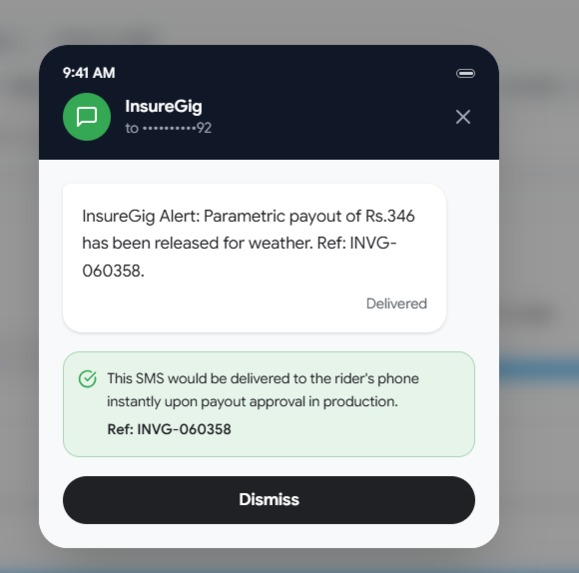
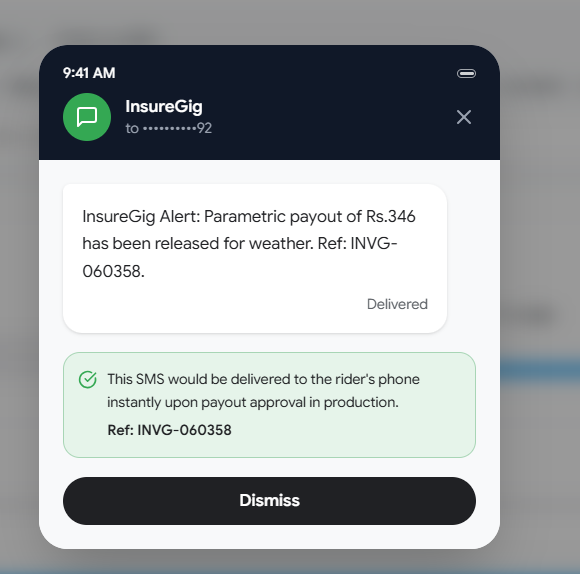
Msg received
-
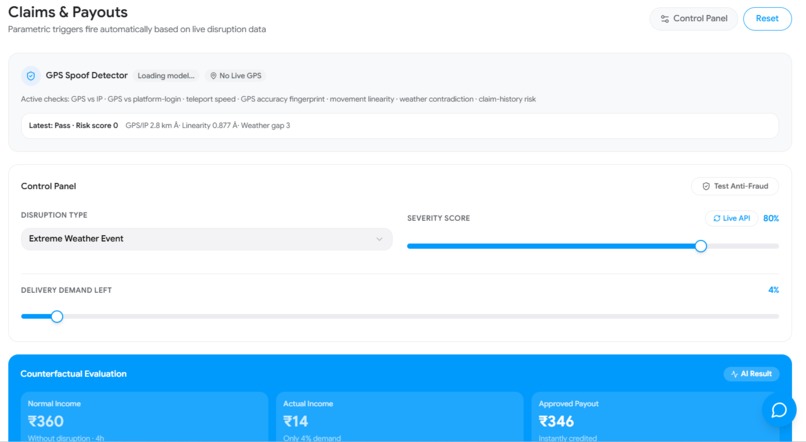
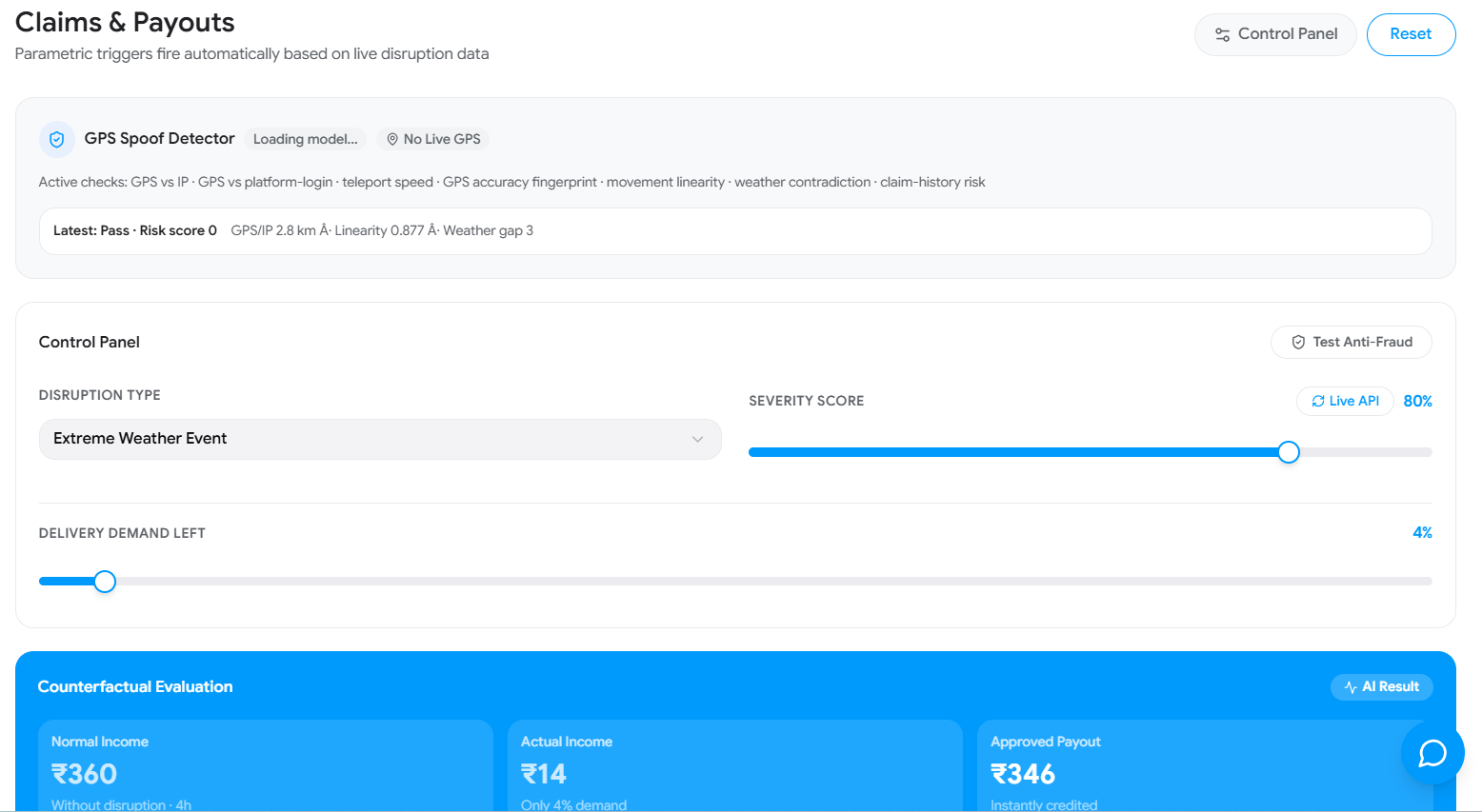
control panel
-
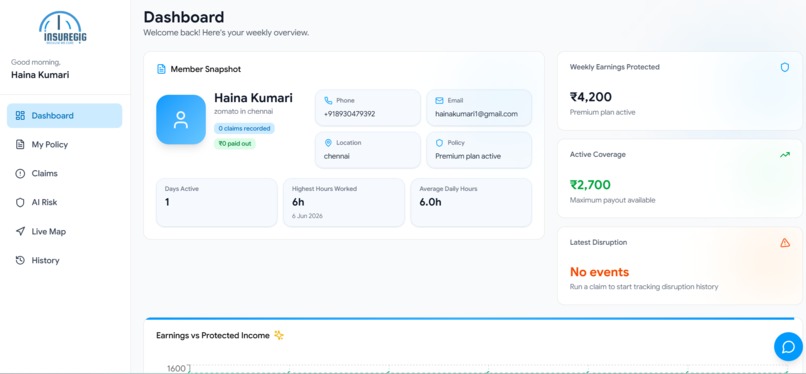
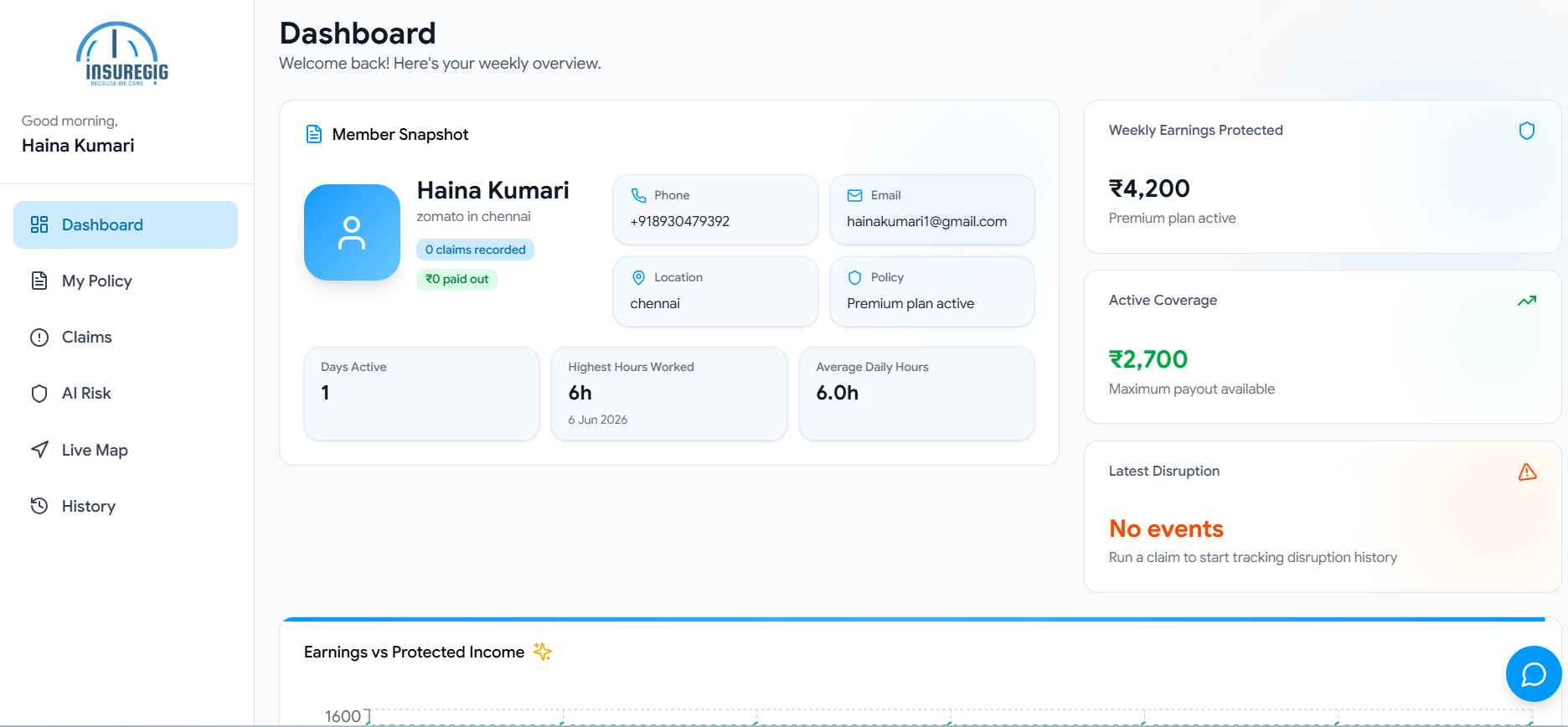
dashboard
-
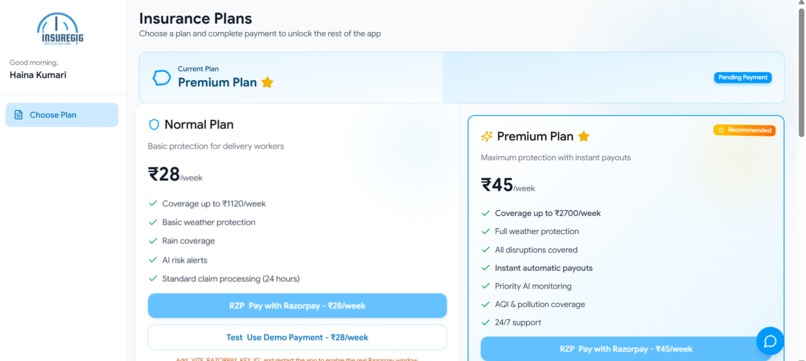
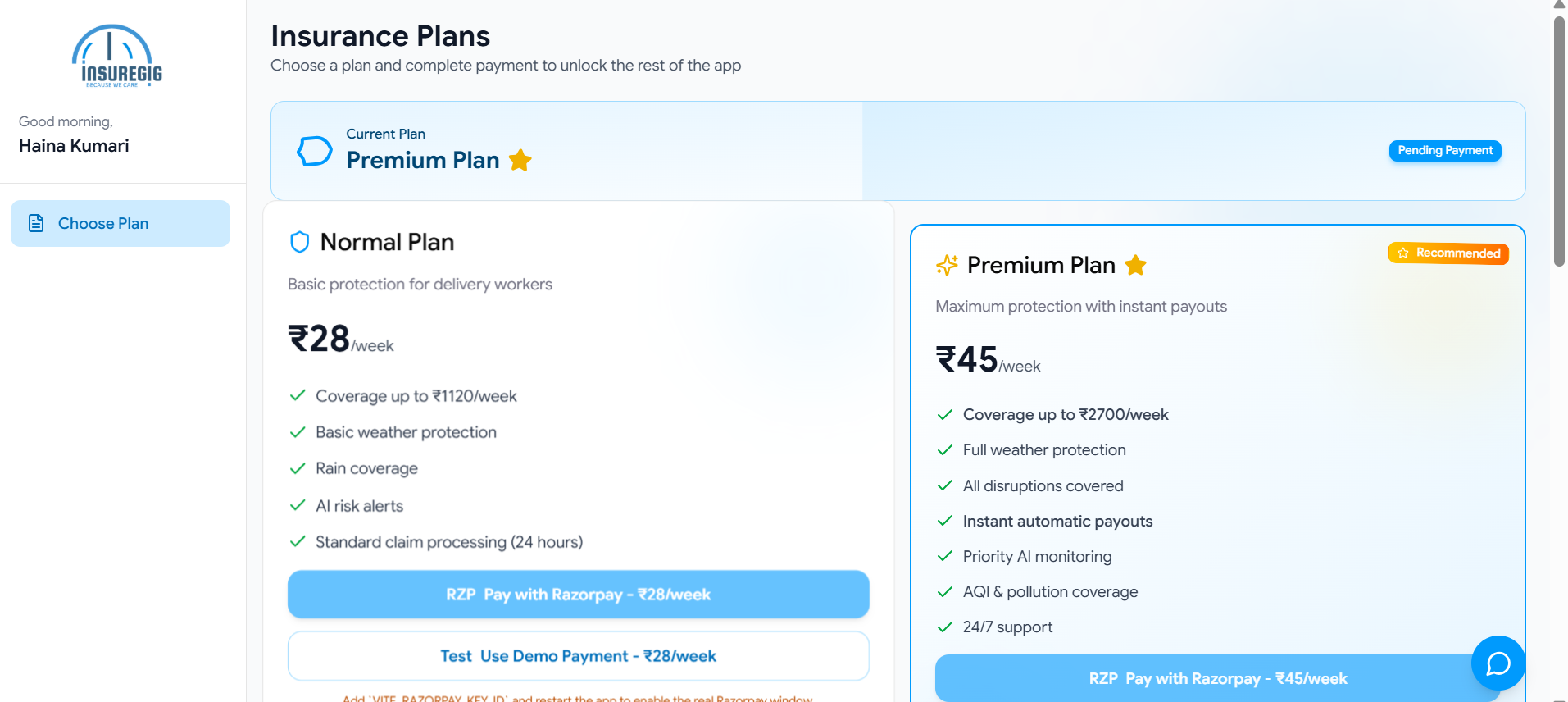
plans
-
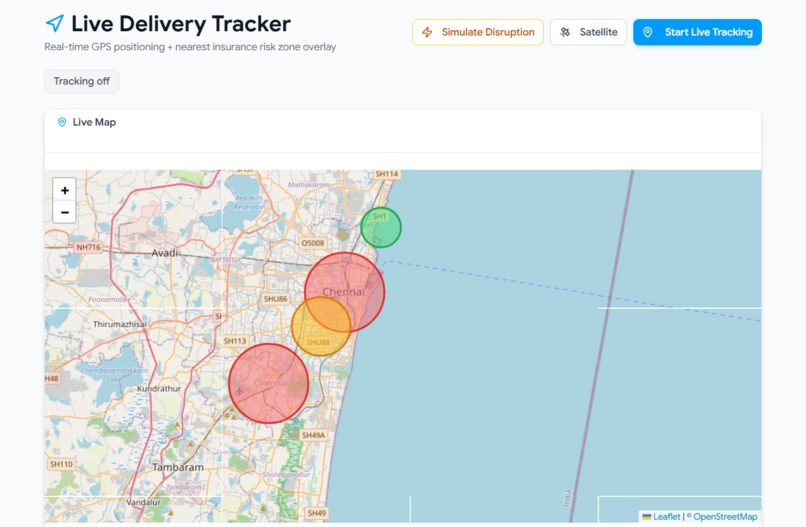
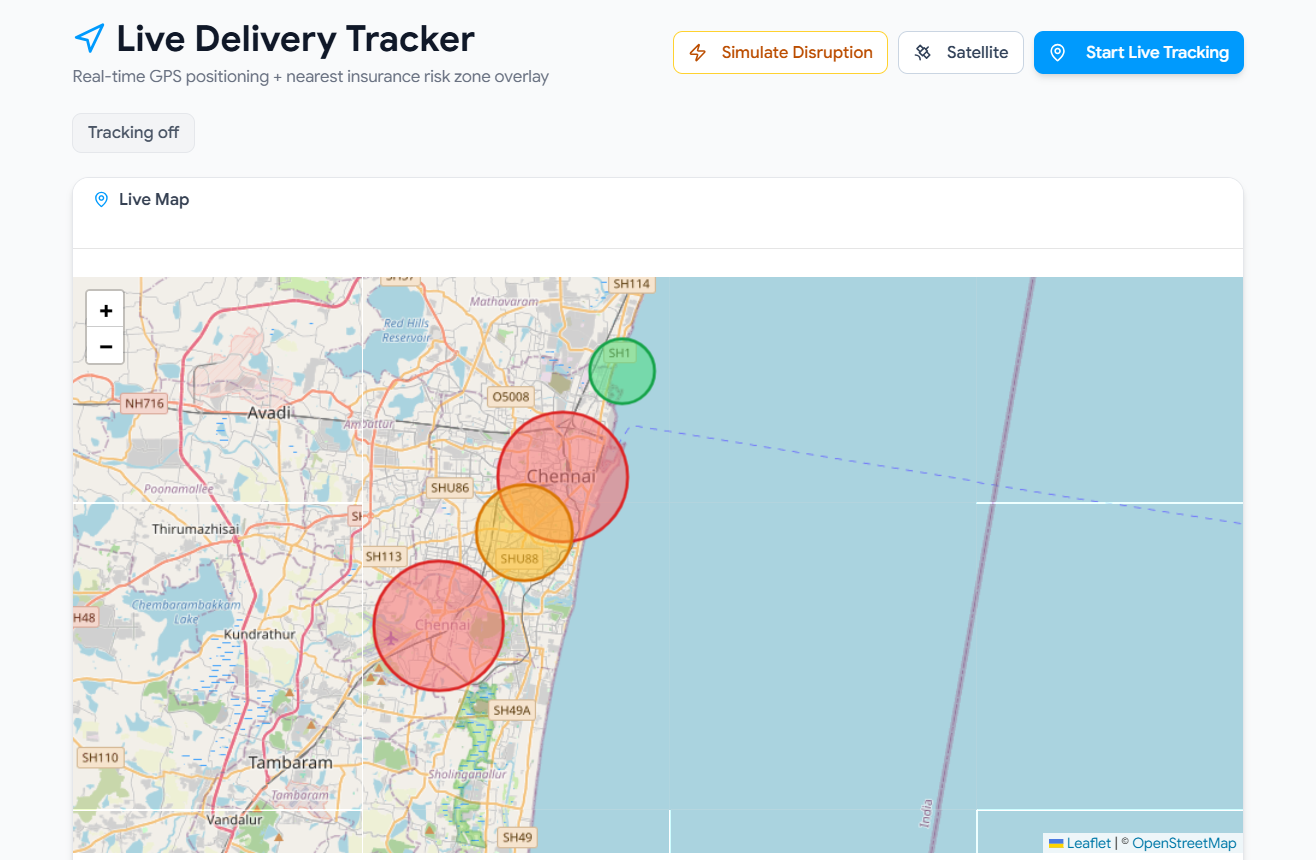
map
-
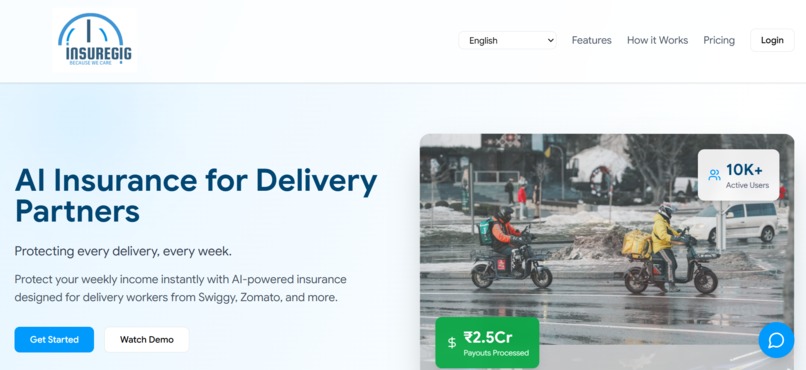
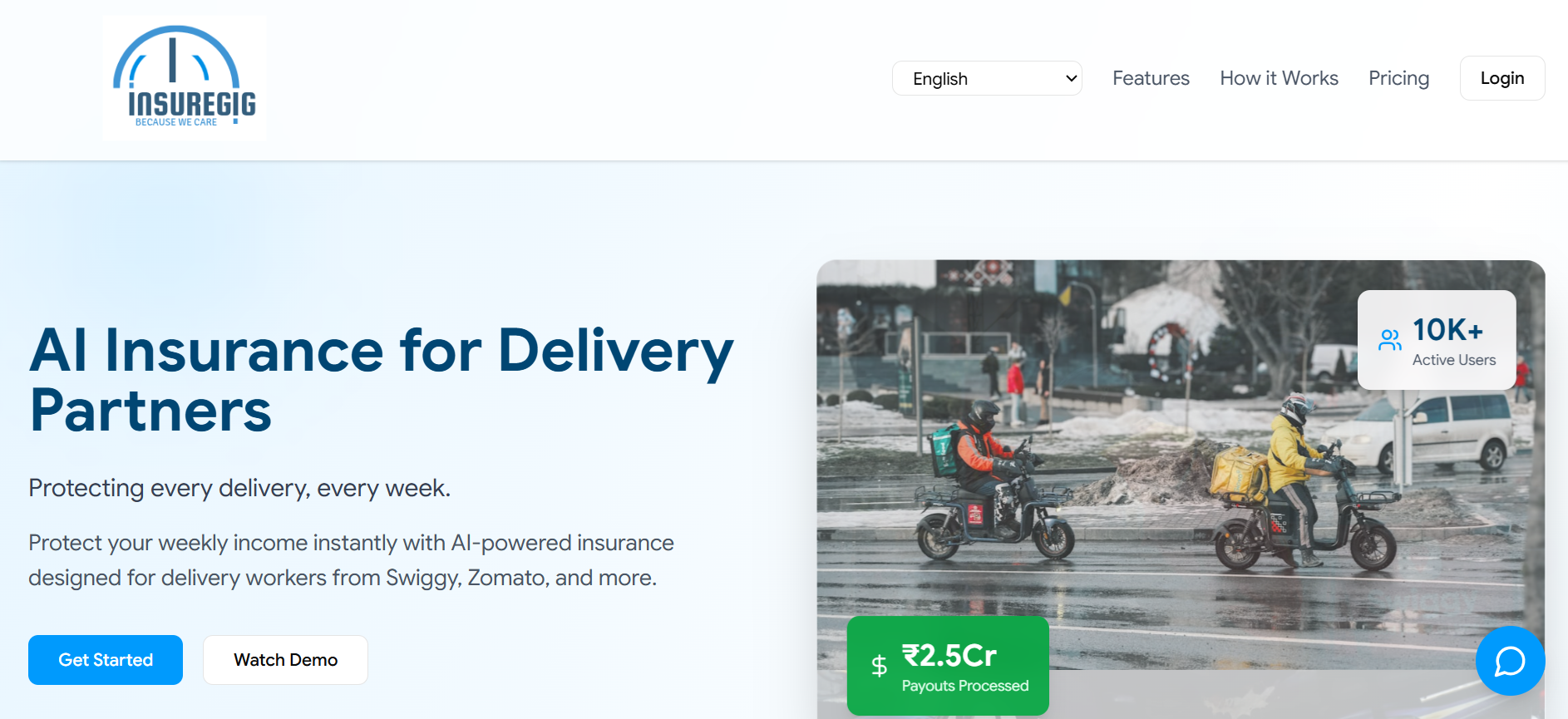
main page
Inspiration
Gig workers and delivery partners are the invisible engine of modern cities, yet they absorb most of the financial shock from disruptions like extreme weather, air pollution spikes, traffic gridlocks, or platform outages. A single bad day can mean a full loss of income with no safety net.
We were inspired to solve a simple but critical question: What if insurance for gig workers reacted instantly to real-world disruptions instead of waiting for manual claims?
What it does
InsureGig is a micro-insurance platform for delivery partners that provides automated financial protection against real-world disruptions.
It uses a parametric insurance model, where payouts are triggered automatically when predefined conditions are met—such as severe rainfall, high AQI, traffic congestion, or platform server downtime.
No paperwork. No delays. No claim disputes. Just instant protection when income is at risk.
How we built it
We built InsureGig as a full-stack AI-powered InsurTech system:
Frontend: Web app with role-based dashboard and policy flow Backend: Supabase for authentication, policies, claims, and history Payments: Razorpay integration (demo gated premium purchase flow) AI/ML Layer: TensorFlow.js model for weekly premium prediction (₹20–₹50 range) 16-feature disruption prediction model (AQI, rainfall, traffic, platform signals) 4-output risk scoring: weather, AQI, traffic, and platform disruption severity Risk Engine: Live weather data via OpenWeatherMap API 29 predefined risk zones across major Indian cities GPS + IP + movement pattern-based spoof detection Routing Intelligence: OSRM-based real-road routing with alternative path generation ML-driven rerouting simulation for safer delivery paths Notifications: SMS alerts via Twilio (claim/payout triggers) AI Support: Gemini-powered chatbot for user assistance Localization: Multi-language support (EN, HI, MR, GU, TA, TE)
Challenges we ran into
Designing a fair premium pricing model within a tight ₹20–₹50 weekly constraint Balancing real-time performance with ML-based risk scoring Integrating multiple external APIs (weather, maps, SMS) without latency issues Preventing GPS spoofing and fake claim triggers Building a reliable parametric trigger system without manual intervention gaps
Accomplishments that we're proud of
Built a fully automated parametric insurance system for Delivery workers. Implemented real-time disruption prediction using ML + environmental data Created a fraud-resistant claim system using multi-signal GPS verification Designed live rerouting around risk zones using real road networks Integrated end-to-end flow: signup → premium → risk scoring → claim → payout simulation Built multilingual support for wider accessibility in India
What we learned
Insurance becomes far more powerful when it is event-driven instead of manual Real-world systems need hybrid intelligence (rules + ML + heuristics) GPS and location-based fraud detection is a multi-signal problem, not a single check Small latency improvements matter a lot in real-time risk systems Gig economy protection is not just financial—it is also behavioral + environmental
What's next for Insure gig
Move from simulation to real payout integrations with insurers Expand risk signals using: city-level traffic APIs platform order density data Build dynamic premium adjustment (real-time insurance pricing) Introduce emergency micro-loans during extreme disruption events Partner with delivery platforms for embedded insurance at signup Add predictive income protection scoring per driver
Built With
- framermotion
- html5geolocationapi
- leaflet.js
- numpy
- openweathermap
- pandas
- postgresql
- python
- react
- typescript

Log in or sign up for Devpost to join the conversation.