-
-
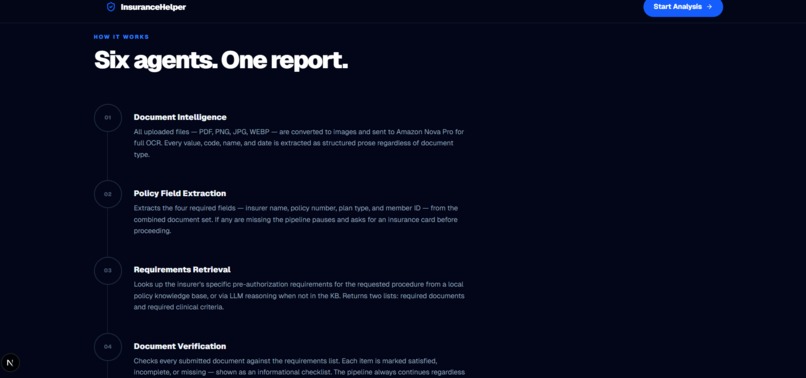
how?
-
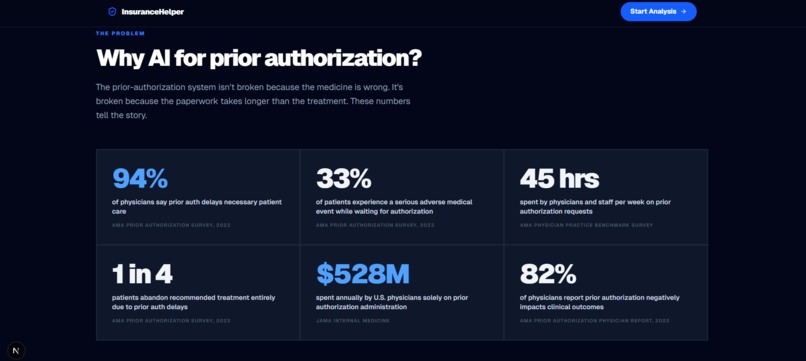
why?
-
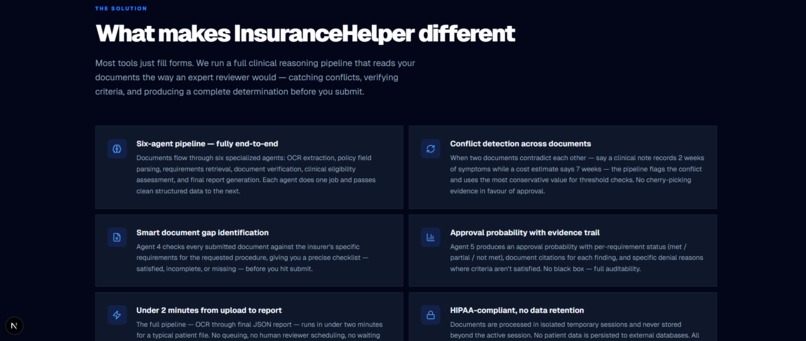
what?
-
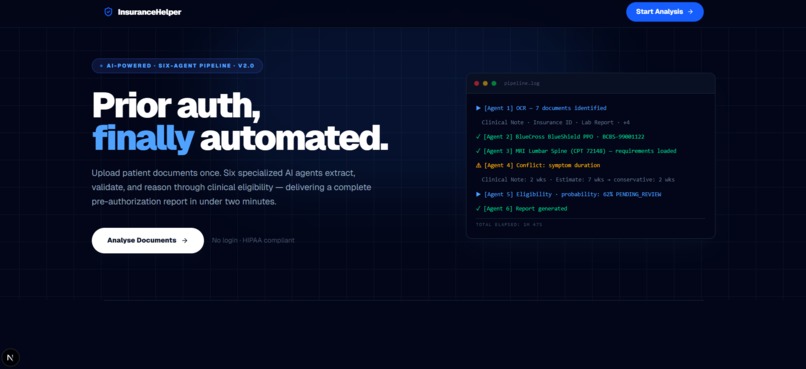
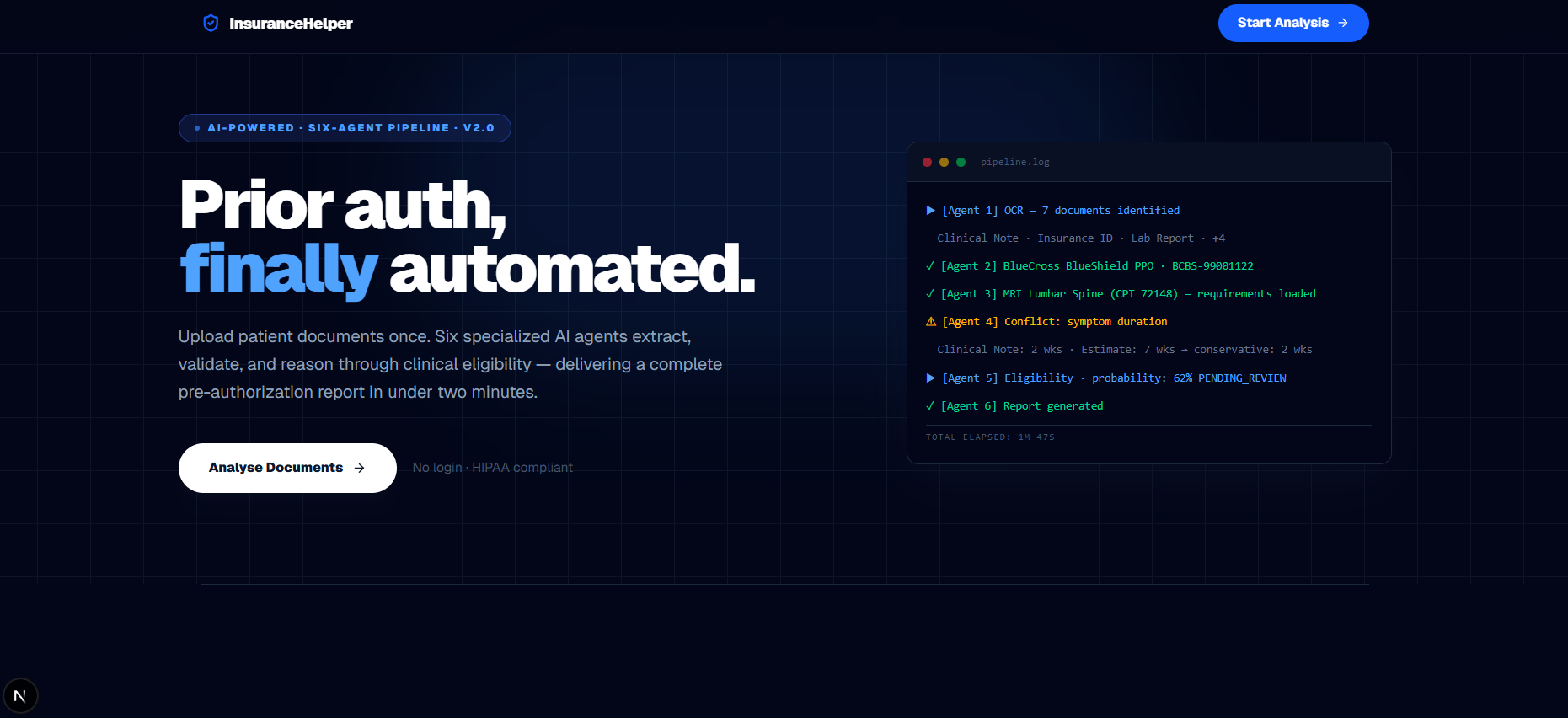
landing page
-
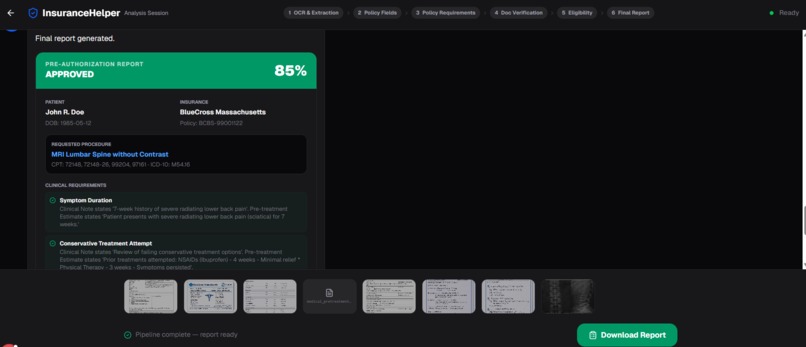
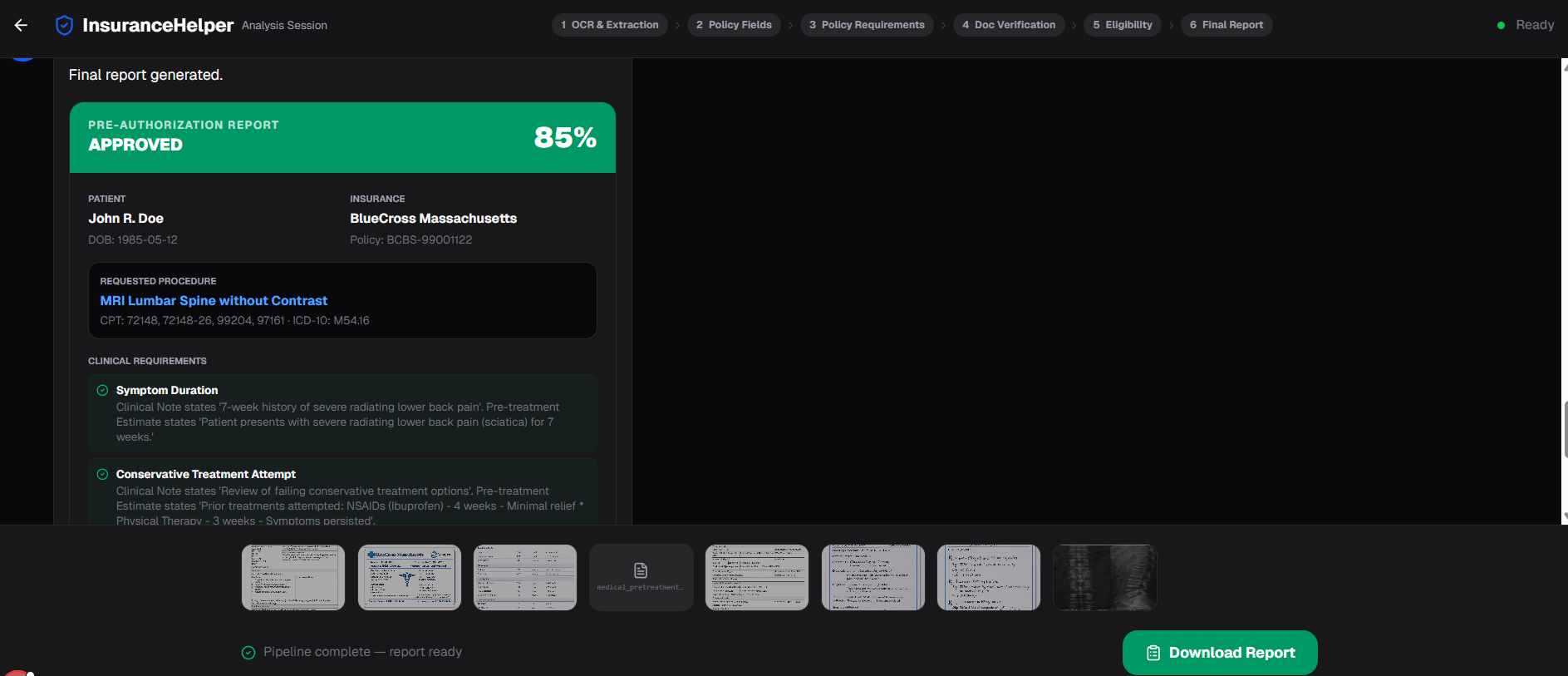
analysis of patient's documents
Inspiration
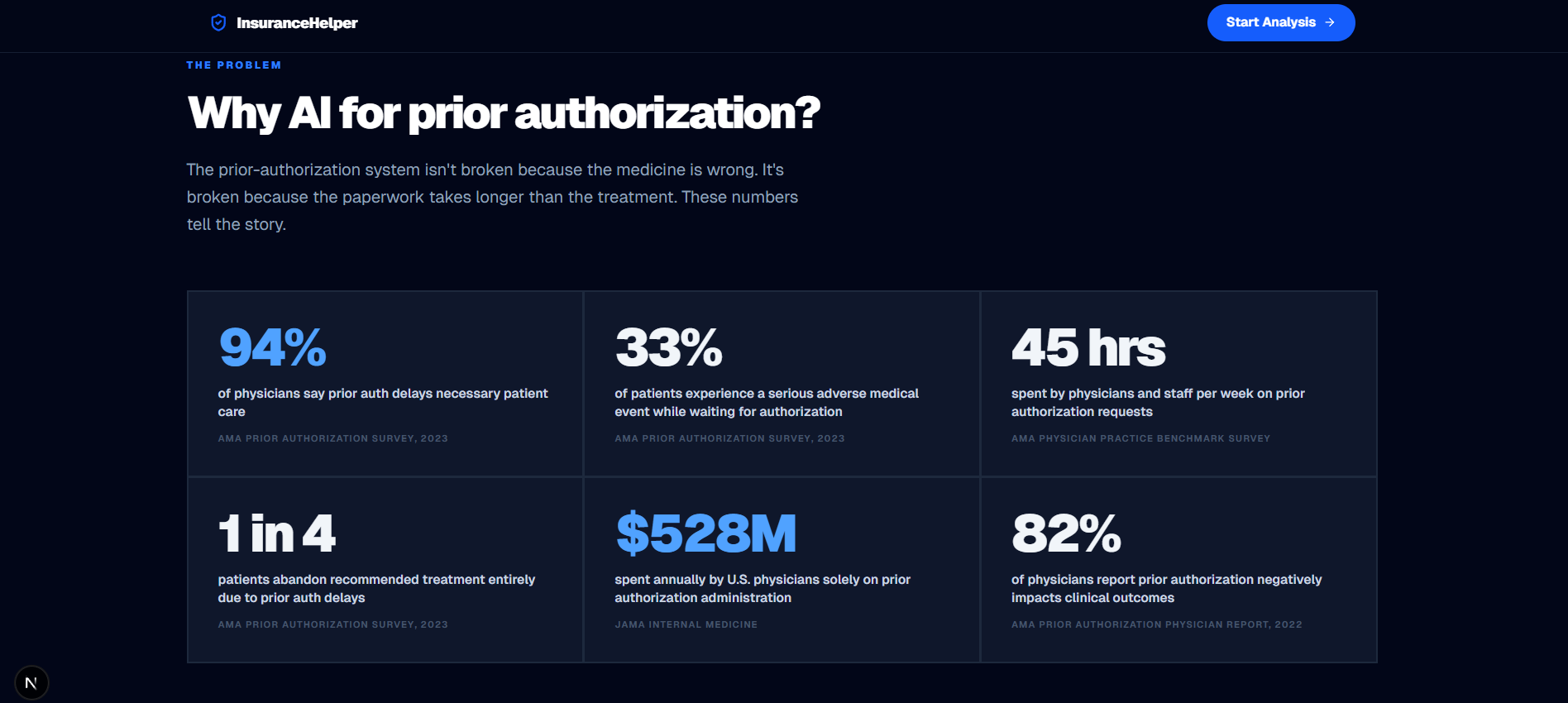
We've all heard stories of patients waiting days — sometimes weeks — for insurance pre-authorization approvals, while doctors and staff spend hours on phone calls and paperwork just to get a procedure greenlit. It felt like exactly the kind of painful, repetitive, high-stakes process that AI should be able to help with. That's what pushed us to build this.
What it does
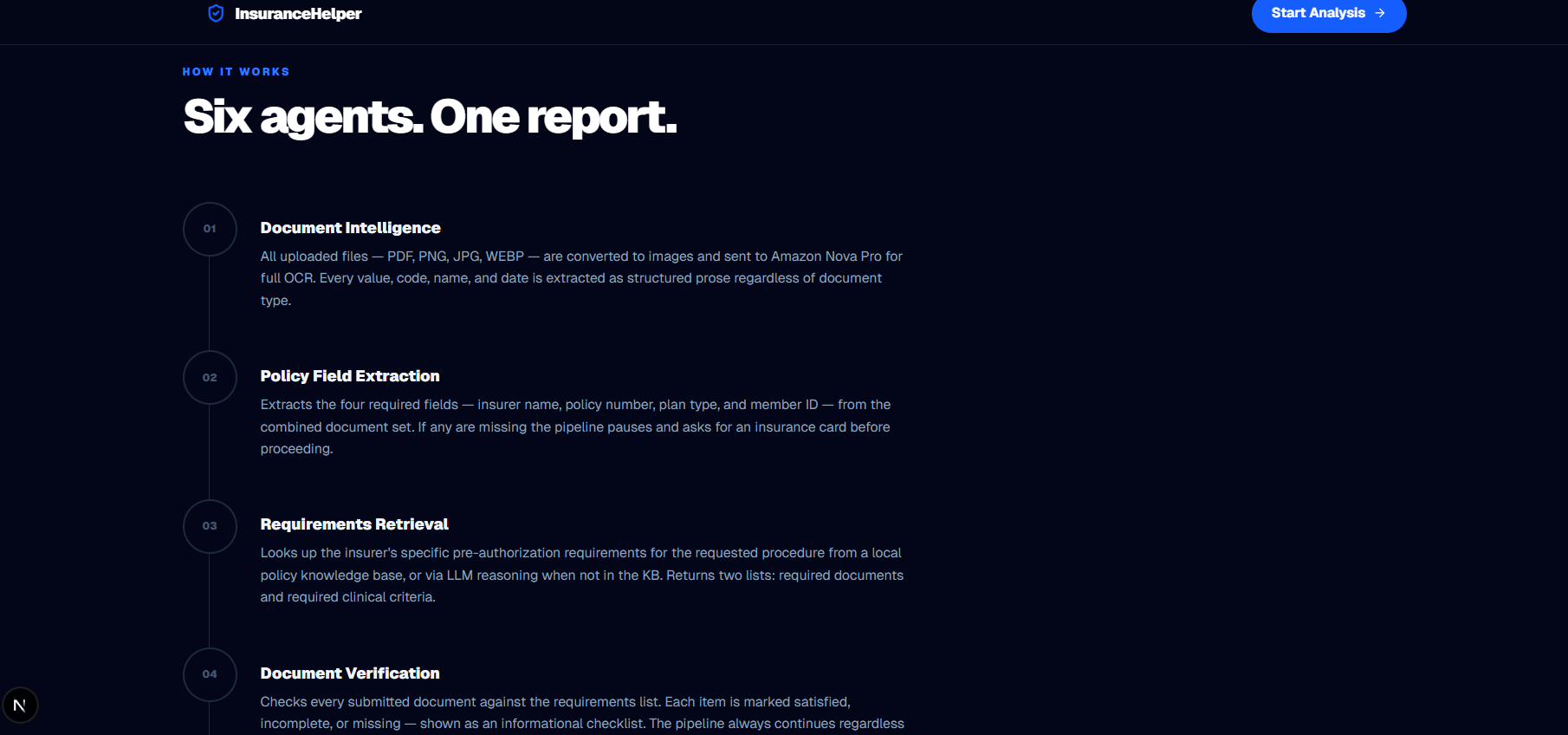
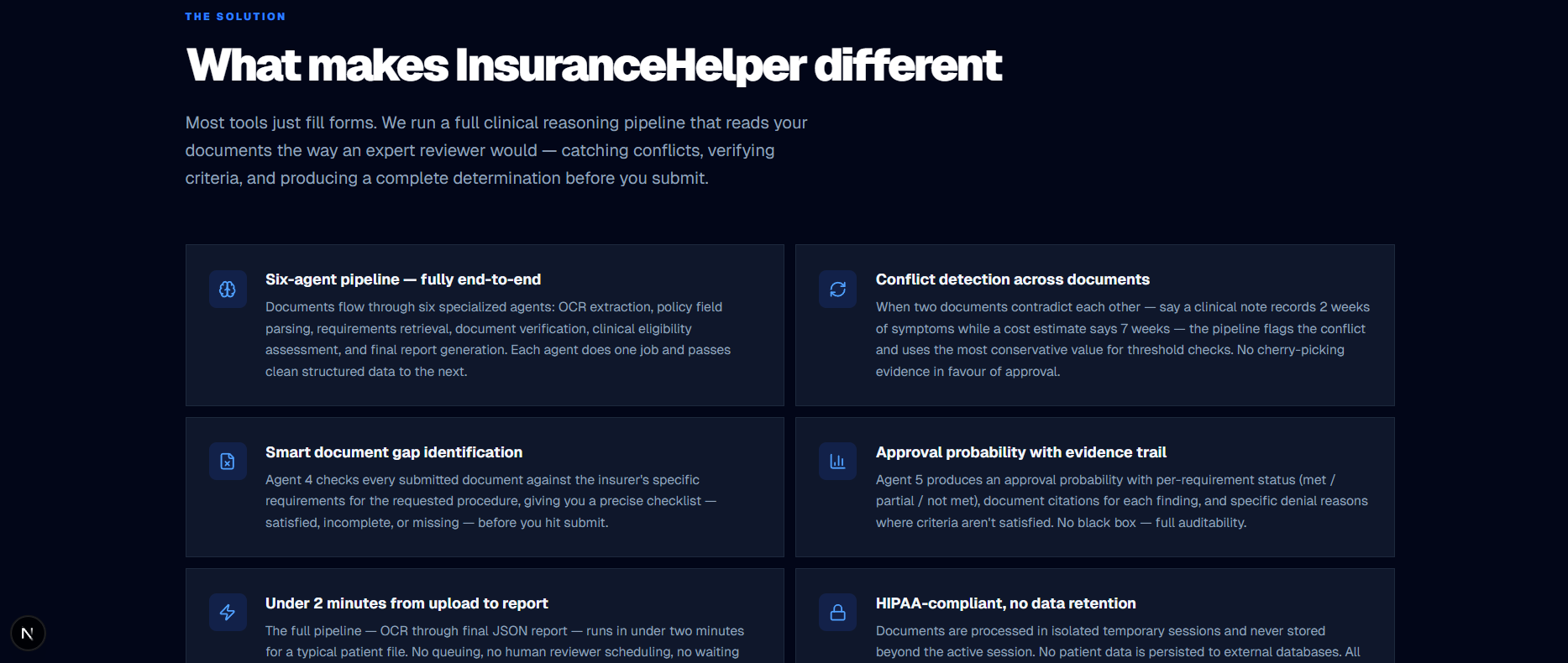
InsuranceHelper is an AI-powered pipeline that automates health insurance pre-authorization. You upload your patient documents — clinical notes, referrals, lab reports, insurance cards — and six specialized agents handle everything: reading and understanding the documents, identifying the insurance policy, fetching its requirements, checking if your documents meet them, assessing clinical eligibility, and finally generating a filled pre-authorization form ready to submit.
How we built it
The backend is a Python pipeline of six sequential agents, each with a specific role, all running on Amazon Nova models via AWS Bedrock. The frontend is built with Next.js. The agents pass structured data down the chain, and we used a deterministic document-checking layer to avoid hallucinations in the most critical steps. FastAPI handles the API layer, with files stored in S3.
Challenges we ran into
we ran into Getting the agents to produce consistent, structured JSON outputs was harder than expected — LLMs love to add extra text or markdown that breaks parsing. We also had to think carefully about how to handle incomplete document sets gracefully, so the pipeline could pause, ask for what's missing, and resume rather than just crash. Keeping all agents at temperature 0 and adding JSON repair logic saved us a lot of pain.
Accomplishments that we're proud of
The pipeline actually works end-to-end — upload messy real-world documents and get a filled authorization form on the other side. We're also proud of the interactive UI that makes the pipeline feel transparent: you can see each agent working step by step, and if something's missing, the system tells you exactly what to upload next.
What we learned
Multi-agent systems are only as strong as their interfaces. We spent a lot of time designing exactly what each agent passes to the next, and that discipline paid off. We also learned that deterministic logic and LLMs can work really well together — you don't have to pick one.
What's next for insuranceHelper
We want to connect it directly to real insurer APIs so the policy lookup is live rather than simulated. Adding EHR integrations (like Epic or Cerner) would make it usable in an actual clinical workflow. Longer term, we'd love to support appeal letter generation when a claim gets denied.
Built With
- amazon-web-services
- bedrock
- fastapi
- nextjs
- nova
- python


Log in or sign up for Devpost to join the conversation.