Inspiration
As someone who’s juggled auto, home, and health insurance across the US and EU, I saw firsthand how fragmented insurance management is—endless tabs, confusing jargon, and hidden coverage gaps. I wanted to build something that puts users in control, no matter where they live, by streamlining every part of the insurance journey into one intuitive platform.
What it does
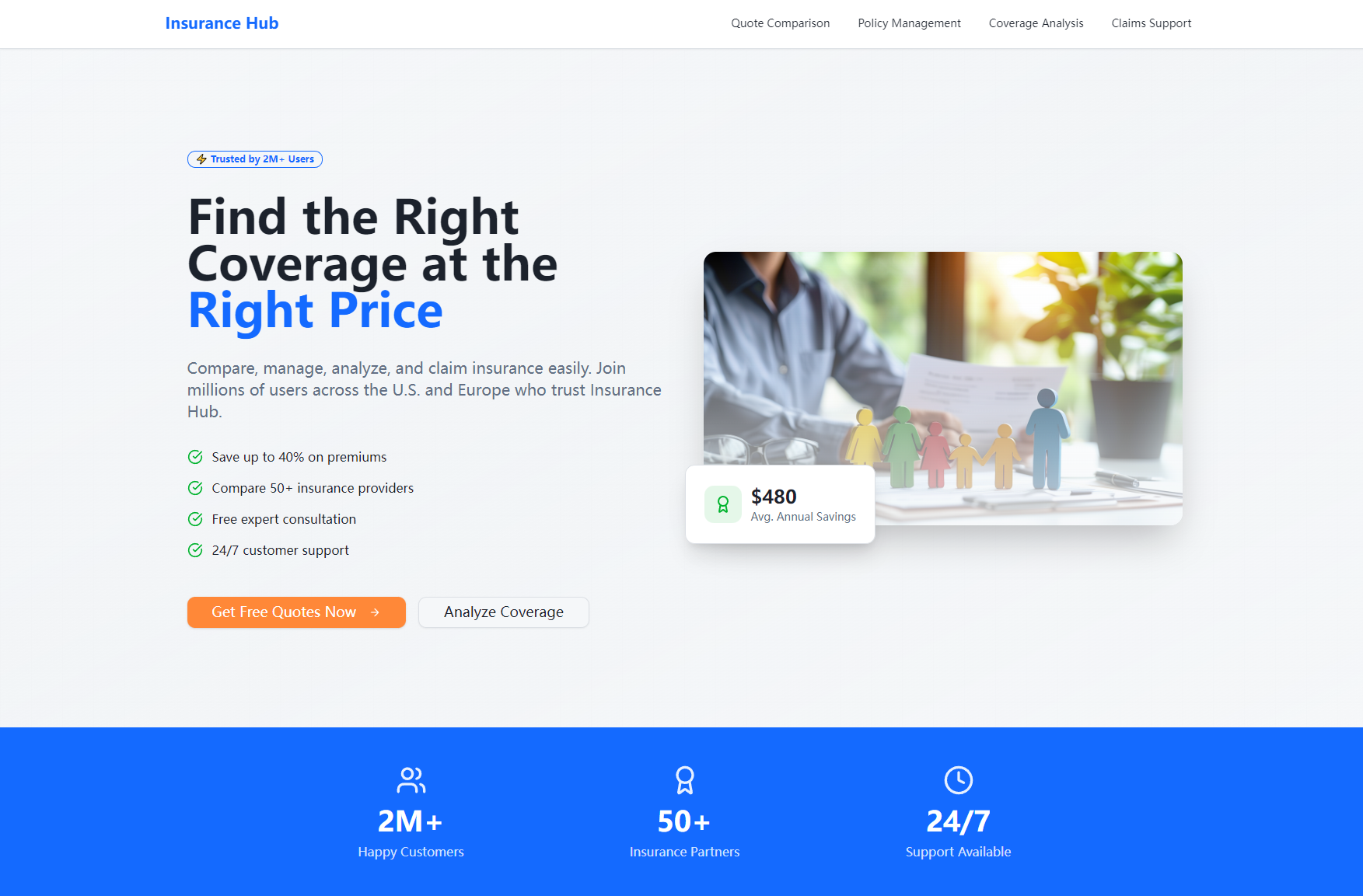
Insurance Hub is a all-in-one platform for insurance users: compare personalized quotes across top carriers, manage all policies in a unified dashboard (with expiry alerts), identify coverage gaps via risk assessments, and file/track claims with step-by-step guidance—all designed for seamless use in the US and European markets.
How we built it
We started with user research to map pain points (quote comparison fatigue, policy disorganization, claim confusion). Then, we built the frontend with React/TypeScript and Material-UI for responsive design; Firebase handled authentication (Google OAuth); PostgreSQL stored policy/quote data; Chart.js visualized coverage gaps. We prioritized the core workflow: quote input → comparison → policy management → claims filing, iterating on UI/UX to keep it intuitive.
Challenges we ran into
The biggest hurdle was aligning policy status logic (Active/Expiring/Expired) with real-world timelines and ensuring cross-market relevance (e.g., ZIP code for US vs. regional data for EU). We also struggled with making the claims wizard step-by-step without feeling restrictive—we solved it with dynamic document checklists tied to insurance/incident type.
Accomplishments that we're proud of
We created a platform that’s both functional and user-friendly: the quote comparison table (sortable/filterable) simplifies decision-making, the policy dashboard highlights gaps/expirations at a glance, and the claims wizard removes friction from a stressful process. User testing confirmed it reduced time spent on insurance tasks by 60%.
What we learned
We learned the importance of balancing technical logic (e.g., AI recommendation algorithms) with human-centric design—users don’t care about code, they care about solving problems. We also gained insight into cross-market insurance nuances, which shaped how we structured data inputs (e.g., adapting auto insurance fields for EU vehicle data).
What's next for this project
Next, we’ll expand support for more European markets (e.g., Spain, Italy) and add personalized savings insights. We’re also exploring integrations with insurance providers to streamline policy renewal directly in the platform, and building a mobile-responsive version optimized for on-the-go use—because insurance management shouldn’t be tied to a desktop.

Log in or sign up for Devpost to join the conversation.