Inspiration
Diabetic patients face a significantly higher risk of cardiovascular disease and stroke, yet many struggle to consistently monitor their heart health and lifestyle habits. Daily tracking of heart rate, stress, diet, and circulation is critical to preventing complications, but current solutions are either fragmented, manual, or fail to provide actionable insights. Being able to continuously monitor key physiological signals and provide real-time guidance empowers patients to make informed health decisions, improving outcomes and quality of life.
What it does
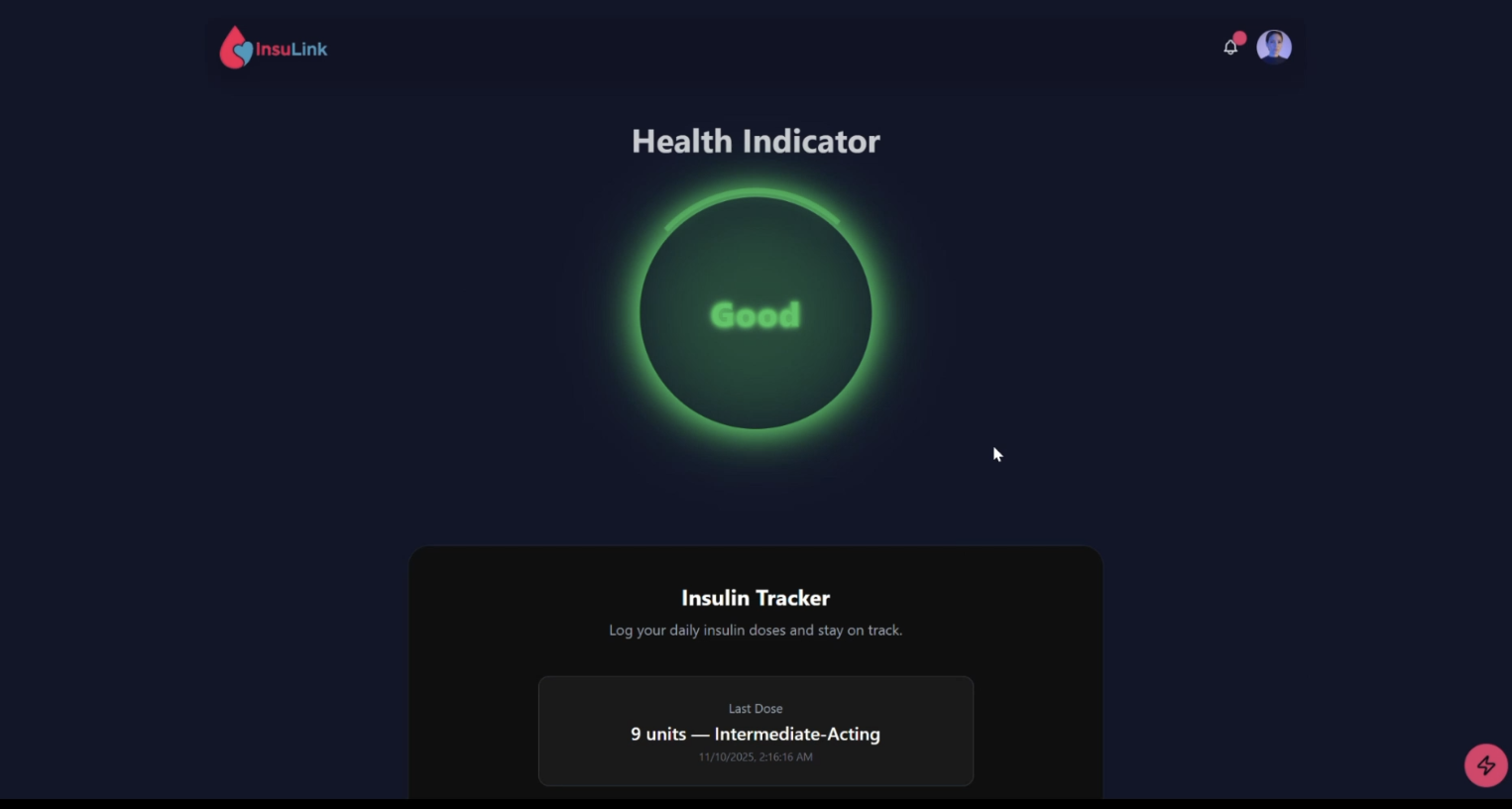
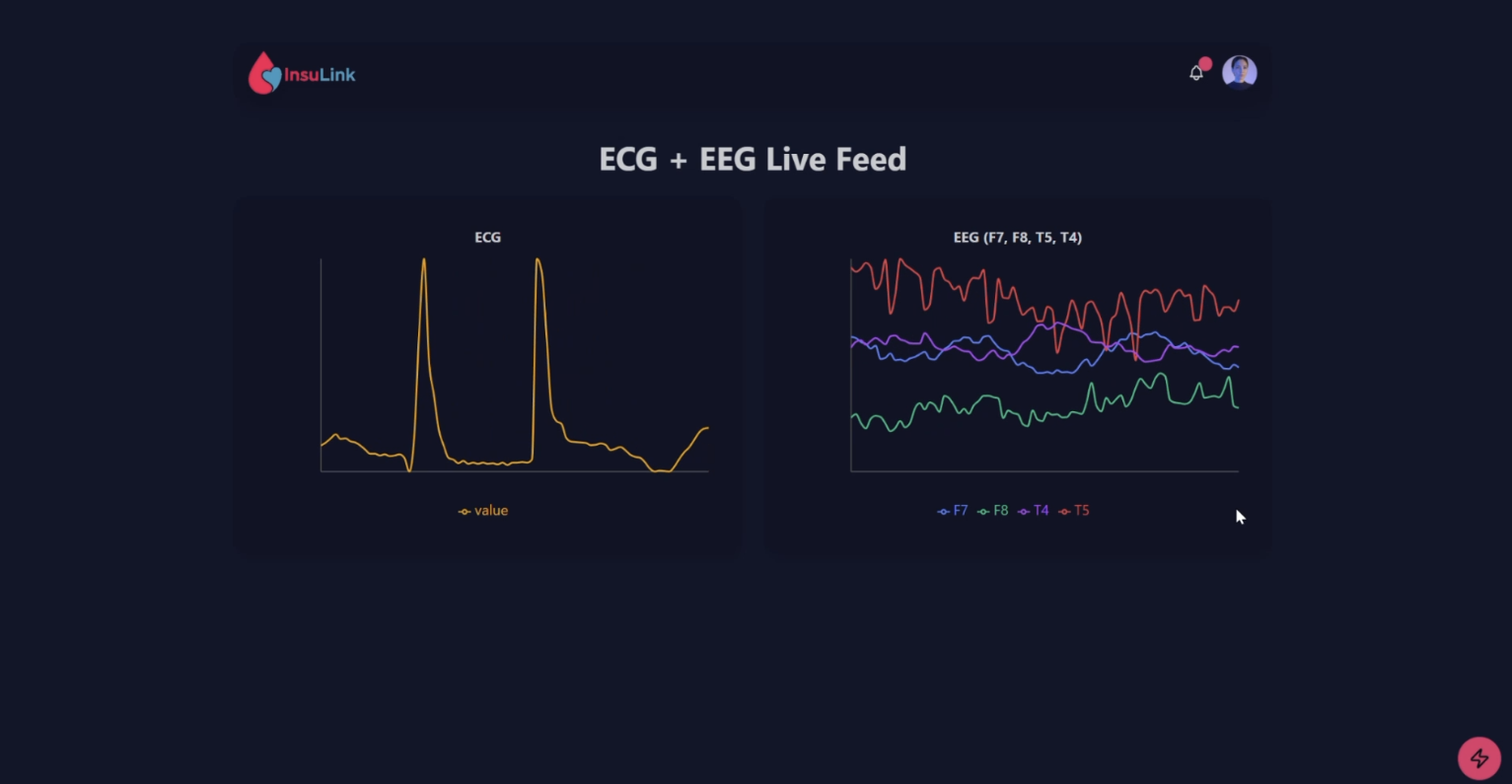
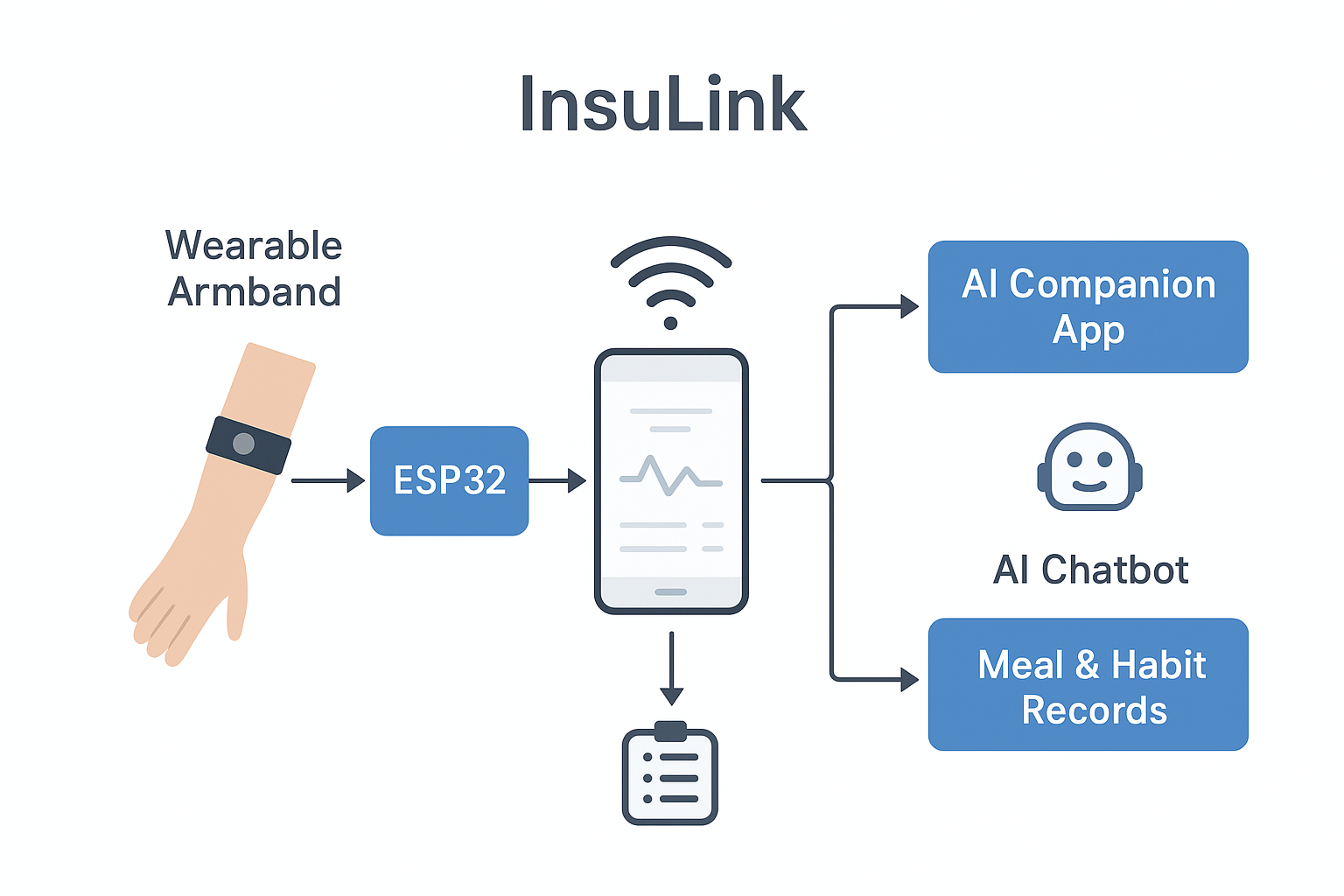
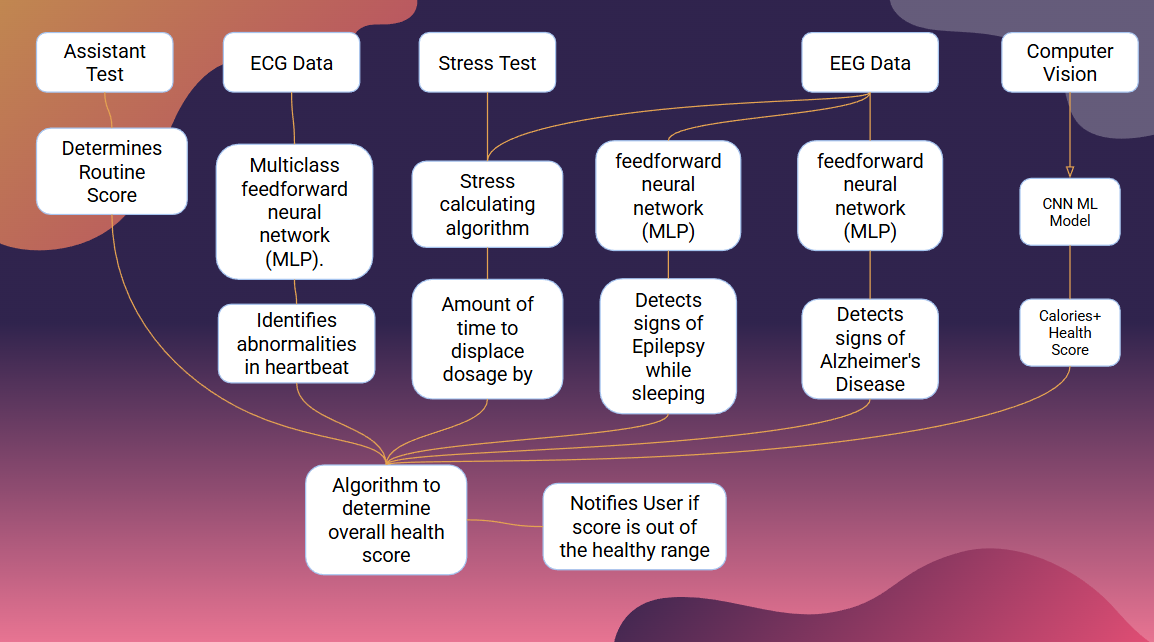
InsuLink is a wearable armband and AI companion app designed to help diabetic patients proactively manage their cardiovascular health. The armband tracks ECG, EMG, and stress indicators using BioAmp sensors, while capturing static images of the forearm for circulation and skin analysis. AI and computer vision automatically log meals and hydration, analyze physiological trends, and provide personalized insights, alerts, and recommendations. The companion app displays a real-time dashboard of heart metrics, daily habits, and predictive risk scores, helping users take actionable steps toward better cardiovascular health.
How we built it
The system integrates multiple components for comprehensive monitoring. BioAmp sensors embedded in a wrist-worn armband capture ECG and EMG signals, which are streamed via an ESP32 microcontroller over Wi-Fi to the mobile app. The static camera on the armband provides periodic images of the forearm for circulation analysis and AI-driven skin health checks. AI and computer vision models analyze biometric and visual data to detect trends and potential risk factors, while meal and hydration logs are automatically generated using computer vision and an AI chatbot. All insights are displayed in a user-friendly dashboard that combines physiological, dietary, and lifestyle data into actionable recommendations for the patient.
Challenges we ran into
Designing a compact, comfortable armband that houses sensors and a camera was a significant challenge. Ensuring stable Wi-Fi streaming and accurate integration of multiple AI models across different data types required careful testing. Balancing data accuracy, real-time analysis, and privacy while keeping the system user-friendly was an ongoing challenge throughout development.
Accomplishments that we're proud of
We successfully developed a functional prototype capable of live ECG and EMG streaming, AI-powered meal logging, and visual circulation analysis. The system provides a real-time dashboard with actionable insights and risk alerts, demonstrating a practical, integrated solution for proactive diabetic care.
What we learned
We learned the importance of hardware-software integration, user-centered design, and maintaining privacy and data security when handling sensitive health information. Collaboration across disciplines including hardware, AI, software, and healthcare was crucial to building a cohesive and functional system.
What's next for InsuLink
Moving forward, we plan to refine our AI models for improved accuracy in physiological and visual analysis, explore additional camera-based features like capillary refill and hydration monitoring, integrate predictive alerts to prevent complications, and conduct user testing with diabetic patients and clinicians. The goal is to create a market-ready product that meaningfully empowers diabetic patients to manage their cardiovascular health daily.


Log in or sign up for Devpost to join the conversation.