-
-
image
About the Project
Inspiration
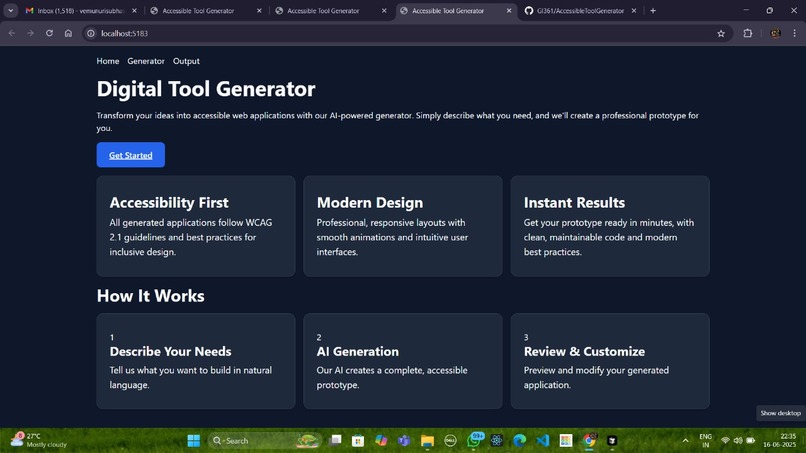
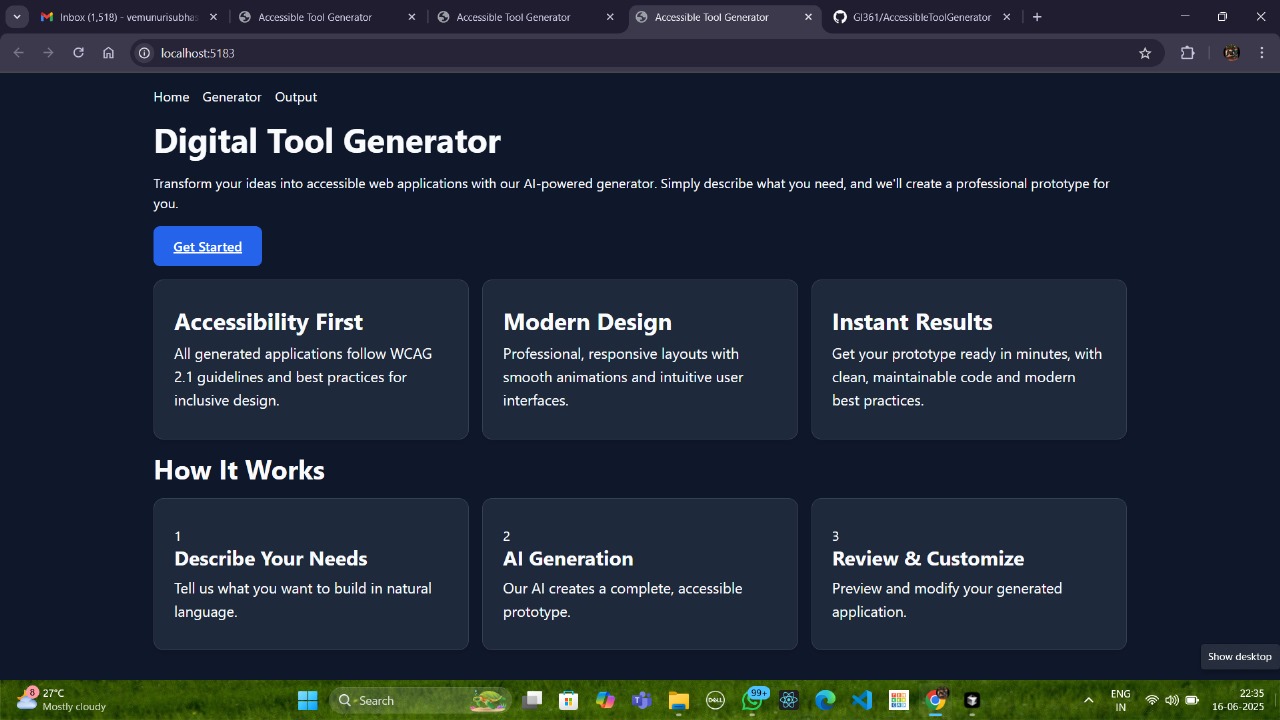
The idea was born from a simple question: What if someone could just describe what they needed, and technology did the rest — no code, no complexity? We saw how millions struggle with digital tools due to physical, cognitive, or technical limitations. Our mission became clear — to eliminate barriers and make digital empowerment accessible to all.
What We Learned
Throughout the development process, we explored cutting-edge natural language processing (NLP) and accessibility design standards. We gained deep insights into inclusive UX, assistive technologies, and how AI can adapt to diverse user needs in real-time.
How We Built It
We used a language model to parse natural language input and generate corresponding UI components or tool functionalities. The backend integrates accessibility-first frameworks and voice-control APIs. The front end is designed with simplicity, contrast compliance, and screen reader support.
Challenges We Faced
- Understanding the nuances of accessibility across different disabilities.
- Making tool generation both accurate and customizable from open-ended input.
- Ensuring low-latency, real-time feedback even on limited devices.
- Balancing flexibility with simplicity to serve both tech-savvy and tech-naive users.
This journey wasn't just technical — it was human-centered, and it reshaped how we think about inclusion in design.
Built With
- css
- html
- javascript
- react
- reactrouterdom
- tailwindcss
- vite
- webspeechapi


Log in or sign up for Devpost to join the conversation.