-
-
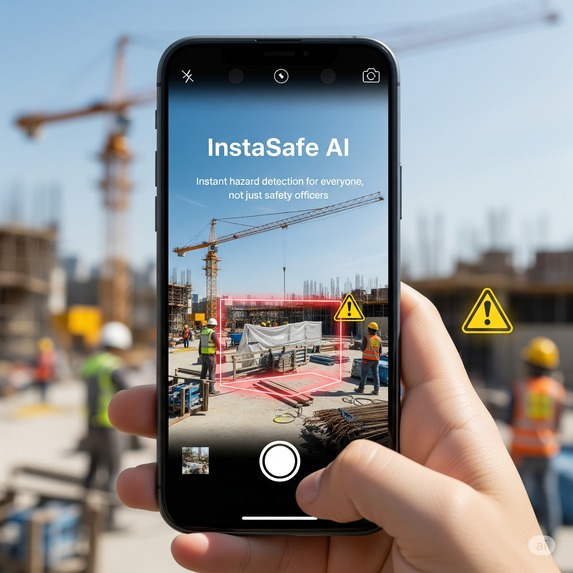
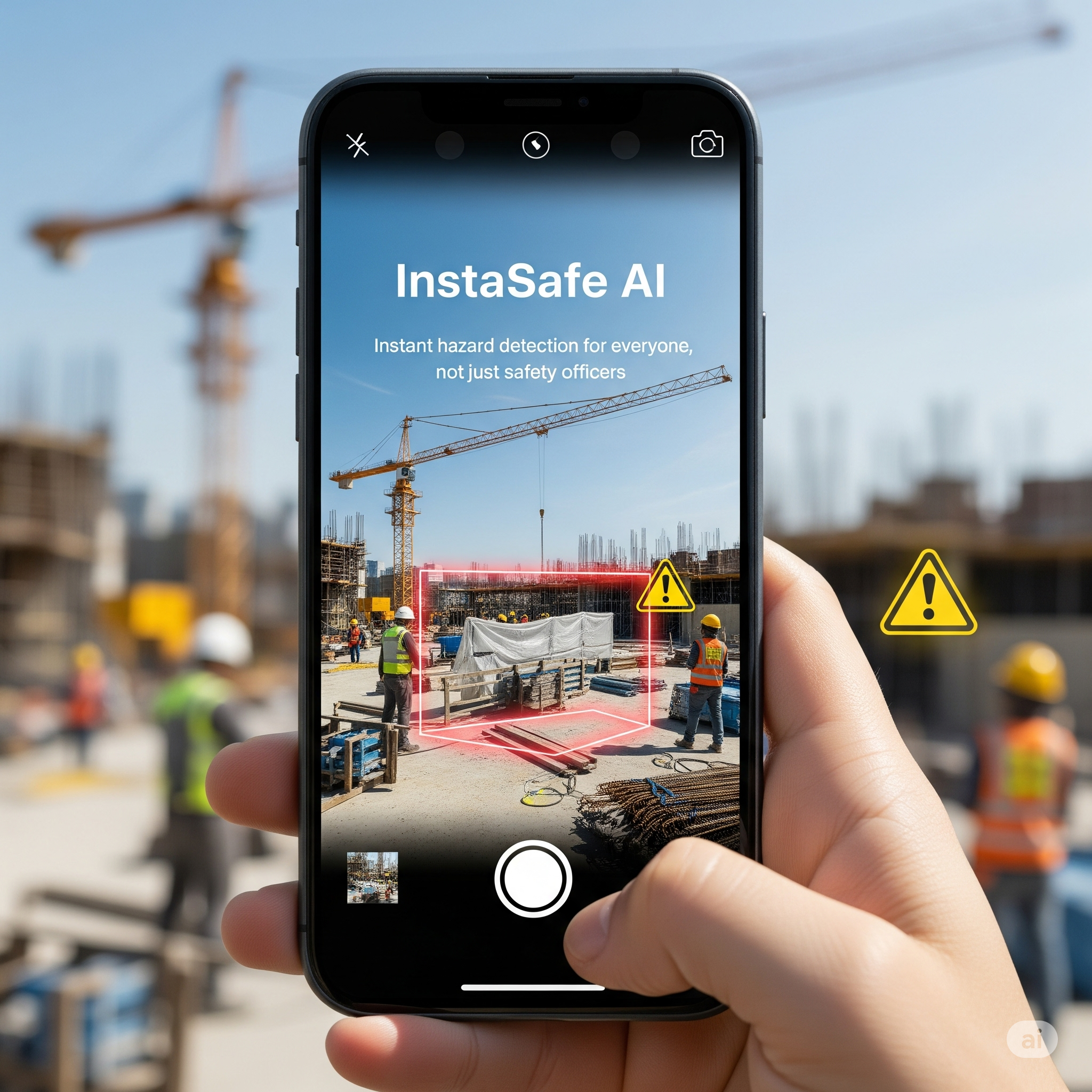
Market Image
-
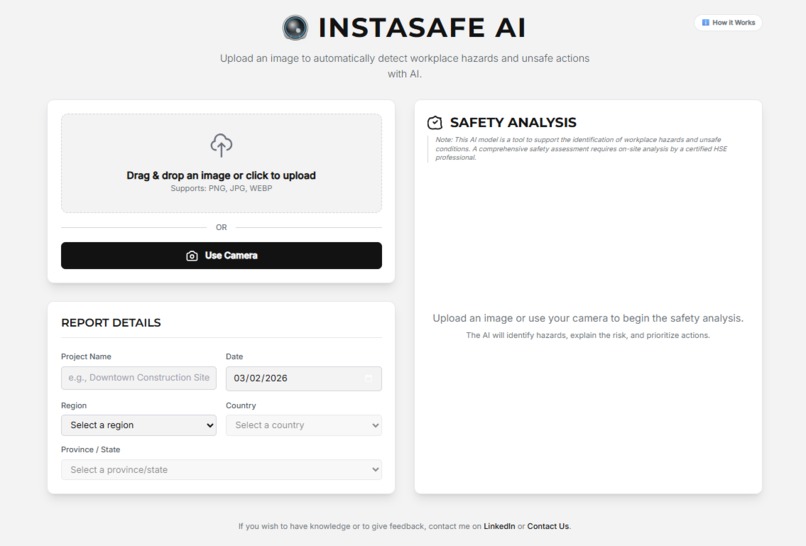
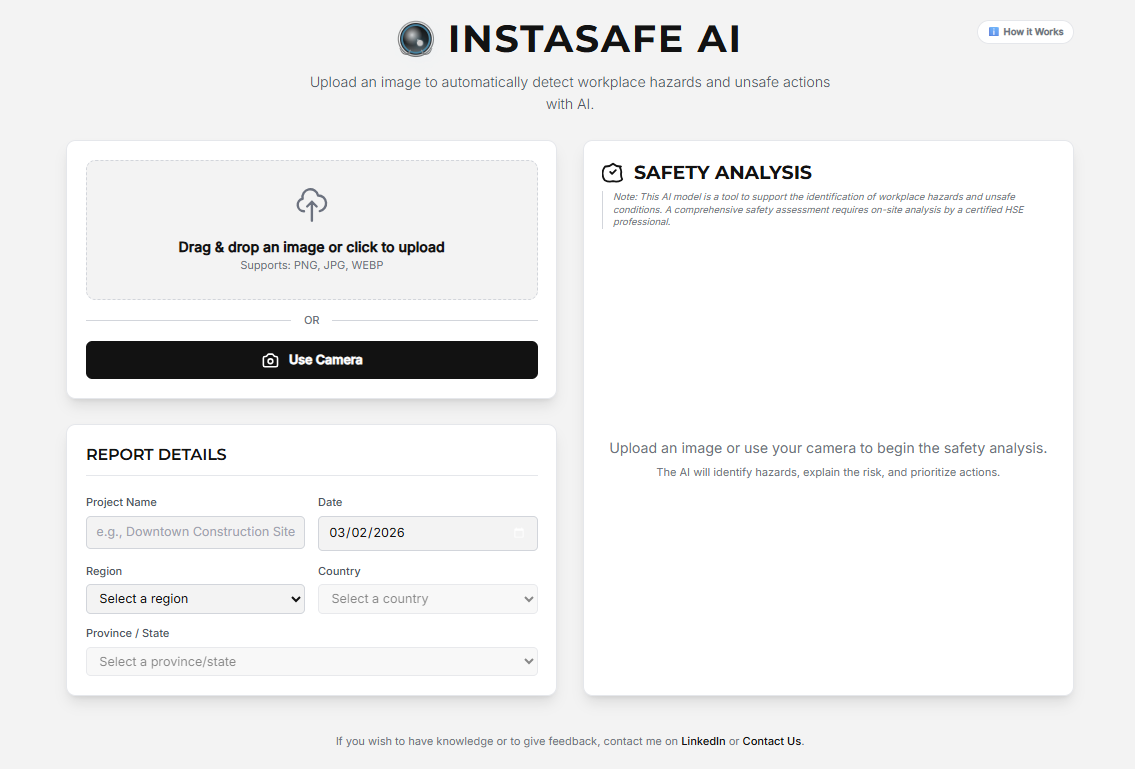
Home screen
-
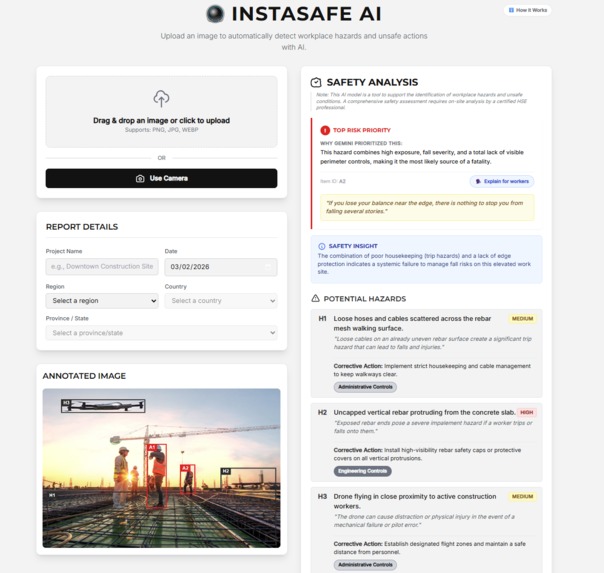
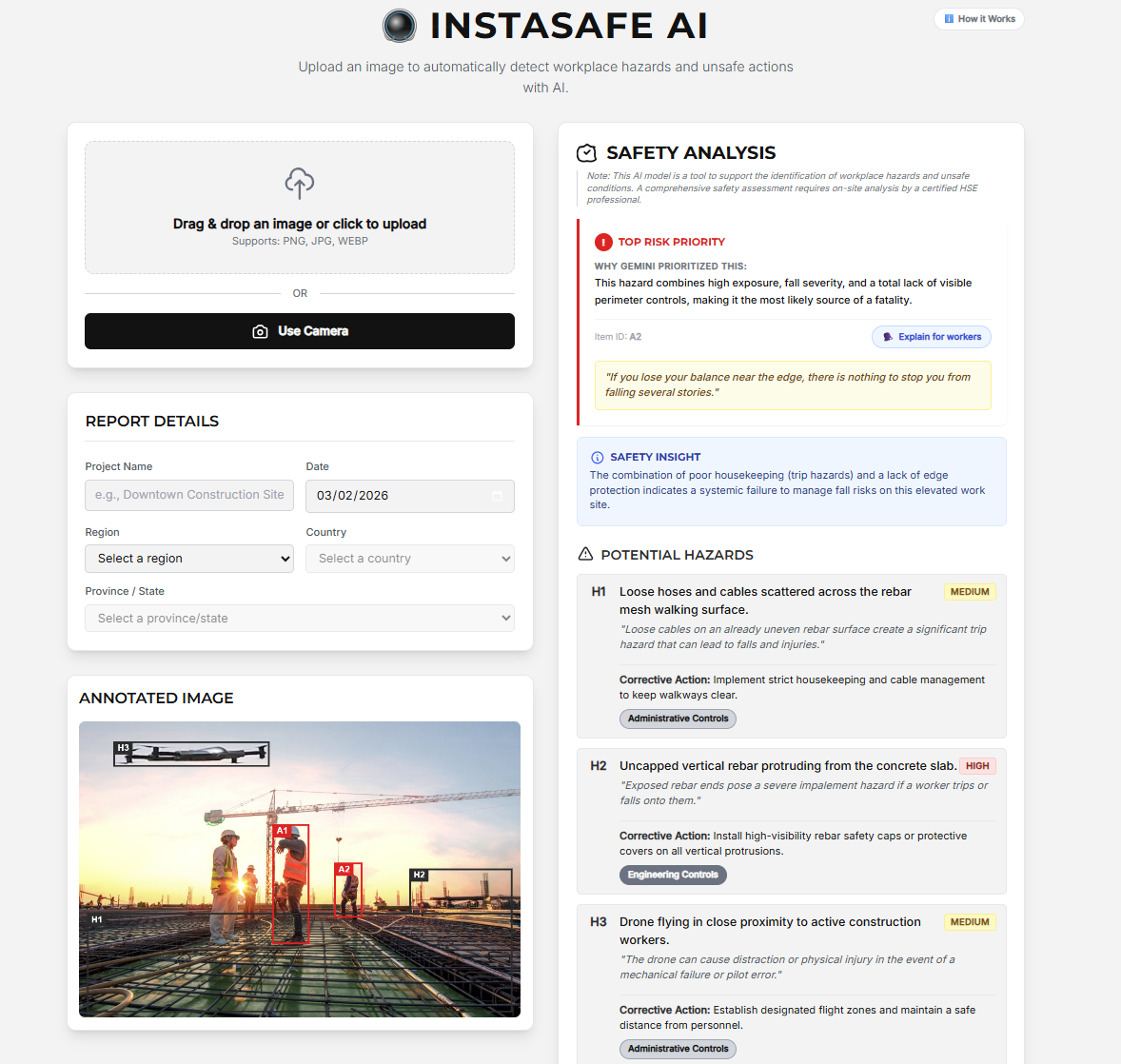
Analysis View
-
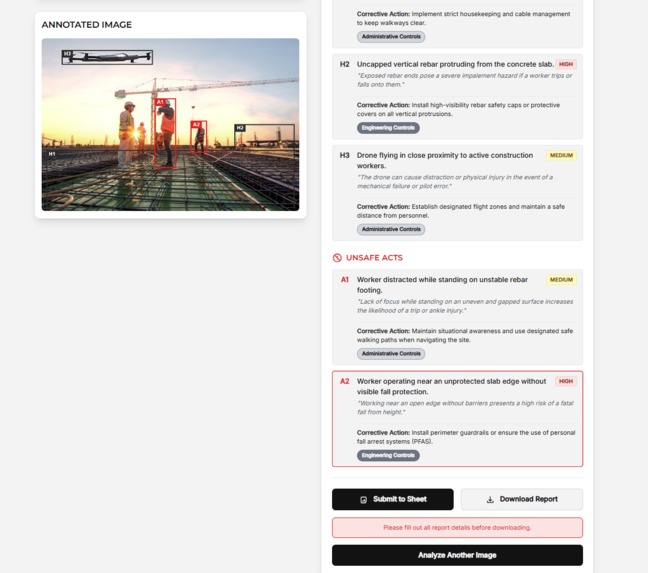
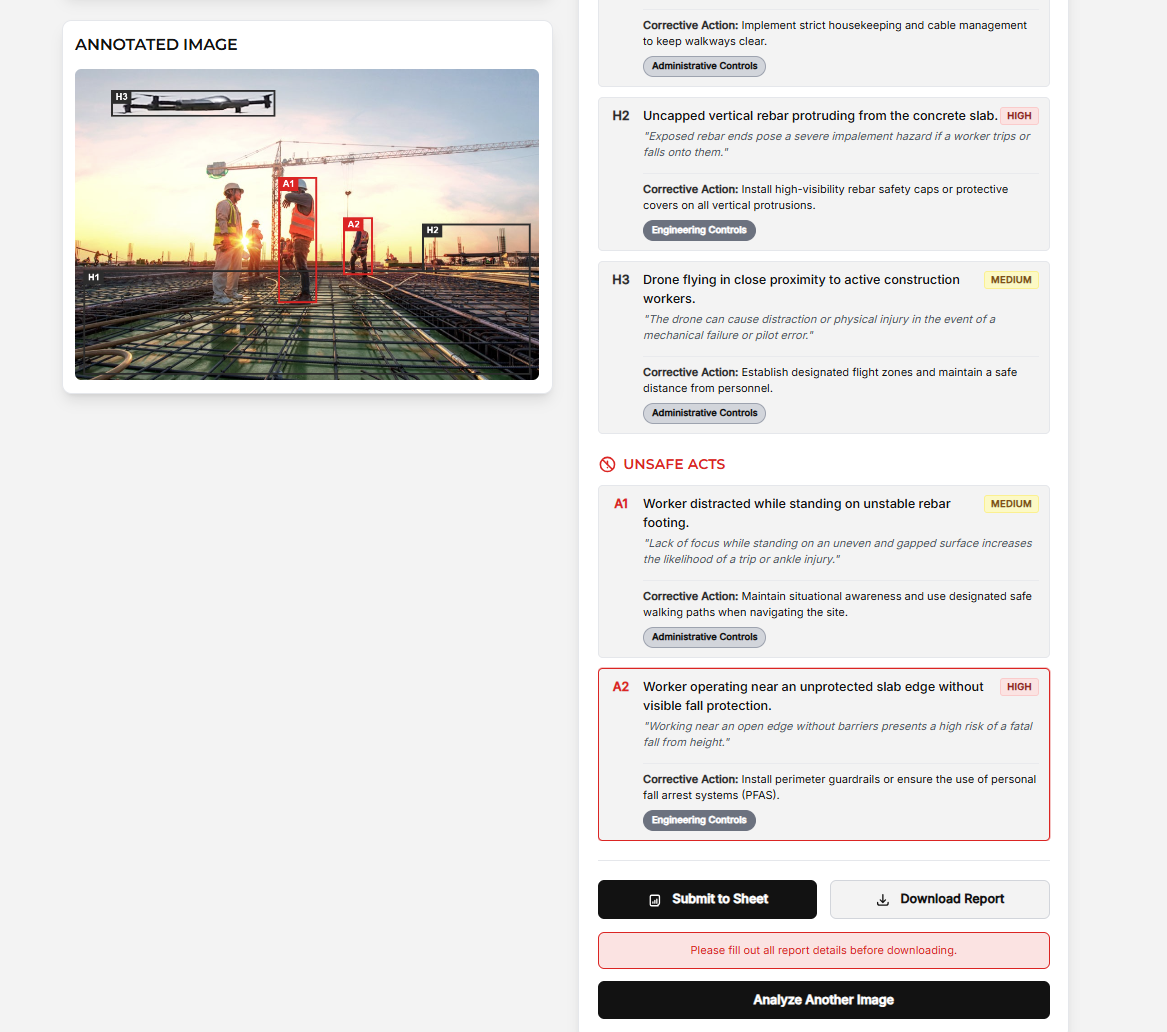
Analysis View
Inspiration
I work closely with Health, Safety, and Environment (HSE) processes and have seen firsthand how workplace safety inspections are often manual, checklist-driven, and reactive. Critical hazards are sometimes identified only after work has already progressed, increasing the risk of serious incidents.
With a technical background, I wanted to apply my skills to support safety professionals, not replace them. The goal was to use AI as a second set of eyes—one that can consistently analyze visual information, highlight risk, and explain why a condition is dangerous.
The release of Gemini 3, with its multimodal reasoning capabilities, created an opportunity to bridge real-world HSE practice with advanced AI. InstaSafe AI was inspired by the idea of using Gemini to help ensure workplaces are safer by identifying and prioritizing life-threatening risks before incidents occur.
What it does
InstaSafe AI is a real-time safety reasoning system that analyzes worksite images to detect hazards and unsafe acts, explain their risk, and prioritize the most critical safety issues.
Instead of simply detecting objects, the system reasons about:
Visual context and worker behavior
Injury severity and likelihood
Risk prioritization based on real-world consequences
It highlights a Top Risk Priority, provides professional and worker-friendly explanations, annotates images for visual grounding, and recommends corrective actions aligned with the Hierarchy of Controls.
How we built it
InstaSafe AI is built using Gemini 3’s multimodal reasoning capabilities.
Images captured from active worksites are analyzed by Gemini, which interprets environmental conditions, worker actions, and spatial relationships. Gemini reasons about safety risk rather than relying on static rules, producing structured, explainable findings.
The frontend is designed to be calm and human-centered, surfacing insights clearly without overwhelming users. The application also generates audit-ready PDF reports that include a transparent AI Safety Analysis Methodology, supporting responsible, human-in-the-loop use.
Challenges we ran into
One of the main challenges was avoiding a “black-box” AI experience. In safety-critical environments, trust matters as much as accuracy, so we focused on making Gemini’s reasoning visible and understandable.
Another challenge was balancing speed with reliability. We intentionally designed the experience to feel deliberate rather than rushed, reinforcing that safety decisions should be thoughtful and informed.
Accomplishments that we're proud of
Building a system that reasons about safety, not just detects objects. Making AI explanations understandable to both safety professionals and workers. Creating a calm, professional UX suitable for safety-critical use. Demonstrating a real-world application of Gemini 3’s multimodal reasoning.
What we learned
Multimodal reasoning provides significantly more value than object detection alone. Explainability is essential for AI adoption in safety and compliance domains. AI systems are most effective when designed to support, not replace, human judgment.
Gemini 3 enabled us to build an AI system that aligns closely with how experienced HSE professionals assess risk.
What's next for InstaSafe AI
Next, we plan to expand InstaSafe AI with: Real-time video analysis for live inspections Trend analysis across multiple inspections and sites Voice-based interaction for hands-free use on worksites Deeper integration with safety management systems
Our goal is to continue using Gemini’s reasoning capabilities to help create safer, more proactive workplaces.
Built With
- css
- gemini
- react
- tailwind
- typescript


Log in or sign up for Devpost to join the conversation.