Inspiration
As a busy professional who loves my Instant Pot but hated scrolling through generic recipes, I wanted a tool that cuts through the noise. I kept throwing out ingredients because I couldn’t find quick, model-specific recipes—so I built one that uses only what’s on hand, fits my tight schedule, and works for my exact pot.
What it does
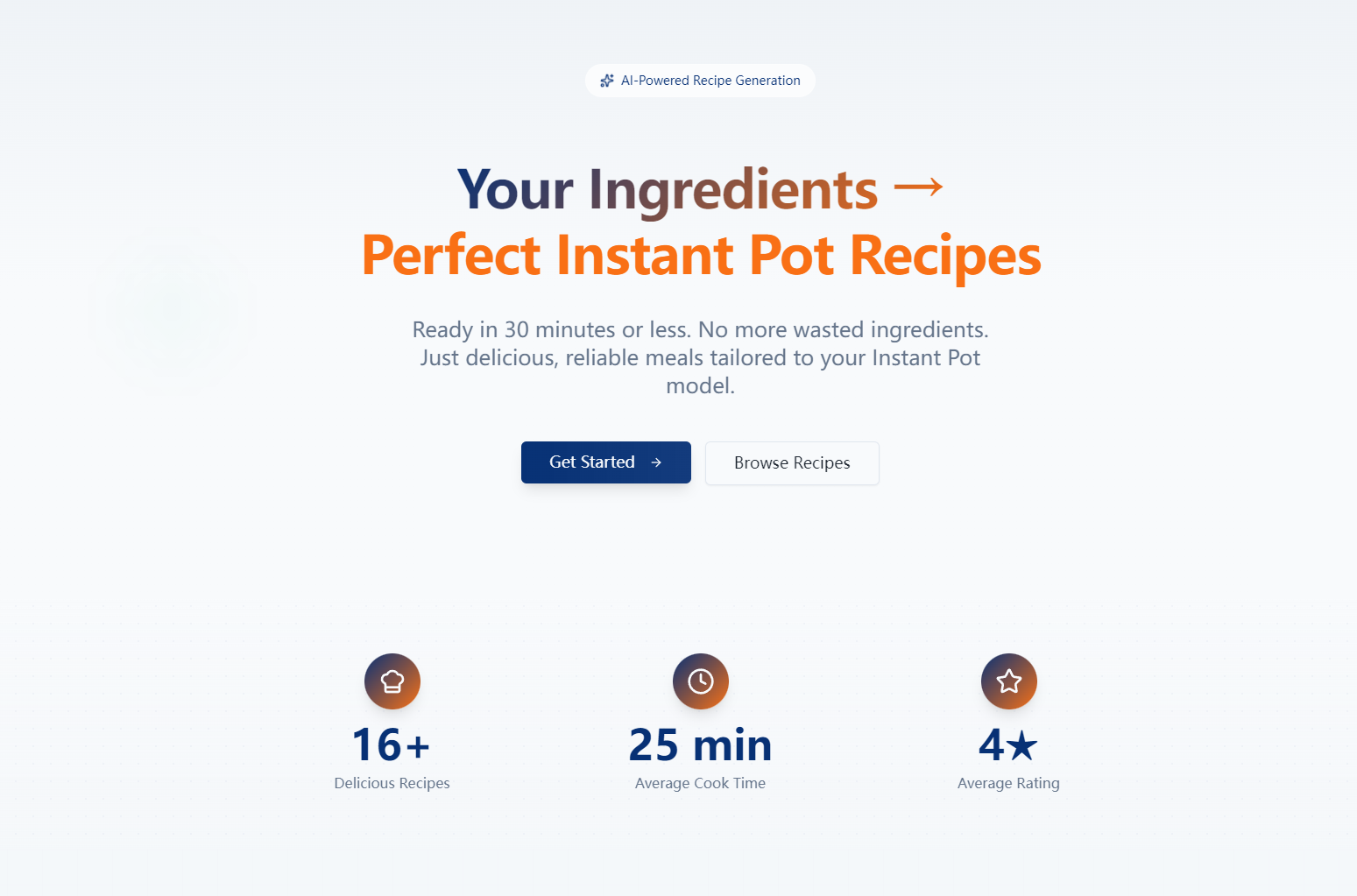
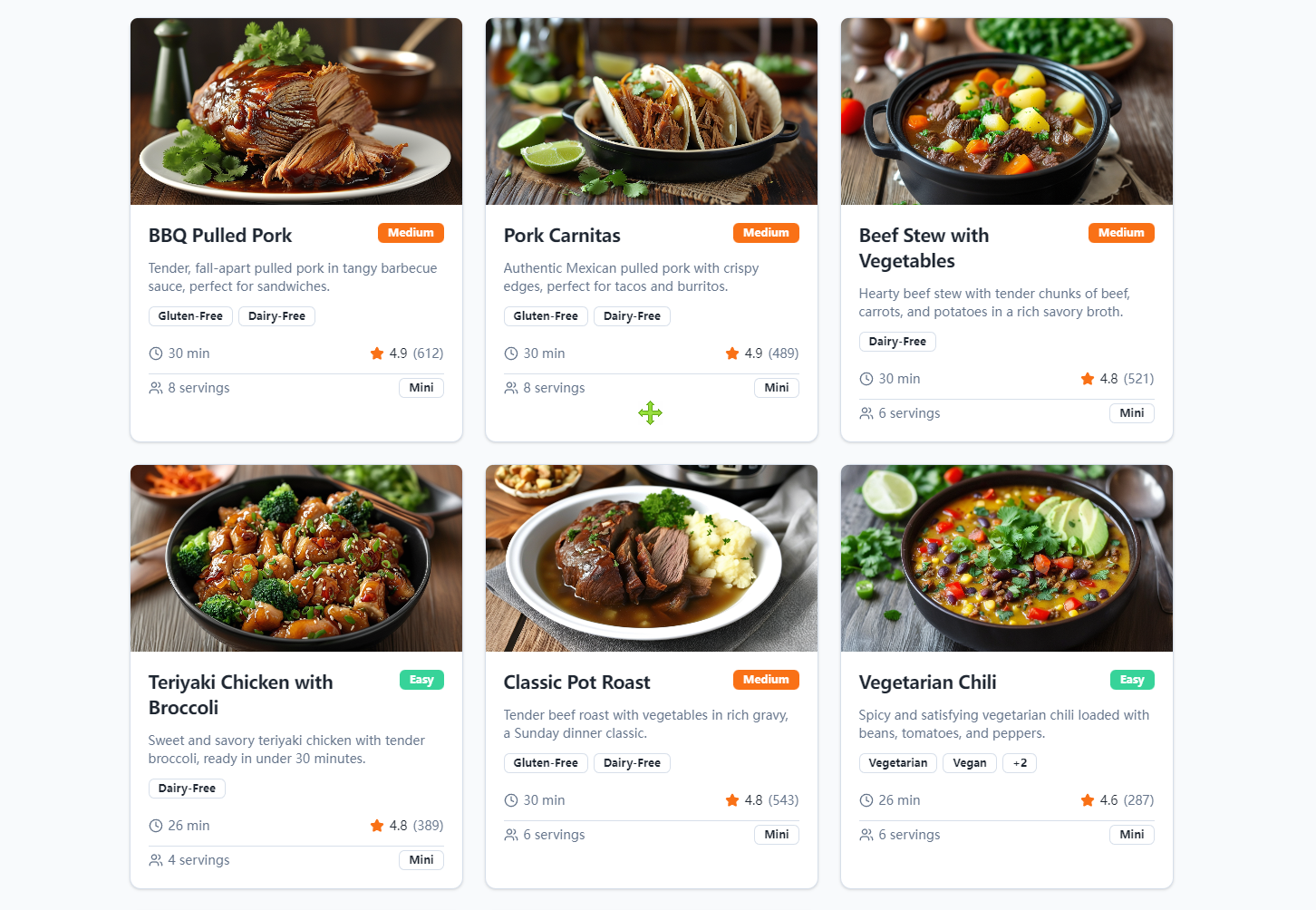
This web app lets users input ingredients, select their Instant Pot model (Duo, Ultra, Max, etc.), and generates complete 30-minute meals. Each recipe has model-specific cooking settings, a full time breakdown, and 2-3 ingredient substitutions with notes on cook time/texture changes. Users can rate recipes and leave quick feedback (Easy, Tasty, etc.) to refine future suggestions.
How we built it
I started by mapping core user needs (quick meals, model compatibility, minimal waste) to page structures (ingredient input, results, detail pages). I used React for the frontend to create intuitive input/recipe displays, Python/Flask for backend logic, and integrated an AI API to generate recipe logic. I built a database of Instant Pot model parameters to adjust cooking settings, and tested with real home cooks to refine the UI/UX.
Challenges we ran into
The biggest hurdle was calibrating model-specific cooking parameters—each Instant Pot model has unique pressure levels and cook times, so I had to validate hundreds of recipe adjustments to ensure accuracy. I also struggled with handling edge cases (no ingredients entered, no matching recipes) in a user-friendly way, and iterated on error prompts until they felt helpful, not frustrating.
Accomplishments that we're proud of
I’m proud that the app delivers on the core promise: every recipe is under 30 minutes, uses only user-provided ingredients, and is tailored to their exact Instant Pot. The substitution logic also works seamlessly—users no longer have to skip recipes because they’re missing one ingredient, and the feedback system already makes future suggestions smarter.
What we learned
I learned how critical user-centric testing is—early versions focused too much on technical accuracy and not enough on ease of use, but real user feedback reshaped the UI (like adding quick-select ingredient buttons). I also gained a deep understanding of how to translate cooking logic into code, and how to balance AI-generated content with reliable, tested cooking parameters.
What's next for This project
Next, I want to expand the ingredient substitution database to include more regional ingredients, refine the AI to learn from user feedback faster, and add a feature to scale recipes for different serving sizes. I also plan to optimize the mobile experience further, since most users access the app while cooking in the kitchen.

Log in or sign up for Devpost to join the conversation.