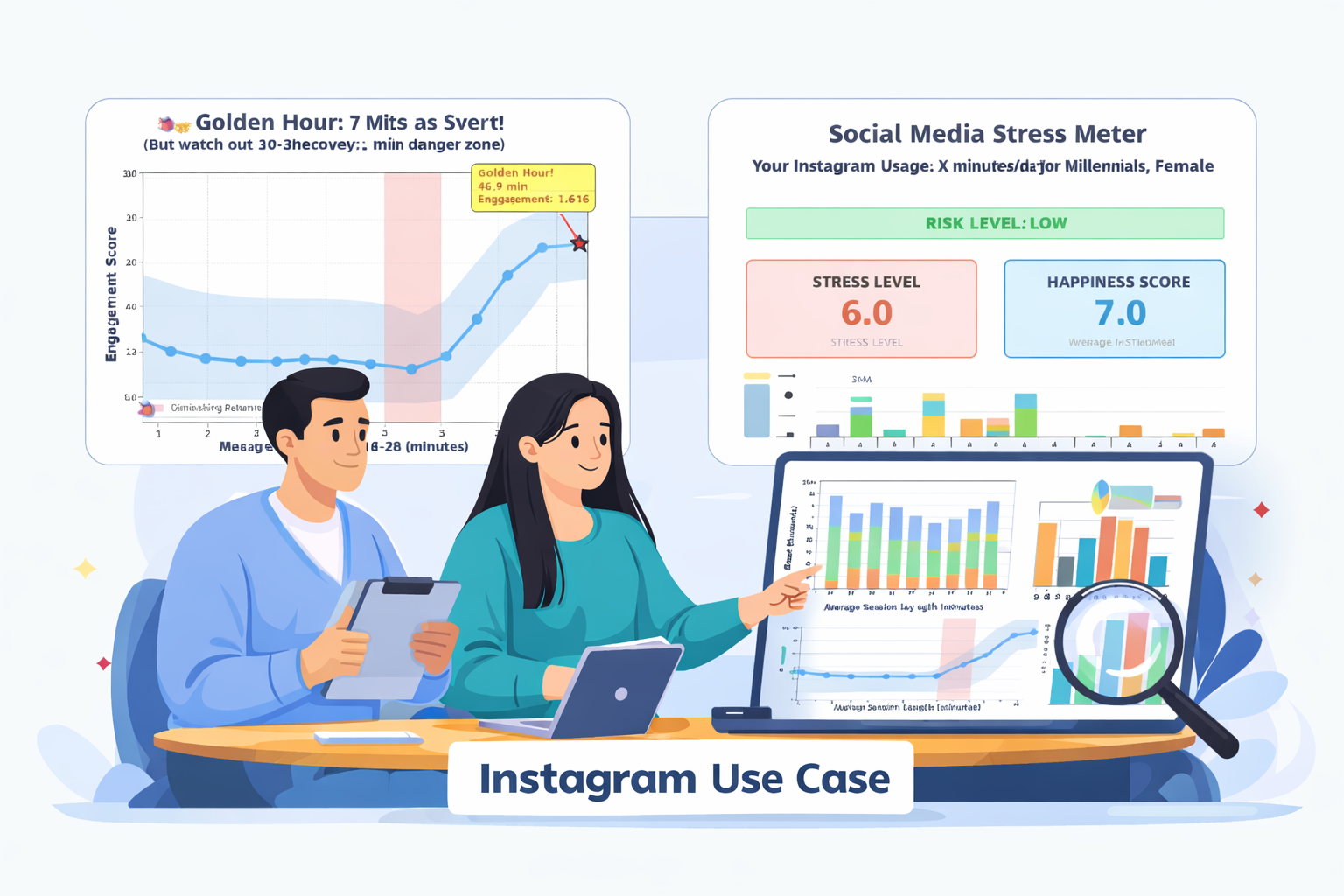
We built this project from a simple question:
is it really Gen Z, or is it all of us?
It started from our own scrolling habits and curiosity about how social media affects us day to day.
Ayu, as Gen Z, is highly active in both posting and viewing content, while Fauzan, a Millennial, engages more as a viewer. As we explored Instagram usage across generations, we realized that the stress and well-being patterns in the data closely mirrored our own experiences. By turning that insight into an interactive experience, we wanted to help others pause, reflect, and rethink their relationship with social media.
Inspiration
Social media platforms like Instagram have become deeply embedded not only in Gen Z’s daily lives, but across multiple generations. While younger users are often at the center of mental health discussions, older generations are increasingly active on social media as well.
This project was inspired by a broader question: How does Instagram usage affect mental health and well-being across different generations, and is Gen Z truly different from the rest?
Rather than relying on assumptions or age-based stereotypes, we wanted to explore how usage intensity, behavior, and mental health indicators compare across generations using large-scale data and interactive analysis.
What it does
Check the project by click this
Instagram User Behavior Analysis is an interactive analytics experience that examines how Instagram usage intensity relates to stress, happiness, and well-being across generations, including Gen Z, Millennials, Gen X, and Boomers.
The project highlights generational similarities and differences through:
- Large-scale behavioral analysis
- Demographic comparisons
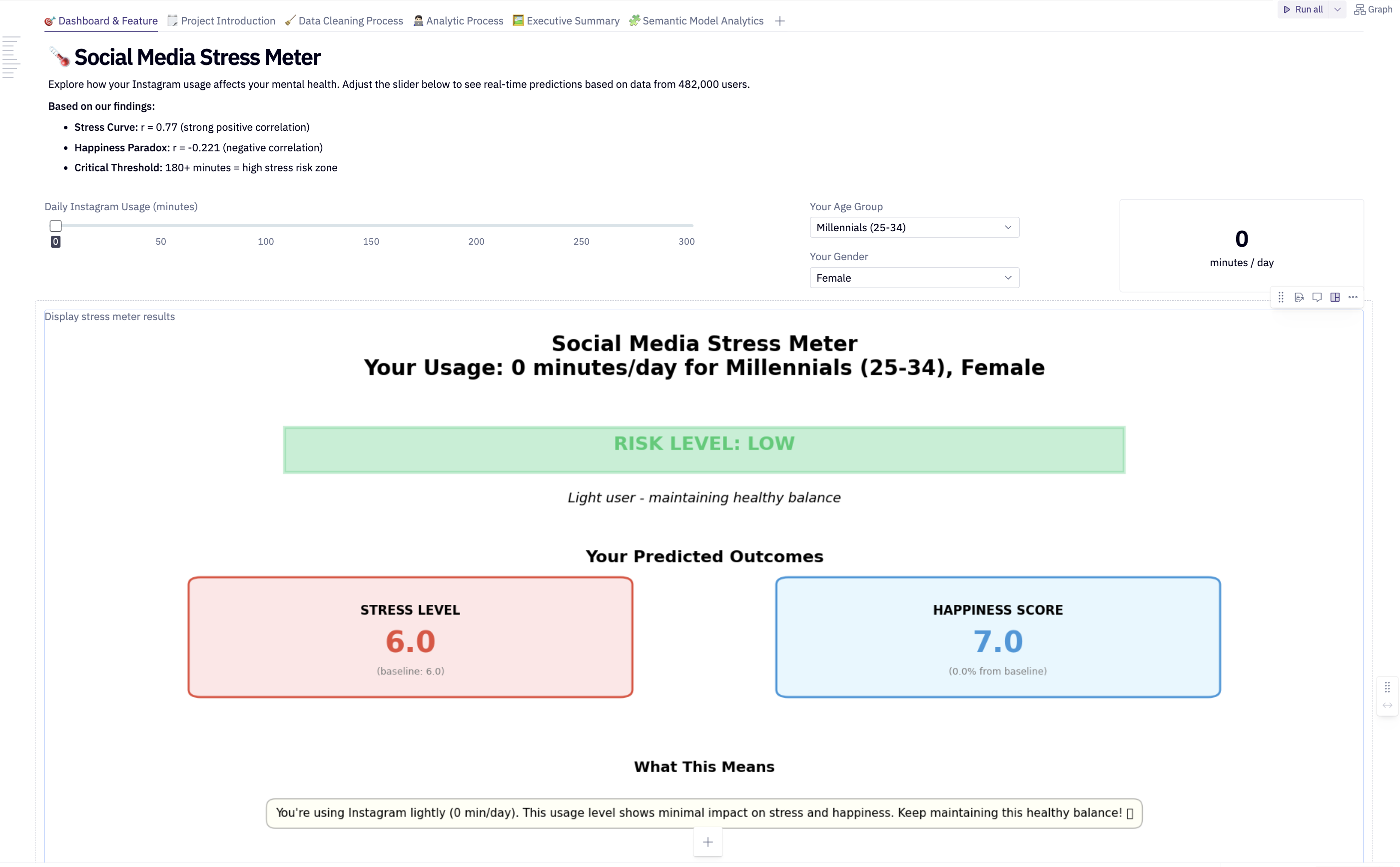
- An interactive feature called the Social Media Stress Meter
Users can adjust their Daily Instagram Usage (minutes) and instantly see:
- Estimated stress levels
- Predicted happiness scores
- A clear risk classification (Healthy, Warning, Heavy Trap)
This allows users from any generation to explore how usage duration may impact their mental well-being.
Dataset Overview
Instagram User Behavior Dataset analyzing 482,548 (800k before cleaning) users across 58 columns to understand the relationship between social media usage and well-being.
Quick Stats
| Metric | Value |
|---|---|
| Total Users | 482,548 (60.3% after cleaning) |
| Total Columns | 58 comprehensive metrics |
| Analysis Focus | Gen Z Instagram usage impact on stress & happiness |
Column Structure
The dataset contains 58 columns organized into 8 categories:
| Category | Columns | What It Captures |
|---|---|---|
| Demographics | 5 | Age, gender, location, generational cohort |
| Instagram Usage | 10 | Daily minutes, session length, engagement metrics |
| Mental Health | 3 | Stress scores (PSS-10), happiness, sleep hours |
| Physical Health | 4 | Exercise, BMI, social events, hobbies |
| Content Preferences | 2 | Format types, theme interests |
| Social Network | 3 | Followers, following, ratios |
| Account Info | 2 | Creation year, account type |
| Behavioral Metrics | 29 | Detailed interaction patterns & derived segments |
Key Analysis Columns
The core metrics driving this analysis:
daily_active_minutes_instagram— Primary usage metric (0-400 minutes)perceived_stress_score— PSS-10 stress indicator (0-40)self_reported_happiness— Well-being measure (0-10)age_cohort— Gen Z vs. Millennials vs. Gen X vs. Middle Age vs. Boomerssleep_hours_per_night— Sleep quality indicator
Plus 53 supporting columns for content type, engagement patterns, social metrics, and lifestyle factors.
How we built it
We built this project entirely using Hex, combining analytics, interaction, semantic modeling, and AI:
Data Analysis & Cleaning We began with over 800,000 raw data points, cleaned and processed using Python within Hex notebooks. The final dataset contains 482,548 high-quality records across 58 variables, with all steps fully documented.
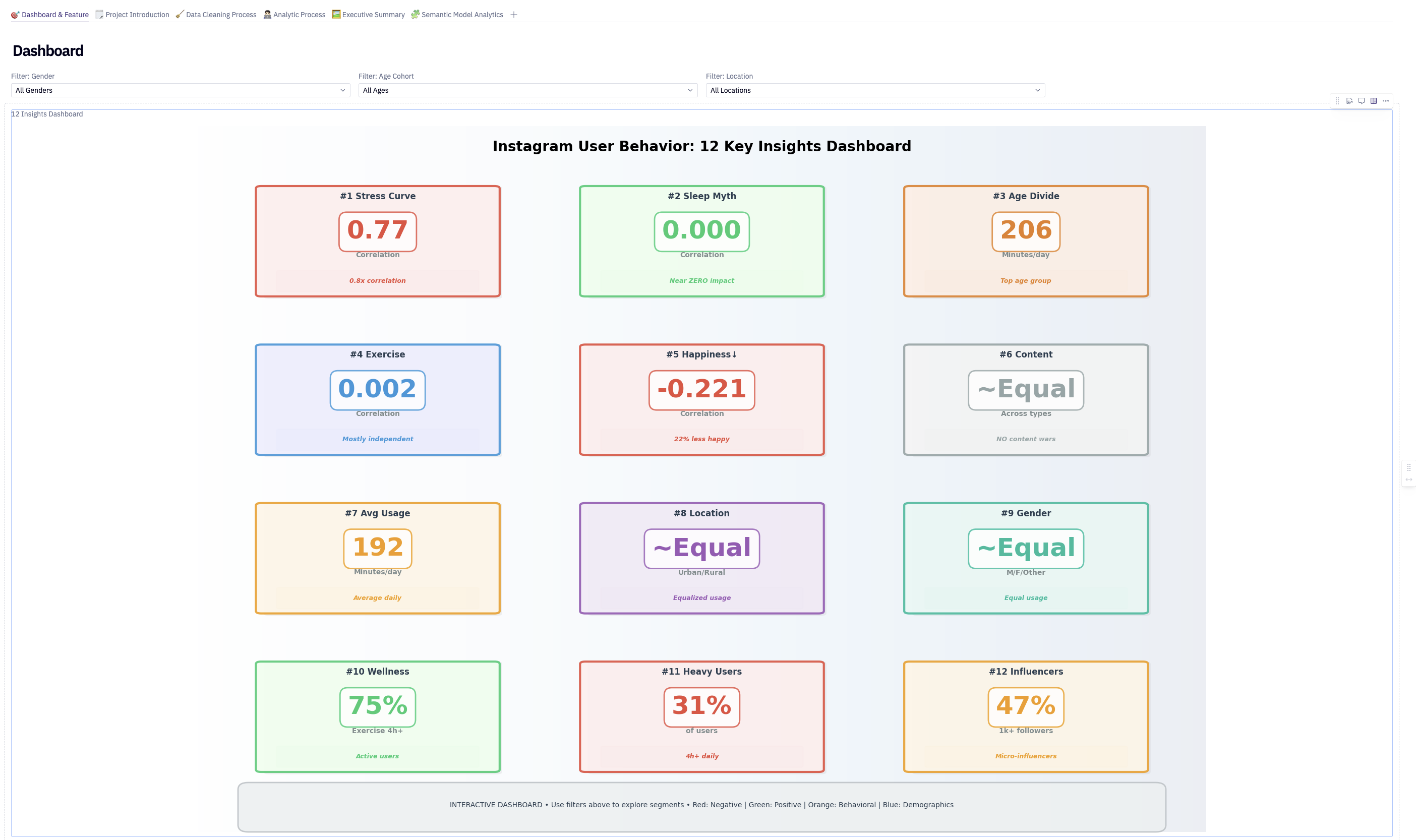
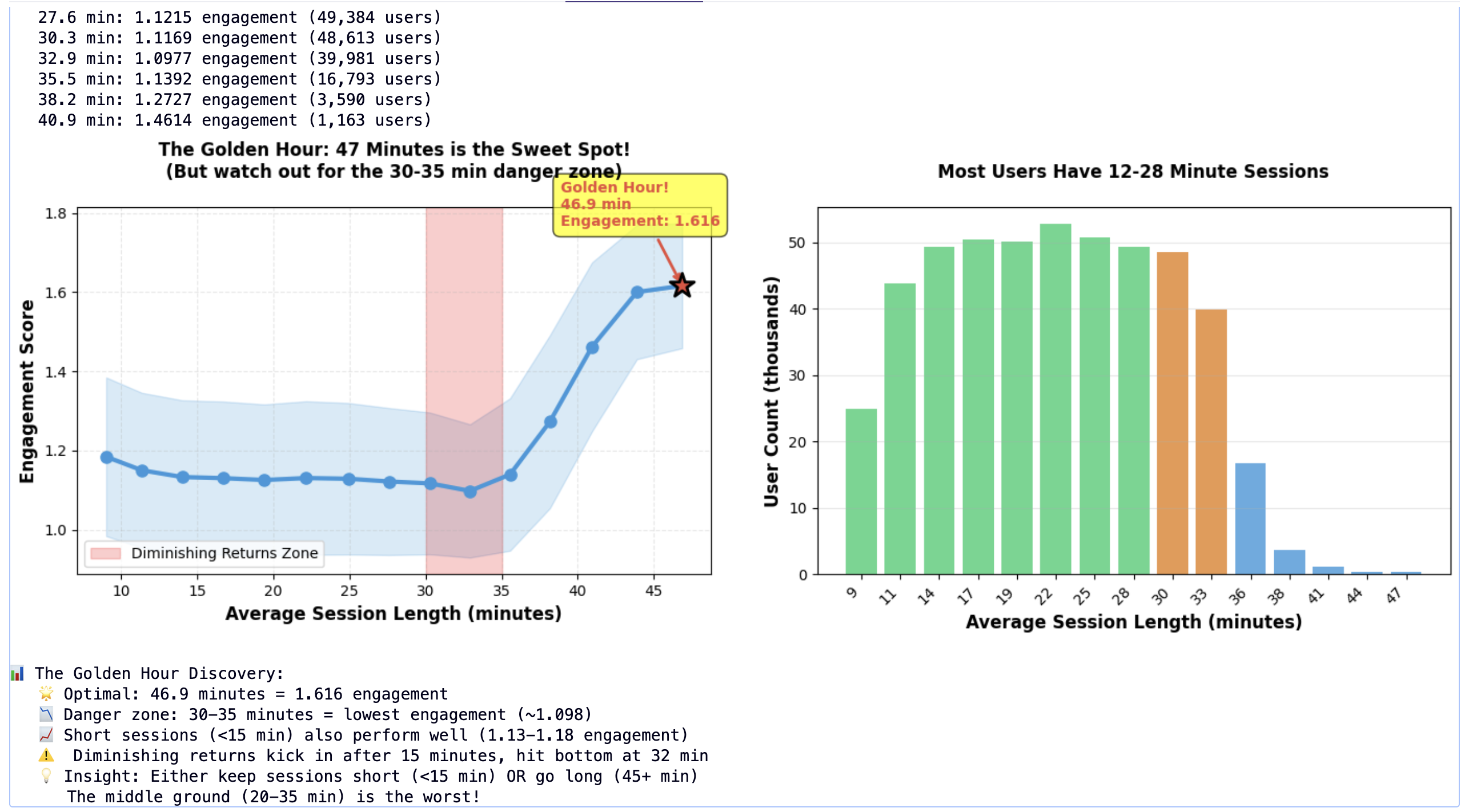
Exploratory & Statistical Analysis Using Hex notebooks, we derived 12 key insights, including correlations between usage intensity, stress, and happiness, as well as behavioral and demographic comparisons across generations.
Interactive App Builder We used Hex’s App Builder to create the Social Media Stress Meter, enabling users to simulate how different usage levels affect mental health outcomes.
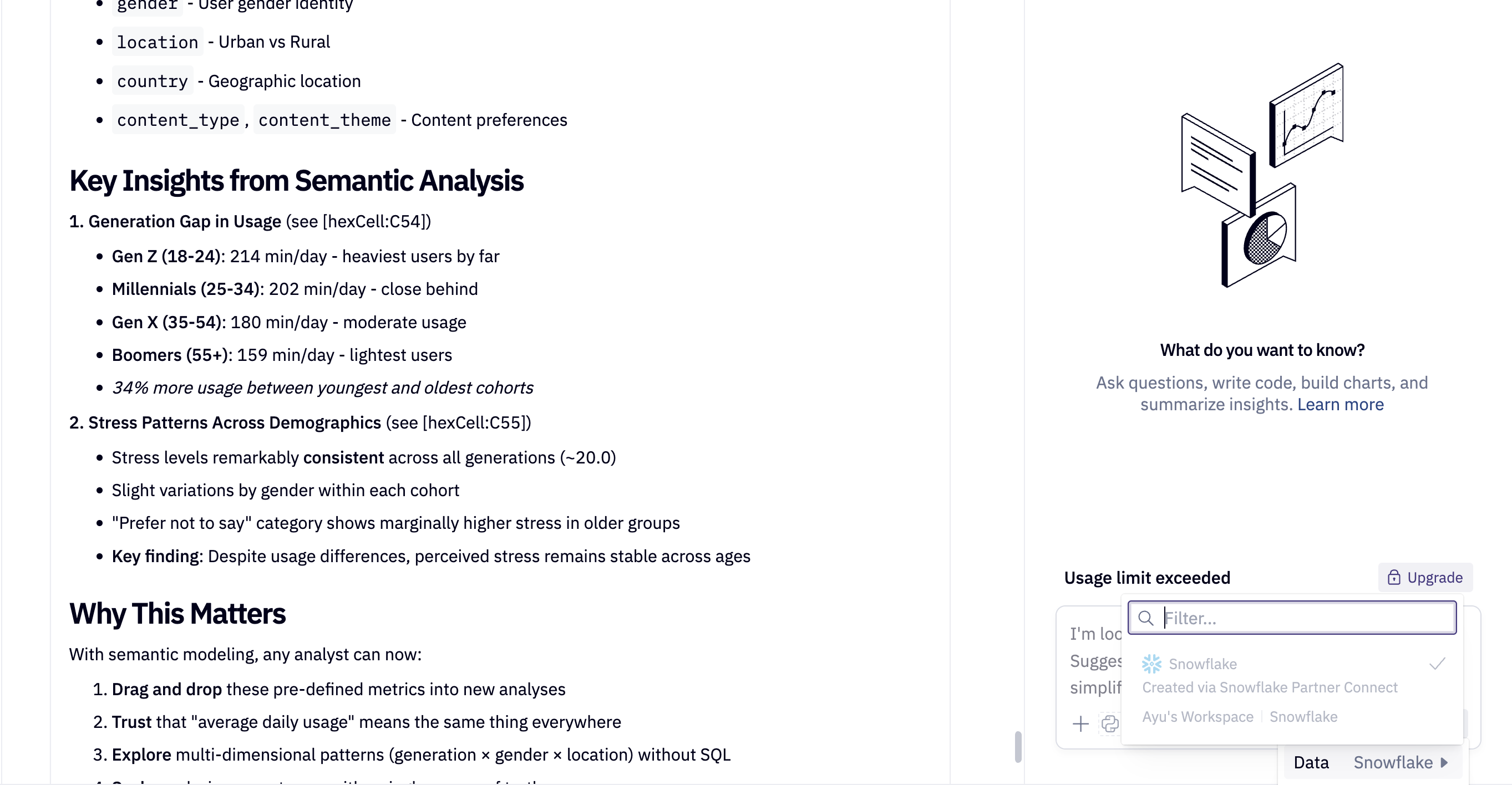
Semantic Modeling with Snowflake We implemented a semantic layer connected to Snowflake to define core metrics and dimensions once, ensuring consistent analysis across notebooks and applications.
AI Capabilities Hex’s AI features were used to help explain insights and translate complex analytical results into accessible, human-readable narratives.
Challenges we ran into
- Learning and implementing semantic modeling midway through the project
- Designing an interaction that works equally well for users across different age groups
- UI Creativity from a Developer Perspective
One challenge was translating complex analytical outputs into a visually engaging and customizable UI. We focused on interaction design, layout, and visual feedback to make the experience feel more like a product than a dashboard.
- Semantic Modeling & Snowflake Access
One of our biggest learning challenges was implementing the semantic model with Snowflake. While understanding the concept took some time, the actual connection and setup turned out to be surprisingly straightforward once we had access.
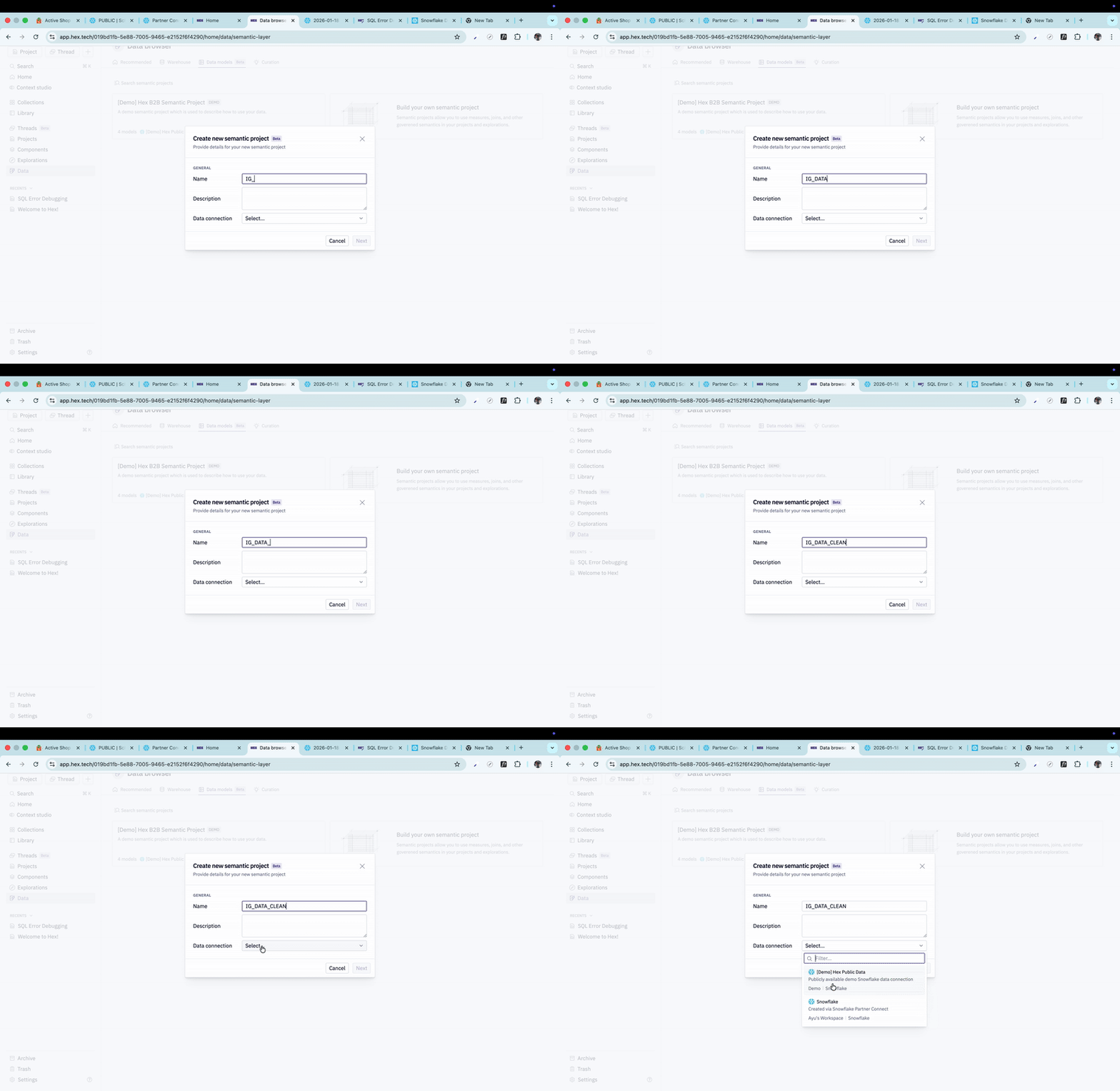
Unfortunately, creating and managing semantic models requires role (manager/admin) level permissions, which were not available in the official hackathon workspace. As a result, we implemented the semantic layer in our own 14-day free trial workspace, allowing us to demonstrate the full capability, but only for a limited duration.
Access Project : Instagram User Behavior Analysis + Semantic Model - in our workspace
Accomplishments that we're proud of
- Analyzing Instagram behavior across four generations at scale
- Identifying that Gen Z is the heaviest user group, while stress levels remain relatively stable across ages
- Challenging common assumptions around sleep and exercise with data-driven evidence
- Building an interactive feature that makes abstract correlations intuitive
- Implementing a governed semantic layer for scalable, reusable analytics
- Delivering a fully public, interactive Hex project that blends analytics, storytelling, and AI

What we learned
- Instagram usage patterns vary significantly by generation, but mental health impacts are not always proportional
- Usage duration matters more than content type across all age groups
- Heavy usage is a cross-generational issue, not exclusive to Gen Z
- Semantic modeling enables faster, more reliable analysis across teams
- Interactive storytelling significantly improves engagement and understanding
What's next for Instagram User Behavior Analysis
We already explore thread feature we use thread feature for our future analytic idea
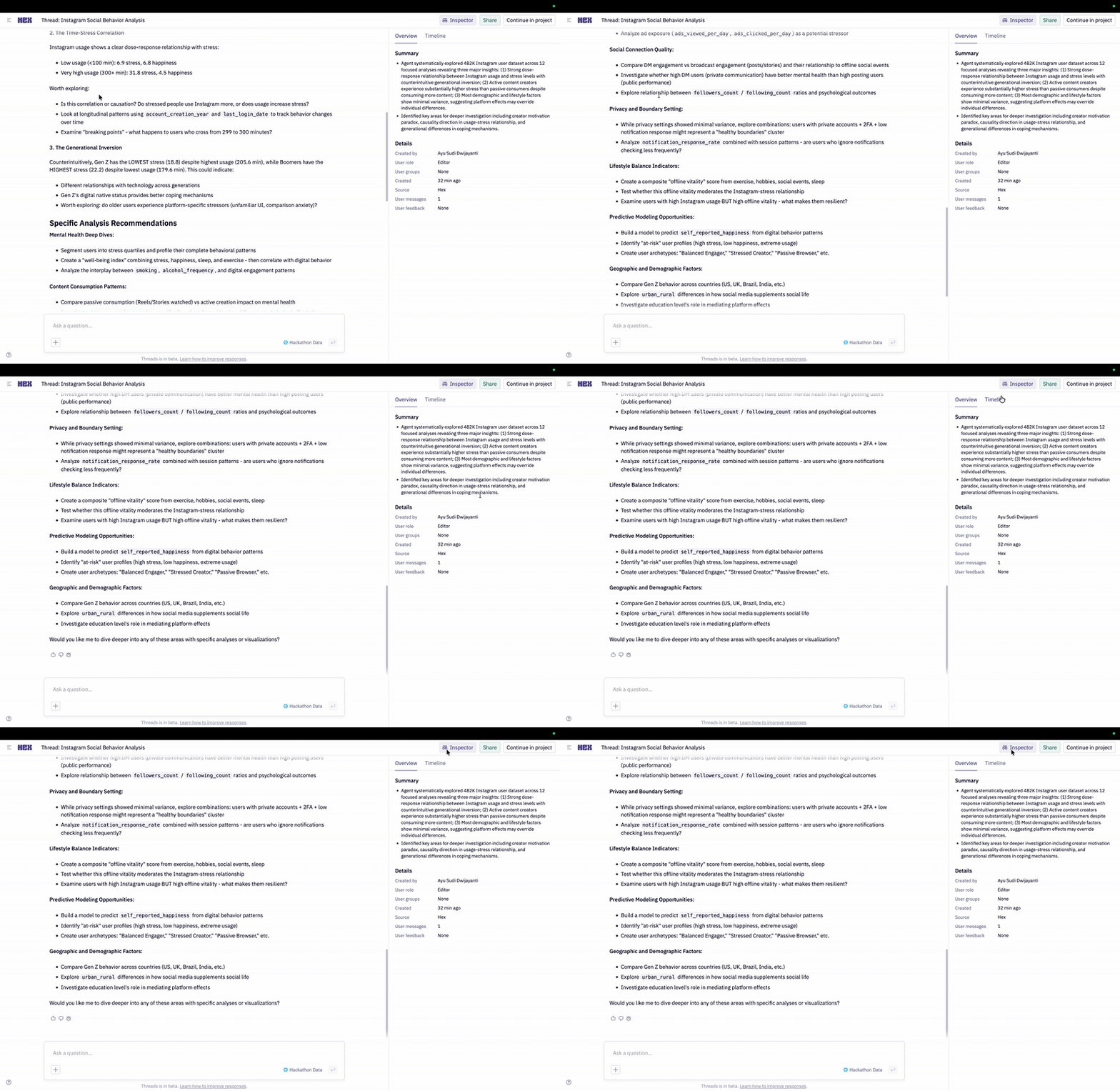
Link to Next Project Idea from Thread Conversation
Next, we plan to:
- Expand the analysis to include other social platforms such as TikTok and YouTube
- Add generation-specific insights and recommendations
- Explore longitudinal trends to understand changes over time
- Enhance AI-driven explanations for deeper contextual insights
- Turn the project into a shareable public tool for digital well-being awareness across generations



Log in or sign up for Devpost to join the conversation.