Inspiration
We’re both social events coordinators for our student organizations, and we watch the same problem play out every week: people find out about events after they happen. Last summer, one of us went looking for dance socials and only found her preferred style through a friend of a friend, because that community only posts on Facebook. Our generation doesn’t live on Facebook. We live on Instagram.
Students already use Instagram to look up things to do, but it only surfaces events from accounts you already follow. If you don’t know the host, you never hear about it. Facebook has a strong events ecosystem that young people don’t use, so whole communities stay invisible. The demand is real: people are even building their own AI agents just to scrape local events.
What it does
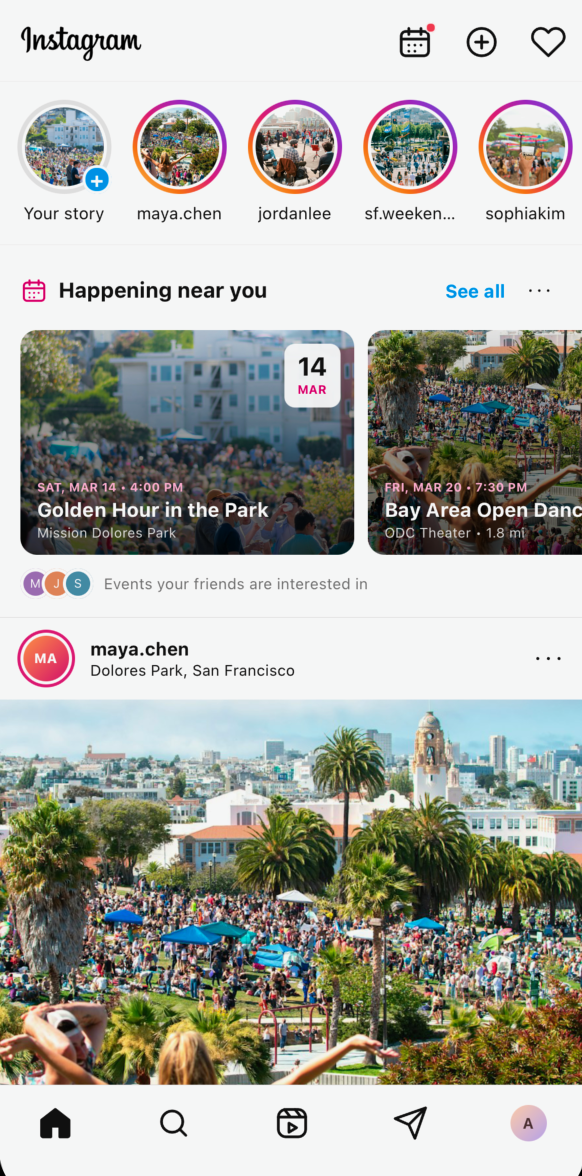
Events for Instagram brings Facebook-quality event discovery into the app young people already use, powered by Muse.
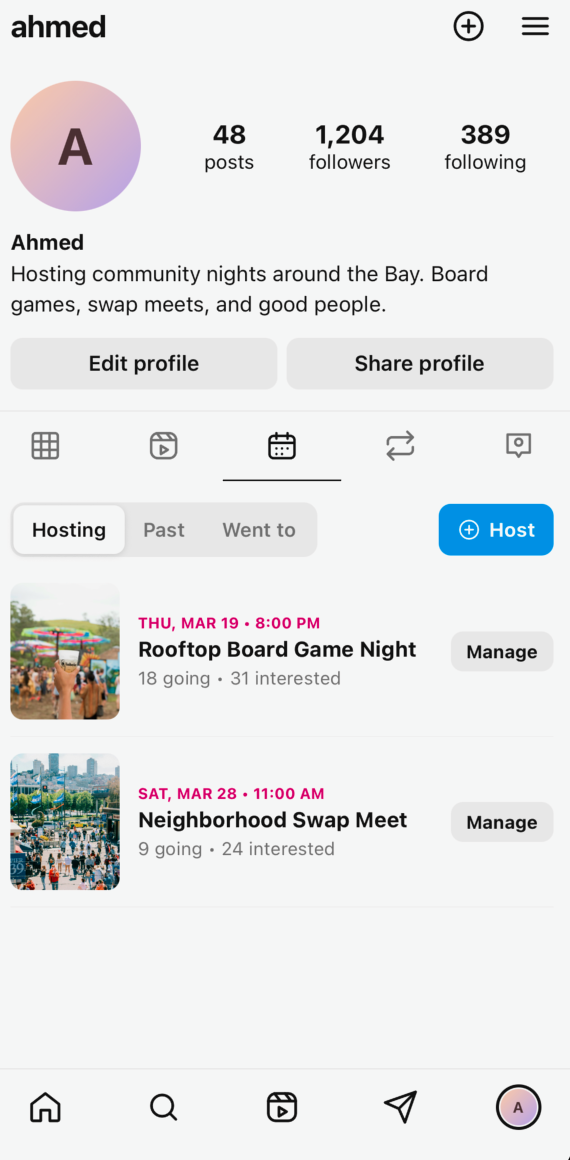
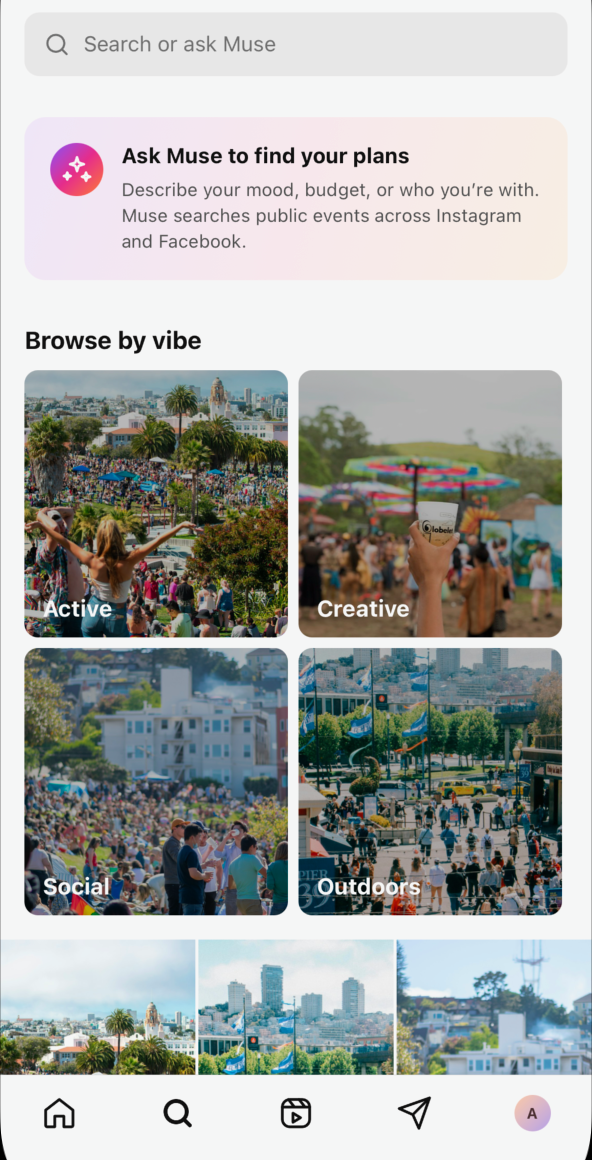
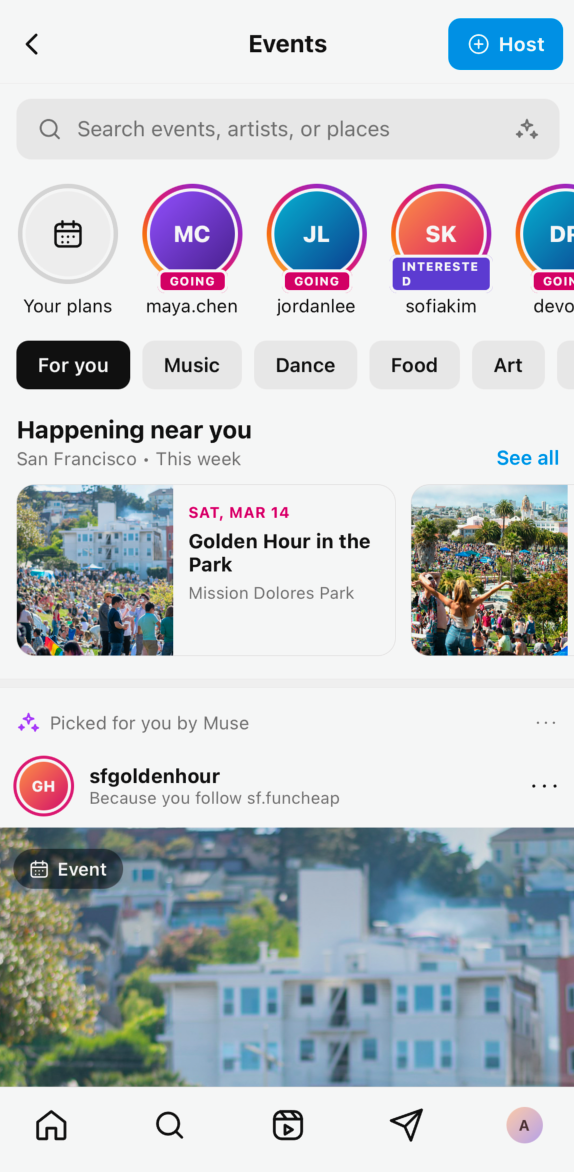
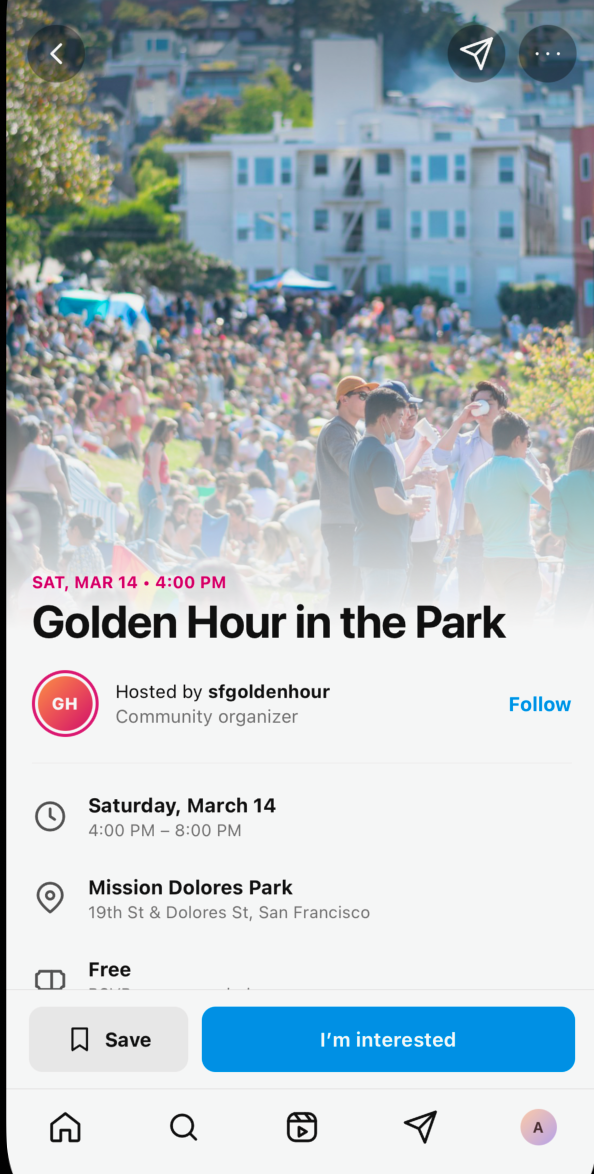
Events in your feed: See what’s happening near you and which friends are going. Friends’ RSVPs as stories: Your friends’ plans sit at the top of the Events page. Muse-ranked discovery feed: Every pick explains itself, with reasons like “Because you follow this host” or “Popular with your friends.” Natural-language search: Type “free events this weekend” and Muse turns it into real filters, so you don’t have to scroll. Smart event pages: Muse summarizes the event, reads the comments to gauge how people actually feel, and answers questions like “Can I go solo?” You also get tagged posts and Reels from past events, a map with drive time, and similar events. Host tools: Muse writes a clearer title, then generates a cover, a Reel, a flyer, a Story, and ad variants. One tap cross-posts to Facebook Events.
How we built it
We used Figma to make the design, then used Claude to iterate on the design.
Challenges we ran into
Serving two audiences at once: Creators don’t want the wrong crowd showing up, and consumers don’t want events that wouldn’t interest them. Ranking and hosting tools had to respect both. Going beyond posting: An event post only reaches people who already follow the account. Designing discovery for people who don’t know the host yet meant rethinking how events surface. Making AI essential, not decorative: We wanted Muse to be required for the experience to work, not a bolt-on feature. Scoping: With a long list of ideas (calendar, personalization, A/B testing, automations), we had to focus on what solves the core problem.
Accomplishments that we're proud of
A full loop for both sides: discovery for attendees and creation and promotion for hosts. Explainable recommendations, so users always know why they’re seeing an event. Plain-English search that turns natural language into real filters. A one-tap bridge between Instagram and Facebook Events, bringing Facebook’s established events platform to a younger audience. A feature built from lived experience. We’re passionate about this because we face the problem ourselves.
What we learned
Event discovery is a real gap: people already search Instagram for things to do, and the problem has been validated by people building their own AI event scrapers. Good AI features need to serve both creators and consumers, and they have to explain themselves. Connection beats screen time. The best features are the ones that end with people putting their phones down and meeting in person. We care about solving a problem more than building a product.
What's next for Instagram Events something
Calendar integration and automated reminders. Deeper Muse personalization and smarter recommendation algorithms. Host controls for audience targeting, so organizers can reach the right people. Business sponsorships: More ways for businesses to sponsor and host events on Instagram, bringing them to the platform instead of separate apps.

Log in or sign up for Devpost to join the conversation.