-
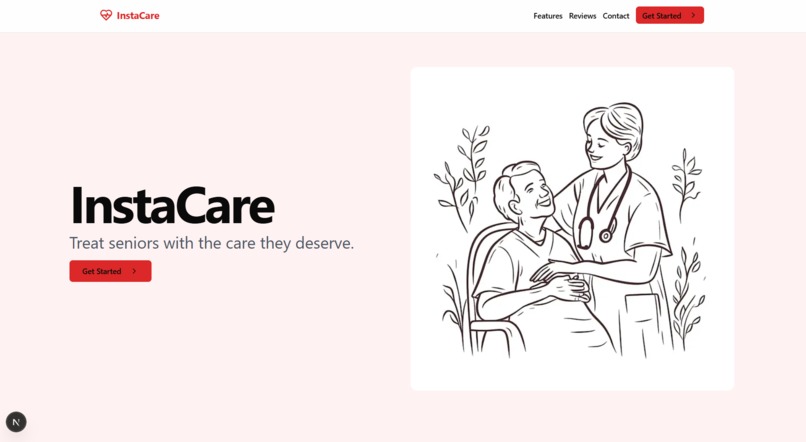
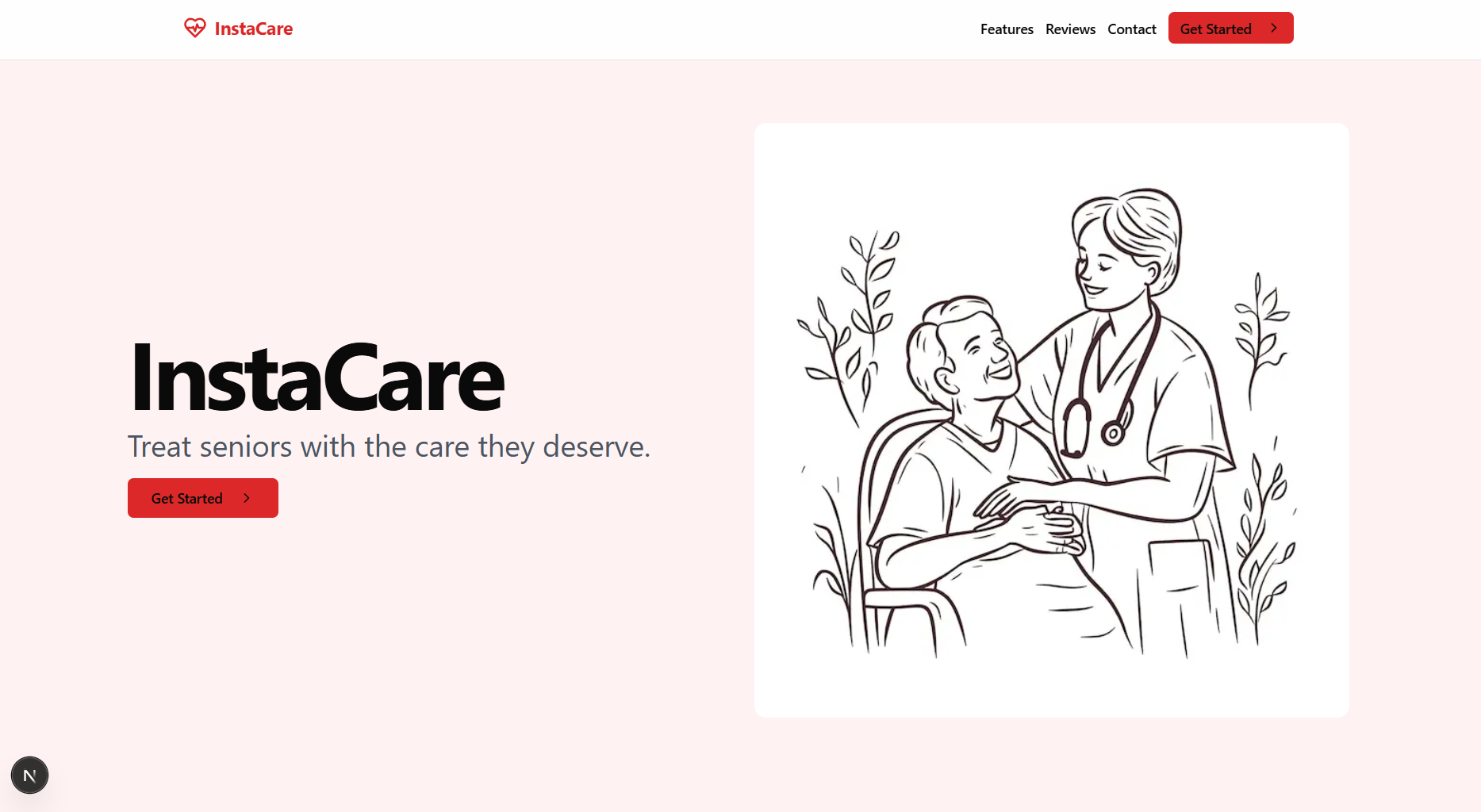
Landing Page
-
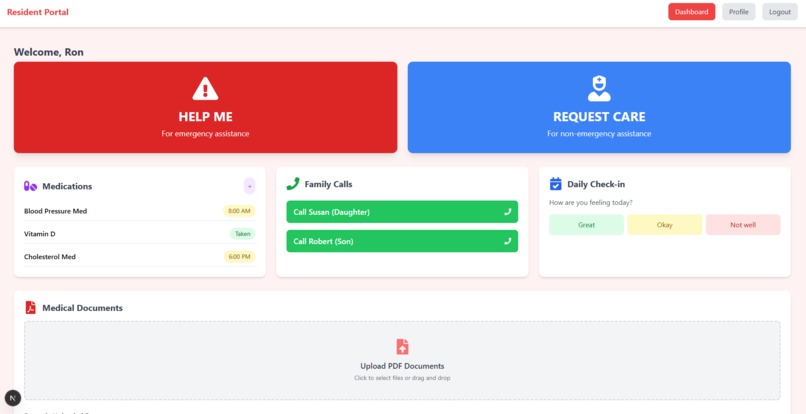
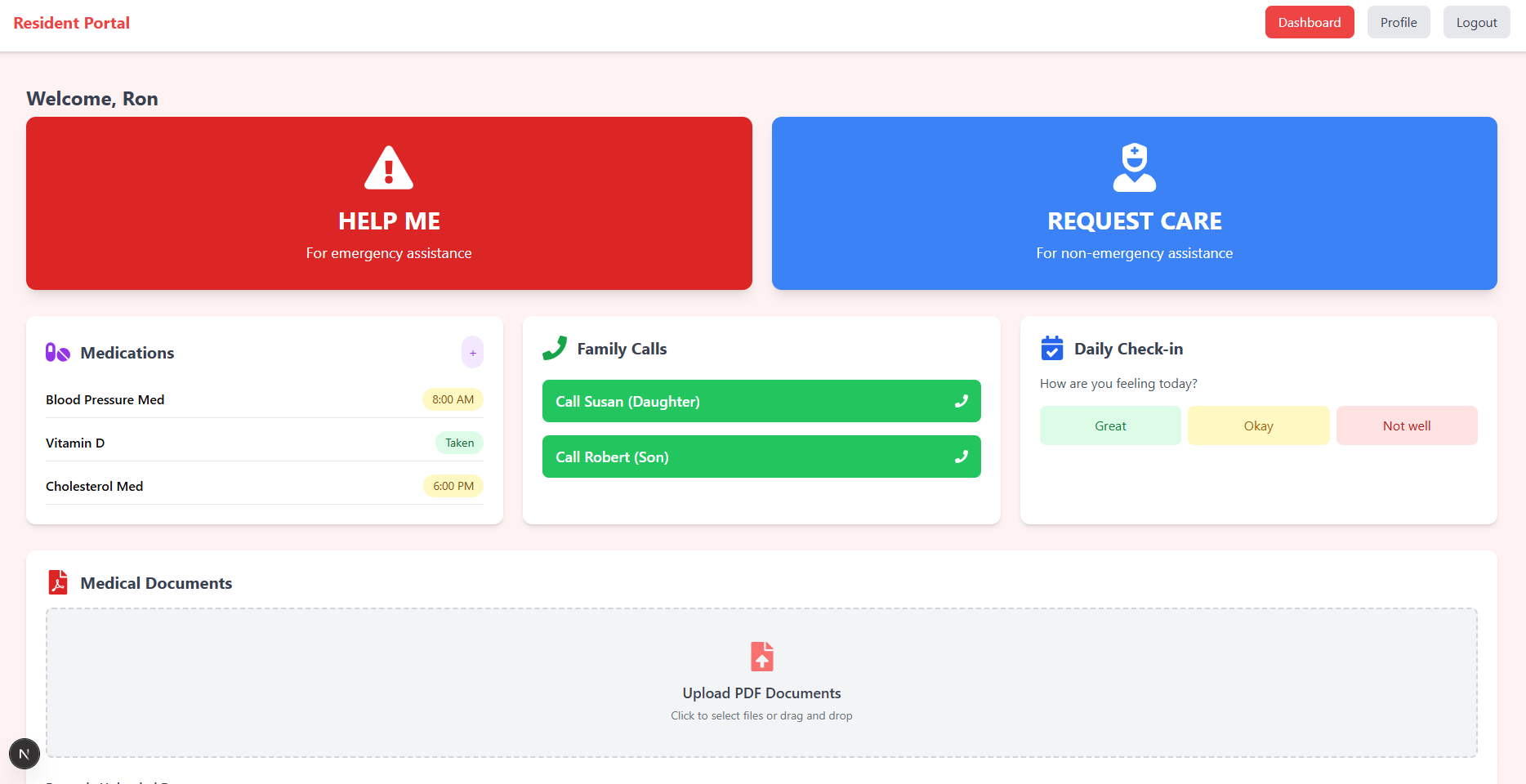
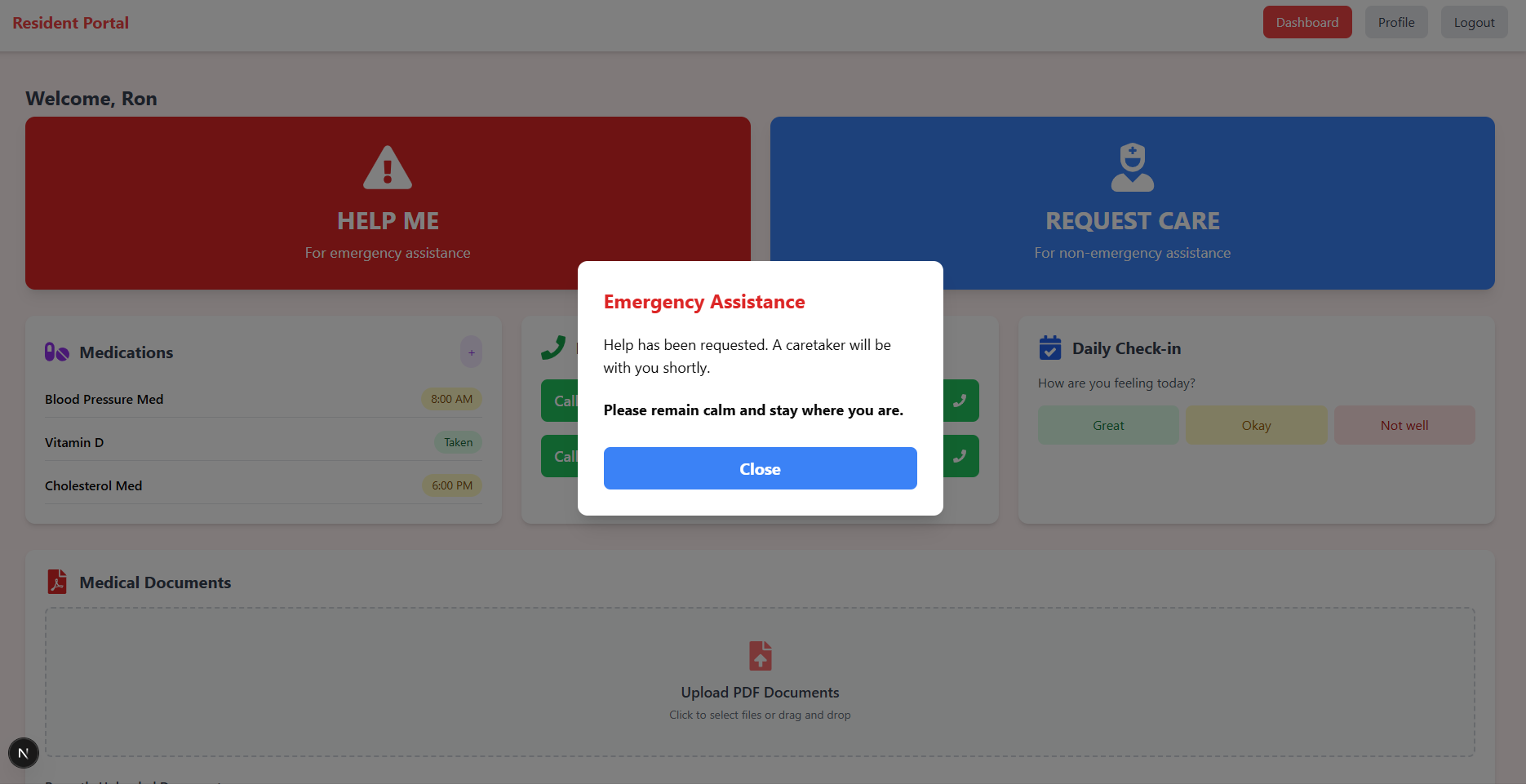
Resident Care Portal
-
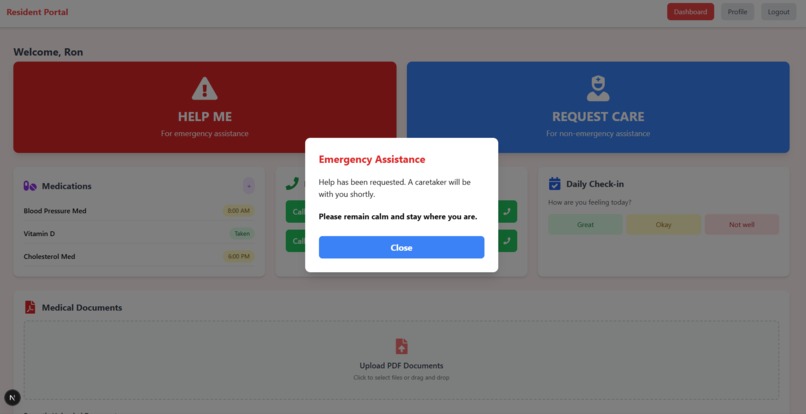
Emergency Assistance Popup
-
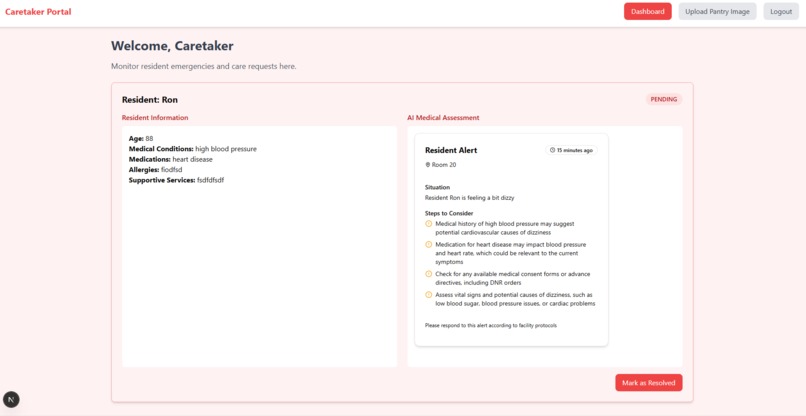
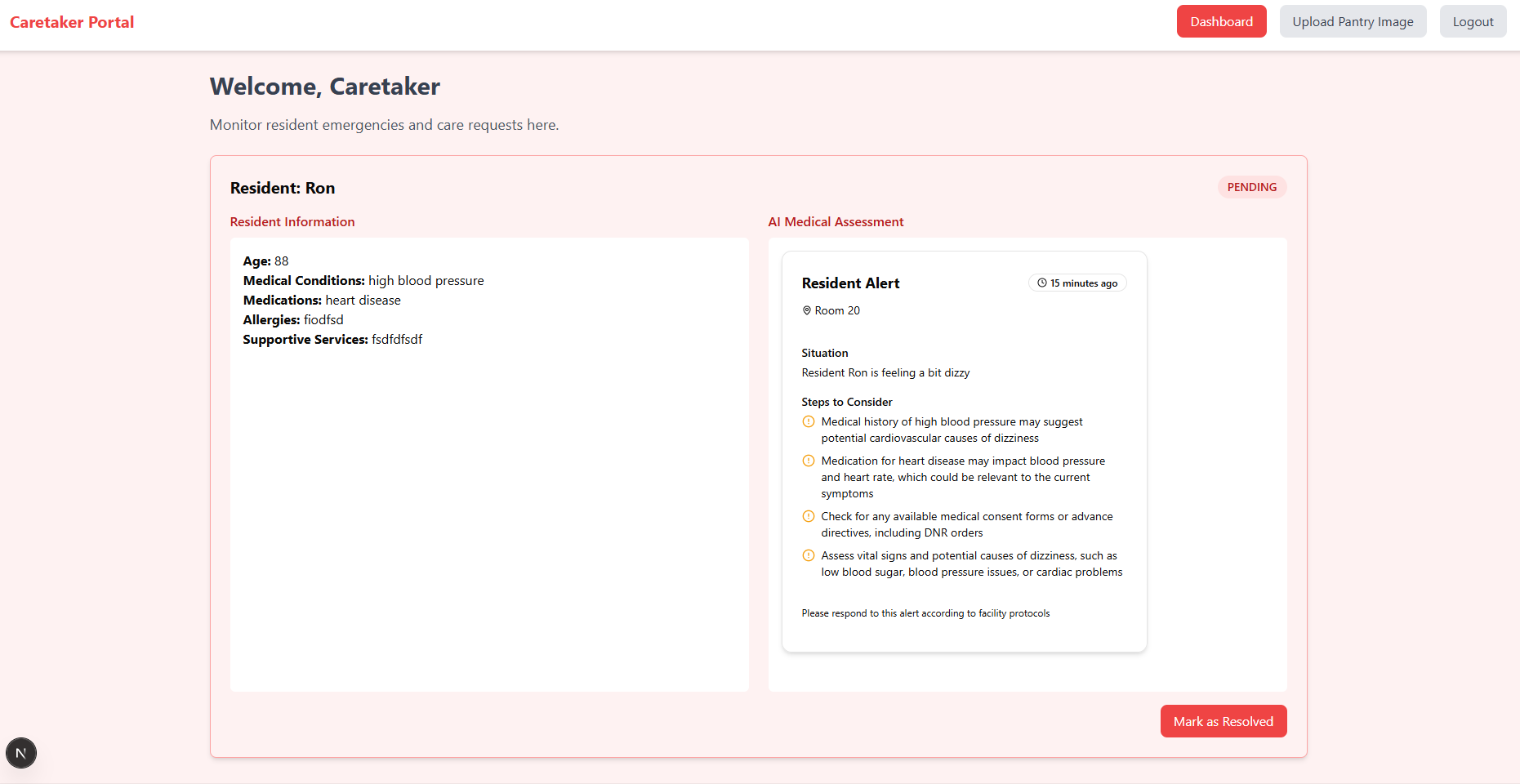
Caretaker Quick Response Portal (Cerebras RAG AI Inference)
-
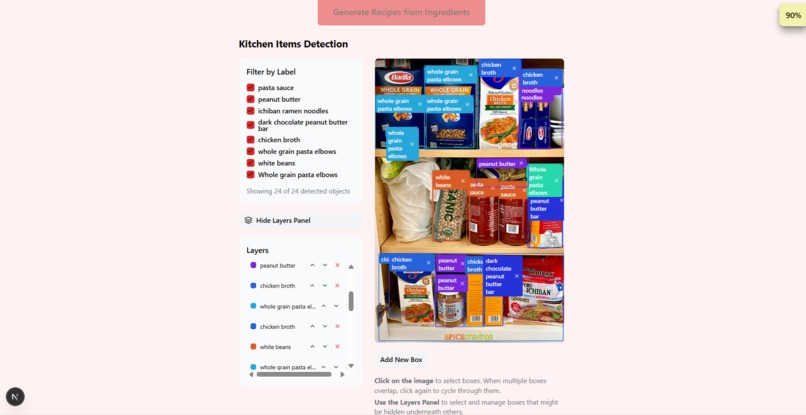
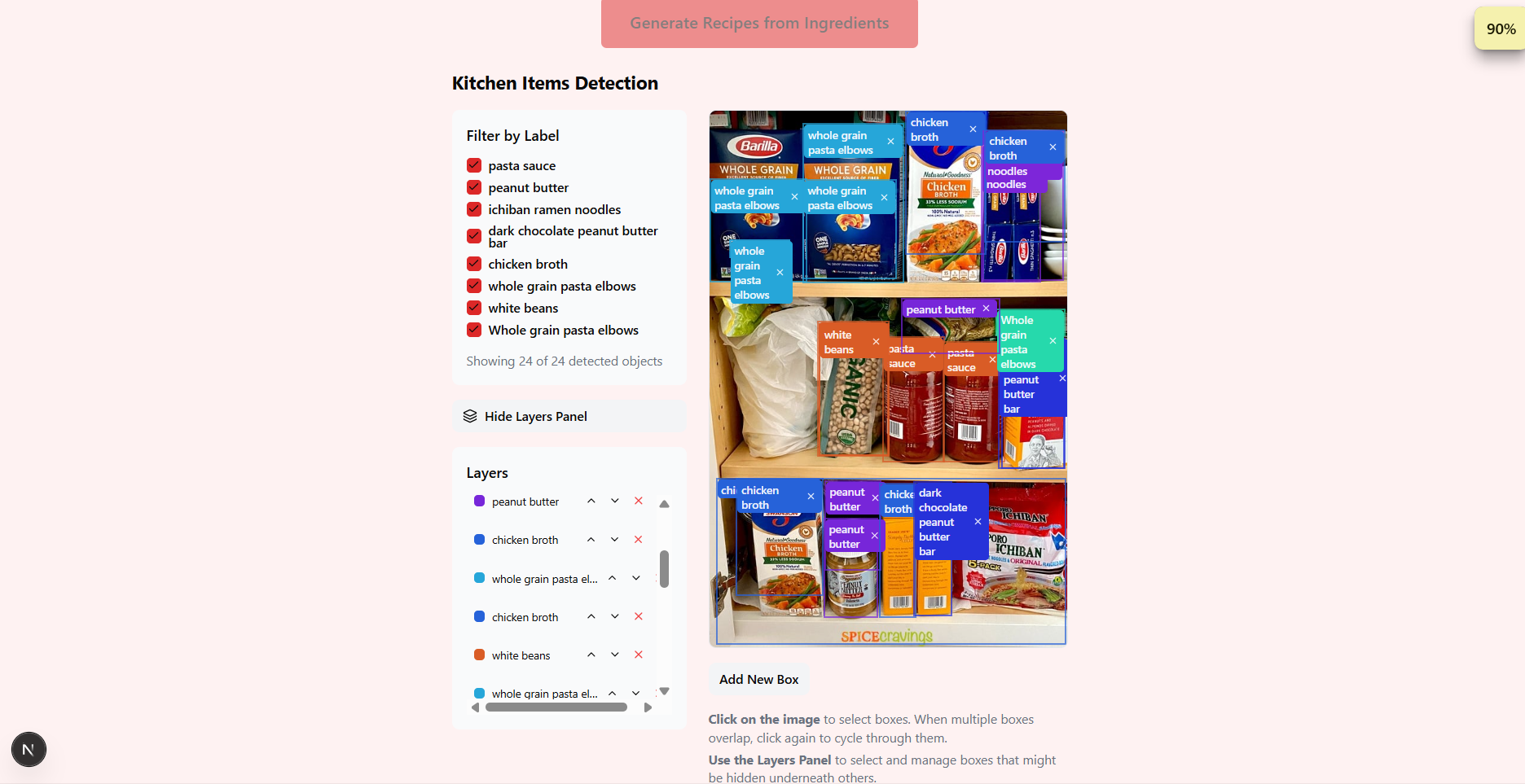
Computer Vision YOLO Food Detection
-
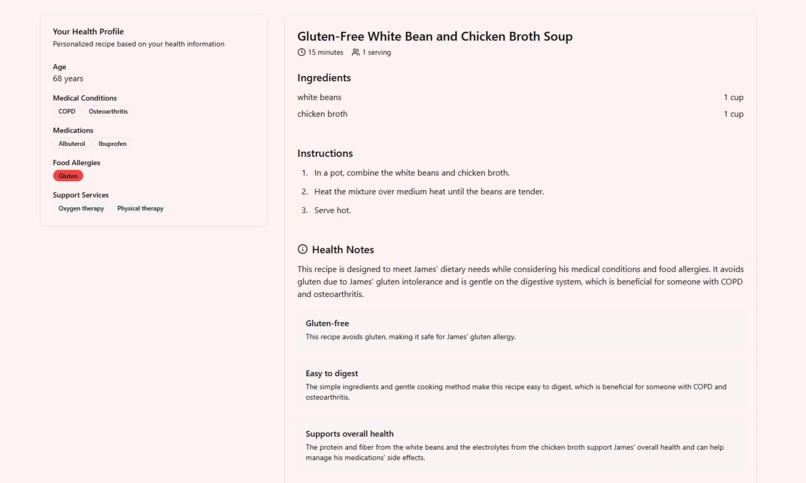
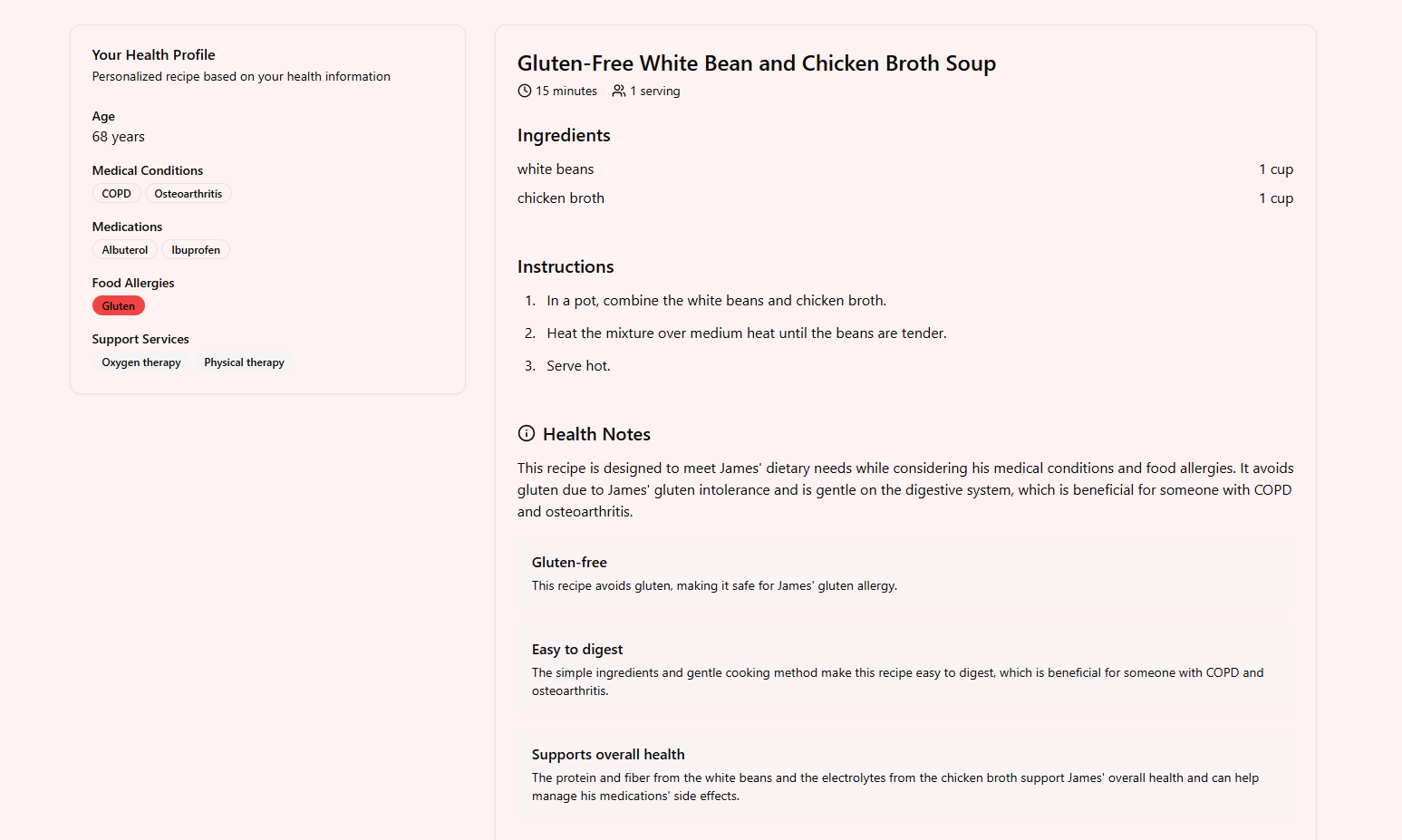
Cerebras DuckDuckGo Recipe Generation
Inspiration
As we become older, we become increasingly grateful for our parents and past generations who have raised us to be who we are today. Unfortunately, caretakers working in senior homes around the world are overwhelmed, stuck using outdated technology, and unable to give residents the personalized and necessary care they deserve. This was the inspiration behind why we wanted to make InstaCare. Giving generational personalized care to everyone, all with one simple app.
What it does
Our application is a complete caretaking package for senior homes, offering light-speed emergency response times and Human-AI tools that improve everyday life for caretakers and residents alike. Our main feature is allowing caretakers to generate personalized healthy and delicious recipes for residents with just a snap of the camera, freeing up time normally spent taking inventory for resident needs elsewhere. In addition, caretakers get summarized reports of current emergencies and tasks, all displayed on a compact and user friendly page. On the other hand, residents are able to get swift care at the click of a button, tailored to their uploaded medical history and preferences. This app was built to alleviate the burden on caretakers and give both caretakers and residents instant help they need.
How we built it
- We utilized numerous AI APIs and agents such as Claude and Cerebras for numerous features to speed up patient care and ensure that caretakers are able to make snap judgements and the right decisions
- We made use of Docker to minimize the application size and easily ship our application. The website utilizes ReactJS for the frontend and works with a Supabase backend in order to quickly send data to our models
- We built a RAG pipeline with Cerebras and Pinecone to deliver lightning fast and context aware care for our senior home residents. With Cerebras fast AI inference, we used it during life-threatening emergencies where seconds matter. Our RAG retrieves medical history, medications, allergies to provide emergency care or guide first responders. Our solution ensures senior residents receive the right care faster than ever.
- A YOLO pretrained object detection model would box out objects which will then be piped directly into Claude’s API in order to ensure the best results in recognizing food ingredients. The results will then be displayed as an interactive display using NextJS, allowing the user to accurately pick the needed ingredients for each individual patient -The resulting ingredient list would be fed into a Cerebras AI-Agent which would search the web using the DuckDuckGoSearch tool at lightning speeds to get a quick, easy, and healthy recipe, outputted as a JSON to be stored and displayed on our website
Challenges we ran into
- Our ambition to utilize AI tools meant we ran into dependency issues, as each AI tool relied on numerous packages all utilizing different versions. Which took us a lot of time to figure out as each package required a specific version of another package, but was then incompatible with another package which was a huge headache.
- Though using AI tools are powerful, we had to ensure our responses were fast and accurate otherwise we would end up with gibberish text walls. Utilizing Cerebras for its speed and Claude for its powerful image processing gave us the best of both worlds, allowing us to give tailored responses to whatever a caretaker or resident needed.
- Backend synchronization was a challenge, as parsing through AI generated data alongside with saving everything for efficient access would throw error after error at us.
Accomplishments that we're proud of
We built a fully functional application within the time frame, with multiple core functions including context AI, computer vision, and emergency responses.
- The scope of the project was a lot more bigger and complex than we anticipated and we were worried we couldn’t finish the core features on time.
What we learned
- We learned the ins and outs of RAG and how they are beneficial in environments that require quick context and responses.
- We also learn to utilize different AI APIs in order to scan and process information for the user. We also learned how to use docker to utilize O-Llama.
- Our team learned to quickly prioritize what needed to be done, as our ambition stretched us too thin. We had to regroup and then narrowed down a game plan to build our main features. Furthermore, we embraced challenges head on, learning unfamiliar technologies and exploring solutions for a better tomorrow.
What's next for InstaCare
For our potential future roadmap, we want to add features that ensure residents who are blind, disabled, or suffering any other conditions would be able to use this app. Our motto is personalized care to everyone, no matter who they are!
- A portable one button clicker for instant responses would give residents the ability to call for help no matter where they are.
- We wanted to work with voice detection tools to allow residents not fluent in English to translate their needs and allow caretakers to understand exactly what needs to be done.
Built With
- ai
- ai-agents
- cerebras
- claude
- image-processing
- ml
- python
- supabase


Log in or sign up for Devpost to join the conversation.