
Inspiration
Current medical record systems are dense and difficult to use without prior training.
What it does
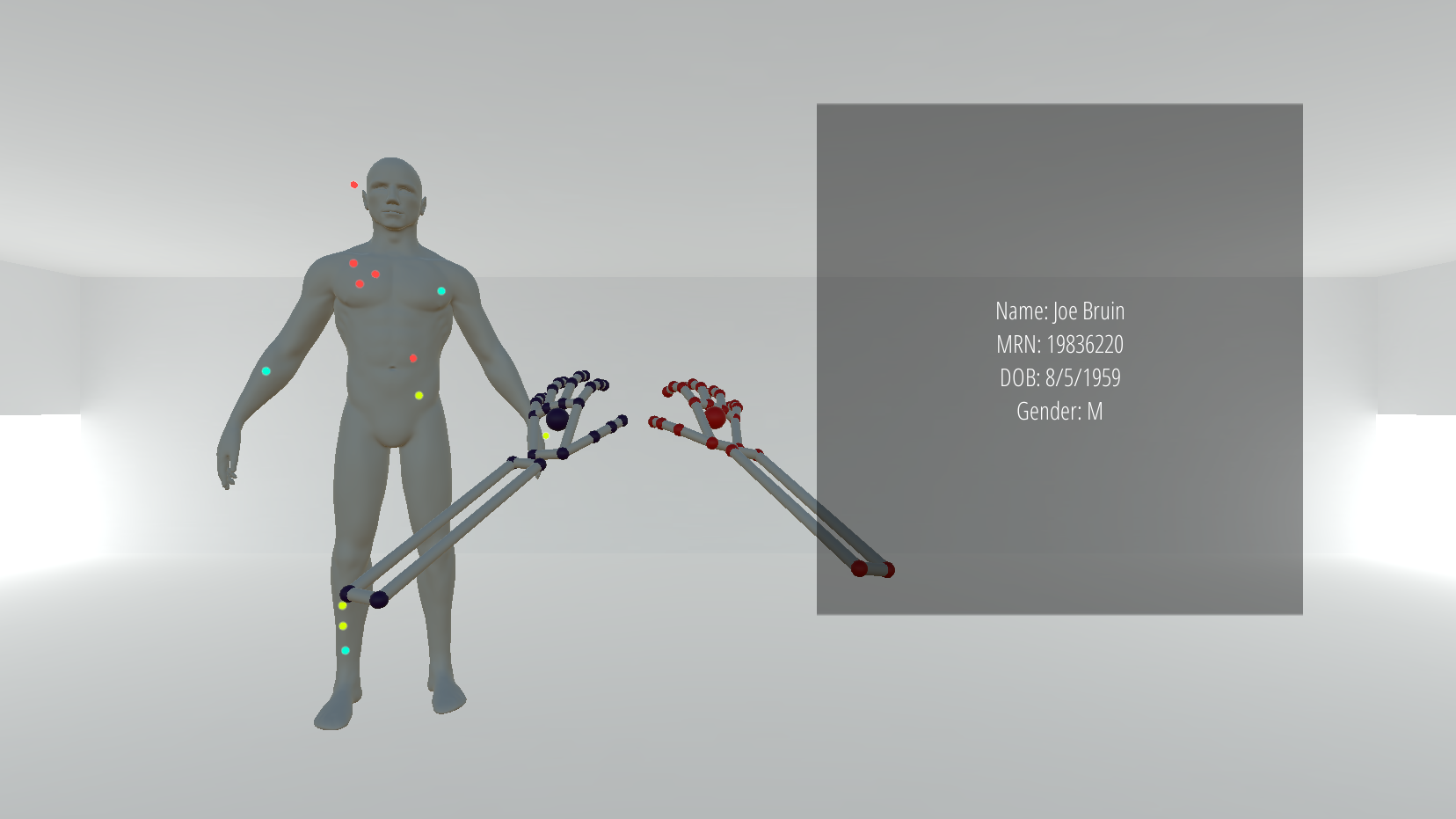
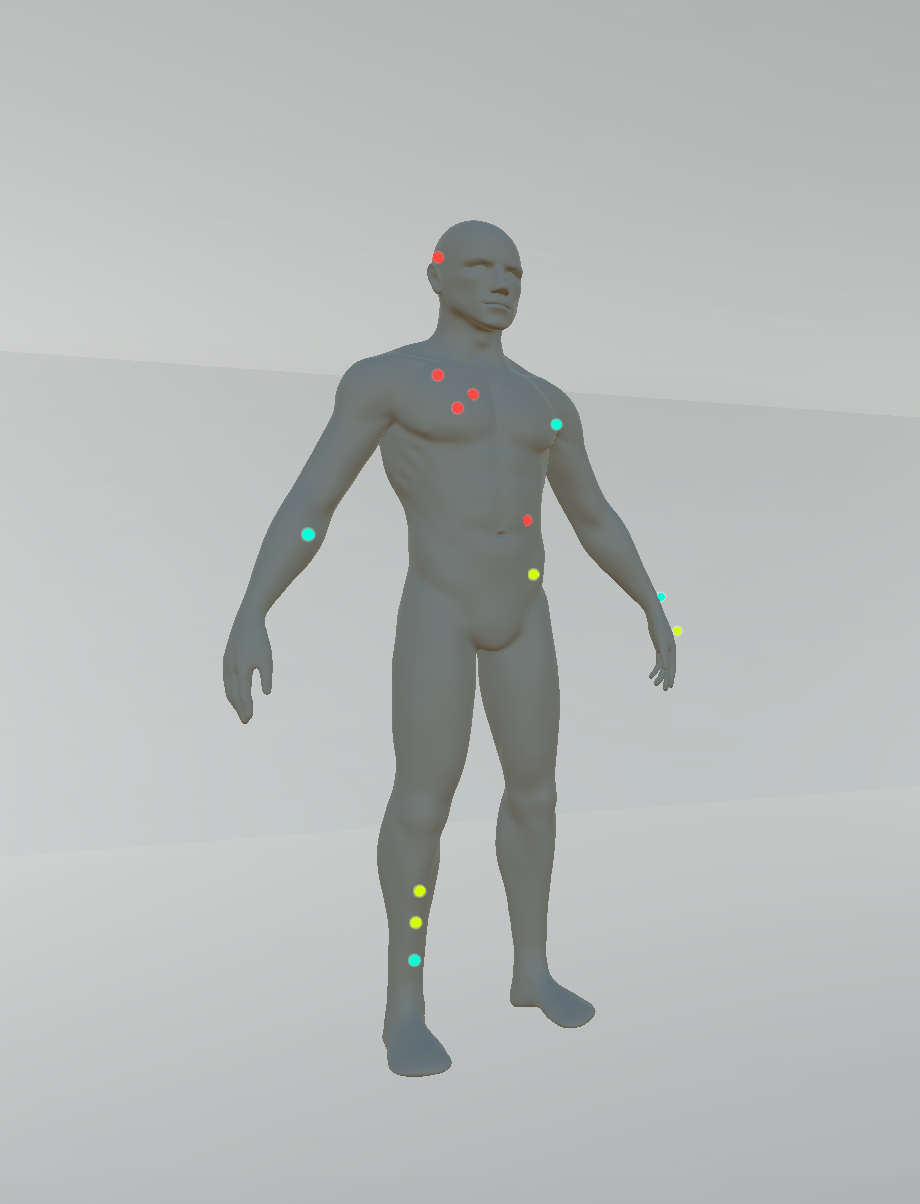
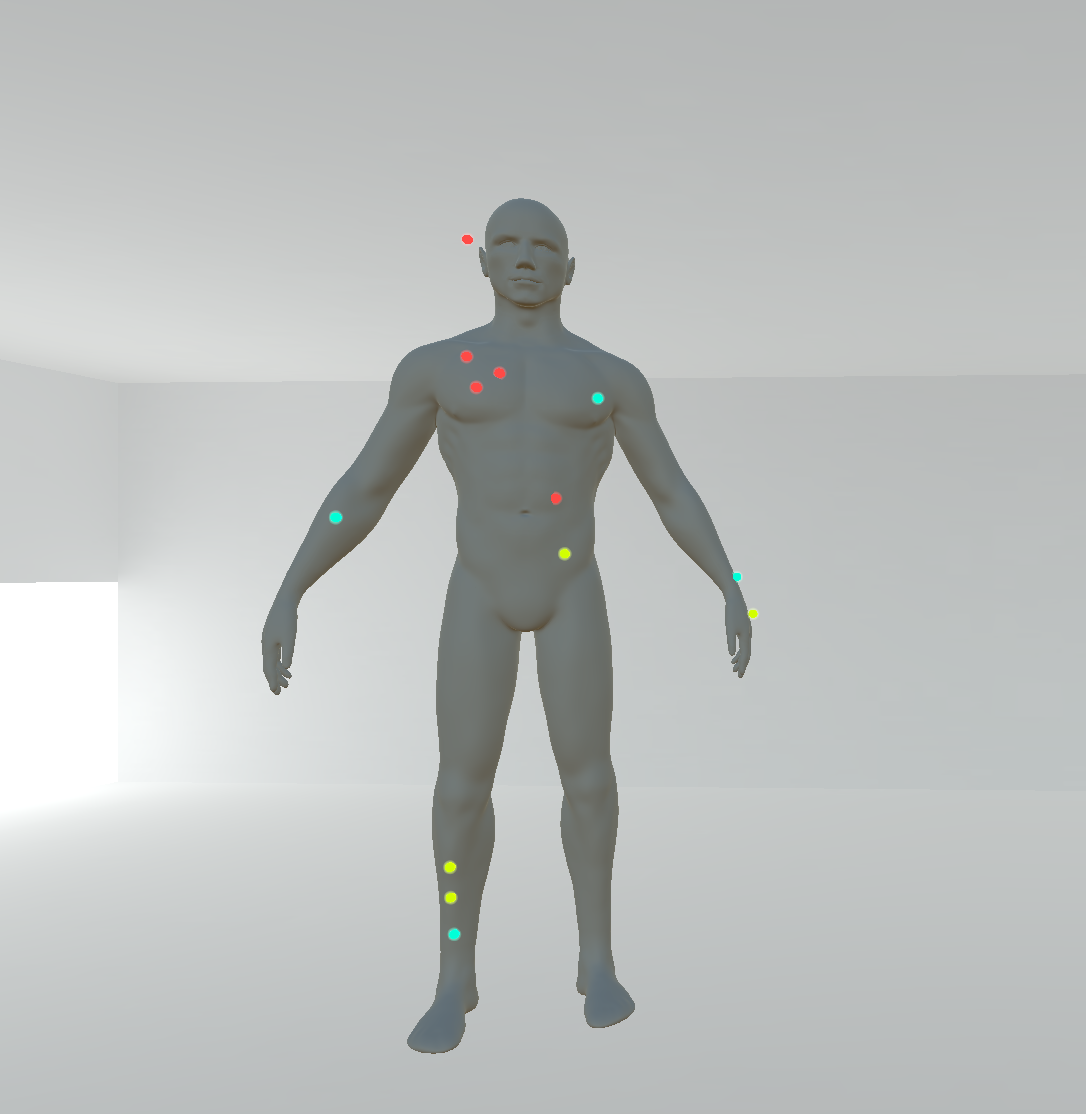
Provides an intuitive and interactive way of interacting with health information and history. Every complaint, diagnosis, operation, etc. is detailed as a superposition on a human figure. Access to each event is natural -- any medical records are located in the corresponding sector on the body. To tie it all together, we used a Leap Motion to interact with our visual patient chart.
How we built it
Built using Unity and leap motion.
Challenges we ran into
We ran into trouble regarding communication between commands sent via Leap Motion and our graphical interface. Mapping between Leap and unity coordinate systems Leap inaccuracies with many different gestures
Accomplishments that we're proud of
We successfully use Leap Motion to interface with our graphics to provide an intuitive experience. Features include zooming into certain regions of the body, rotating the body, and viewing medical event information.
What we learned
3 of our 4 group members had not used leap motion before this hackathon. Learning to use this piece of software was a huge piece of our experience. In addition, we also learned the various techniques necessary to share code between programmers when working on a team project such as this one.
What's next for Insite
The next step for insite is working to display injuries, previous operations, and current body anatomy directly onto our 3D patient image. By superimposing these events onto the patient patients will be able to better visualize their current state of health. An example of this could be showing cancerous regions directly onto our figure and developing a timeline feature in which a doctor or patient could scroll through past month or year and observed the change in size of cancerous regions.


Log in or sign up for Devpost to join the conversation.