-
-
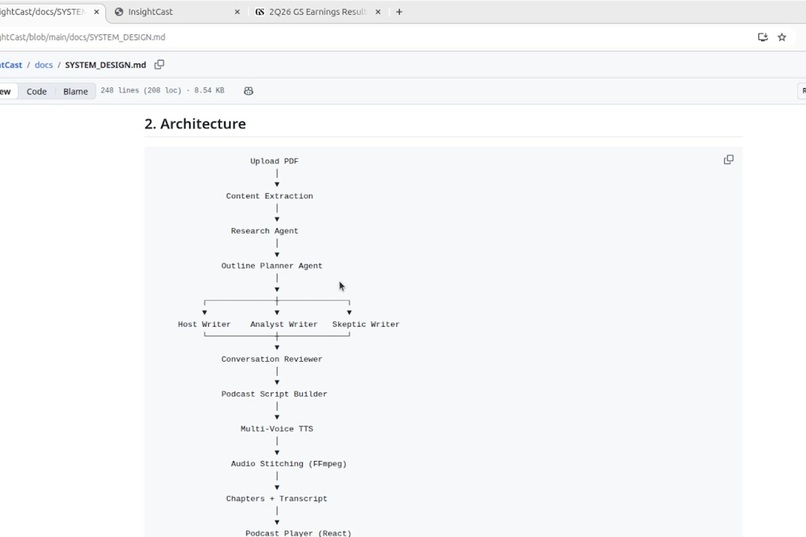
Project architecture: extraction, research, planning, multi-persona writing, review, TTS, and playback.
-
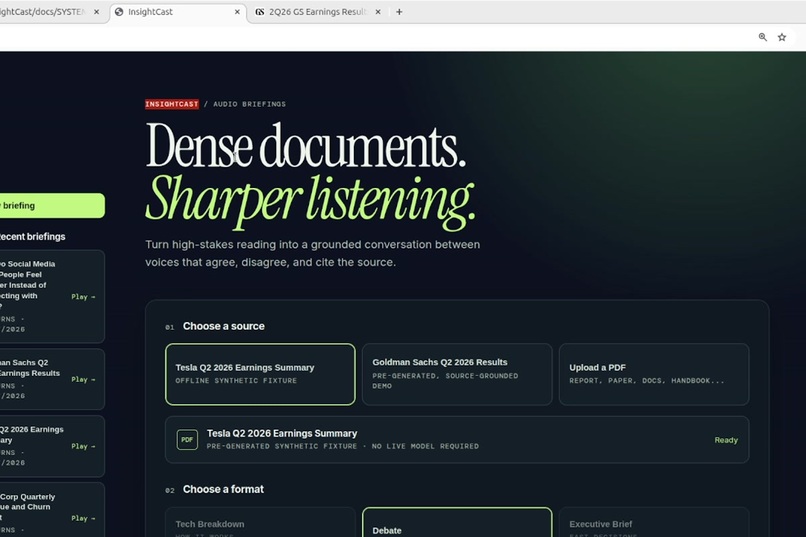
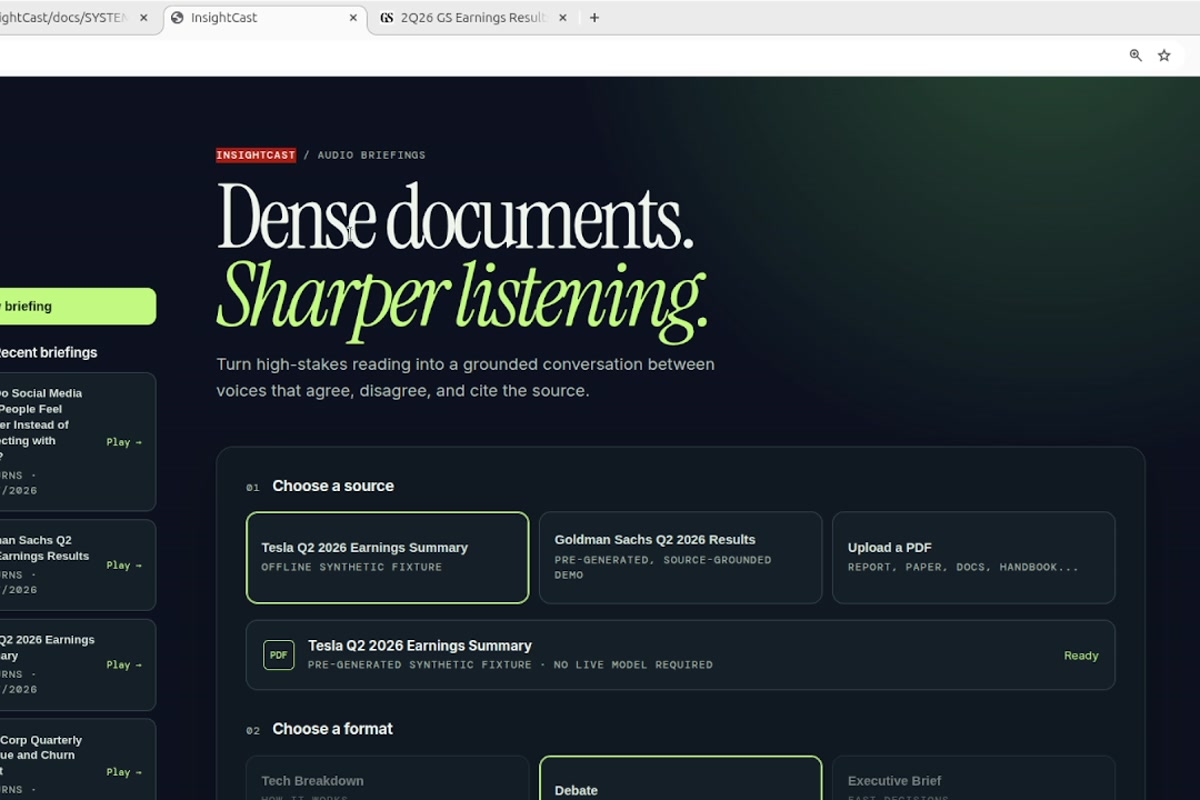
InsightCast source selection: deterministic demos or live PDF upload for an audio briefing.
-
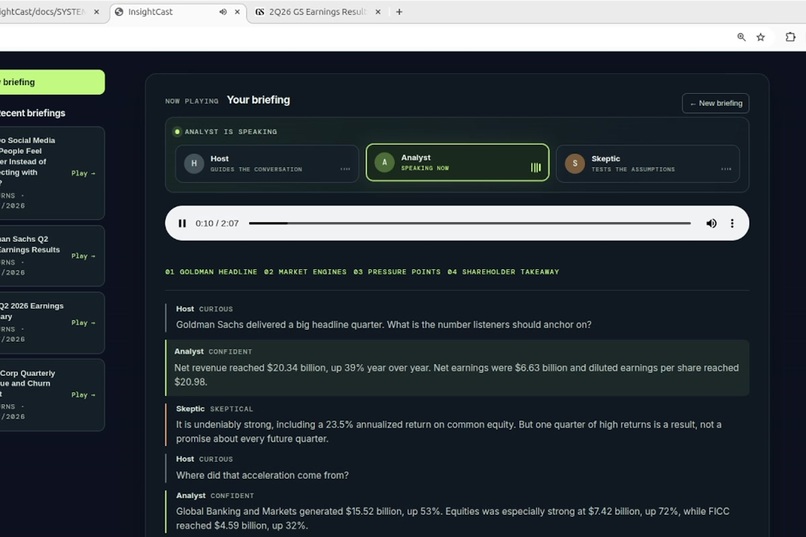
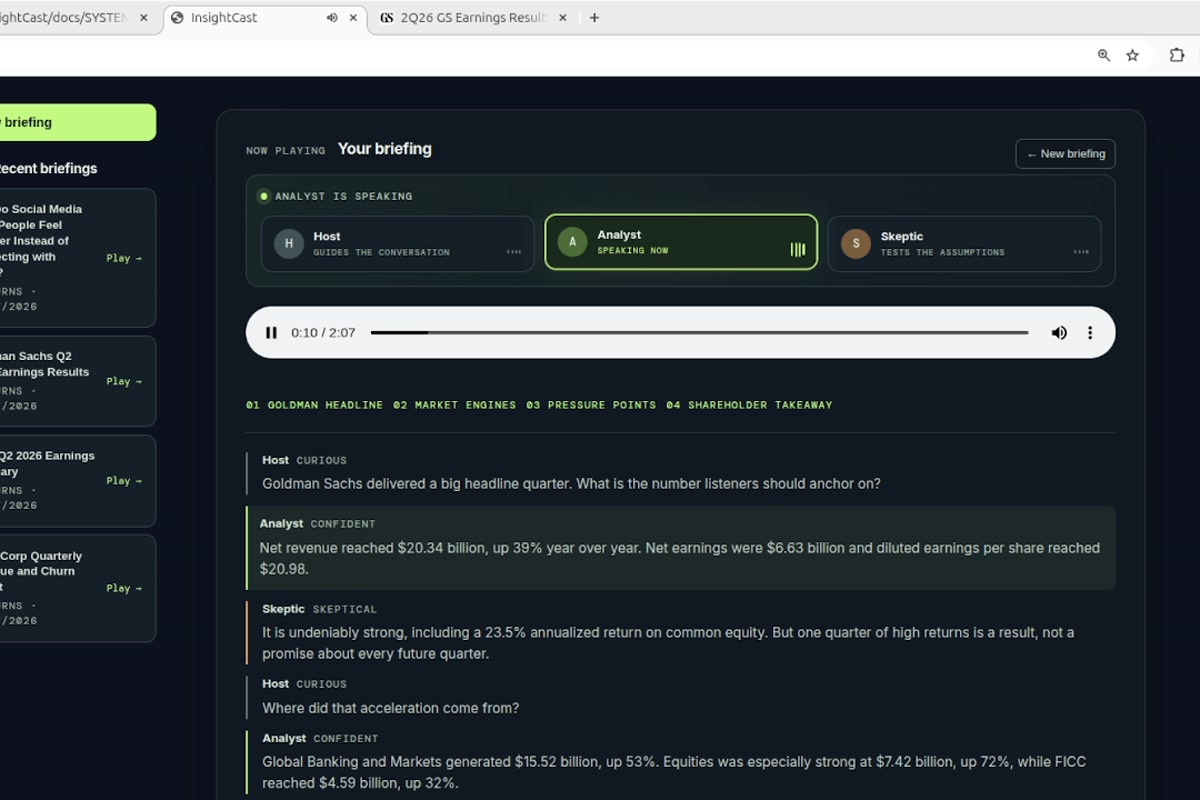
Interactive player with active speaker highlighting, chapter seeking, and source-grounded transcript.
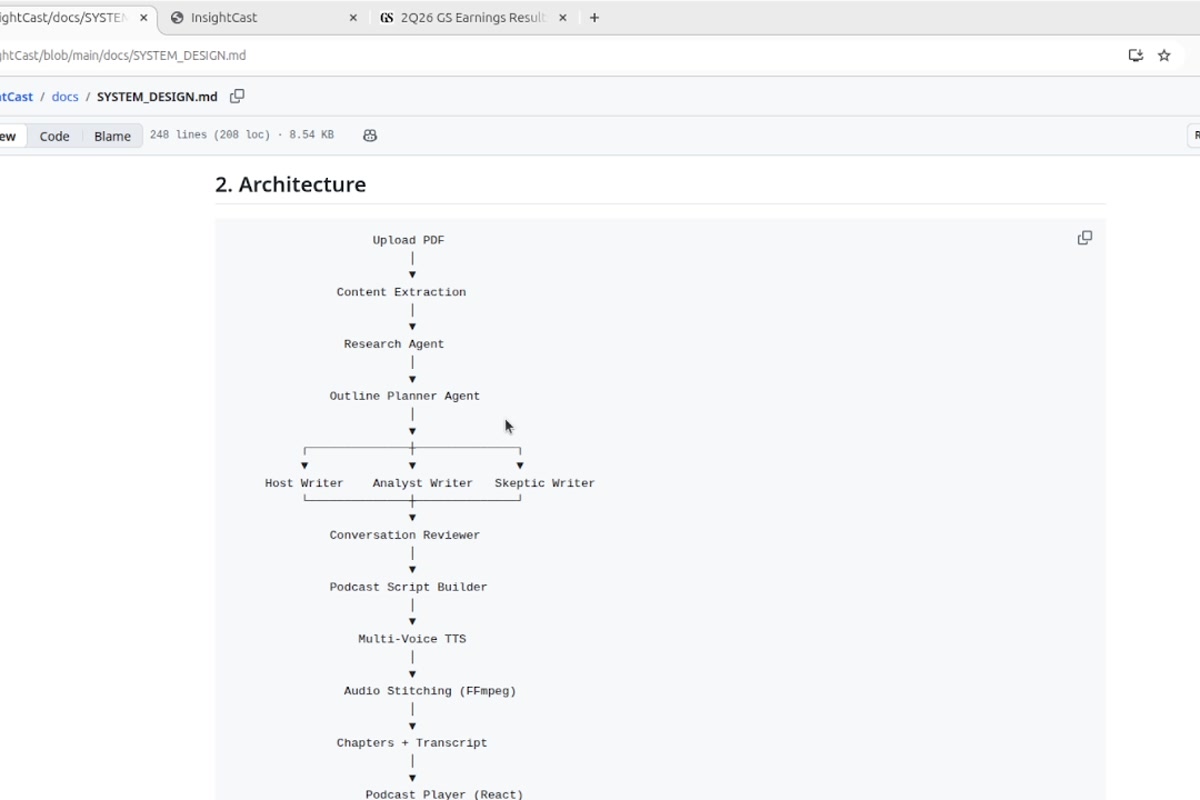
InsightCast (Insights from content + Podcast) — Turn Documents into Evidence-Backed Podcast Briefings
I often save research papers, earnings reports, policy documents, and long PDFs with the intention of reading them later, but "later" rarely comes. I wanted a way to understand these documents while commuting, working, or exercising without losing the context behind the information.
InsightCast transforms documents (PDFs, reports, and other long-form content) into grounded, multi-speaker podcast briefings. Instead of a single narrator, it uses three roles: a Host to guide the conversation, an Analyst to explain the key findings, and a Skeptic to question assumptions and highlight limitations using evidence from the source. This conversational format makes complex documents easier to follow while keeping every important claim traceable to the original content.
How I Built It
Users upload a document, and InsightCast extracts the content before processing it through a structured multi-agent pipeline:
Document
    ↓
Extraction
    ↓
Research
    ↓
Planning
    ↓
Writing
    ↓
Review
    ↓
Multi-Voice Podcast
Instead of relying on one large prompt, I divided the workflow into specialized agents. The Research agent extracts important facts and assigns them stable IDs, the Planner organizes those facts into a narrative, writer agents generate dialogue while referencing the facts, and a Reviewer verifies that the final script is accurate, balanced, and grounded before audio is generated.
The final application includes a podcast player with chapter navigation, transcript highlighting, replayable briefings, and distinct voices for each speaker.
Inspiration
The idea came from realizing that listening is often easier than reading, especially for long technical documents. While AI summaries are convenient, they don't always make it clear where their conclusions come from. I wanted to build something that was just as easy to consume but still transparent and trustworthy.
Challenges
The biggest challenge was building a reliable system while working with limited hardware and API constraints. Smaller local models occasionally generated unsupported claims, while hosted models could hit token and rate limits.
To improve reliability, I:
- Split the workflow into specialized agents with clearly defined responsibilities.
- Passed stable fact references through every stage so claims remained traceable.
- Added structured output validation, response repair, and retry logic.
- Optimized prompts to stay within provider limits.
- Limited reviewer rewrites to avoid infinite loops.
- Built deterministic demo fixtures to test the complete pipeline consistently.
What I Learned
I initially thought grounding was mainly a prompt engineering problem, but I learned that it has to be enforced throughout the system. Passing fact references between agents, validating outputs, and reviewing the generated script had a much bigger impact on reliability than simply writing better prompts. That experience changed how I approach building trustworthy AI applications.

Log in or sign up for Devpost to join the conversation.