
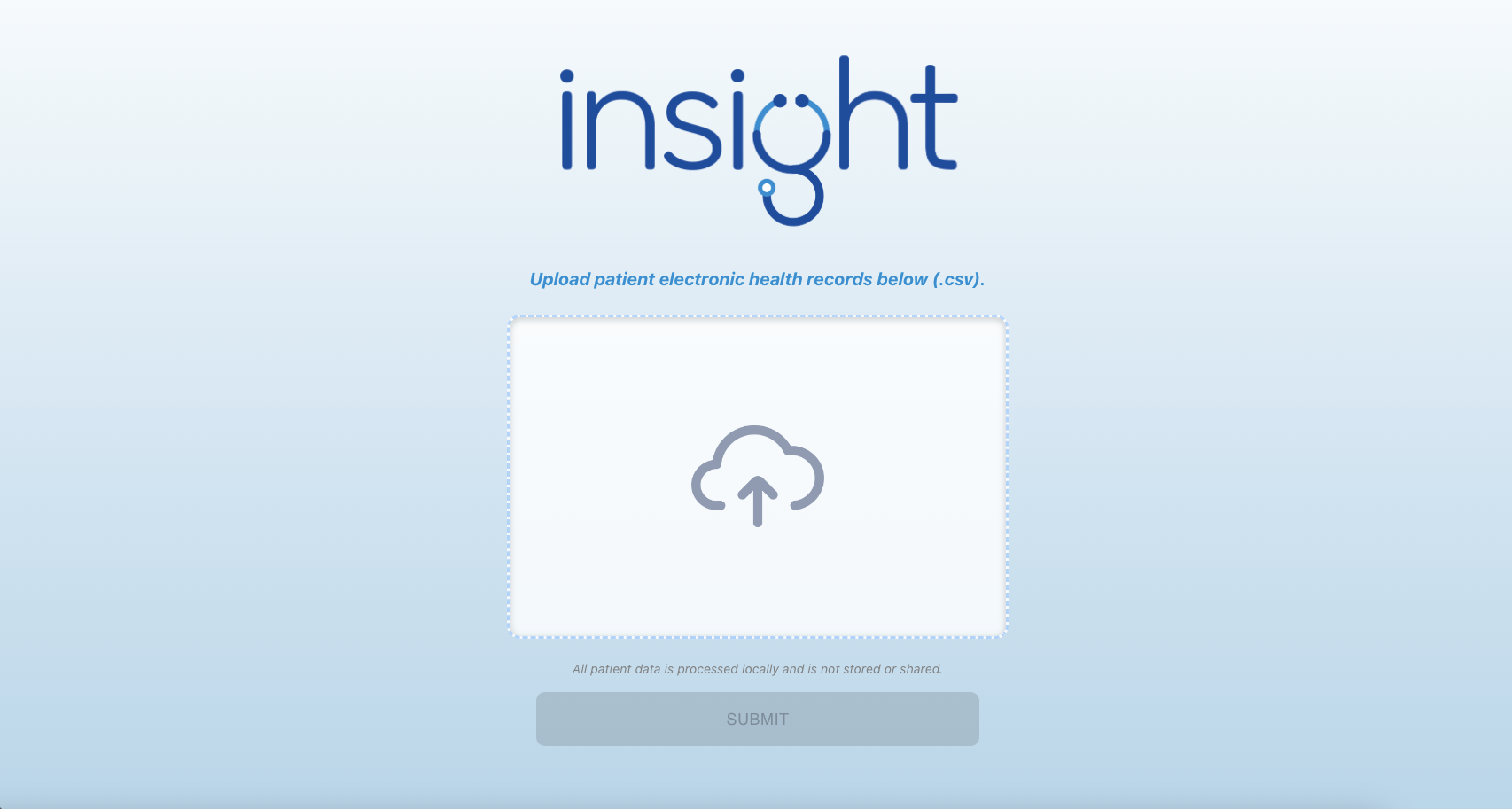
Inspiration: Our teammate's cousin is a doctor who consistently faces the problem of not having enough meeting time with her patients. This arises from the fact that due to the many patients a day and their various medical complications, the medical problems range from common to rare. Due to this, the doctor cannot have a quality meeting time with all their patients. We believed it would be unique and impactful to create a platform where we can help the doctor understand when a patient has a complicated medical history which then the doctor can spend more time reviewing their file and hence be more prepared for their meeting.
What it does: This product is an AI-powered tool that analyzes a patient's Electronic Health Record (EHR) to assess the complexity of their medical case. It uses machine learning and natural language processing (NLP) to analyze structured data (e.g., medical history, medications, age, illnesses). The tool helps doctors better prepare, manage time, and deliver personalized care, all while ensuring data privacy by running locally on the doctor's machine without sending any data to external servers.
How we built it: For the backend, we used Python in VS Code, leveraging machine learning models like Explainable Boosting Regressor, Random Forest, and XGBoost from Scikit-Learn to assess and classify patient complexity. We utilized Seaborn and Matplotlib for data visualization to present insights clearly and effectively. On the frontend, we combined React, JavaScript, and Python in VS Code, along with Adobe After Effects, to create an interactive and engaging user interface that offers a seamless user experience (UI/UX). This combination of technologies allowed us to build a robust and visually appealing solution.
Challenges we ran into: One of the challenges we faced was trying to get our model to classify when a patient is "complex" or not. Our model was constantly overfitting and we spent a majority of our time fixing this problem. The next major challenge was trying to get the correct output in the frontend of the information of what makes a patient "complex" or not.
Accomplishments: We're mainly proud of our diligence and loyalty to this project as we didn't know if we wanted to spend as much time as we did or how we would react to the problems we would face. Due to our motivation to do well, we believe we made an excellent product that is the epitome of what we had envisioned from the initial stages.
What we learned: We learnt how to utilize efficiently utilize outside sources to our benefit when we faced problems. Examples of outside sources include countless YouTube videos, reading step-by-step articles, and learning our code to understand the problem. We believed we're better equipped for future problems as we now have more skillsets and tools to utilize for the future.
What's next: For our, we first want to focus on the internals of our project. Some of these are to find a newer model that has a better chemistry to our idea and code and can produce more efficient outputs, searching for more edge cases to decrease any lags or unknown problems, and improve the minor details in our UI/UX that we neglected.
Built With
- adobe-after-effects
- flask
- javascript
- matplotlib
- python
- react
- scikit-learn
- seaborn
- vscode

Log in or sign up for Devpost to join the conversation.