-
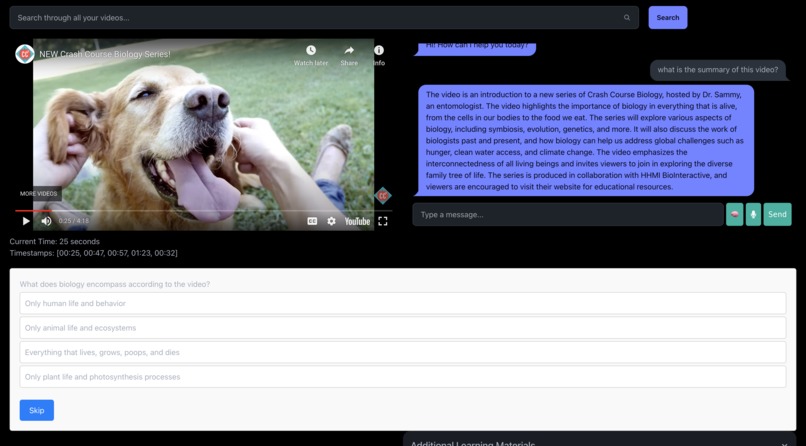
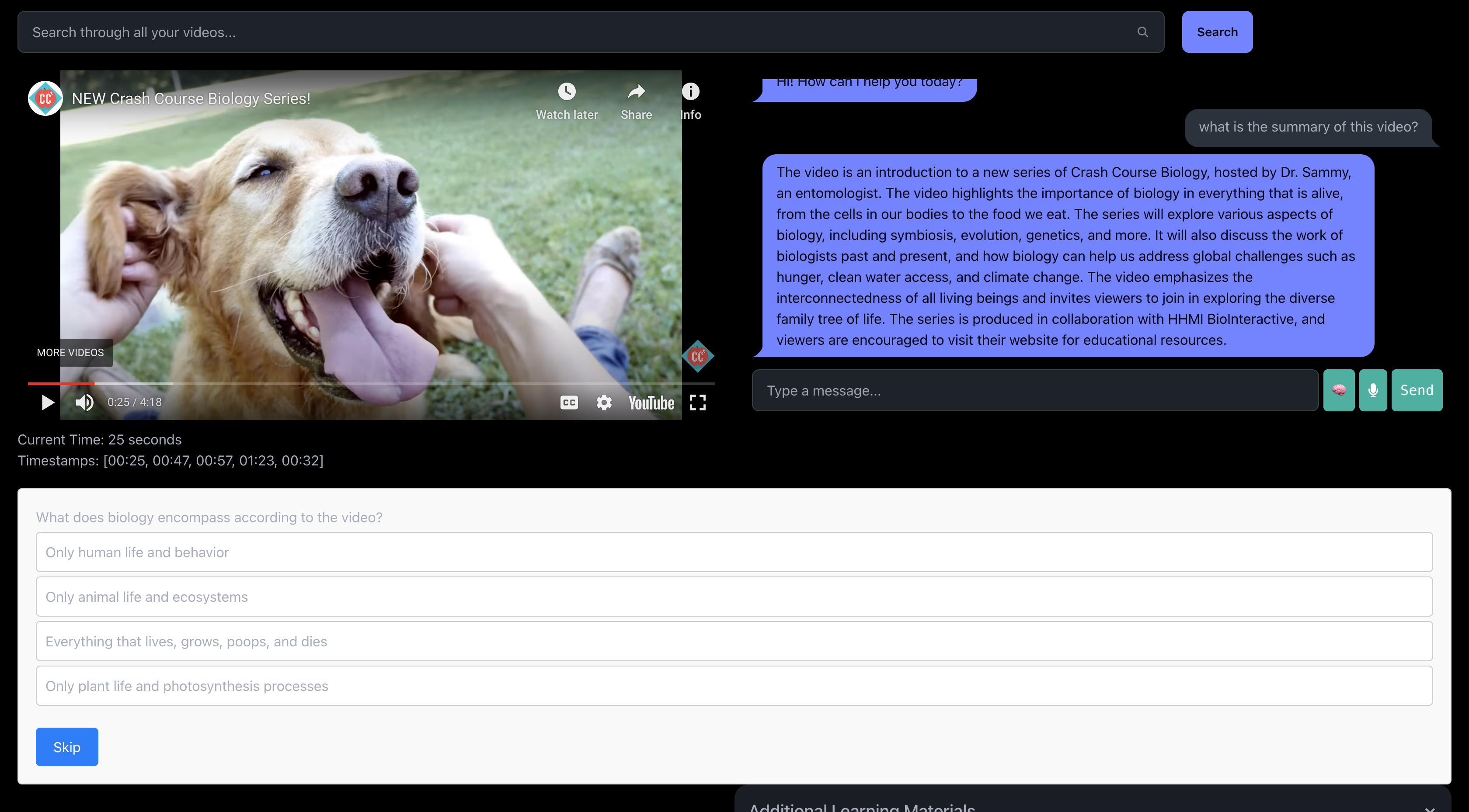
Video Chat/Quiz Screen
-
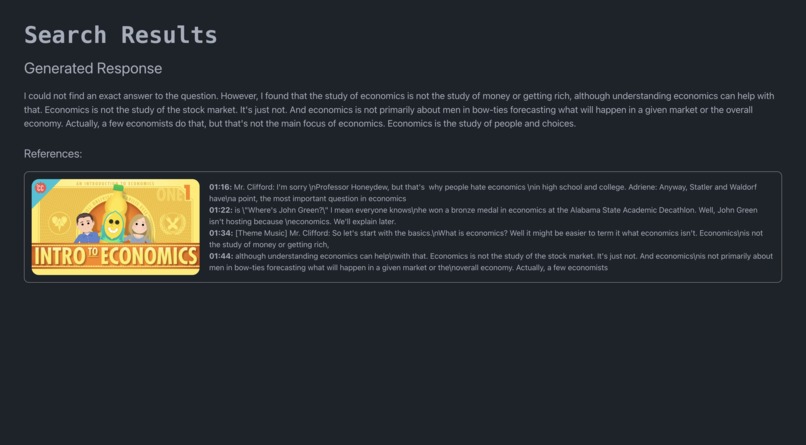
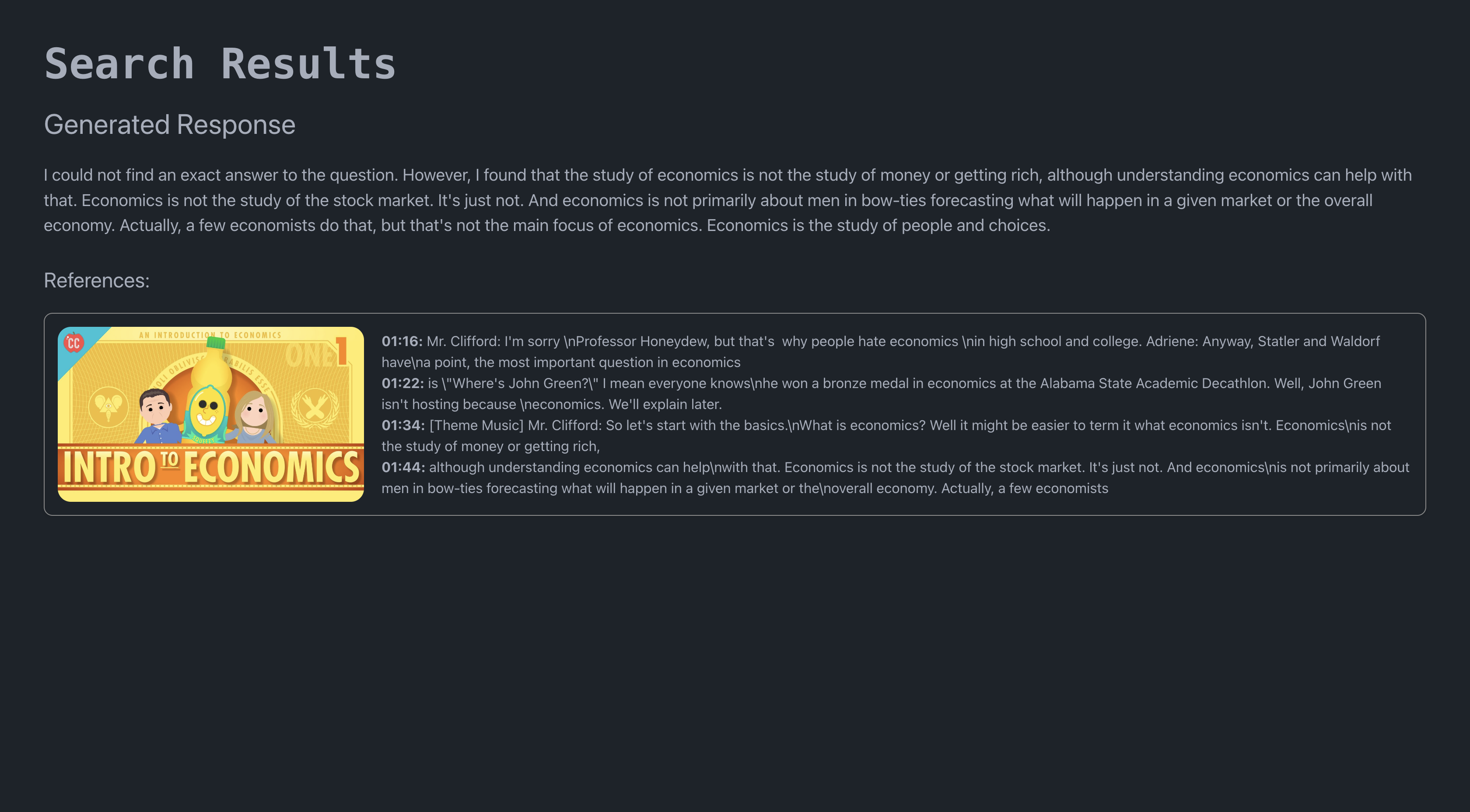
Smart RAG AI Search
-
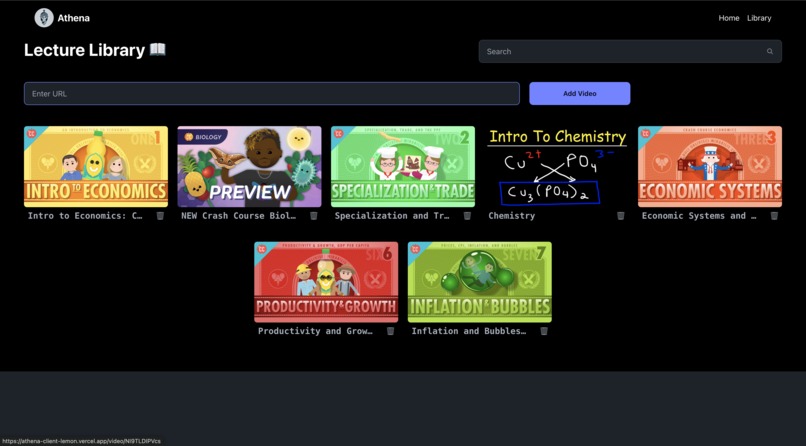
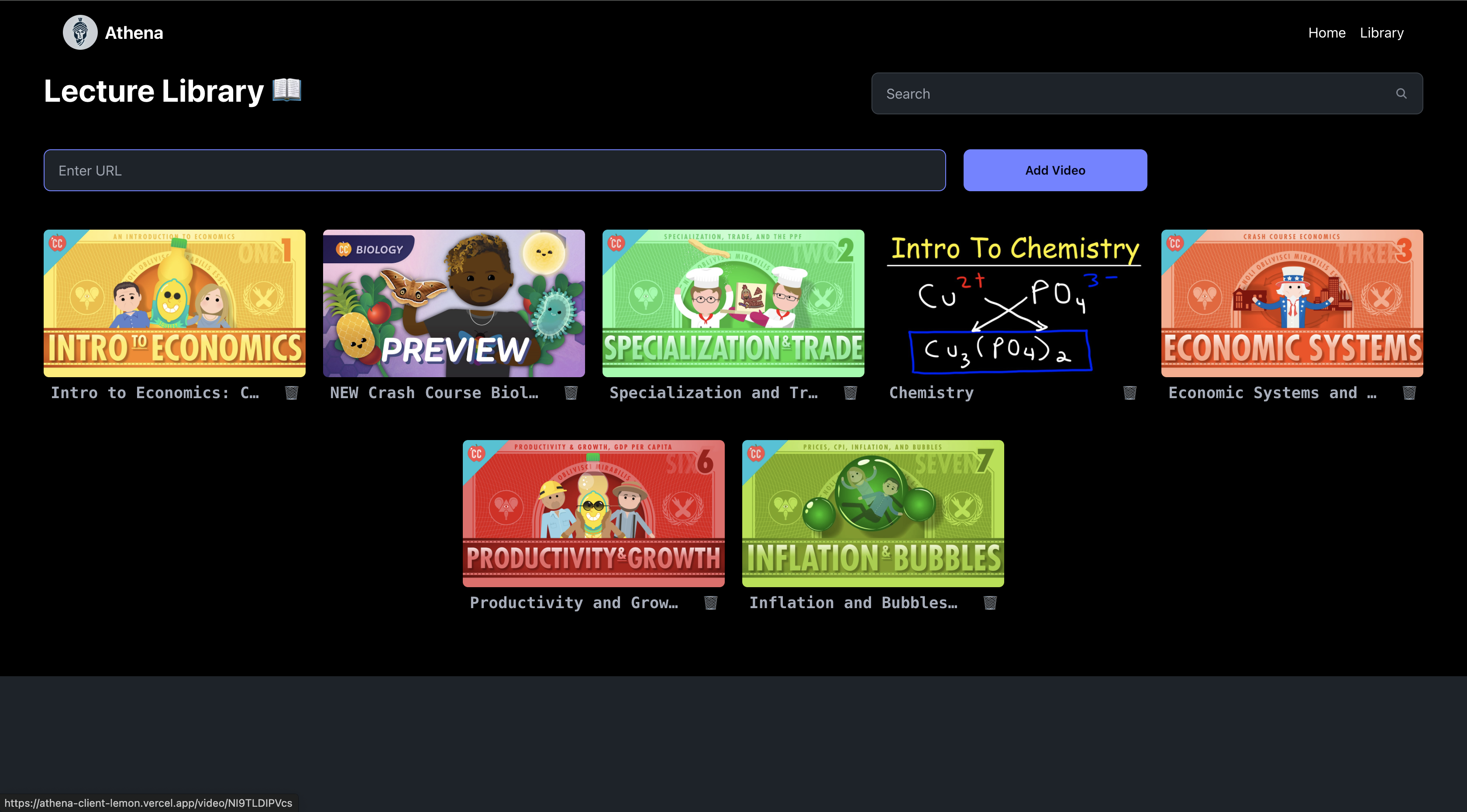
Video Library
-
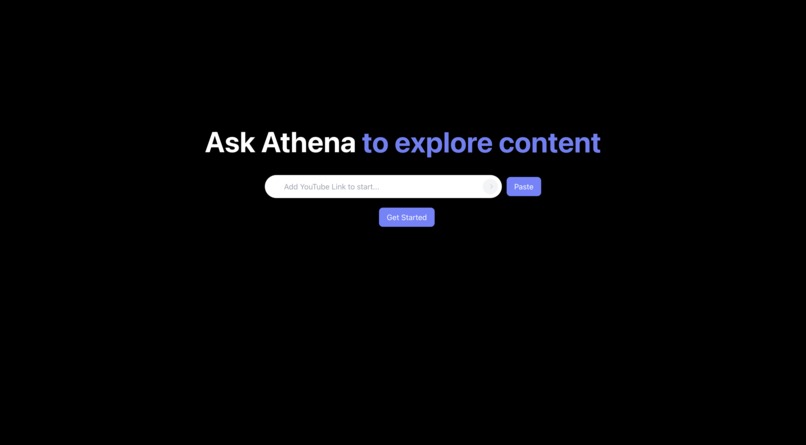
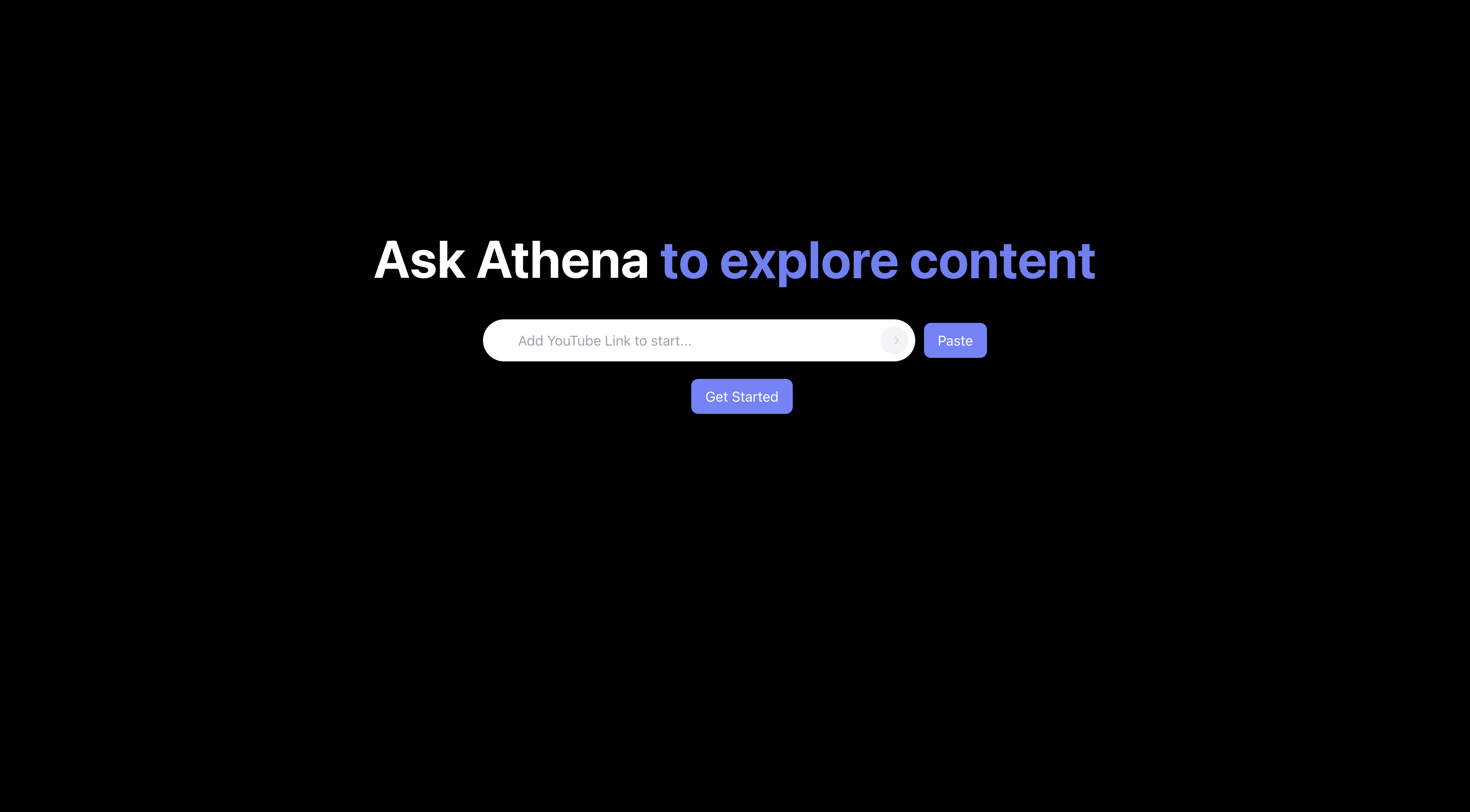
Landing Page
Check out our Live Demo and Video Demo:
Live Demo: https://athena-client-lemon.vercel.app/ Video Demo: https://www.loom.com/share/430791bd31d5436b8bba7fb4793614b7
Inspiration
We have all been in the position where we're a week away from the midterm that makes or breaks our grade and are about 10 lectures behind_. A daunting task at hand, we as students need to sit through all 20 hours of video footage to comprehensively understand all topics that are covered.
The inspiration came from observing students struggle to stay engaged with online lectures and the desire to make learning more dynamic and effective. We created an application that allows you to synthesize, search for topics, transcribe, and engage with lectures for all types of educational videos in one platform.
What it does
Athena transforms traditional lecture videos into an interactive learning experience. Users can add YouTube links to their library, and our platform automatically generates quizzes based on a GPT with the video transcripts that are randomly placed throughout the video to perform an active recall of concepts just discussed in the video.
Additionally, Athena offers a GPT-based assistant that uses the video transcript as context to help answer any questions a user might have while watching the lecture. This assistant includes speech-to-text and text-to-speech capabilities, reducing the need for typing.
Our platform also features an AWS Bedrock Retrieval-Augmented Generation (RAG) system that allows users to search for specific topics or moments across their entire library of lectures.
How we built it
Frontend: Built with React. We used React Router for navigation and integrated Tailwind CSS for styling to create a responsive and visually appealing interface. There are four main pages on our demo: the landing page, the library page, the video-specific chat/quiz page, and the AI-powered search page
Backend: The backend is built using Node.js and Express. It handles video link submissions, processes video transcripts, and generates quizzes. We used AWS services such as S3 and Bedrock for storage and retrieval of video transcripts and other data.
AI Integration: We integrated OpenAI’s GPT model for generating contextual answers based on video transcripts. The speech-to-text and text-to-speech features are powered by external APIs such as Hume.
RAG System: Utilizing AWS Bedrock's powerful search capabilities, we implemented a Retrieval-Augmented Generation system to enable efficient searching of specific topics across the user’s lecture library.
Challenges we ran into
Transcript Accuracy: Ensuring the accuracy of video transcripts was a significant challenge. We had to fine-tune our approach to handle different accents, speech speeds, and background noises. We considered using Groq to provide fast speech-to-text conversion of the video's mp3 file but realized that YouTube API provides good enough transcripts of the video instantly.
Youtube iFrame: We kept on running into an unsolvable bug of the iFrame not accepting the player instance wanting to play the video again. We had to time the API call correctly with a time delay in order to prevent the instance from showing up.
Seamless Integration: Integrating multiple APIs (speech-to-text, text-to-speech, GPT) in a way that will work with each other without interrupting
Scalability: Designing the backend to efficiently handle a growing number of users and data while maintaining performance and reliability was another challenge we faced.
Accomplishments that we're proud of
Successful AI Integration: We’re proud of how we successfully integrated advanced AI technologies to provide meaningful assistance and interactivity. User-Centric Design: The platform’s user interface is intuitive and user-friendly, making it easy for users to navigate and interact with the content, a costume logo with a landing page really helped with this. Effective Learning Tool: The quizzes and search functionality have shown to significantly enhance users' learning experience, providing immediate feedback and easy access to information.
What we learned
AI Limitations and Potential: Our speed is dependent on our API calls, integrating something with Groq and consolidating all of our storage onto supabase aided in creating a scalable app for users. Importance of Scalability: Building with scalability in mind from the start saves a lot of future headaches. Efficiently managing data and requests is critical as the user base grows.
What's next for Athena
Mobile Application: Developing a mobile app to make Insight.ai accessible on the go. More Languages: Expanding our platform to support multiple languages for both transcripts and AI assistance and Document based RAG. User Community: Creating a community feature where users can share their own quizzes and notes, and collaborate on learning. Advanced Analytics: Adding advanced analytics to provide users with insights into their learning progress and areas for improvement.
Built With
- amazon-web-services
- express.js
- hume
- node.js
- ocr
- openai
- react
- supabase
- tailwind
- vercel
- youtube
- yt-api


Log in or sign up for Devpost to join the conversation.