

Inspiration
In Mexico, more than 2.69 million people live with visual disabilities (INEGI, 2020). Many assistive devices that help visually impaired individuals understand their surroundings are expensive or hard to obtain. We wanted to build something affordable, portable, and powered by modern AI, so anyone could point a camera, take a picture, and instantly hear what is around them. That idea became insAIght — an intelligent, low-cost assistant designed to make visual information accessible through audio.
What it does
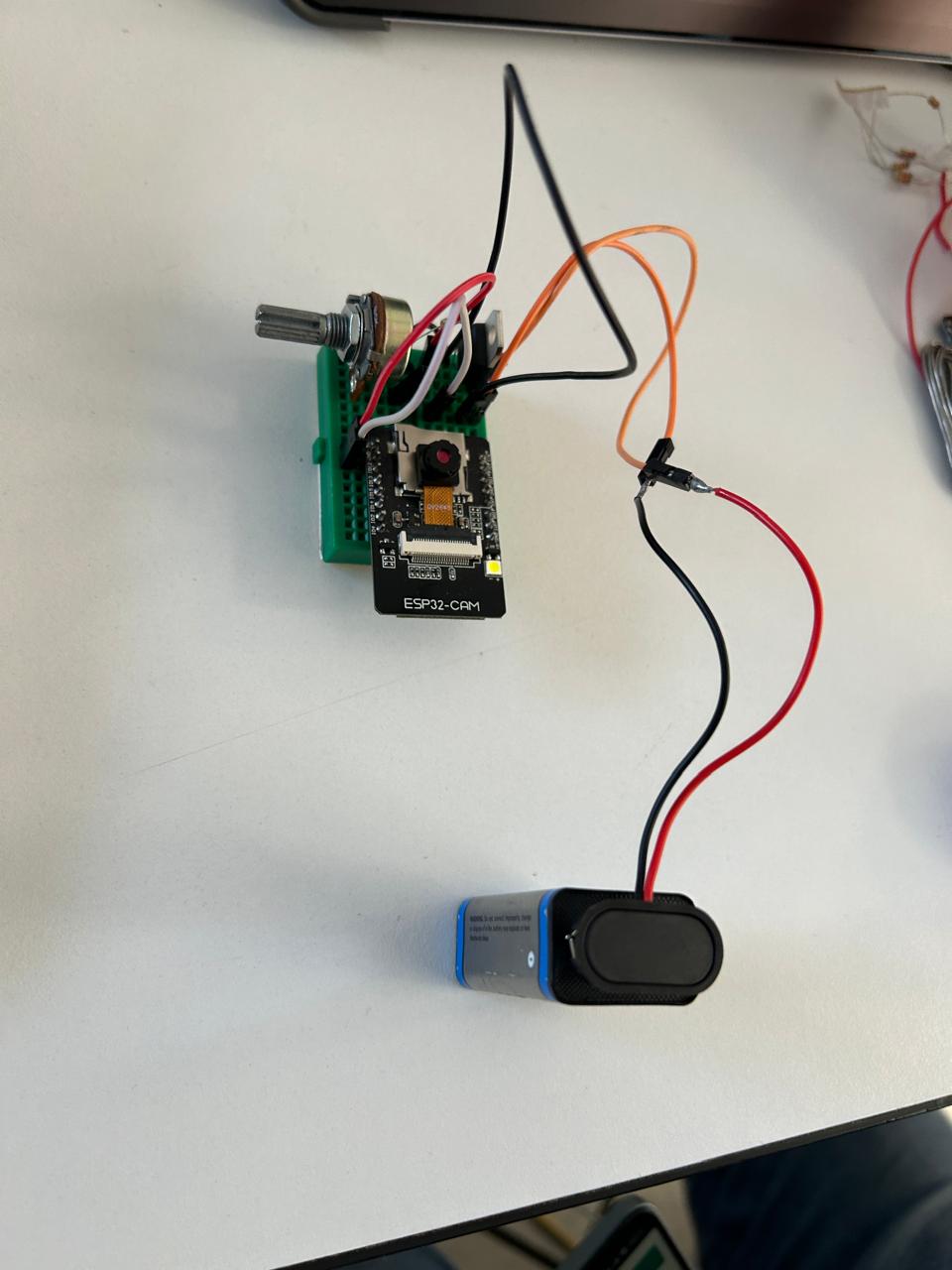
insAIght captures an image using an ESP32-CAM or a smartphone and sends it to our cloud server. The server processes the photo with Gemini Vision, generates a detailed description, and then converts that text into natural speech using ElevenLabs. The user receives an audio message that explains what the camera sees — objects, people, signs, obstacles, text, and general context of the scene. The system works both with the ESP32-CAM device and a simple mobile interface, making it accessible to everyone.
How we built it
We developed a three-part system:
- ESP32-CAM device Captures photos on command Sends compressed JPEG images over WiFi Communicates with our backend through HTTP
- Cloud backend Receives images from ESP32-CAM or phone Sends the image to Gemini Vision API Processes and formats the model’s response Forwards the description text to ElevenLabs
- Audio delivery ElevenLabs generates a clear, natural voice The audio is returned to the user’s device Designed for quick response and low friction.
Challenges we ran into
ESP32-CAM instability (WiFi drops, memory limits) Ensuring images uploaded correctly without corruption Reducing latency between picture → analysis → audio Handling low-light or noisy images Balancing clarity and length in AI descriptions.
Accomplishments that we're proud of
Building a complete end-to-end assistive tool in limited hackathon time Successfully integrating Gemini Vision + ElevenLabs + IoT Making the system work both on hardware and mobile Creating a prototype that is actually useful for visually impaired users
What we learned
How to optimize microcontrollers for image capture How to design AI pipelines combining vision + audio Practical IoT communication and error handling
What's next for insAIght
Add real-time object tracking with continuous audio feedback Integrate OCR + text reading for signs, menus, labels Improve night-mode performance with better image preprocessing Build a wearable version (e.g., a small clip-on camera


Log in or sign up for Devpost to join the conversation.