-
-
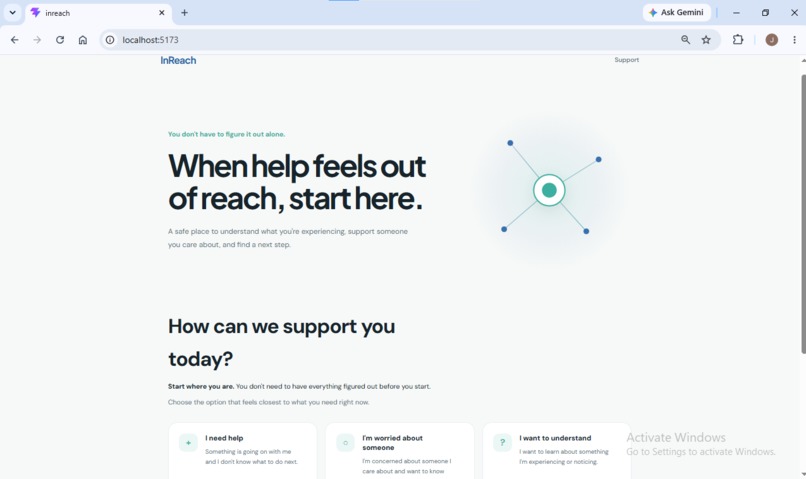
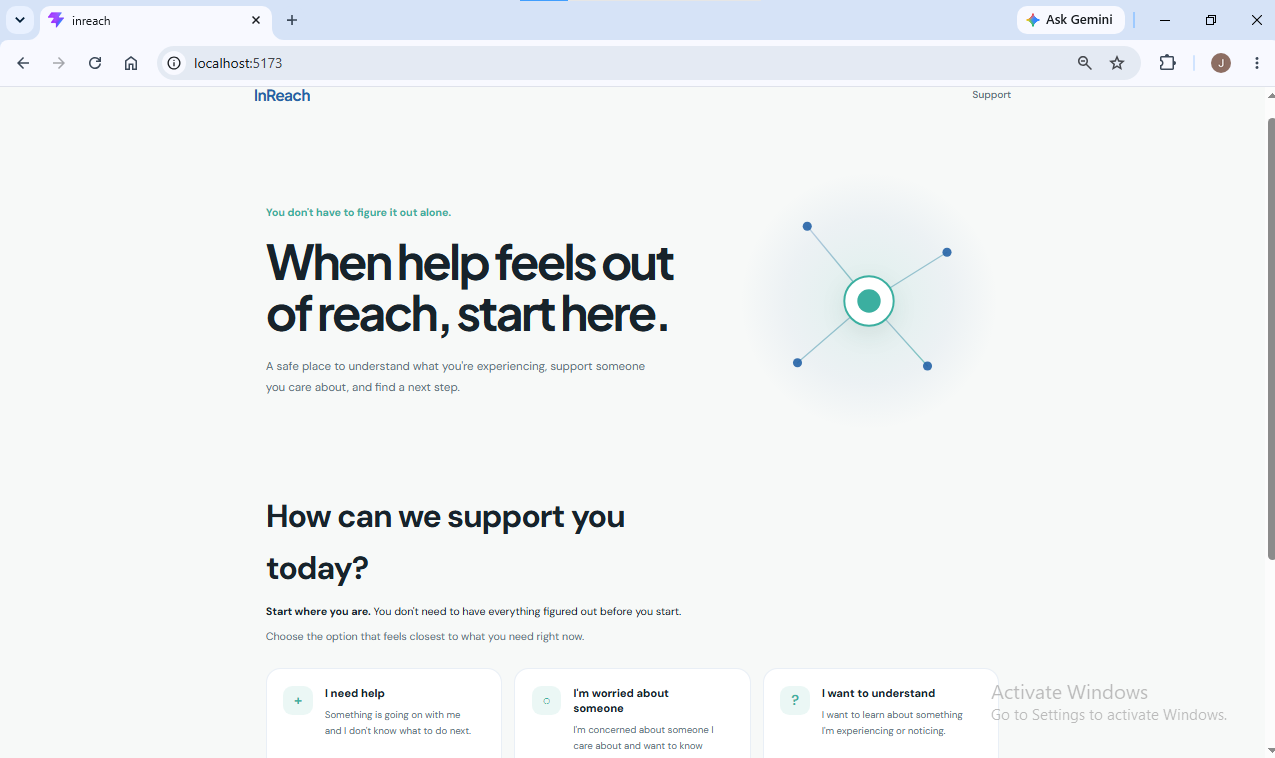
Homepage - InReach’s homepage introduces the platform and gives users a simple, welcoming place to begin.
-
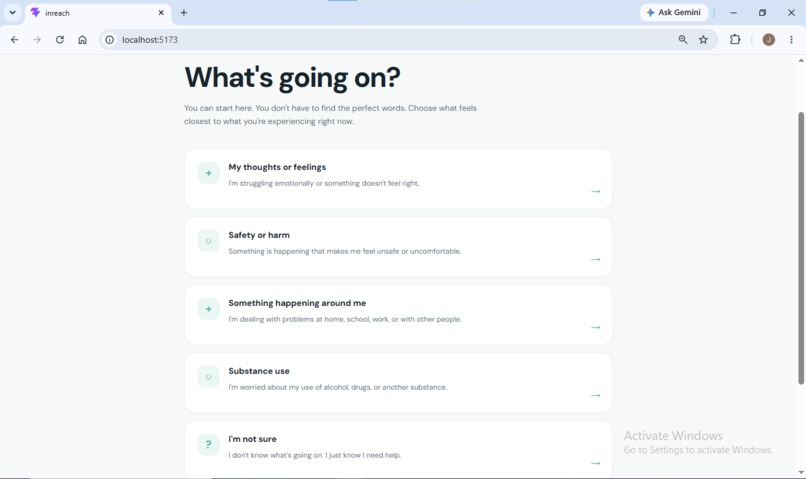
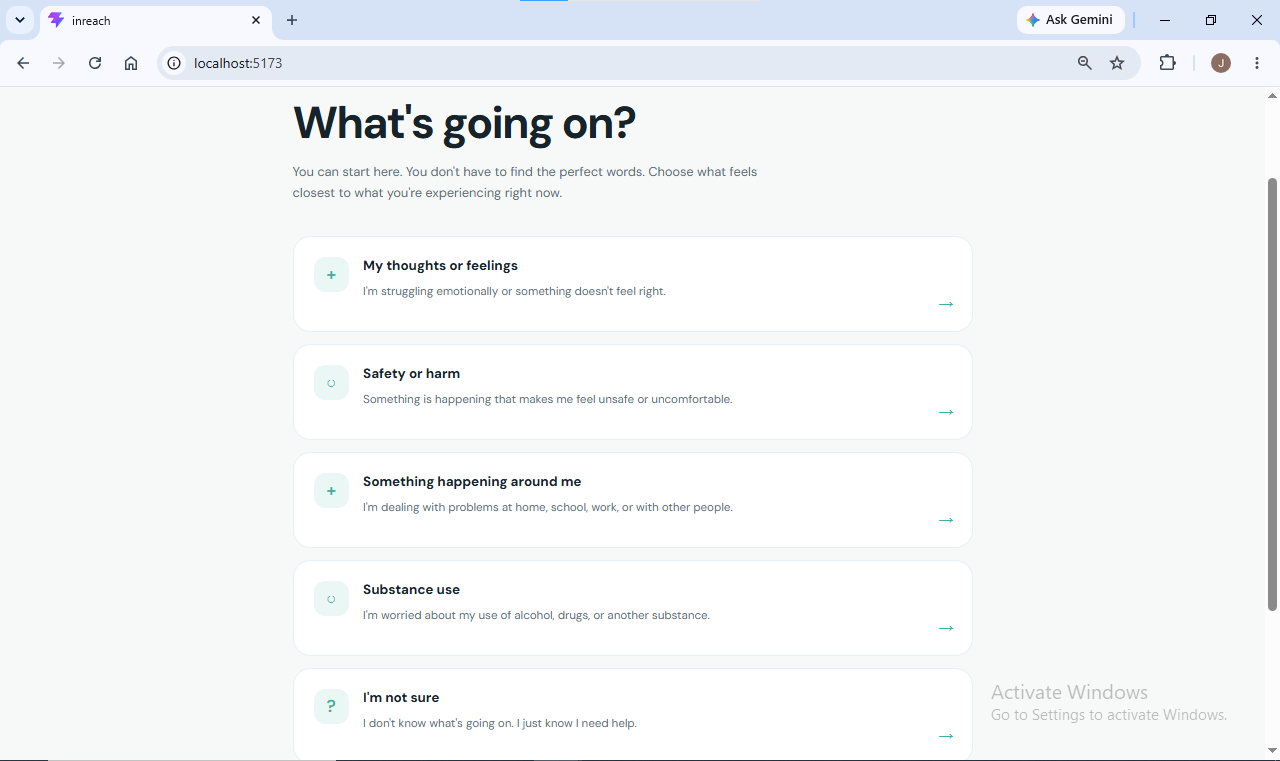
I Need Help Pathway - A guided entry point that helps users identify what they’re experiencing without needing the perfect words.
-
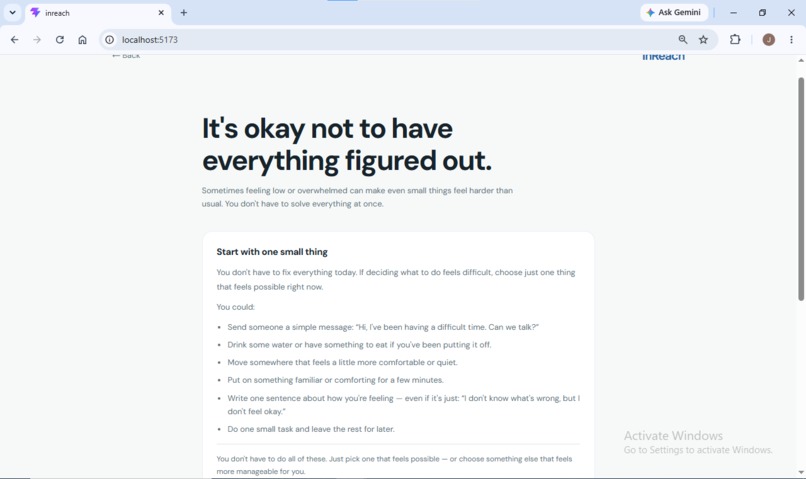
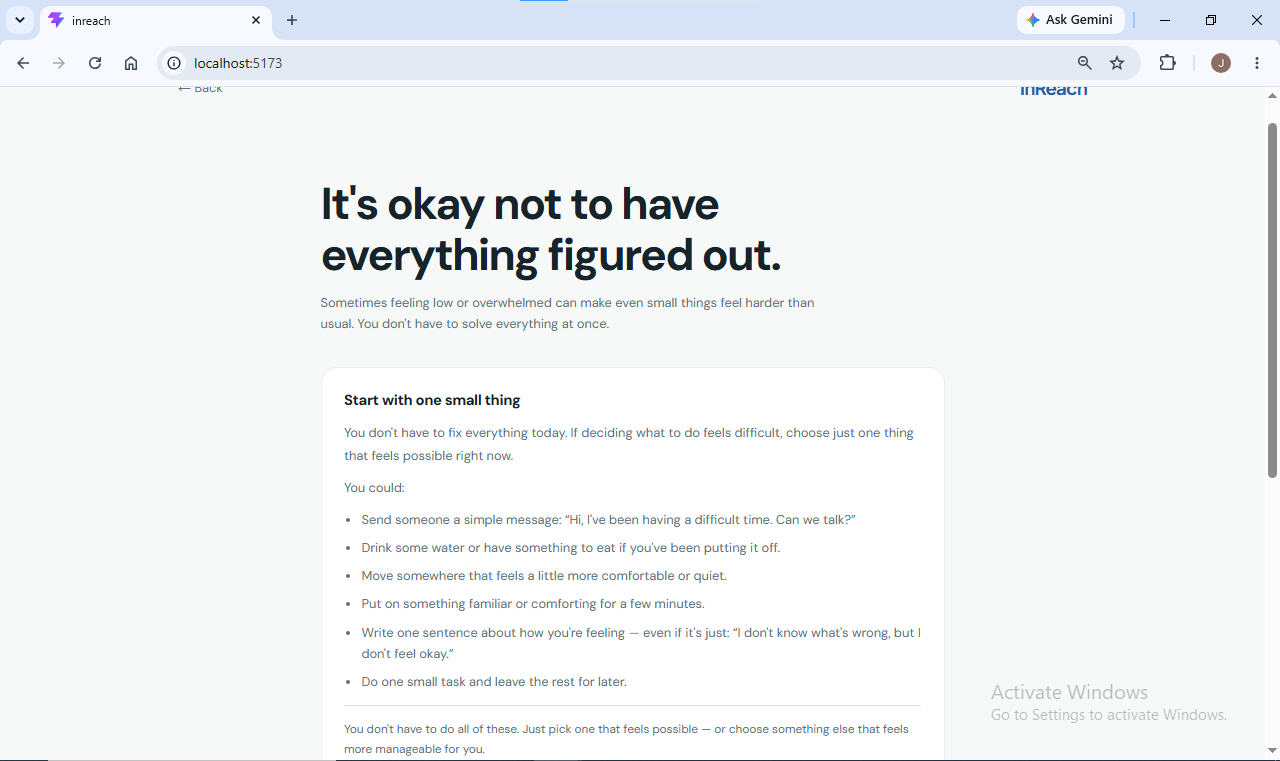
Practical Support - InReach turns uncertainty into manageable, practical next steps users can act on.
-
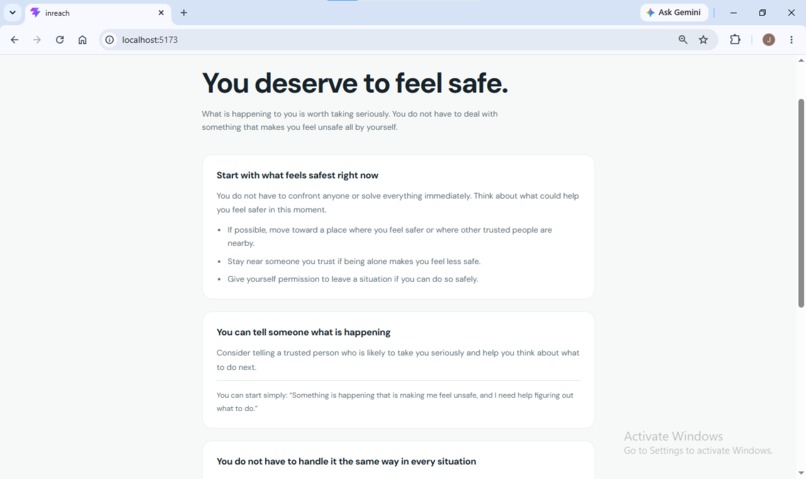
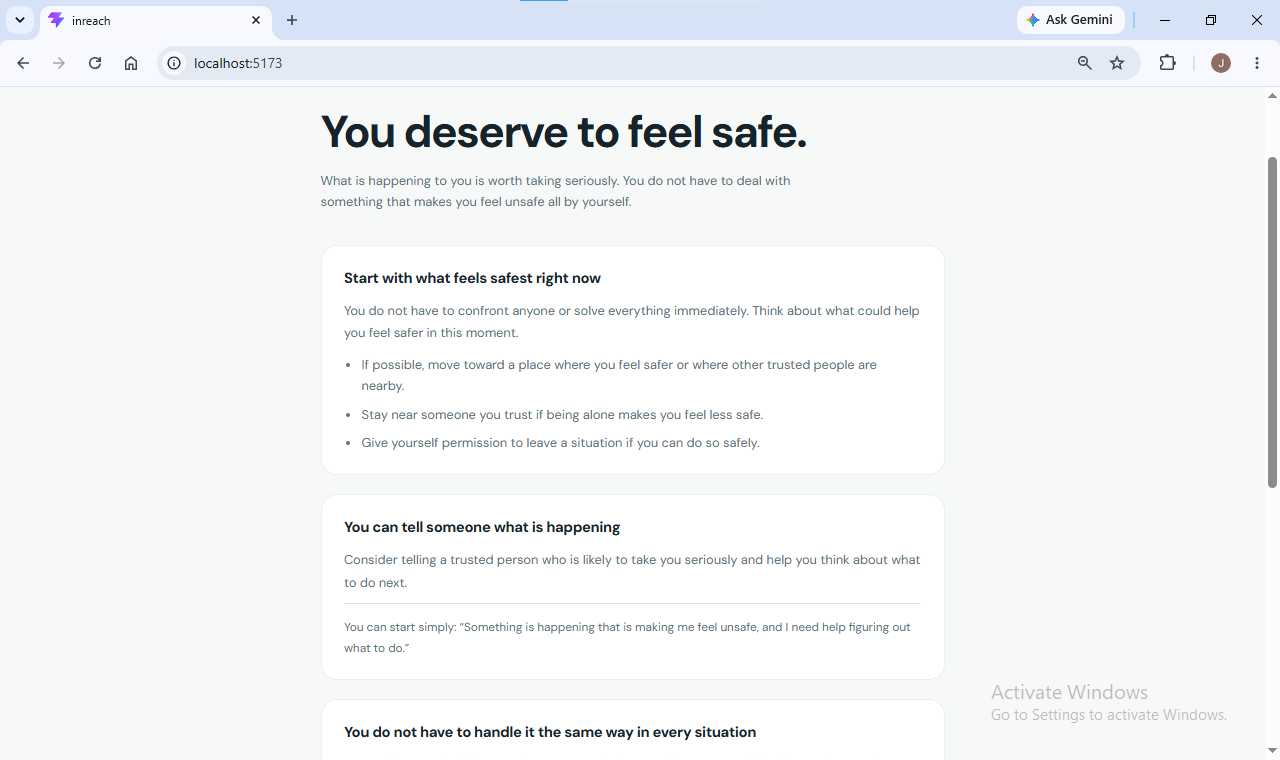
Safety Pathway - A dedicated safety pathway guides users through situations that may leave them feeling unsafe or uncomfortable.
-
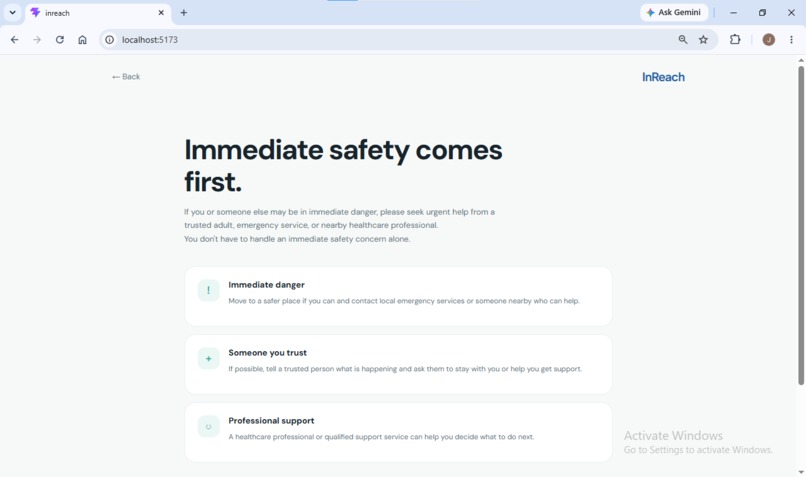
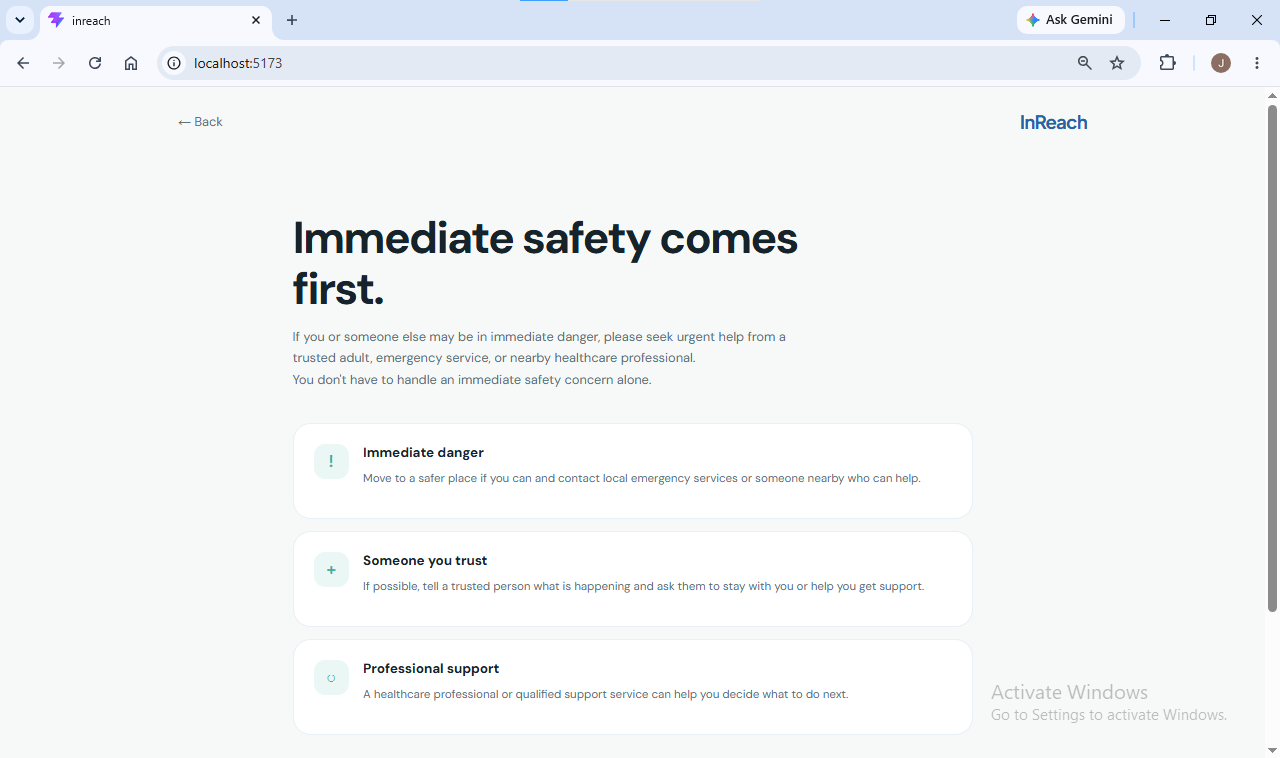
Urgent Support - Urgent-support guidance gives stronger direction when a situation may require immediate attention.
Inspiration
InReach started from a simple but important problem: sometimes, people know that something is wrong, but they don't know what to call it, who to talk to, or what they are supposed to do next.
This is a problem I have personally experienced. During secondary school, I went through a difficult period with my mental health without initially understanding what was happening. I knew that I did not feel right, but I didn't have the words to explain it. Eventually, people around me noticed that something had changed, but even when they were concerned, there was uncertainty about how to respond.
I have also seen this uncertainty affect people around me. In many communities, especially where mental health is still heavily stigmatized, people may respond to someone struggling with jokes, dismissal, fear, or simply not knowing what to say. Someone can recognize that their friend is not okay and still have no idea what the appropriate next step is.
That made me think about the gap between recognizing that someone needs help and actually knowing where to begin.
InReach was created to help bridge that gap.
What it does
InReach is a guided support web application built around the idea that you should not have to understand everything before you are allowed to ask for help.
Users can start from wherever they are and choose the pathway that feels closest to their situation:
- I Need Help — for users struggling with something themselves.
- I'm Worried About Someone — for people concerned about someone they care about.
- I Want to Understand — for people who want to learn more about what they or someone else may be experiencing.
The support journey then breaks the experience into smaller choices instead of overwhelming the user with information immediately.
The current MVP includes pathways covering emotional difficulties, safety and harm, difficult situations around the user, substance use, uncertainty, self-harm concerns, and support for people worried about someone else. It also includes practical next-step suggestions and an urgent-support pathway for situations where immediate safety may be a concern.
A key part of the concept is that users do not need a diagnosis or the "right" label before receiving guidance. Someone can simply say, "I don't know what's going on, but I know I need help." That is enough of a starting point.
InReach is not intended to replace professional care. Instead, it is designed to make the space between "something is wrong" and "I know what to do next" feel smaller.
How I built it
I built InReach as a responsive React web application using:
- React
- Vite
- JavaScript
- CSS
- GitHub for version control and project hosting
As a solo builder, I worked on the concept, user journeys, interface, styling, functionality, testing, and debugging while developing the project under a tight deadline.
I intentionally kept the design simple and approachable. Rather than presenting users with a large amount of information at once, I designed the interface to guide them through smaller decisions. I also used different levels of visual emphasis for ordinary support and urgent situations so that important actions can be easier to identify.
Challenges I ran into
The biggest challenge was building a meaningful working prototype within a very limited timeframe while also balancing other academic responsibilities.
One of the main difficulties was deciding how much functionality to include. There were many features I wanted to eventually add, including verified local resources, more personalized support journeys, accessibility improvements, and additional ways for users to communicate what they are experiencing. I had to prioritize the core experience and focus on making the main support pathways functional first.
I also had to work through responsive design issues, particularly making sure the application remained usable on smaller mobile screens without requiring users to scroll horizontally.
Another challenge was approaching a sensitive subject responsibly. The application needed to acknowledge situations involving safety and self-harm without making users feel judged, overwhelmed, or dismissed.
Accomplishments I'm proud of
I am proud that InReach went from an initial concept to a functional, interactive MVP within a short development period.
The project successfully demonstrates:
- Three distinct guided entry pathways.
- Multiple support journeys based on the user's situation.
- A dedicated safety and harm pathway.
- Self-harm and urgent-support guidance.
- Practical next-step suggestions.
- Responsive desktop and mobile layouts.
- A clear visual identity and support-focused interface.
- A working GitHub repository and demonstrable prototype.
Most importantly, I am proud that the project focuses on a real problem that is personally meaningful to me and that I was able to turn that idea into something people can actually interact with.
What I learned
Building InReach taught me that solving a problem is not always about adding more features. Sometimes the most important part is making the first step easier.
I also learned how difficult it can be to design for situations where users may be uncertain, overwhelmed, or uncomfortable talking about what they are experiencing. The wording, order of choices, visual hierarchy, and amount of information presented all matter.
On the technical side, the project gave me practical experience with React, Vite, CSS, responsive web design, debugging, Git, GitHub, and turning a concept into a working MVP under time constraints.
What's next for InReach
The current project is an MVP and there is significant room to grow.
Future development could include verified local mental-health and emergency resources, connections to professional support, more personalized journeys, accessibility improvements, tools for helping users communicate what they are experiencing, and additional support for people helping someone else.
I would also like to make the pathways more specialized and responsive to different situations rather than relying on a small number of general journeys.
The long-term goal is for InReach to become more than an application that tells someone to "get help." I want it to help people understand what their next step could actually look like.


Log in or sign up for Devpost to join the conversation.