Multi AI Agent – Traffic Monitor Inspiration
Conventional traffic management systems rely on fixed timers, passive CCTV monitoring, and manual intervention. These systems fail to adapt to real-time traffic dynamics and do not scale with increasing urban congestion.
Traffic is inherently a distributed and dynamic system, yet most existing solutions attempt to control it using centralized logic. This mismatch inspired the development of a Multi AI Agent–based Traffic Monitoring System, where specialized agents independently observe, analyze, and act—mirroring real-world traffic ecosystems.
What It Does
The system actively monitors and manages traffic rather than merely recording it.
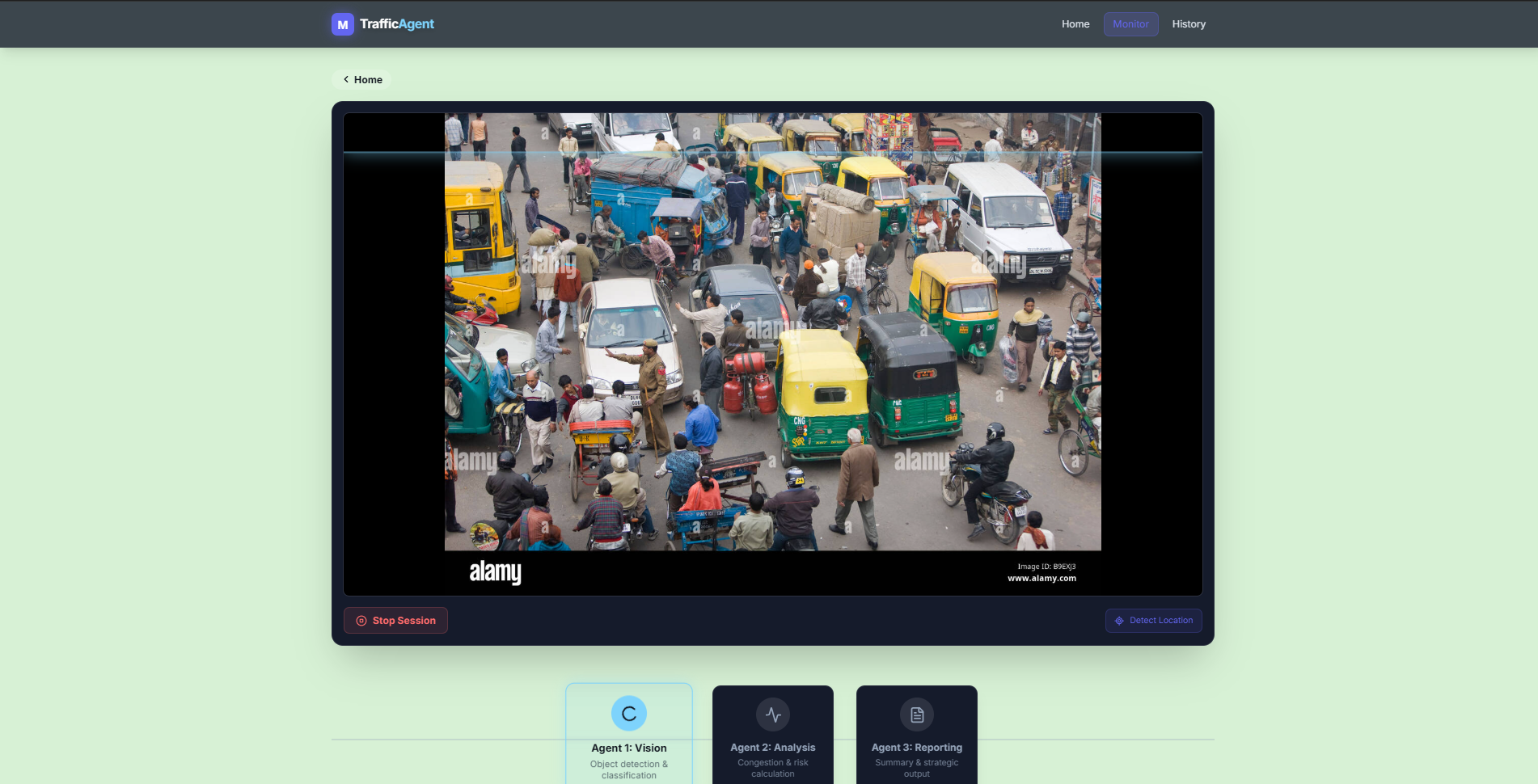
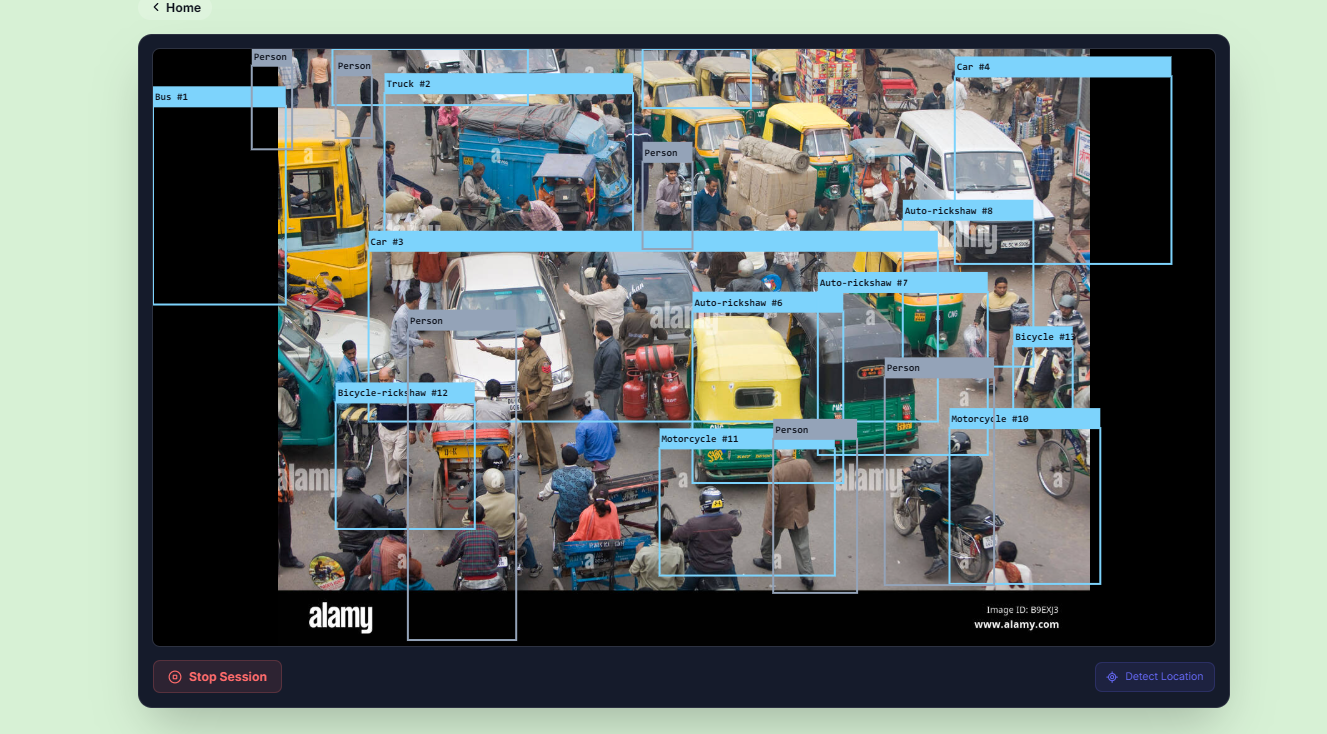
Vehicle Detection Agent Detects and classifies vehicles such as cars, bikes, buses, and trucks from live video feeds.
Density & Congestion Agent Computes lane-wise traffic density and identifies congestion hotspots.
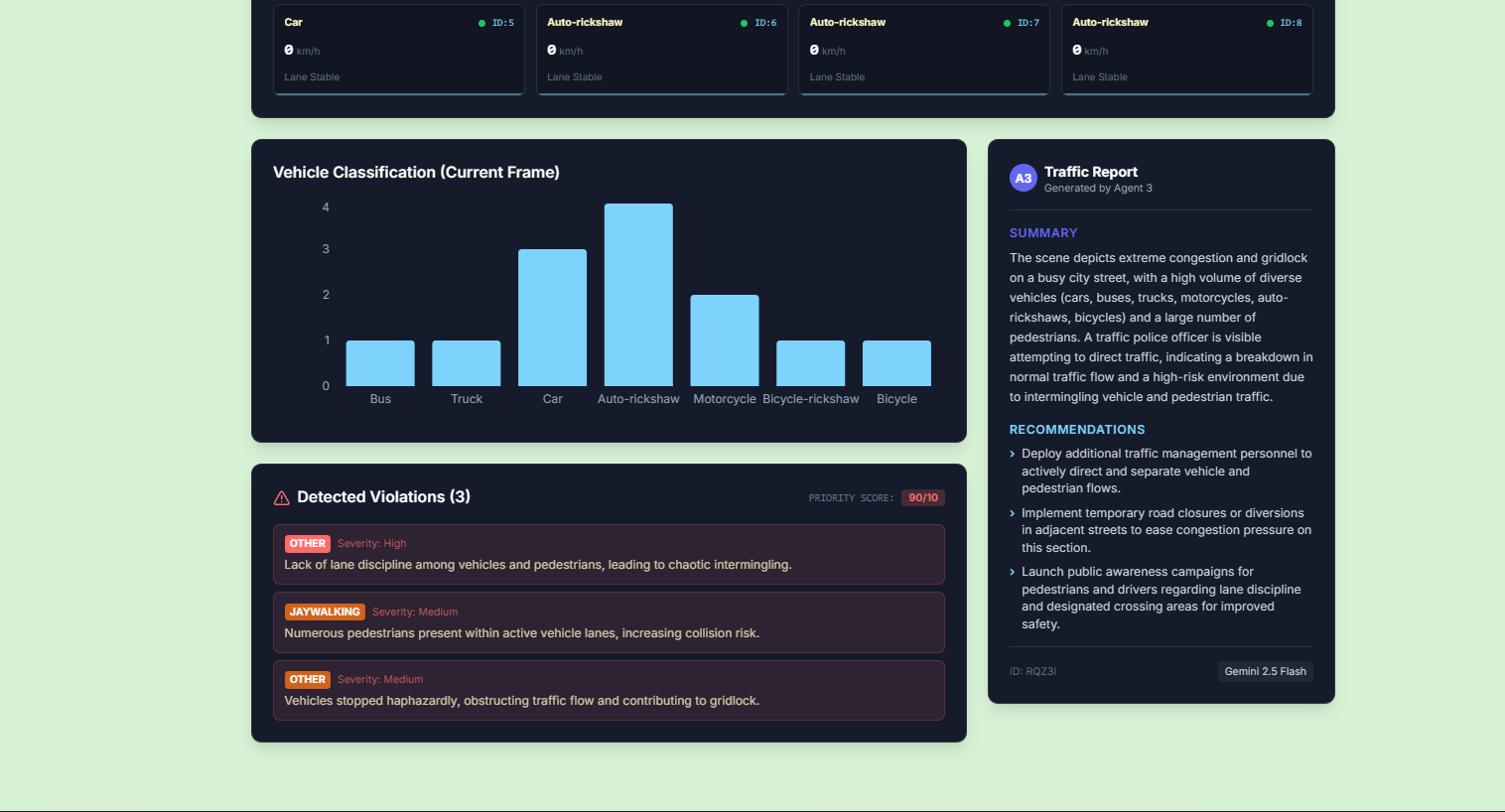
Incident Detection Agent Detects accidents, stalled vehicles, and abnormal traffic behavior.
Decision Agent Dynamically adjusts traffic signal timings and prioritizes critical lanes.
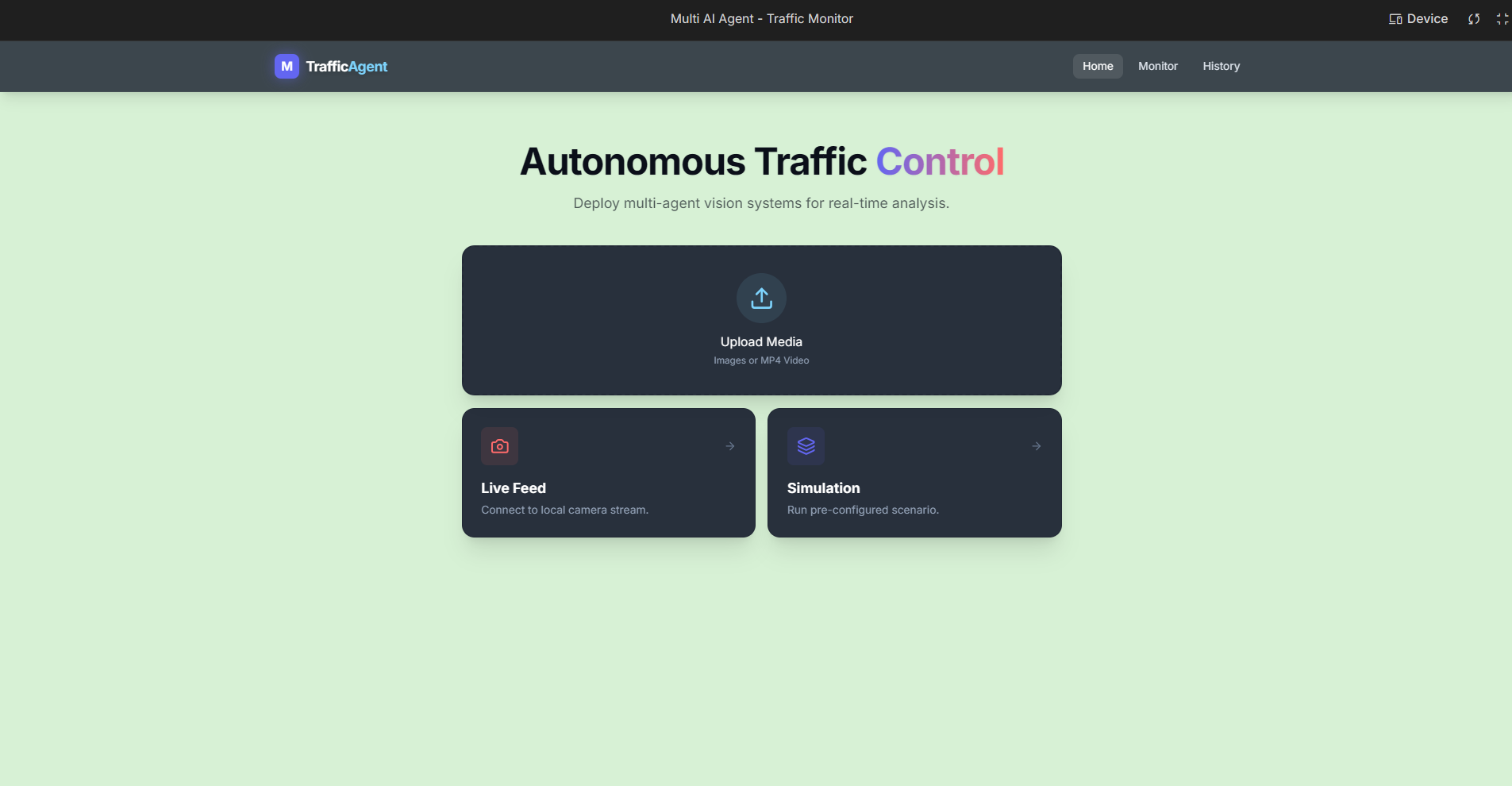
Web-Based Monitoring Dashboard Displays live traffic feeds, heatmaps, alerts, and historical analytics.
How We Built It
The system follows a modular, scalable architecture.
Technology Stack
AI & Computer Vision: Python, OpenCV, YOLO
Architecture: Independent multi-agent services
Backend: Flask / FastAPI
Frontend: Web dashboard using HTML, JavaScript, React
Data Flow
Camera Feed → Detection Agent → Density Agent → Incident Agent → Decision Agent → Dashboard & Alerts
Each agent is decoupled, enabling independent scaling and optimization.
Challenges We Ran Into
Achieving real-time performance without sacrificing accuracy
Handling false positives caused by shadows and parked vehicles
Coordinating decisions between multiple agents
Scaling efficiently across multiple camera feeds
Dealing with inconsistent real-world video quality
Accomplishments That We’re Proud Of
Implemented a true multi-agent AI system
Achieved real-time traffic analysis on live video
Transformed CV outputs into actionable traffic decisions
Built a functional and intuitive web dashboard
Designed the system for city-scale deployment
What We Learned
AI solutions require strong system design, not just models
Modular architectures outperform monolithic systems
Real-world data is noisy and unforgiving
Performance optimization is as important as accuracy
Key takeaway: AI-driven traffic systems are systems engineering problems, not just machine learning problems.
What’s Next for Multi AI Agent – Traffic Monitor
Reinforcement learning for adaptive signal control
Emergency vehicle detection and prioritization
Edge deployment using devices like NVIDIA Jetson
Predictive traffic congestion forecasting
Integration with smart city infrastructure
Privacy-preserving video processing
Simulation-based testing with traffic simulators
Long-term vision: A self-learning, city-wide adaptive traffic control system.

Log in or sign up for Devpost to join the conversation.