-
-
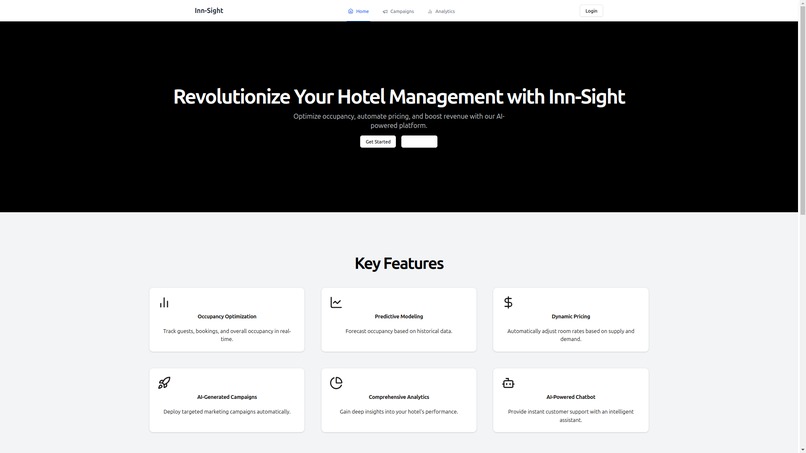
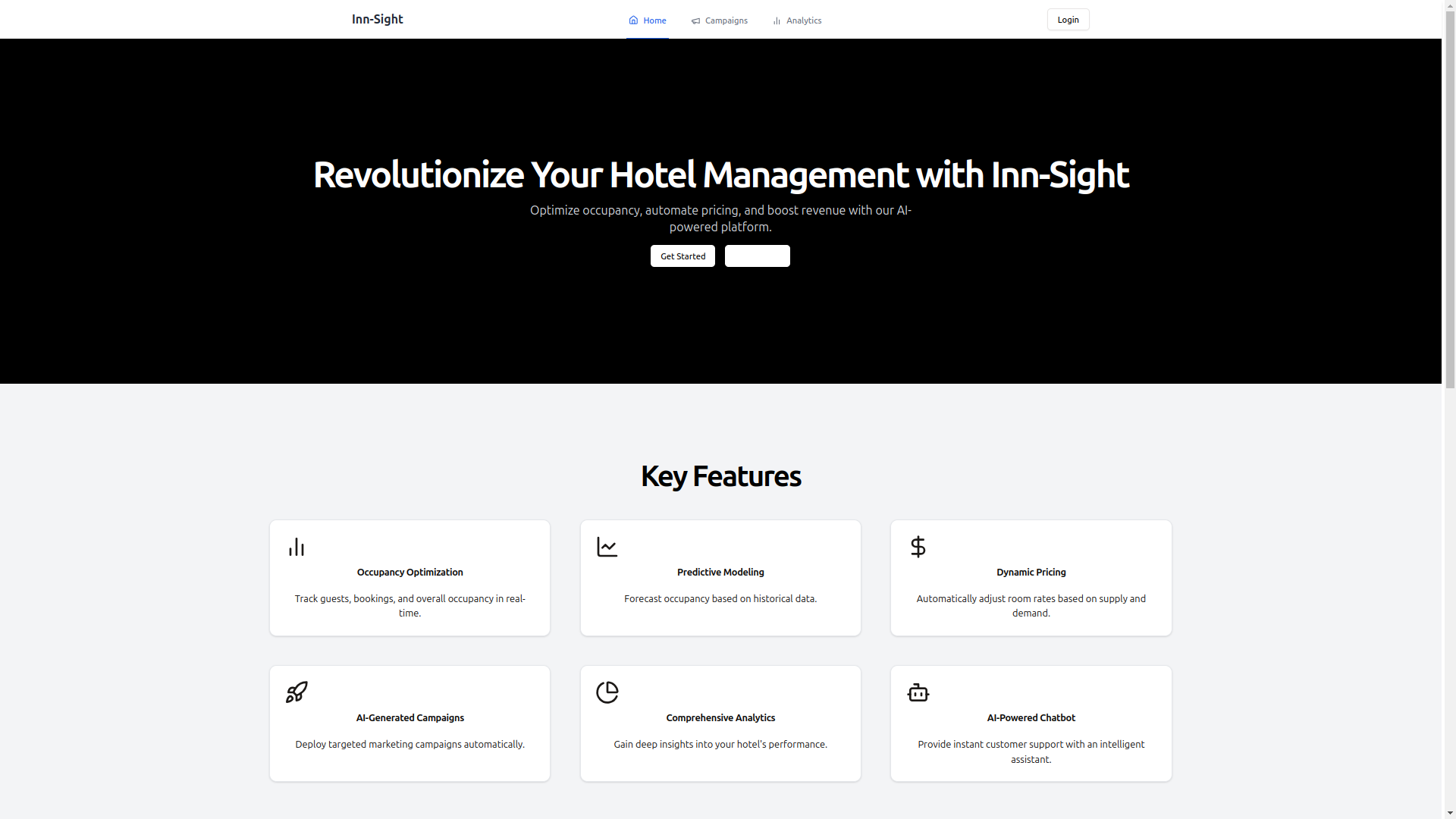
Homepage
-
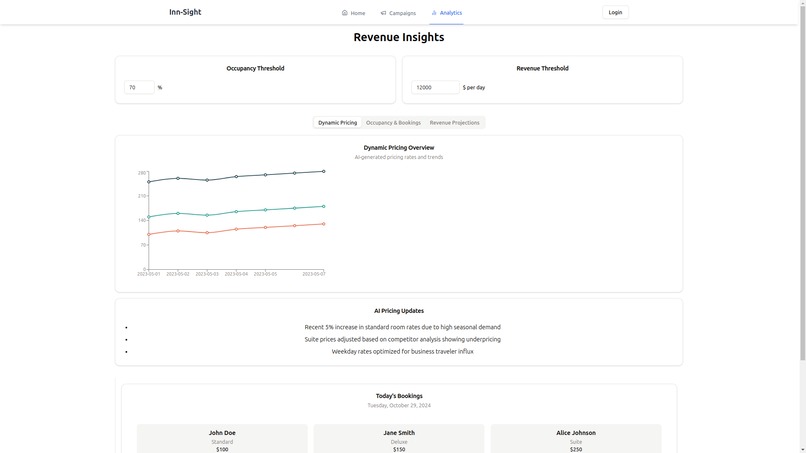
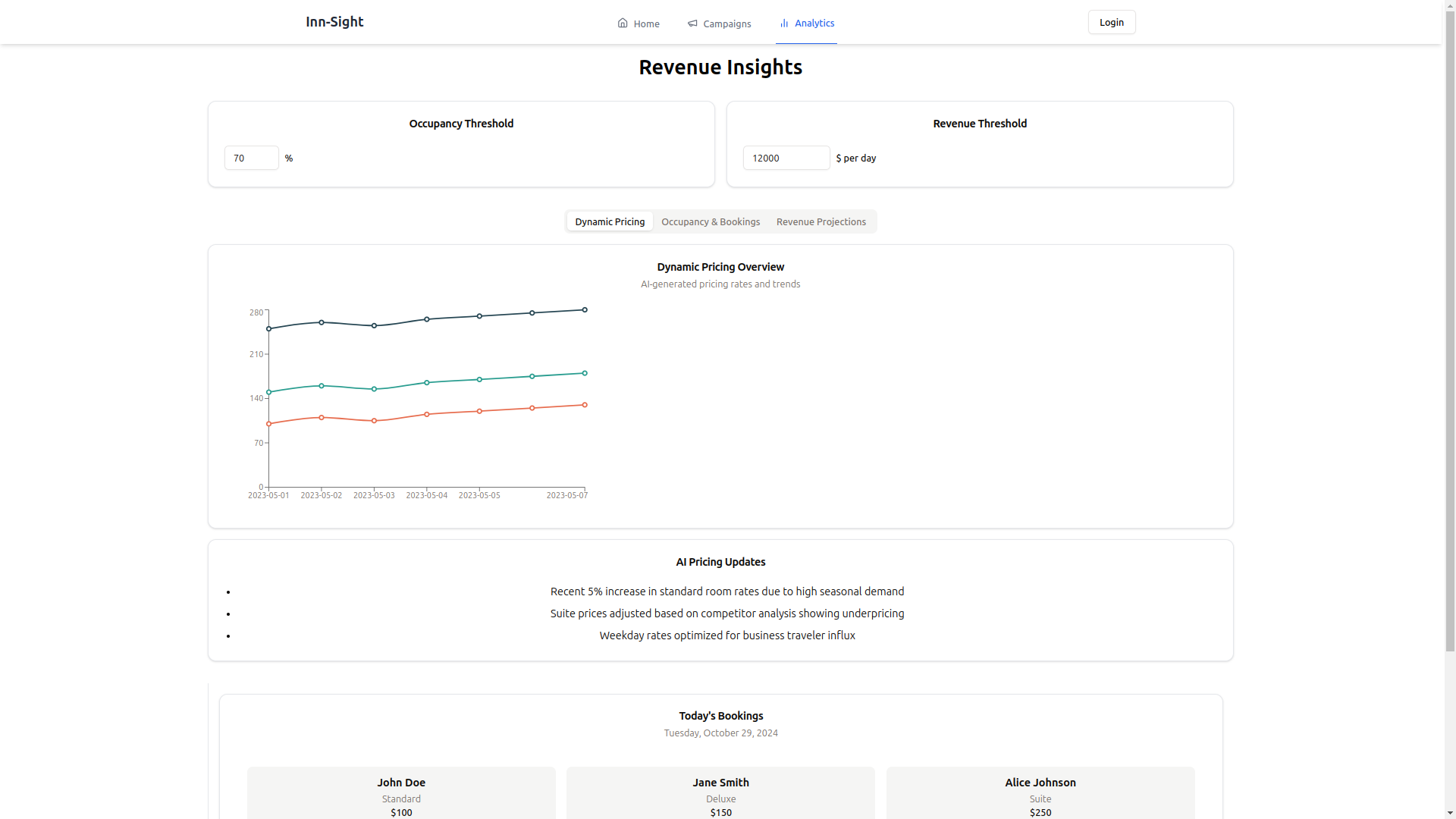
Dynamic Pricing
-
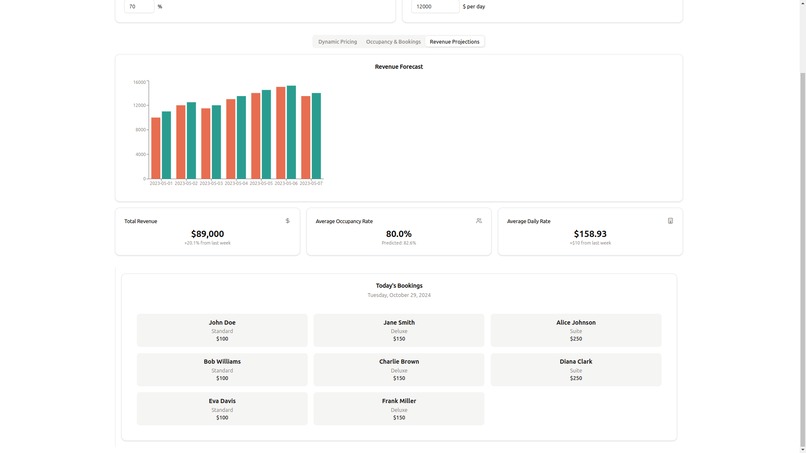
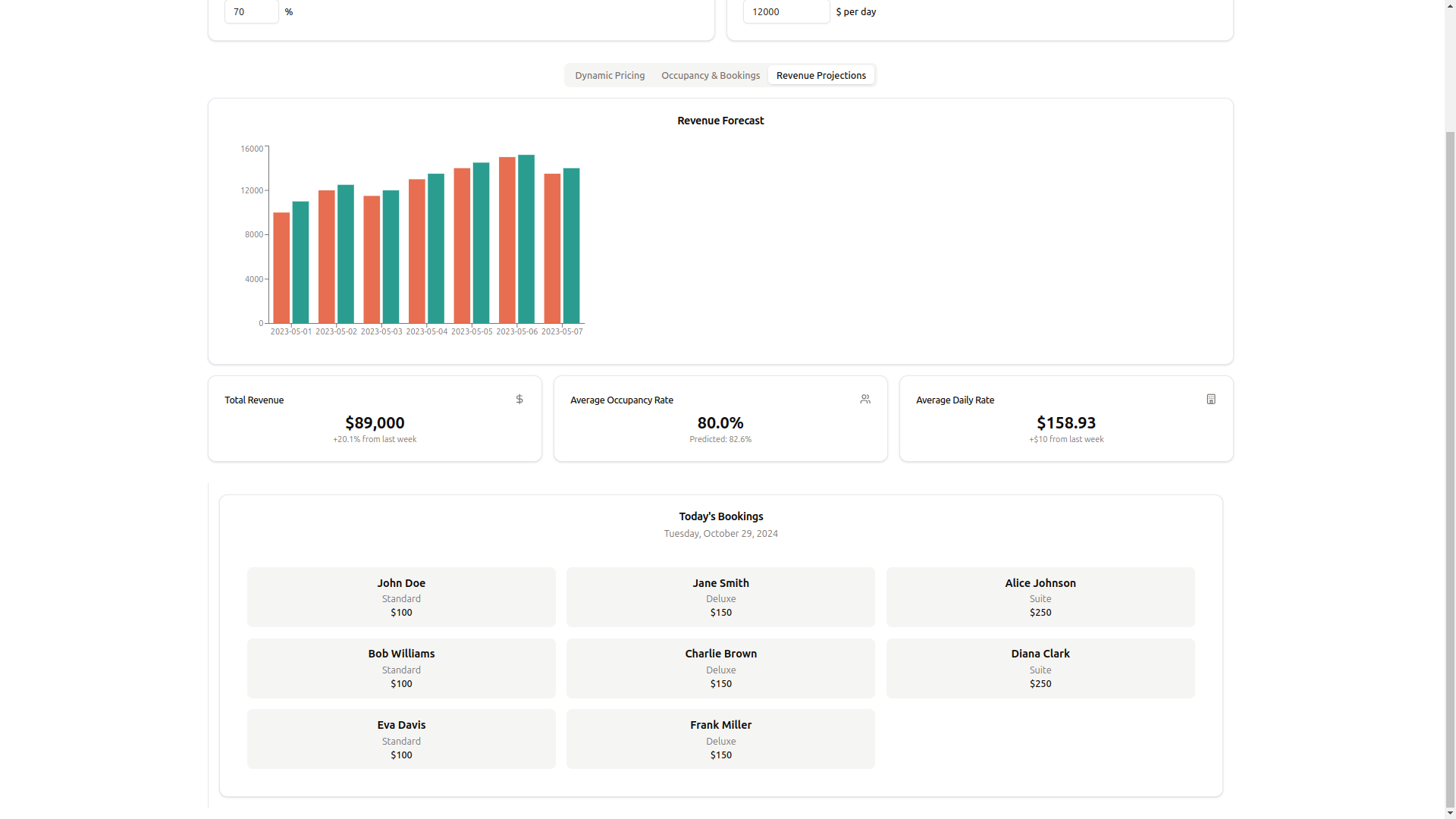
Occupancy Prediction
-
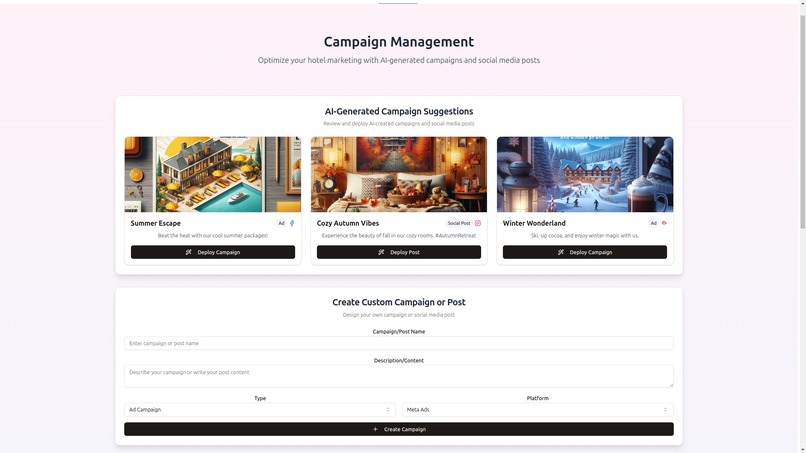
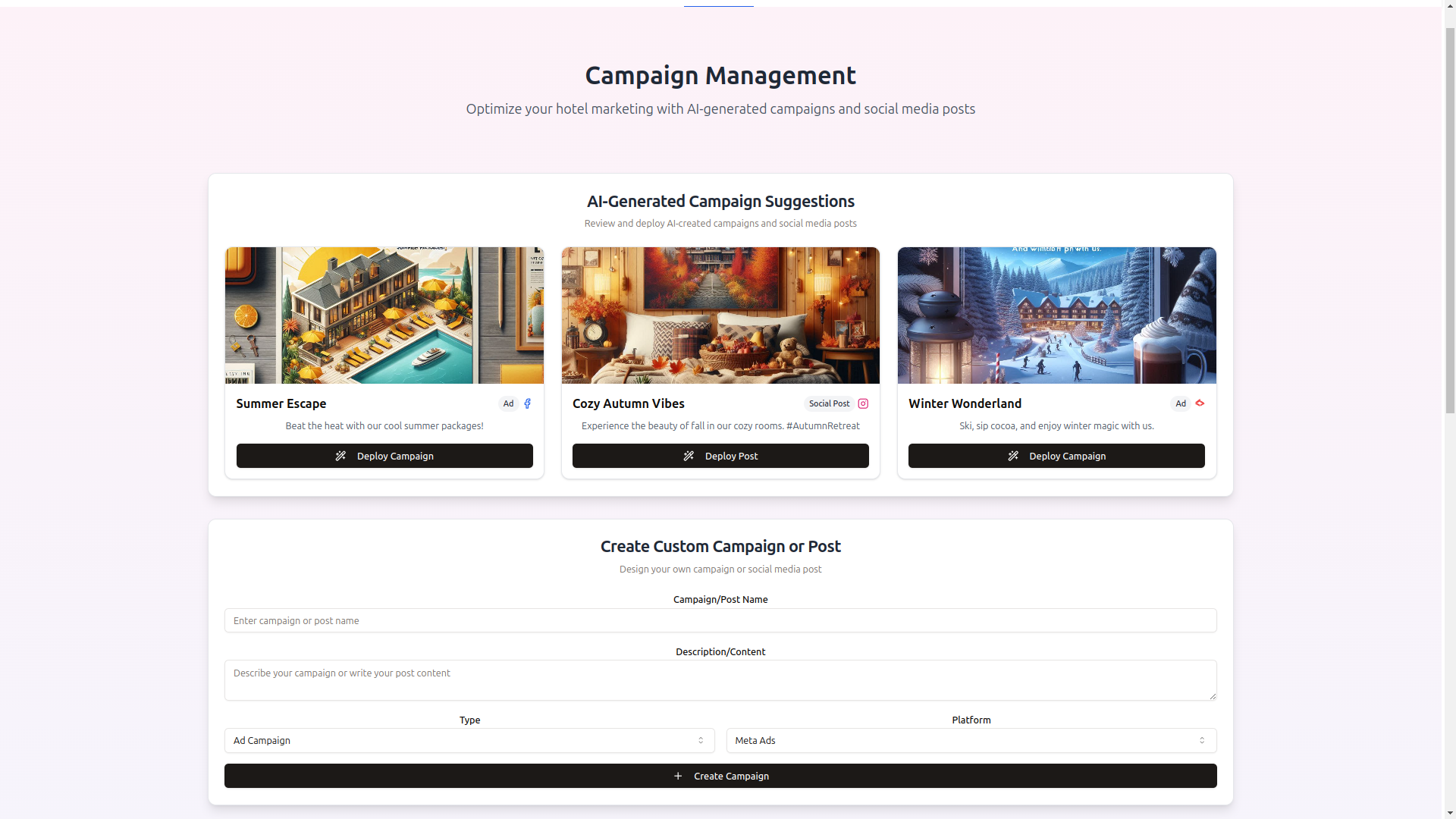
Ad Campaign Manager
Inspiration
The inspiration for InnSight stemmed from the observed challenges faced by hotels in maximizing revenue and managing occupancy rates. Many hotels often struggle with adapting their pricing strategies to fluctuating demand, which can lead to lost opportunities. We aimed to create a solution that leverages machine learning to provide actionable insights for hotel management, empowering them to make data-driven decisions.
What it does
InnSight is a hotel optimization platform designed to enhance operational efficiency and profitability. Key features include:
- Dynamic Pricing Manager: Predicts optimal room rates based on real-time factors like occupancy rates, competitor pricing, and local events.
- Occupancy Prediction Model: Analyzes historical booking data to forecast future bookings and optimize resource allocation.
- Interactive Dashboard: Provides hotel managers with a user-friendly interface to visualize insights and manage pricing strategies effectively.
- Chatbot: For chat based bookings and related enquiries.
How we built it
The project was built using a combination of Python and its various libraries. We utilized:
- XGBoost: For developing machine learning models to predict room rates and occupancy.
- Flask: To create a web application that integrates our models and provides a frontend for user interaction.
- Pandas and NumPy: For data manipulation and preprocessing.
- Matplotlib and Seaborn: For data visualization (initially included for analysis). We began by collecting a dataset of hotel bookings, which we cleaned and preprocessed to extract relevant features. After training our models on this data, we developed the Flask application to allow hotel managers to input minimal information and receive pricing recommendations and occupancy forecasts.
Challenges we ran into
During development, we faced several challenges:
- Data Quality: Handling missing values and ensuring data integrity was crucial for accurate model training.
- Model Tuning: Fine-tuning the machine learning models to avoid overfitting while maintaining predictive power required extensive testing and validation.
- Integration Issues: Seamlessly connecting the backend models with the frontend application presented technical challenges, especially in ensuring accurate data flow and user experience.
Accomplishments that we're proud of
We successfully created a functional prototype of InnSight, showcasing our ability to integrate machine learning with web development. Our dynamic pricing manager and occupancy prediction model achieved a satisfactory level of accuracy, enabling users to make informed pricing decisions. The project allowed us to collaborate effectively as a team, leveraging each member's strengths to contribute to the overall success.
What we learned
Throughout this project, we learned valuable lessons in:
- Machine Learning: Gaining hands-on experience with regression techniques, feature engineering, and model evaluation metrics.
- Web Development: Understanding how to build a web application using Flask, integrating machine learning models, and ensuring a user-friendly interface.
- Collaboration: Working effectively as a team, communicating ideas, and overcoming challenges collectively enhanced our teamwork skills.
What's next for InnSight
Looking ahead, we plan to enhance InnSight by:
- Incorporating More Features: Adding functionalities such as customer segmentation analysis and advanced marketing campaign orchestration.
- Expanding the Dataset: Gathering more diverse data to improve model accuracy and adaptability across different hotel types.
- User Feedback: Engaging with potential users to gather feedback and refine the platform based on real-world needs and preferences.
With these improvements, we aim to make InnSight a comprehensive solution for hotel management, helping establishments optimize their operations and increase profitability.
Built With
- api
- css
- express.js
- flask
- flask-cors
- google.generativeai
- html
- javascript
- joblib
- matplotlib
- pandas
- prisma
- python
- react
- scikit-learn
- seaborn
- xgboost


Log in or sign up for Devpost to join the conversation.