-
-
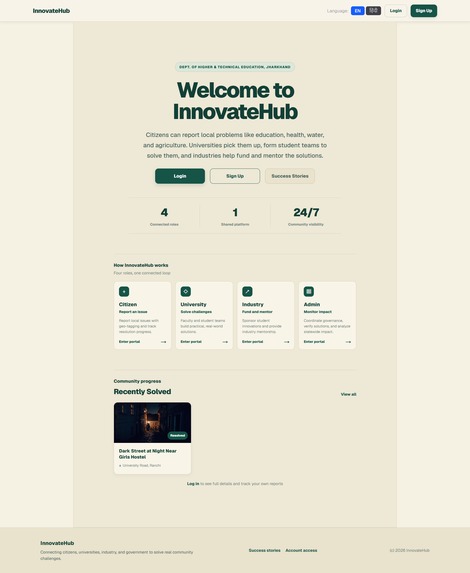
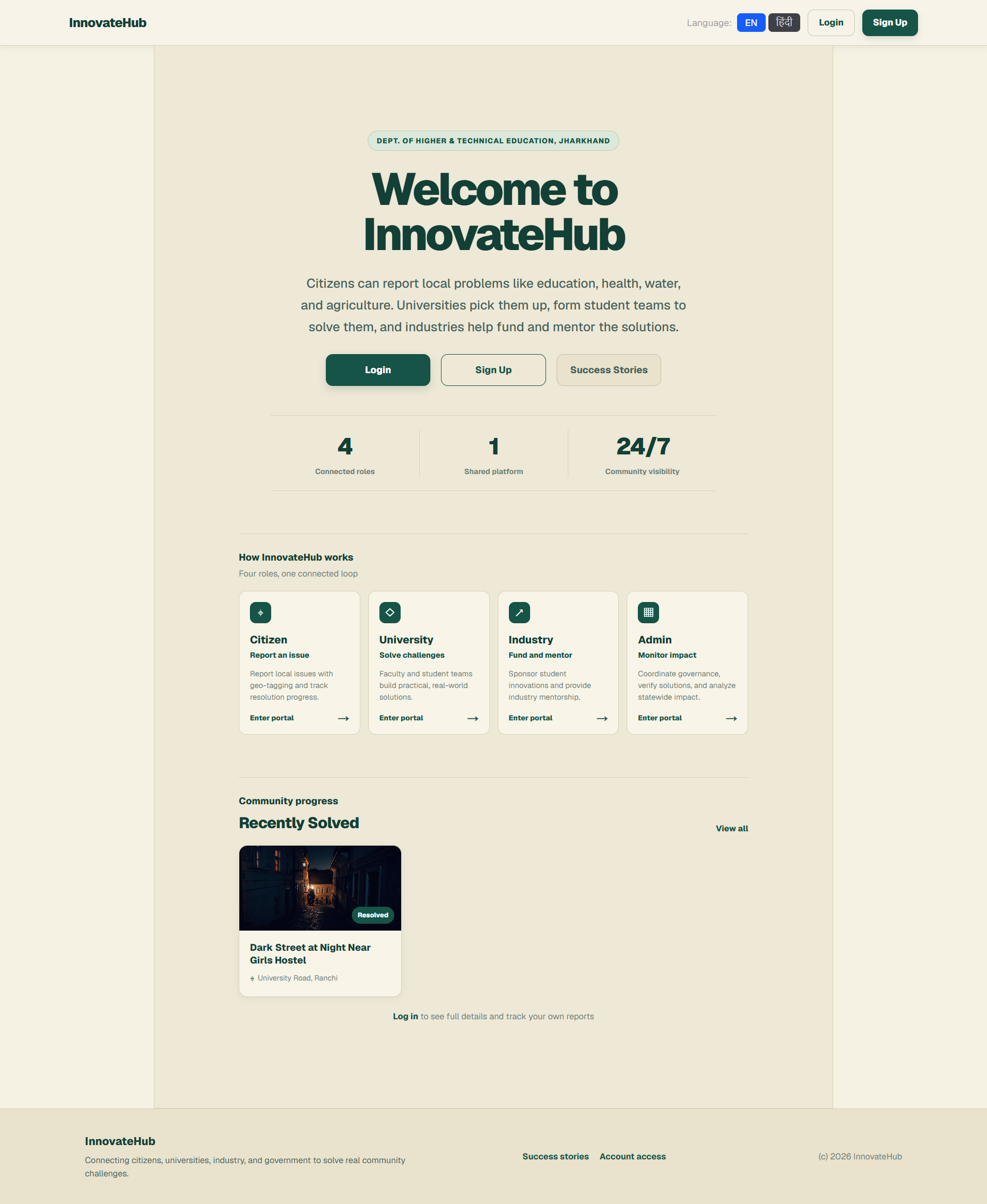
Hero Page
-
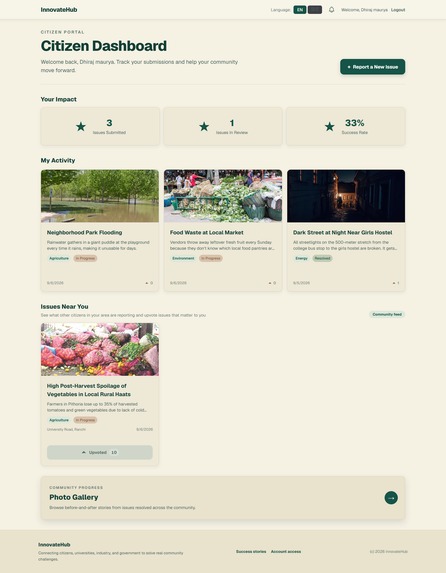
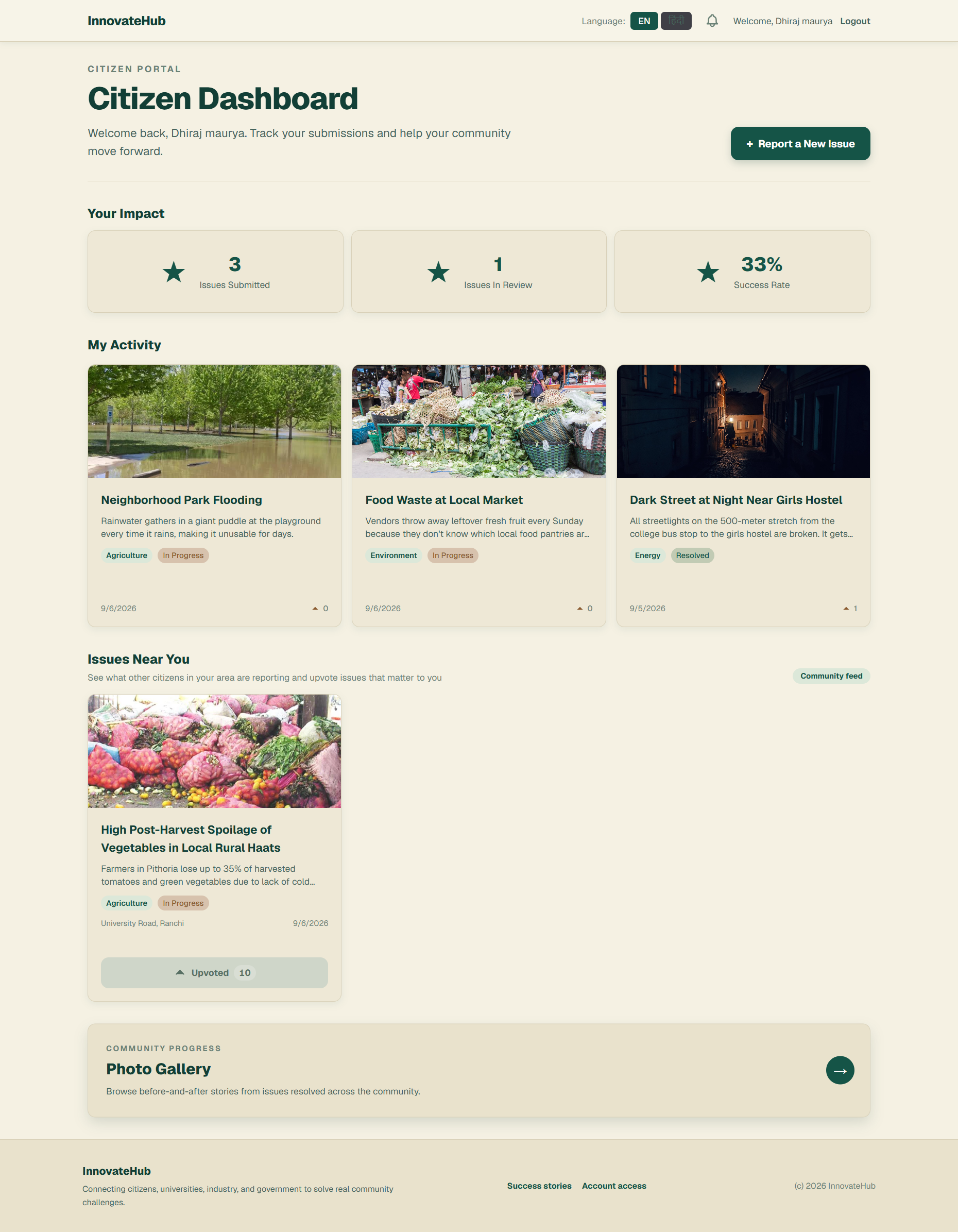
Citizen Dashboard
-
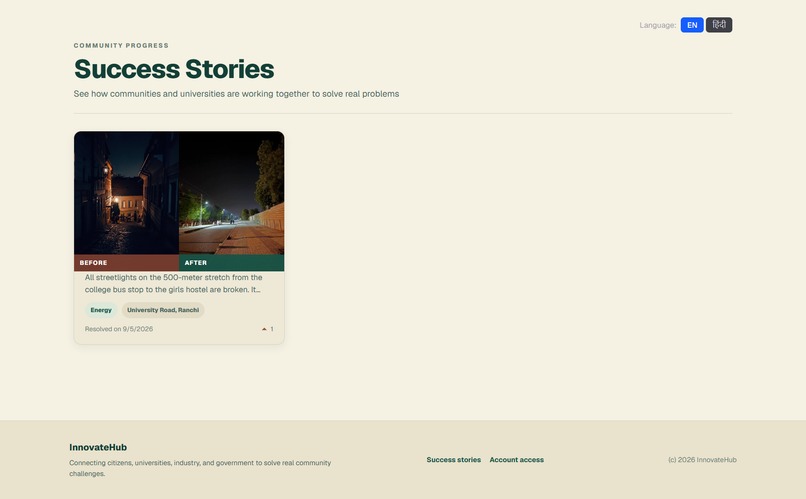
Photo Gallery
-
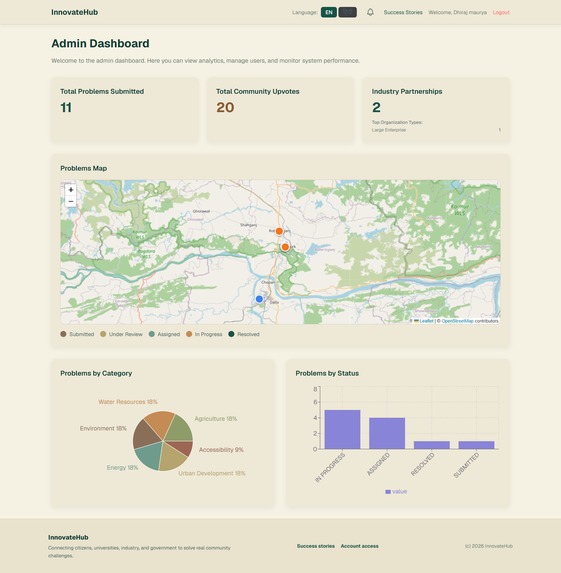
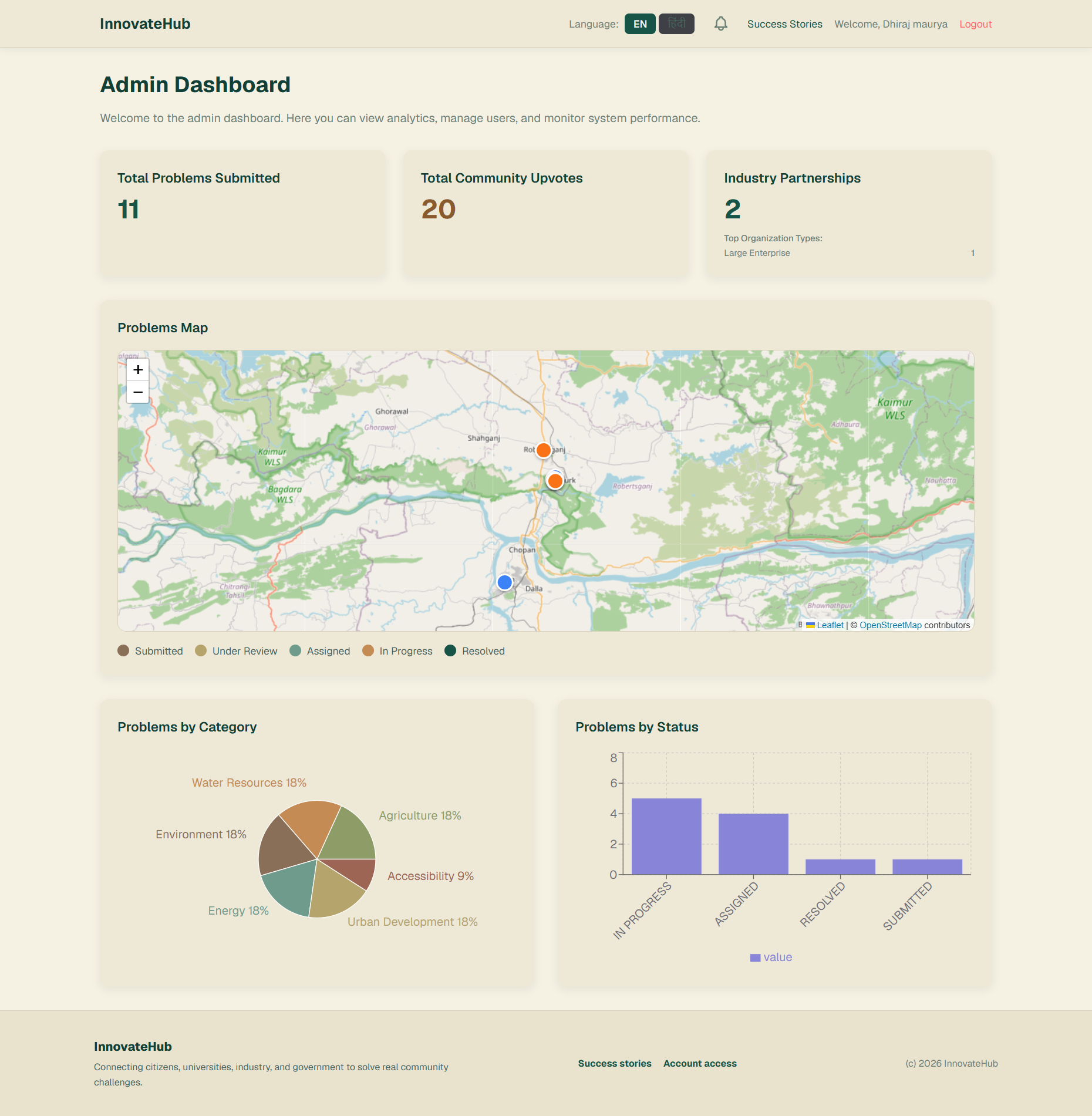
Admin Dashboard
-
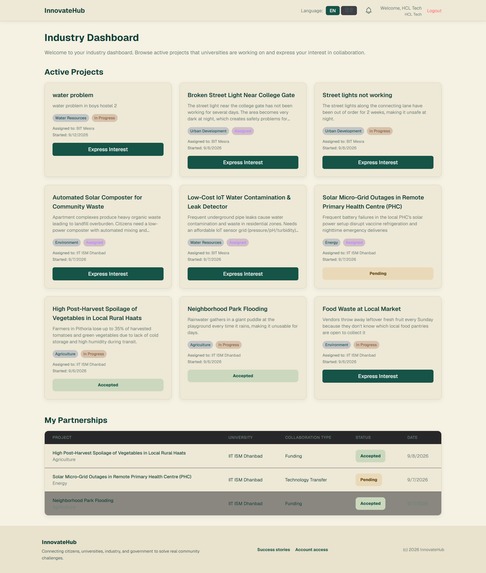
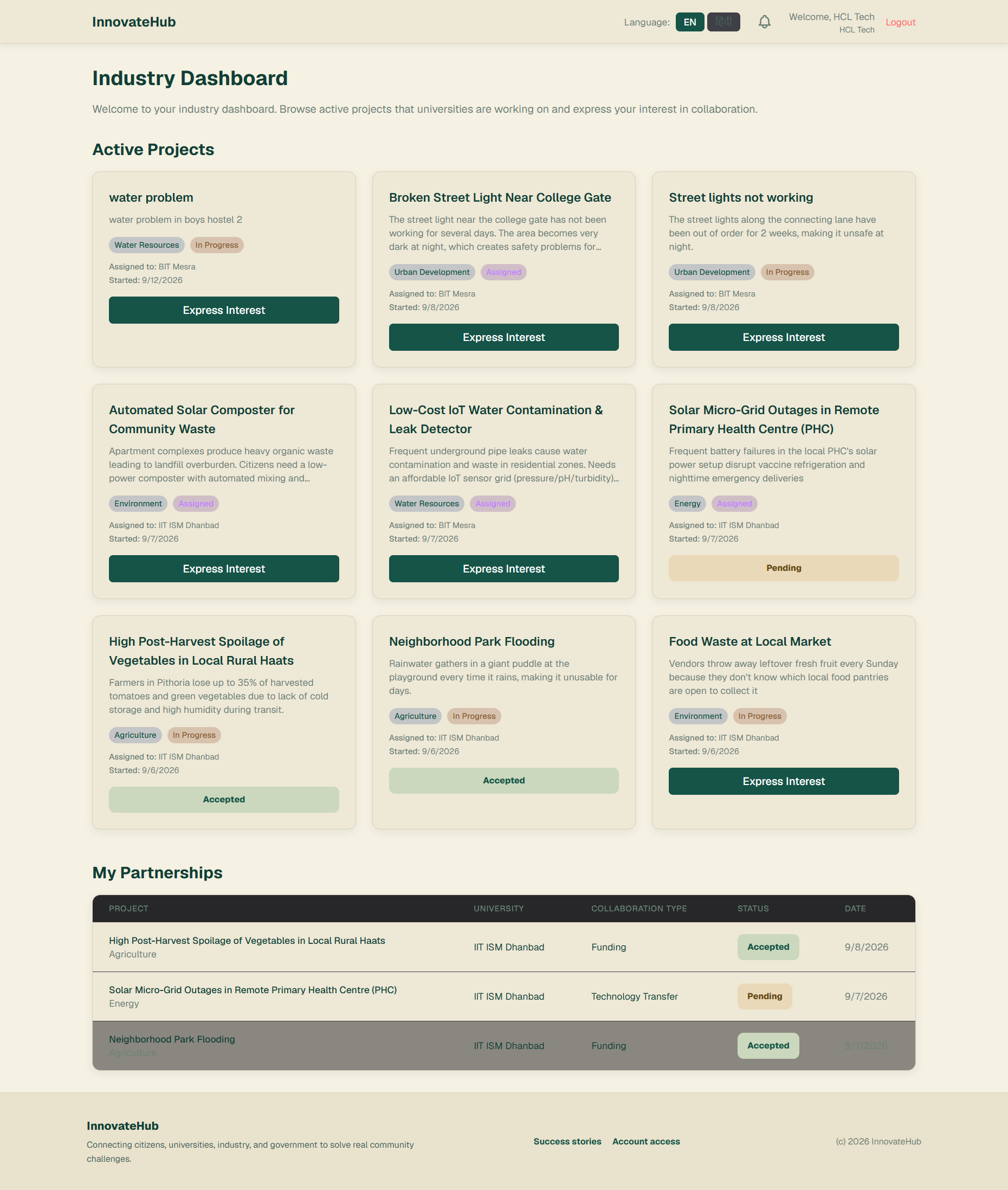
Industry Dashboard
-
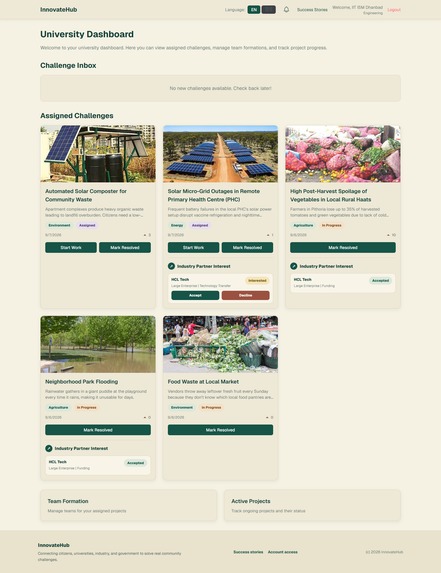
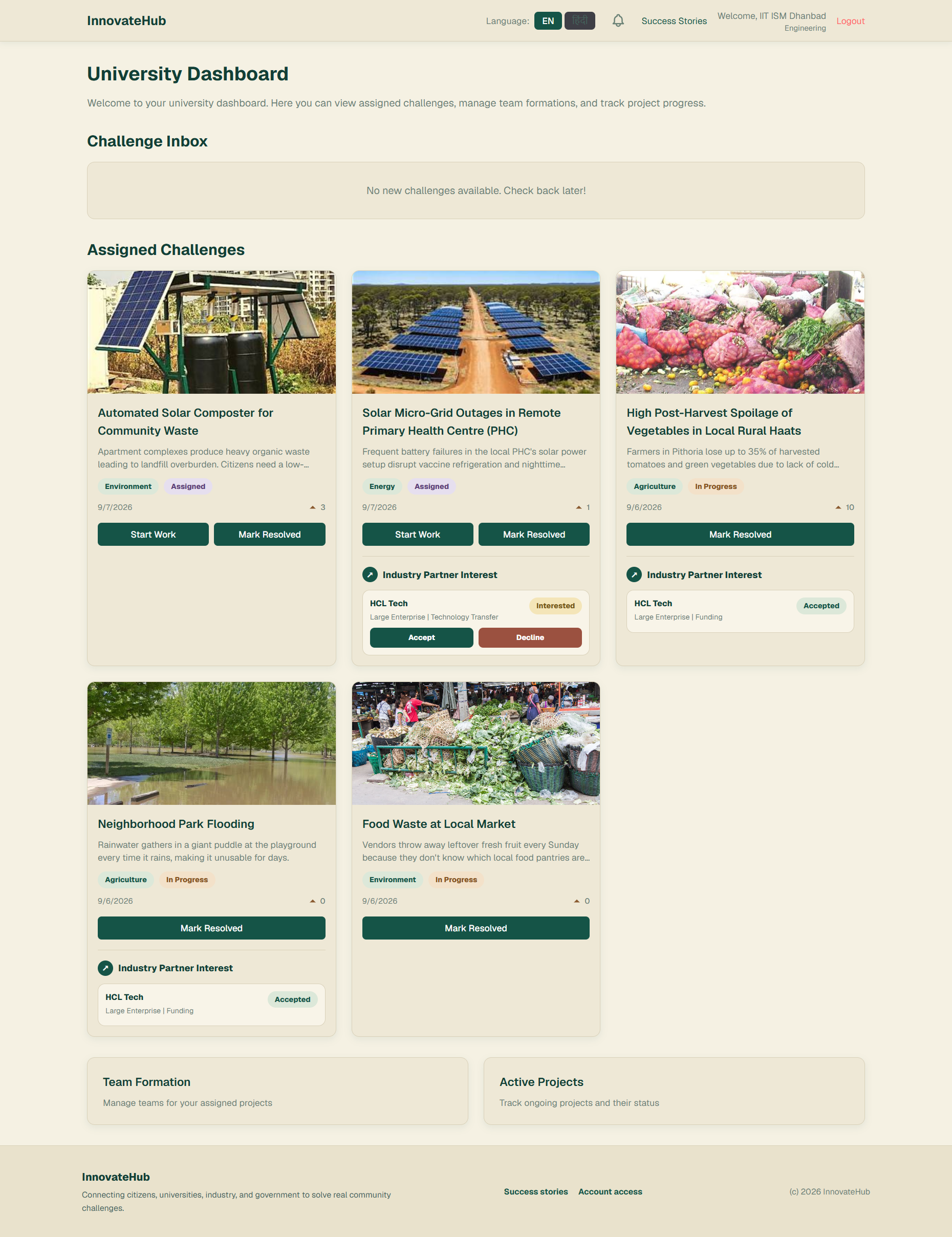
University Dashboard
Inspiration
Honestly, it started from frustration. We'd all seen problems in our own areas — bad roads, water issues, stuff that just never gets fixed — and the only outlet was complaining on WhatsApp groups or social media, which goes nowhere. At the same time, as CSE students, we kept hearing "build something real" but never had a proper source of real problems to work on. So we thought — why not connect the two? Let people report what's actually broken around them, and let students/universities pick those up as real projects instead of made-up ones.
What it does
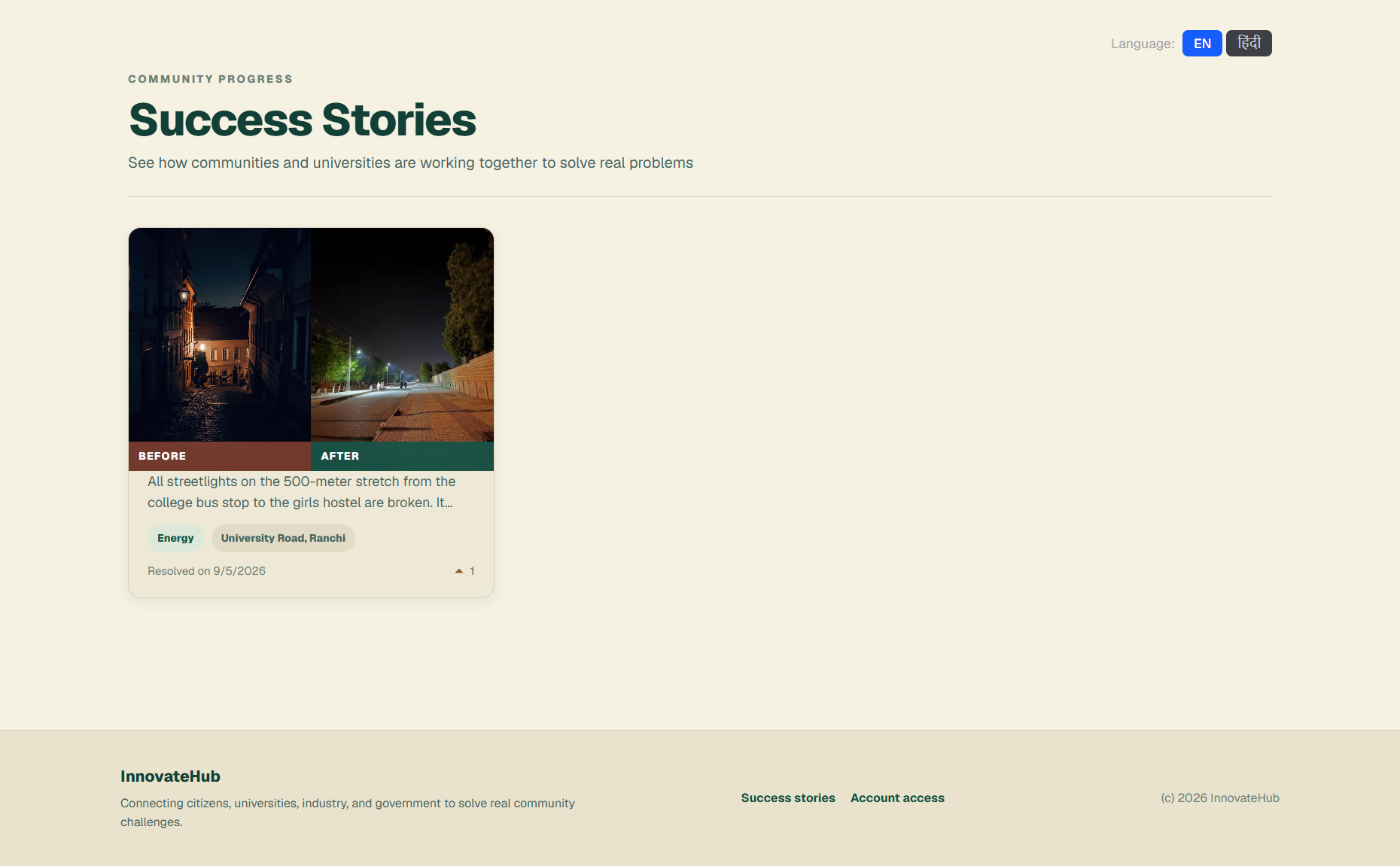
It's basically a bridge between citizens, universities, and industry. Citizens can report a problem in their area (we added AI-based duplicate detection so the same pothole doesn't get reported 50 times), see issues near them, upvote the ones that matter most, and check out a gallery of before/after photos from problems that actually got solved. On the university side, there's a challenge inbox where they can accept issues, form a team with a faculty lead + students, and track the project till it's done. We also made sure it works in Hindi, English, and local Jharkhand languages — because honestly, most civic platforms just assume everyone's comfortable in English, and that's not true.
How we built it
None of us are ML experts, not even close. So we leaned hard on AI coding tools (Antigravity, Cursor) to help us build the data simulation, train a small model, and put the dashboard together. The hackathon rules said we couldn't just call an existing LLM API and call it a day — we had to actually train something ourselves — so we trained a lightweight model specifically for the duplicate-detection feature.
Challenges we ran into
Biggest one — most of our team can't code well, including some of us who were supposed to be "core" contributors. So a lot of it came down to me + AI tools figuring things out step by step. Training an actual ML model for the first time was also rough since we had zero background in it going in.
Accomplishments that we're proud of
Going from a rough hand-drawn sketch on paper to an actual working platform feels like a big deal, especially with a team that mostly couldn't code. Also just the fact that we managed to train a real model instead of faking it with an API call — that took genuine effort to figure out from scratch.
What we learned
Mainly that you don't need to already know ML to build something with ML in it — you just need to be willing to figure it out as you go. Also learned a lot about designing for two totally different kinds of users (regular citizens vs. university admins) on one platform without making it confusing for either side.
What's next for InnovateHub
We want to actually get a university and a local community using this for real, not just as a hackathon demo. Beyond that — bring in real industry partners for mentorship, and expand language support so it's genuinely usable across more regions, not just Jharkhand.
Built With
- ai
- express.js
- figma
- github
- javascript
- machine-learning
- node.js
- postman
- python
- react
- scikit-learn
- supabase
- tailwindcss
- typescript


Log in or sign up for Devpost to join the conversation.