-
-
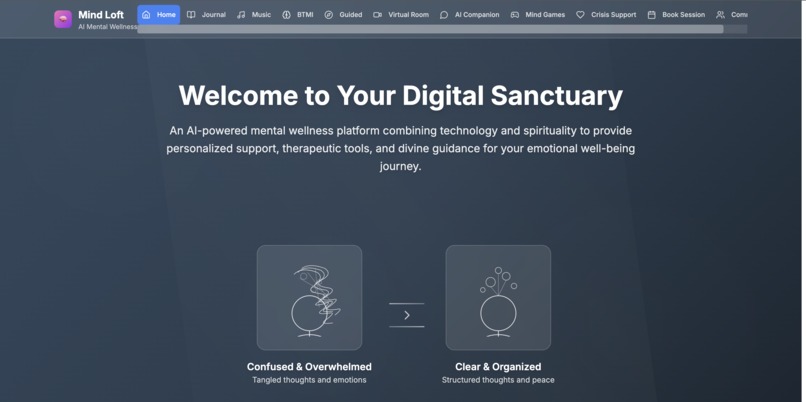
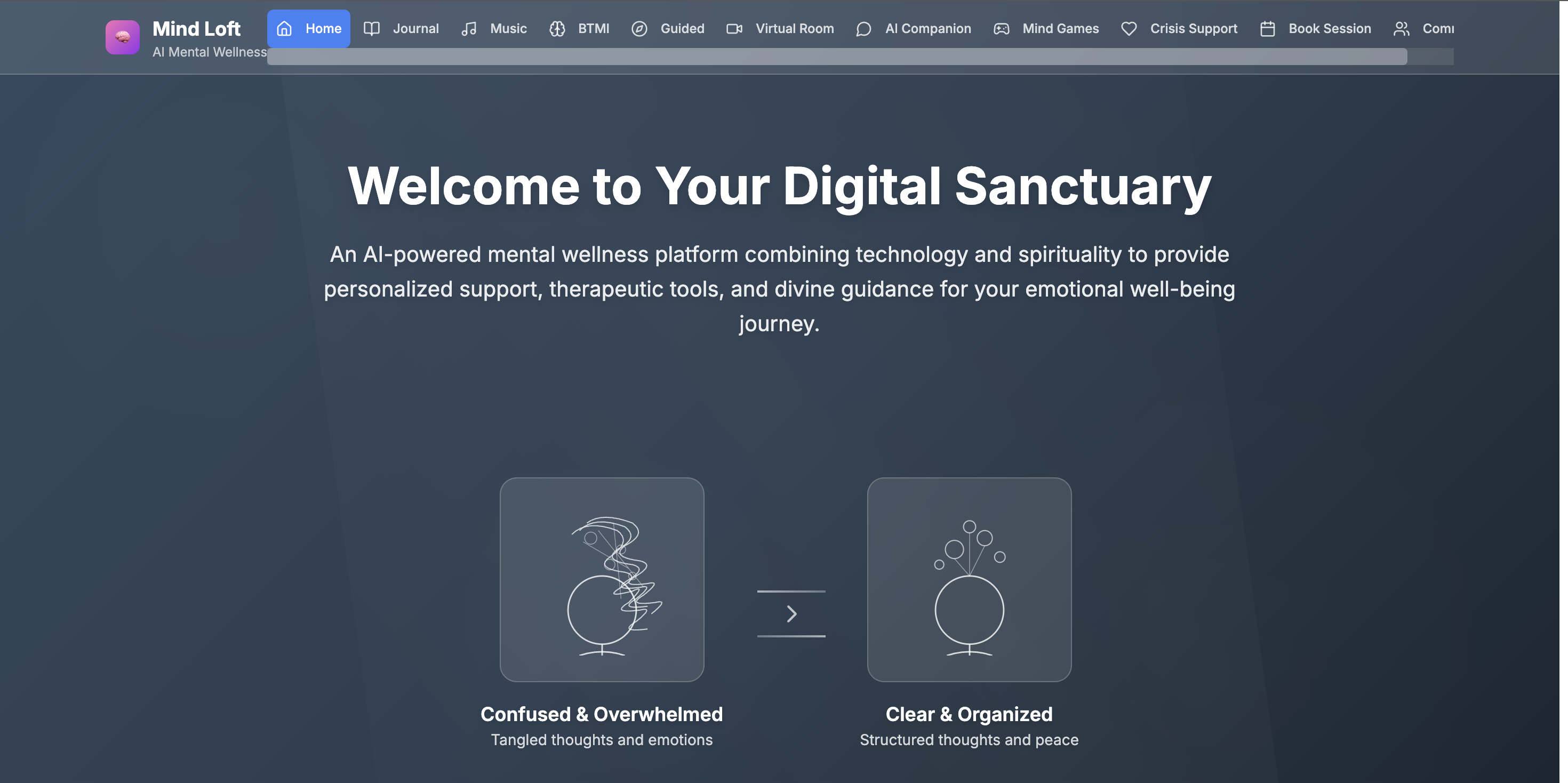
HomePage-Dynamic UI theme changes based on the user’s emotional state
-
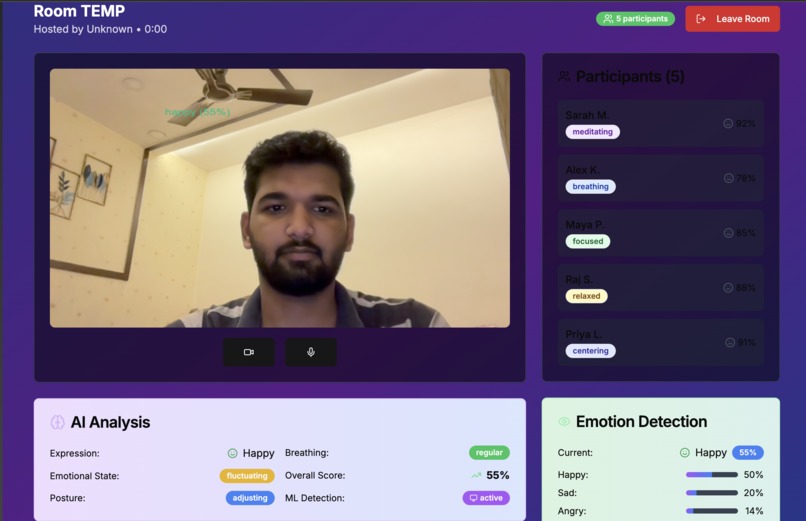
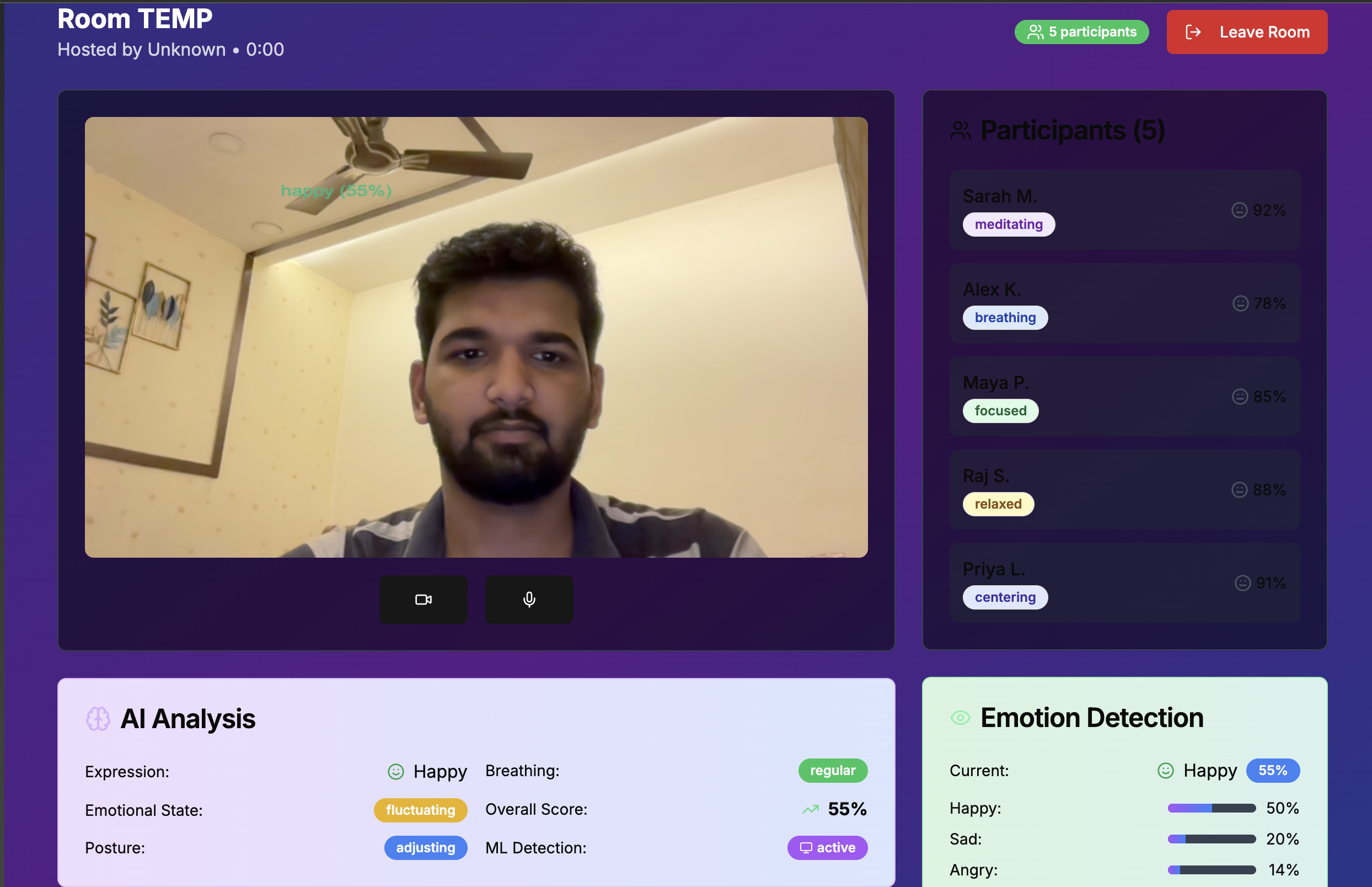
AI-based mood detection
-
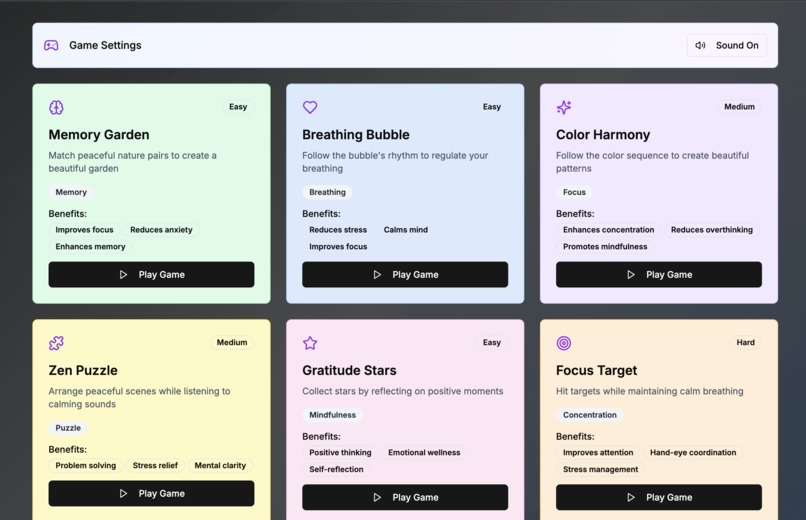
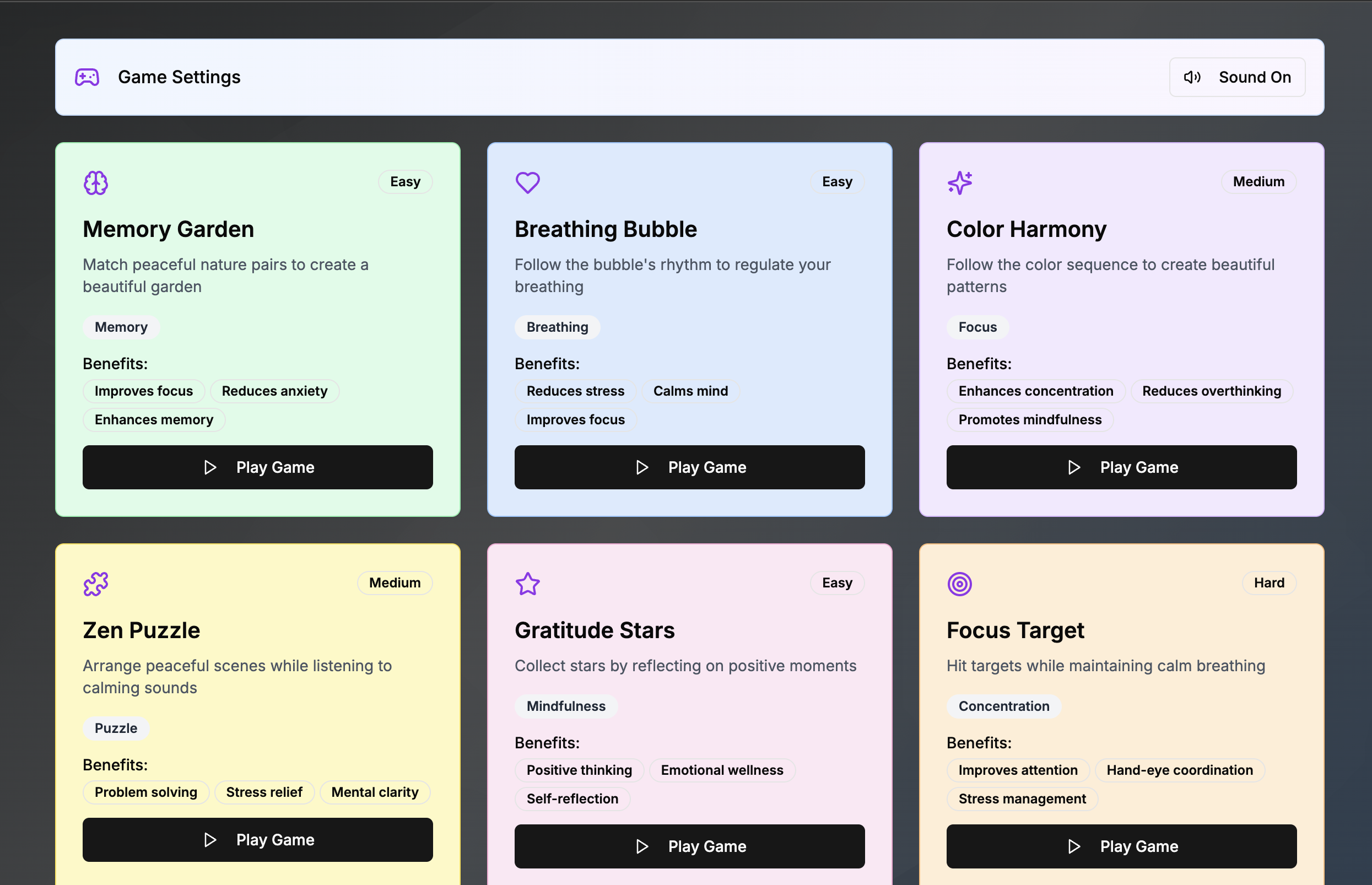
Mind Games
-
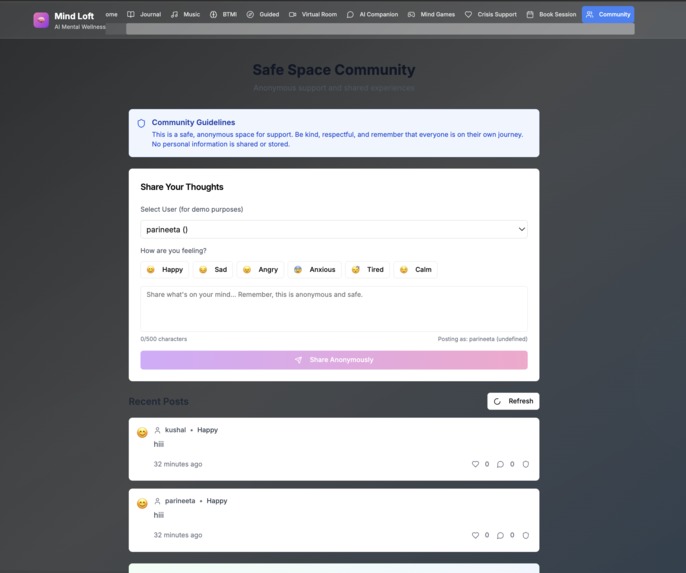
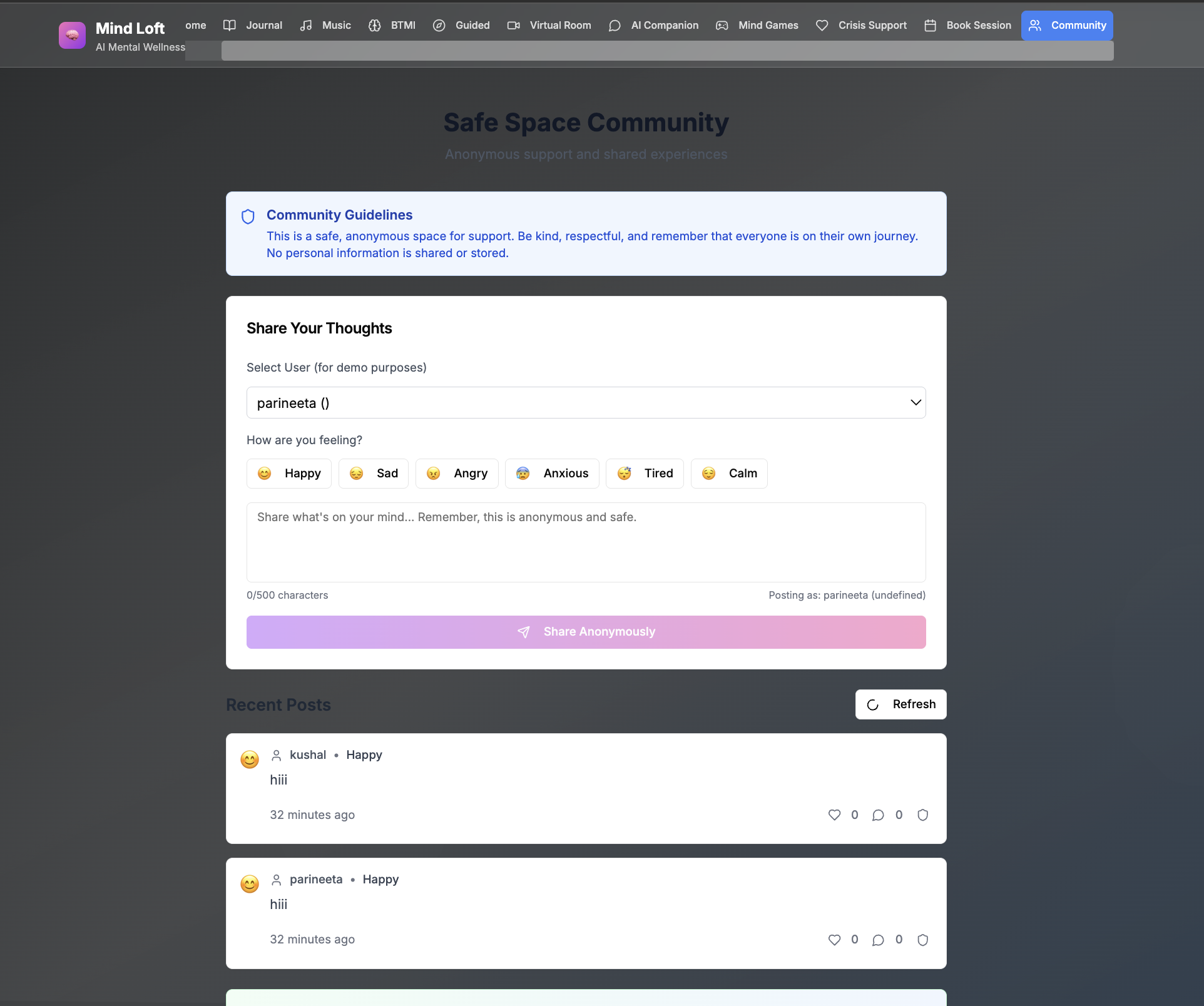
Safe Space Community Anonymous support and shared experiences
-
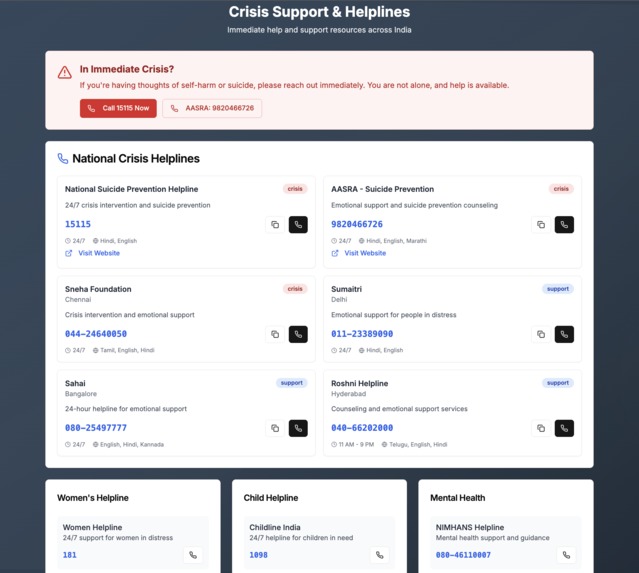
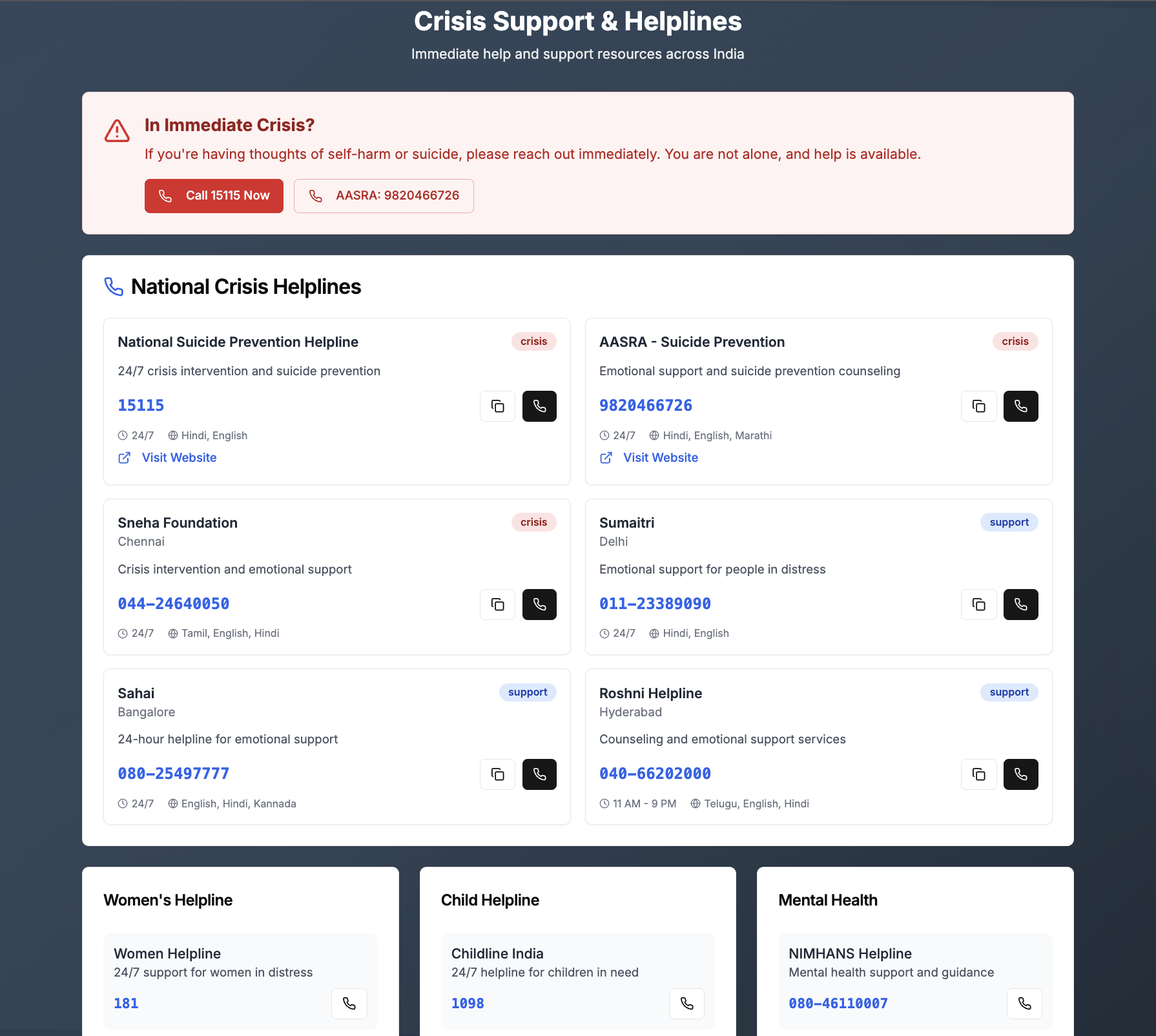
Crisis Support & Helplines Immediate help and support resources across India
-
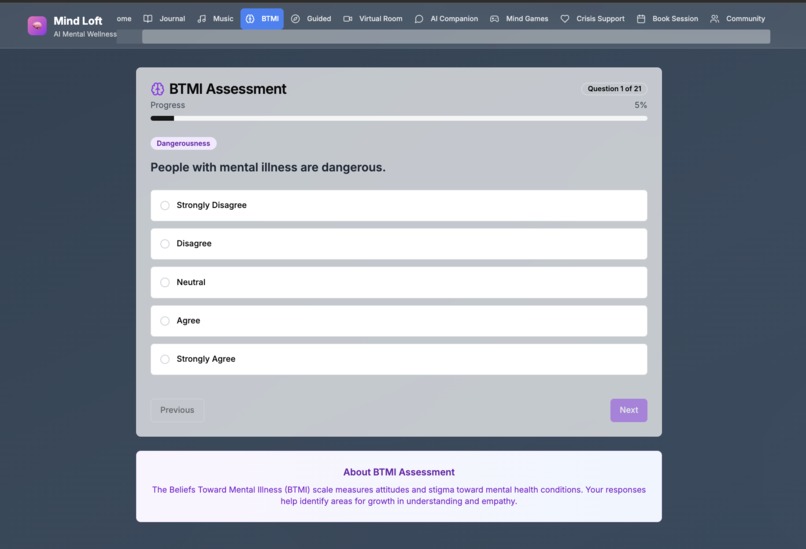
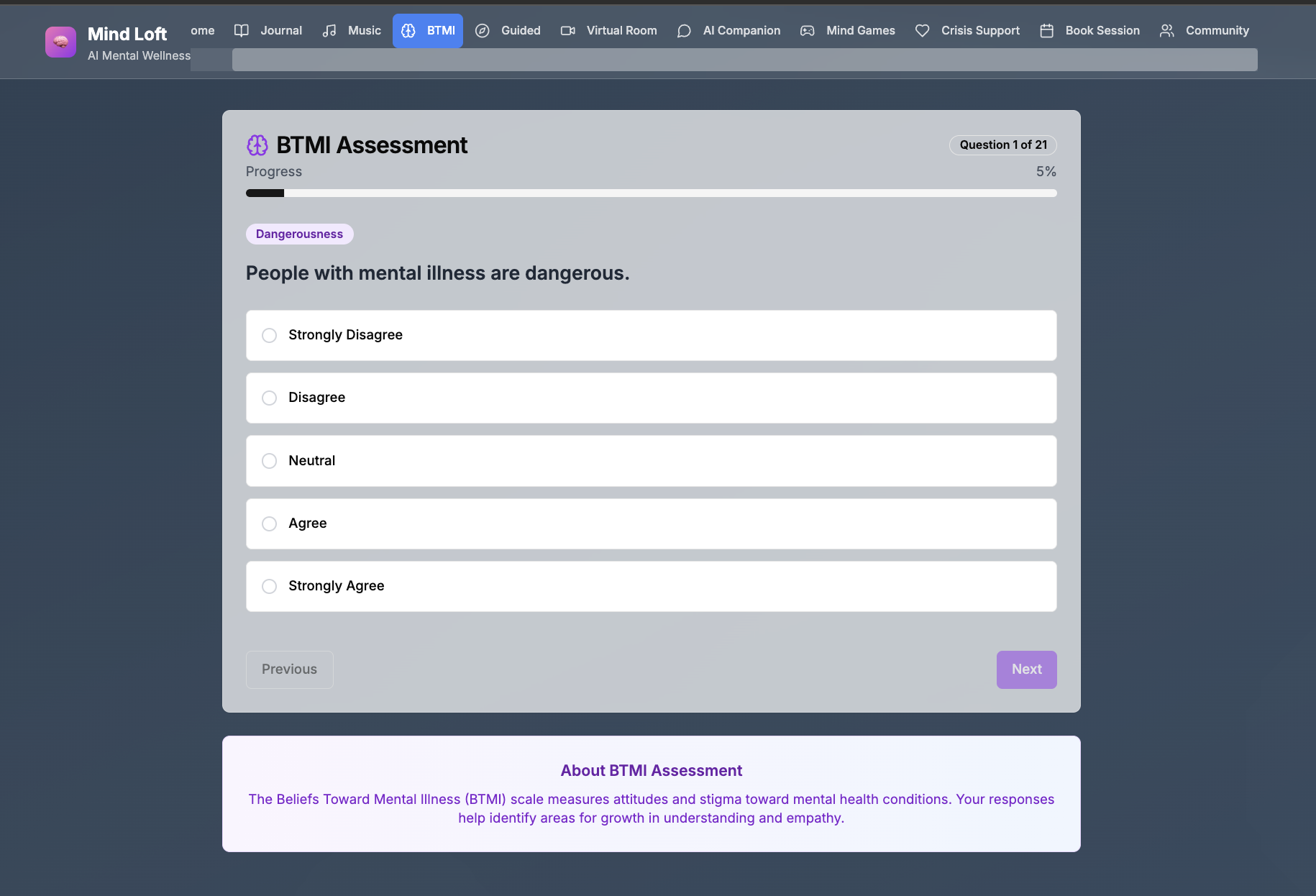
BTMI Assessment
Inspiration
In the post-COVID world, youth mental health has declined significantly. Students face academic pressure, burnout, loneliness, and emotional stress, yet most mental health platforms feel clinical, complicated, or uncomfortable to use. We wanted to create something different — a safe, calming digital space for students where they can express emotions freely, relax, and feel supported without judgment. That idea led to MindLoft — an AI-powered digital sanctuary that blends journaling, mood detection, lo-fi music, and supportive AI conversations into one peaceful platform designed especially for Gen Z.
What it does
MindLoft is an AI-powered mental wellness and productivity platform that helps users relax, reflect, and regain focus. It provides: AI-based mood detection from journal entries and emojis Dynamic UI theme changes based on the user’s emotional state Personalized lo-fi music recommendations A GPT-powered AI buddy that gives calming and supportive responses Anonymous community feed where users can share feelings safely Meditation, breathing exercises, and affirmations Early burnout detection suggestions and emotional support tools MindLoft acts like a digital companion that listens and supports users emotionally.
How we built it
We built MindLoft using an AI-first and emotion-aware architecture.
Tech Stack Frontend: React + Tailwind CSS Backend: Node.js + Express AI/ML: Python (spaCy, Scikit-learn), TensorFlow Lite AI Assistant: GPT API Database & Authentication: Firebase Deployment: Vercel / Netlify
Core System Flow User writes a journal entry. AI analyzes text and emojis using NLP. The system detects the user’s mood. UI theme changes dynamically. GPT AI buddy provides a calming response. Lo-fi music is recommended based on mood. Optional anonymous community interaction. This creates a real-time emotional support system powered by AI.
Challenges we ran into
While building MindLoft, we faced several technical and design challenges: Accurately detecting mood from short journal entries Designing a UI that adapts emotionally without confusing users Integrating AI responses that feel supportive but not robotic Building a safe anonymous community feature Ensuring smooth performance on mobile devices Connecting multiple components (AI, music, UI, backend) in real time Balancing mental wellness + AI + user experience was our biggest challenge.
Accomplishments that we're proud of
We are proud that we: Built a working AI-powered mental wellness prototype Successfully integrated mood detection + music recommendation Created a dynamic emotion-based UI Implemented a GPT-powered emotional support system Designed a safe and anonymous platform for students Developed the project within a short hackathon timeline Most importantly, MindLoft shows that AI can support mental health in a human-centered way.
What we learned
During this project, we learned: How to build AI-driven emotional intelligence systems NLP techniques for sentiment and mood detection Designing products focused on mental wellness Real-time integration between frontend, backend, and AI models The importance of empathetic technology design We also improved our teamwork, system design, and rapid development skills.
What's next for Innovate
Our future vision for MindLoft includes: More advanced emotion detection models Voice-based journaling and mood analysis Personalized AI therapy-style guidance AI-generated meditation sessions Smart mental health analytics dashboard Integration with universities and student platforms Mobile application launch Real-time support and crisis detection features Our goal is to turn MindLoft into a global AI-powered mental wellness platform for students.
Built With
- backend
- css
- deep-learning
- frontend
- github
- html
- javascript
- machine-learning
- mongodb
- node.js
- postman
- python
- react.js
- scikit-learn
- tailwind
- tensorflow

Log in or sign up for Devpost to join the conversation.