Inspiration
InnerTide started with us. Each of us has had days before our period when our mood suddenly dropped. We felt irritable, low or teary, and we didn't understand why. We usually made the connection only later, sometimes not until our period actually started. By then we had often snapped at someone we love, pulled away from friends, or made a decision we wouldn't normally make. We also didn't know how to ask for support without explaining everything.
We wanted to know whether other women felt the same way, so we interviewed 11 women at the hackathon. They confirmed the experience was common:
- About 6 of 11 couldn't tell whether a mood shift was hormonal or "just life," or noticed the cycle link only afterward.
- About 6 described strain with the people closest to them, such as partners and family, while strangers and coworkers saw a "controlled" version of them.
- About 5 described withdrawal and low energy: staying home, skipping friends, replying slowly.
- About 6 said the support they wanted most was being understood, without having to justify how they felt.
One woman's husband follows her cycle and brings her comfort food before she asks. Another front-loads her work into her high-energy week and then "gives herself grace." Those stories shaped what we built.
What it does
InnerTide notices premenstrual mood shifts early and helps you respond with intention instead of overwhelm. It focuses on four moments:
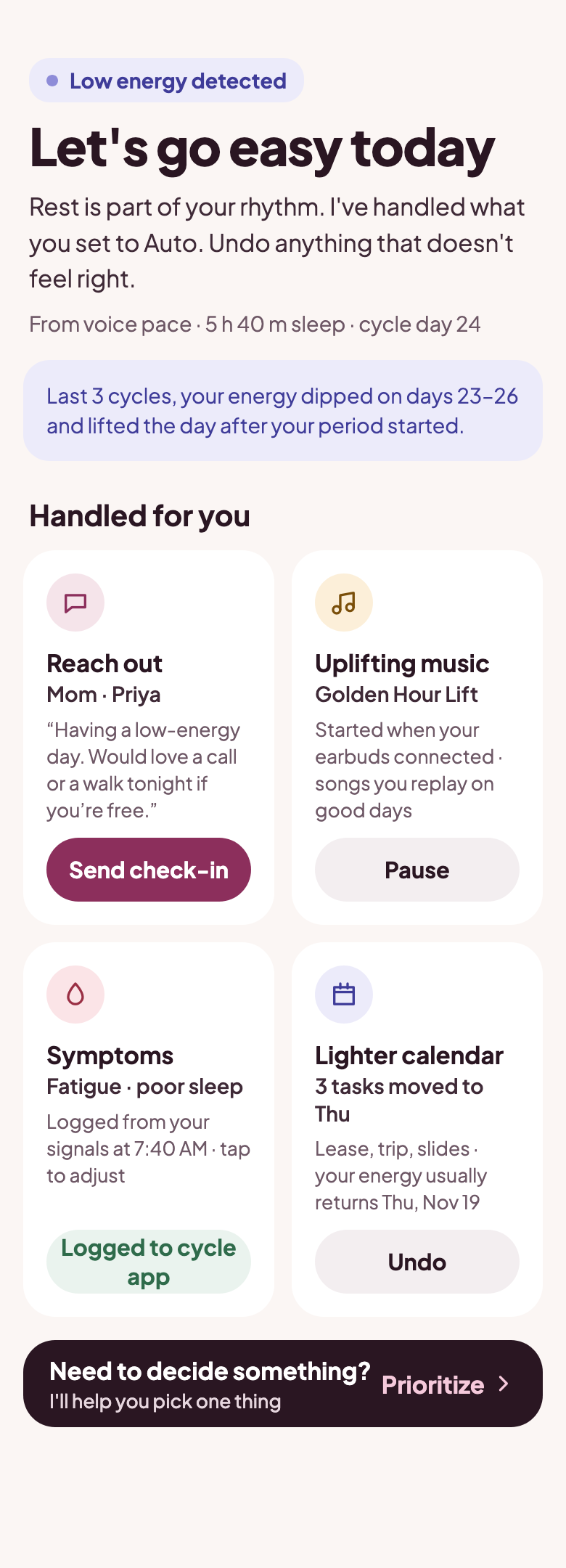
- Low energy. It sends a check-in to a close friend or family member to start a real conversation, plays uplifting music, logs symptoms to your cycle-tracking app, and moves flexible tasks to a higher-energy day on your calendar.
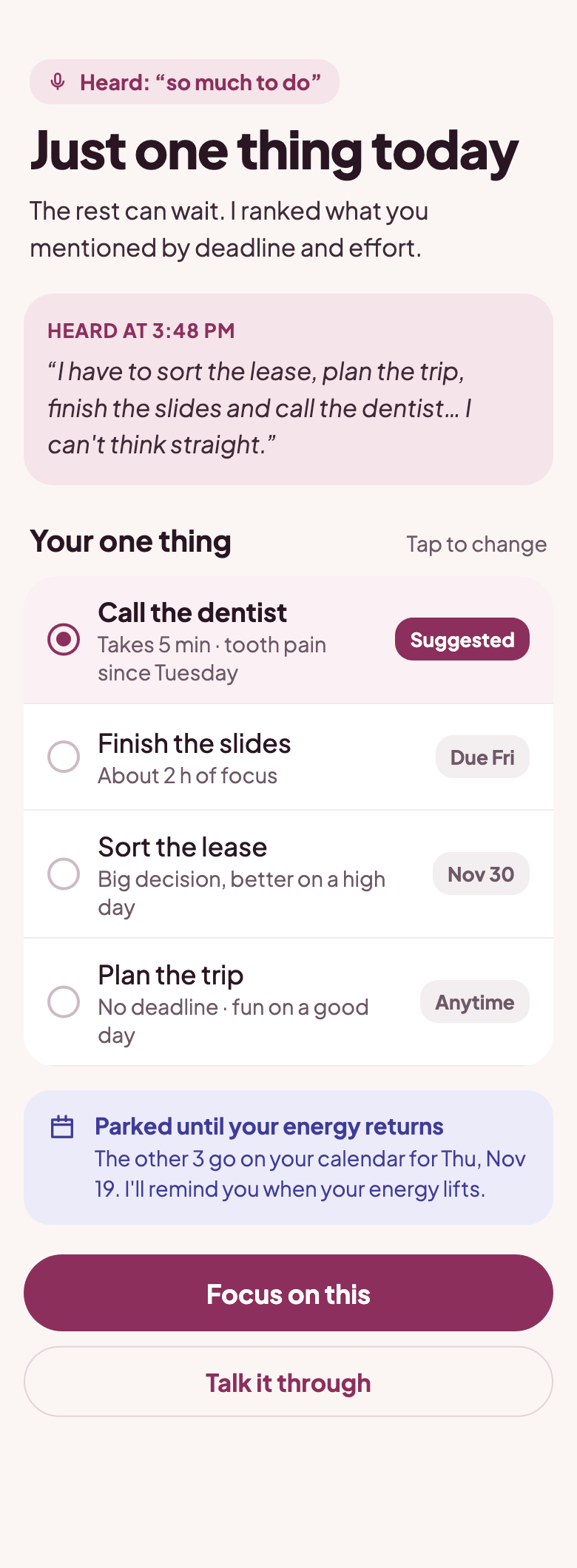
- Decision making. When you're talking through a long to-do list, it helps you pick one thing and parks the rest until your energy returns.
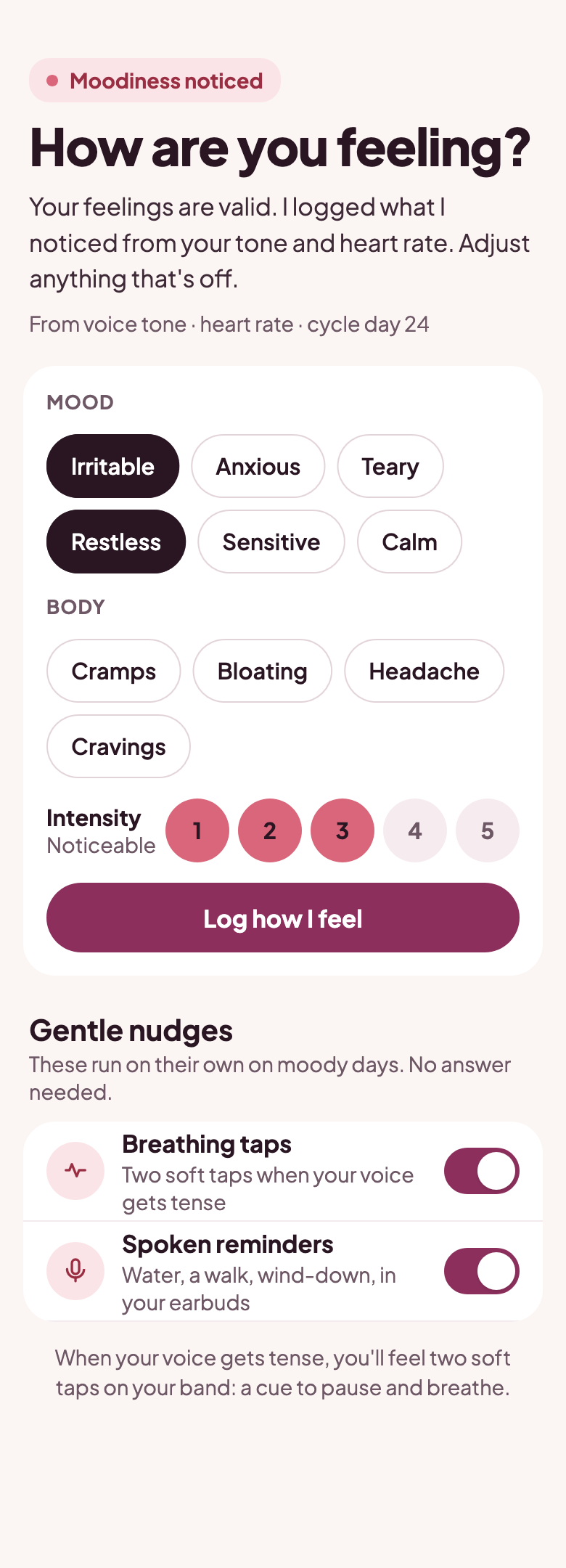
- Moodiness. You can track mood and symptoms quickly, and you get discreet haptic taps or voice reminders to pause and breathe.
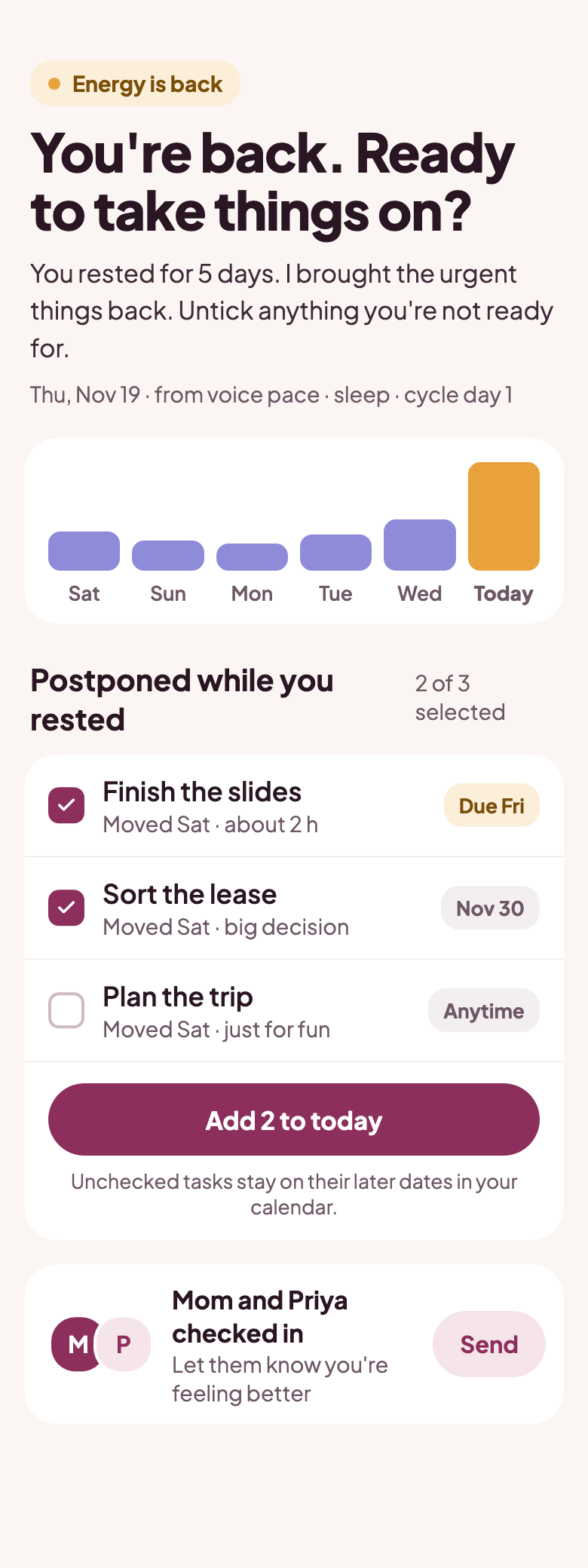
- Positive energy. When your energy comes back, it prompts you to take back the tasks you postponed.
Every action can be undone, and you stay in control.
How we built it
Frontend
- Vanilla HTML/CSS/JS, no build step (
localStoragefor state) - Vexo Open kit for band link (Web Bluetooth/Serial)
Backend
- FastAPI (Python), WebSockets, Docker + Render
Features and models
- Live transcription: Deepgram nova-3
- Voice assistant: Pipecat with Deepgram STT and TTS (Aura), wake words "vexa/vexo"
- Spoken memory support: Gemini Live
- Reasoning and agent decisions: Gemini and Gemini Decisions API
- Emotion and energy detection: voice, band and cycle-day signals
- Vision: camera analysis
- Music: generated music
- Scheduling: Google Calendar and Apple CalDAV
- Health data import and a context graph
Challenges we ran into
- Continuous voice. Always-on listening was hard on several fronts: background noise, other people's voices, and battery. Privacy was the biggest. We chose to analyze voice for pace and tone rather than store words, and to work from changes against her baseline instead of raw recordings.
- Finding the right problem statement. We knew premenstrual mood shifts were hard, but "mood shifts are hard" isn't a problem you can design for. We needed to say why it mattered. The interviews gave us that: women often can't tell why they feel off, and it affects how they treat the people closest to them. That led us to: > How might we help women experiencing premenstrual mood changes recognize emotional shifts and respond more intentionally?
Accomplishments that we're proud of
- We built something we're genuinely passionate about, because it comes from our own experience.
- Women at the hackathon told us they could actually see themselves using something like this.
- We kept the problem statement simple and stayed focused on core needs. We didn't add features for the sake of it, and we cut screens when they made things more complicated.
What we learned
- Start from the user and the problem, not the solution. It was tempting to start from the technology and look for a use for it. Our best decisions came from what the 11 women told us.
- Split work by strengths, but stay open to feedback. Each of us owned the parts we were best at, and we kept checking each other's work, which made everything better.
What's next for InnerTide
- Richer haptic feedback. We want to use LEDs and vibration patterns to signal gently that a mood shift is happening, so she knows without looking at a screen.
- More health data. We'll go beyond our first health-data import and connect more health apps and live metrics, such as sleep, heart rate, HRV and temperature, so the app understands mood changes beyond voice alone.
- More feedback. We'll show InnerTide to more women and keep refining it based on what they need.
Built With
- apple-caldav
- computer-vision
- css
- deepgram
- docker
- fastapi
- gemini
- gemini-decisions-api
- gemini-live
- google-calendar
- html
- javascript
- localstorage
- pipecat
- python
- render
- vexo-open-kit
- web-bluetooth
- web-serial
- websockets
