Inspiration
As someone who’s navigated unprocessed childhood trauma without easy access to therapy, I saw a gap: so many adults crave safe, private tools to heal, but few options balance structure with gentleness. Drawing from the Internal Family Systems model (IFS), I set out to build something that meets users where they are—no forced emotional labor, just compassionate, self-led healing.
What it does
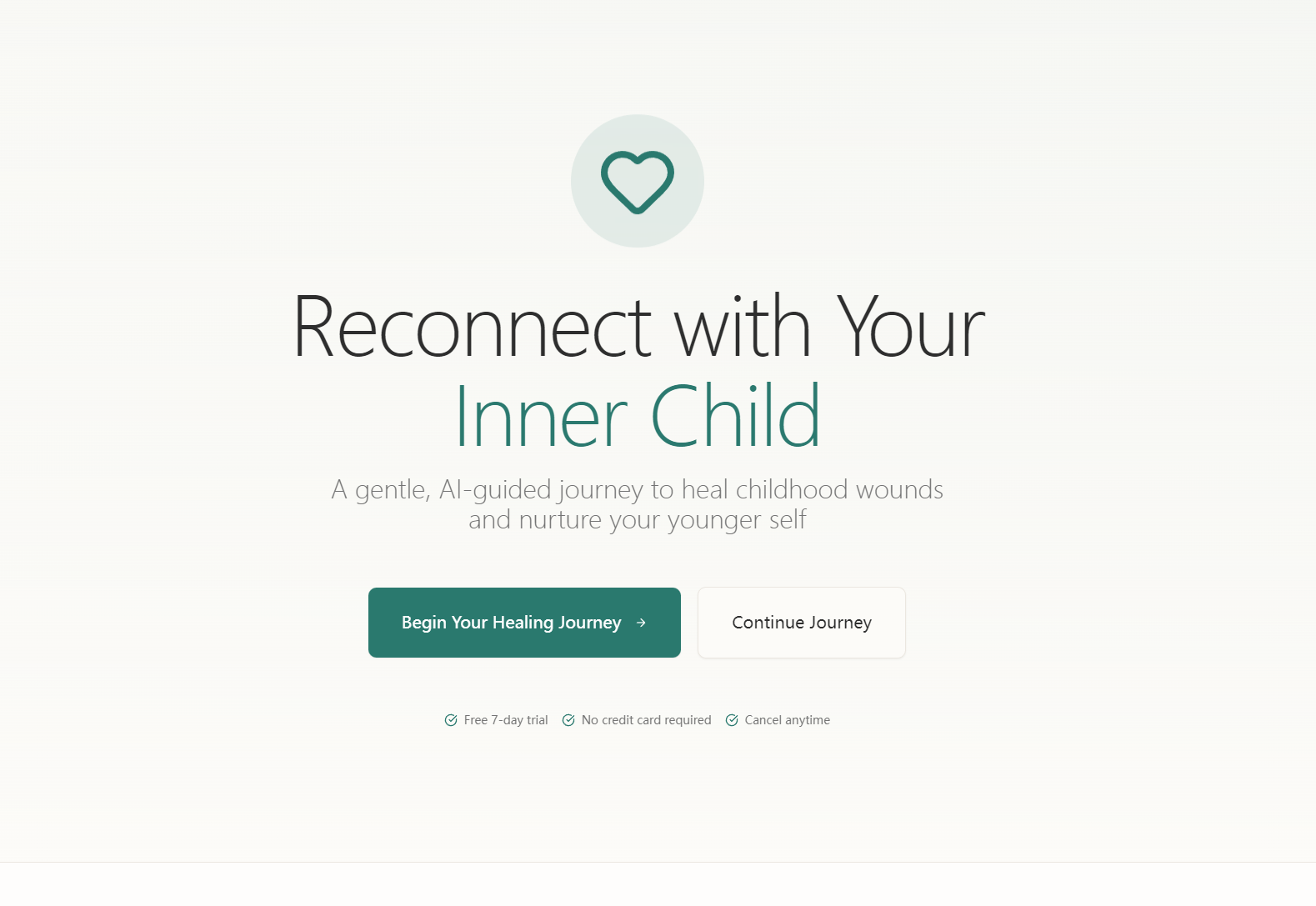
InnerChild AI guides users through daily check-ins, age-specific inner child dialogue, trigger logging, and 8-16 week healing programs. It prioritizes safety: detecting distress to pause sessions and offer grounding exercises, all while tracking progress without clinical jargon.
How we built it
We started with trauma-informed UX principles, building a React frontend for soft, approachable design. The Node.js backend integrates OpenAI API for empathetic AI dialogue and pattern detection, MongoDB for secure user data storage, and Stripe for subscription management. Chart.js visualizes emotional patterns, and AWS handles optional cloud backups. Every feature was tested to ensure user control—depth levels for reflection, flexible program pacing, one-tap safety exits.
Challenges we ran into
The biggest hurdle was balancing AI emotional attunement with safety: we needed the AI to be compassionate but not clinical, and to detect distress without overreacting. We iterated repeatedly on the safety pause logic, testing with trauma-informed advisors to avoid triggering users while ensuring crisis support was immediate. Another challenge was progress tracking that felt encouraging, not overwhelming—we scrapped clinical metrics for warm, visual timelines and milestone feedback.
Accomplishments that we're proud of
We built a tool that centers user agency: no forced memory recall, full control over emotional depth, and safety protocols that feel gentle, not intrusive. The inner child dialogue feature (age-specific, empathetic, saveable) resonates deeply with beta users, and the trigger pattern visualization helps people recognize patterns without shame. We also ensured full data privacy—users own their progress, can export it, or delete their account entirely.
What we learned
Trauma-informed design isn’t just about features—it’s about tone and trust. We learned to prioritize "soft" tech: rounded UI elements, warm language, and optional engagement over rigid workflows. We also realized how critical global mental health resources are; integrating hotlines and grounding exercises made the app feel truly supportive, not just functional. Most importantly, we learned that healing tools need to meet users where they are, not push a one-size-fits-all journey.
What's next for this project
We’re expanding the healing program library to include niche focus areas (grief, caregiver trauma) and adding text-to-speech for low-effort engagement. We’re also partnering with trauma-informed therapists to refine the AI’s emotional responses further, and exploring a mobile web app optimized for on-the-go check-ins. Long-term, we aim to keep the app affordable and accessible, while never compromising on safety or user autonomy.

Log in or sign up for Devpost to join the conversation.