-
-
-
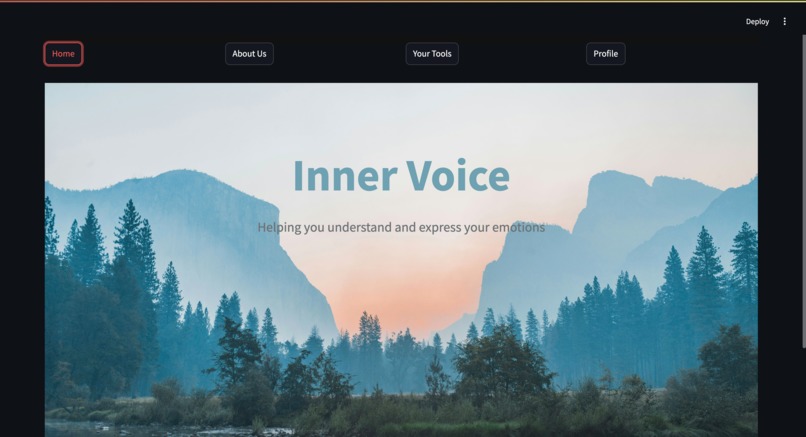
Home Page
-
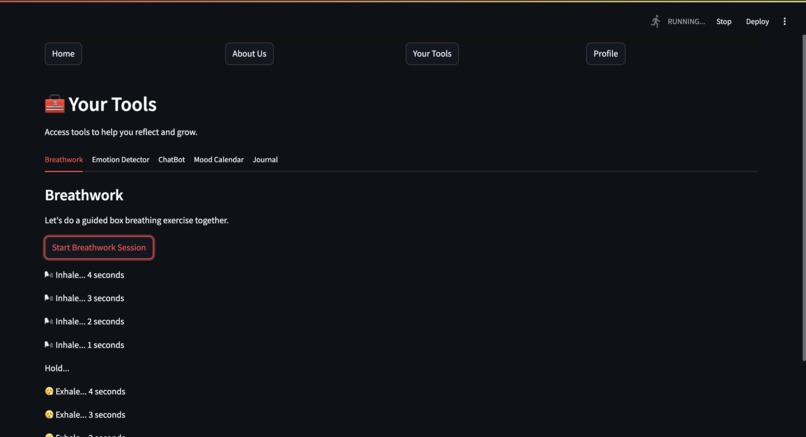
Tool Kit
-
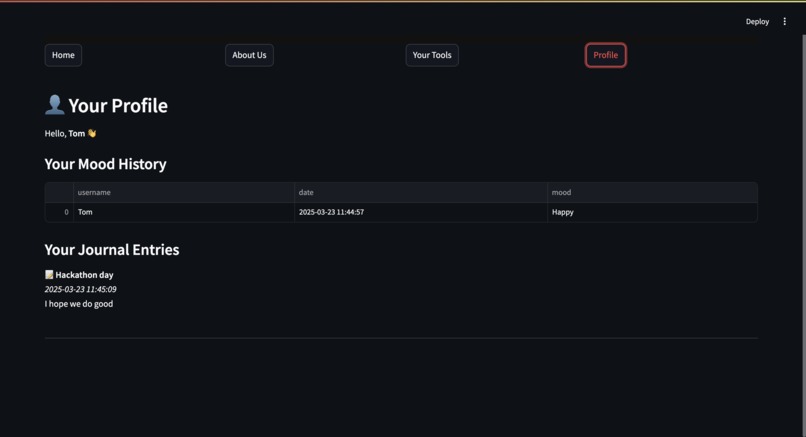
Profile
-
Mood Detector


Inspiration
As students passionate about mental health and accessibility, we noticed a gap in emotional support tools tailored for neurodivergent and disabled individuals. Many existing apps rely heavily on verbal communication, which can be overwhelming or inaccessible for some. We wanted to create something that feels like a gentle companion — one that listens, supports, and empowers users to understand their emotions in a safe space.
What it does
InnerVoice is a mental health and emotion awareness platform designed for neurodivergent and disabled users. It includes:
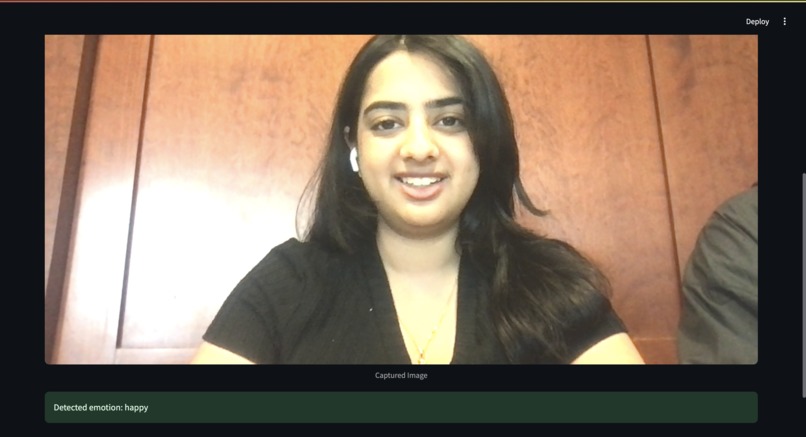
- Emotion Detector:Uses your webcam and DeepFace to detect your current emotional state.
- Chatbot: Responds empathetically and gently guides users through reflection and coping strategies.
- Mood Calendar: Lets users log their daily mood, track emotional patterns, and delete entries as needed.
- Breathwork Tool: Provides a guided breathing exercise to help regulate stress and bring calm.
- Journal: A private space for users to express thoughts, reflect on their day, and revisit entries over time.
How we built it
We built InnerVoice using:
- Python + Streamlit for the UI and backend
- DeepFace for real-time emotion recognition via webcam
- MongoDB for storing user data and mood logs We also focused heavily on creating a clean, accessible, calming UI for users who may be easily overwhelmed.
Challenges we ran into
- Webcam preview issues: Real-time webcam display + capture was tricky in Streamlit.
- Emotion detection: Ensuring the lighting and frame captured clean facial data required trial and error.
- Accessibility: Designing for emotional sensitivity and diverse needs took extra thought in UX choices.
Accomplishments that we're proud of
- We built an end-to-end working prototype with live emotion recognition!
- Created a modular and scalable codebase that we can easily expand.
- Made an app that feels warm, welcoming, and helpful — not clinical.
- Learned a ton about building AI apps with empathy in mind.
What we learned
- How to integrate multiple APIs (DeepFace) into a smooth user experience.
- Practical experience in deploying and debugging Streamlit apps.
- The importance of emotional UX design, especially for mental health-related products.
- Communication, teamwork, and time management in a hackathon setting!
What's next for InnerVoice
We’re excited to continue growing InnerVoice! Next steps:
- Smarter chatbot that adapts to user moods and journal history
- Improved emotion detection using enhanced models and preprocessing
- Integrate new coping tools like journaling, grounding exercises, and real-time support links.
- Expand accessibility: voice inputs, colorblind-friendly mode, and offline features.
InnerVoice is just getting started — and we believe it can truly help people feel heard.

Log in or sign up for Devpost to join the conversation.