-
-
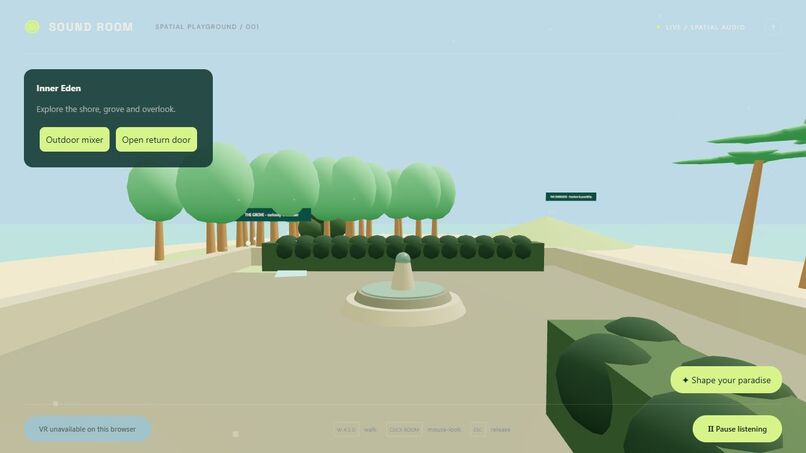
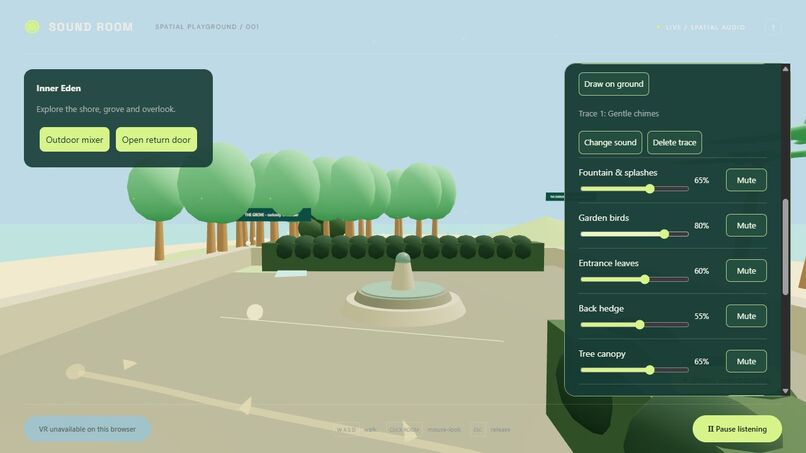
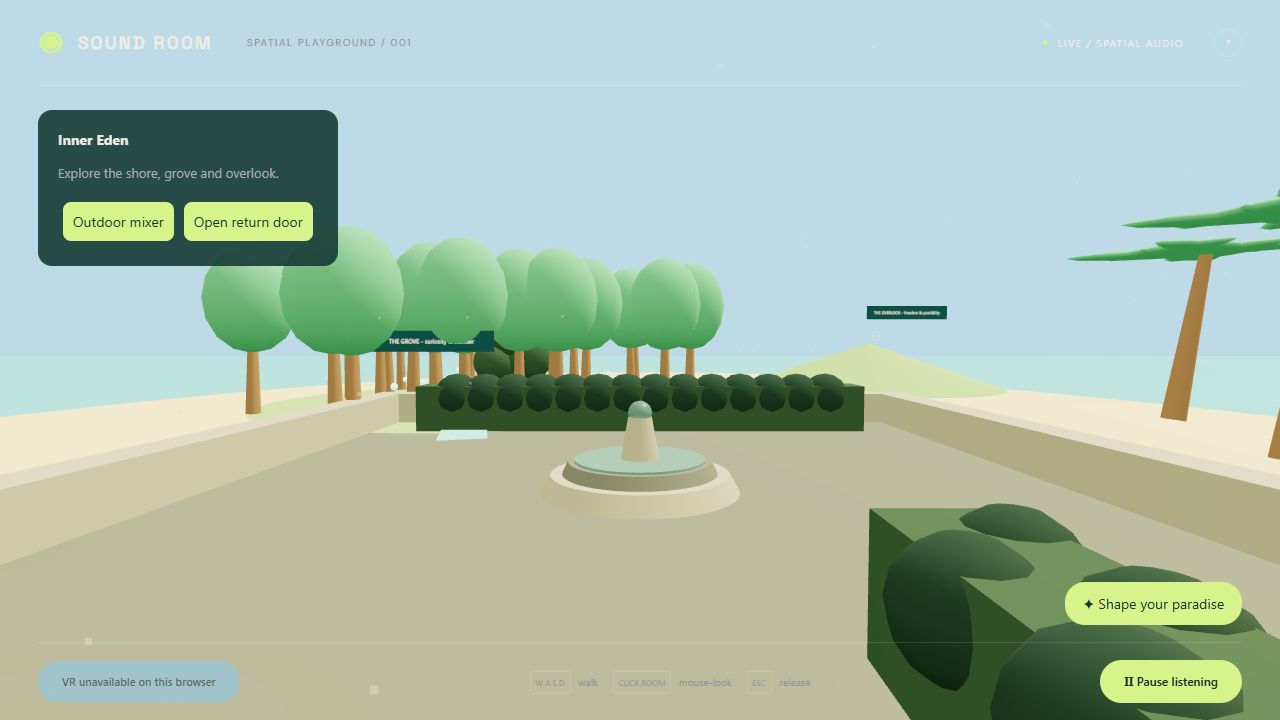
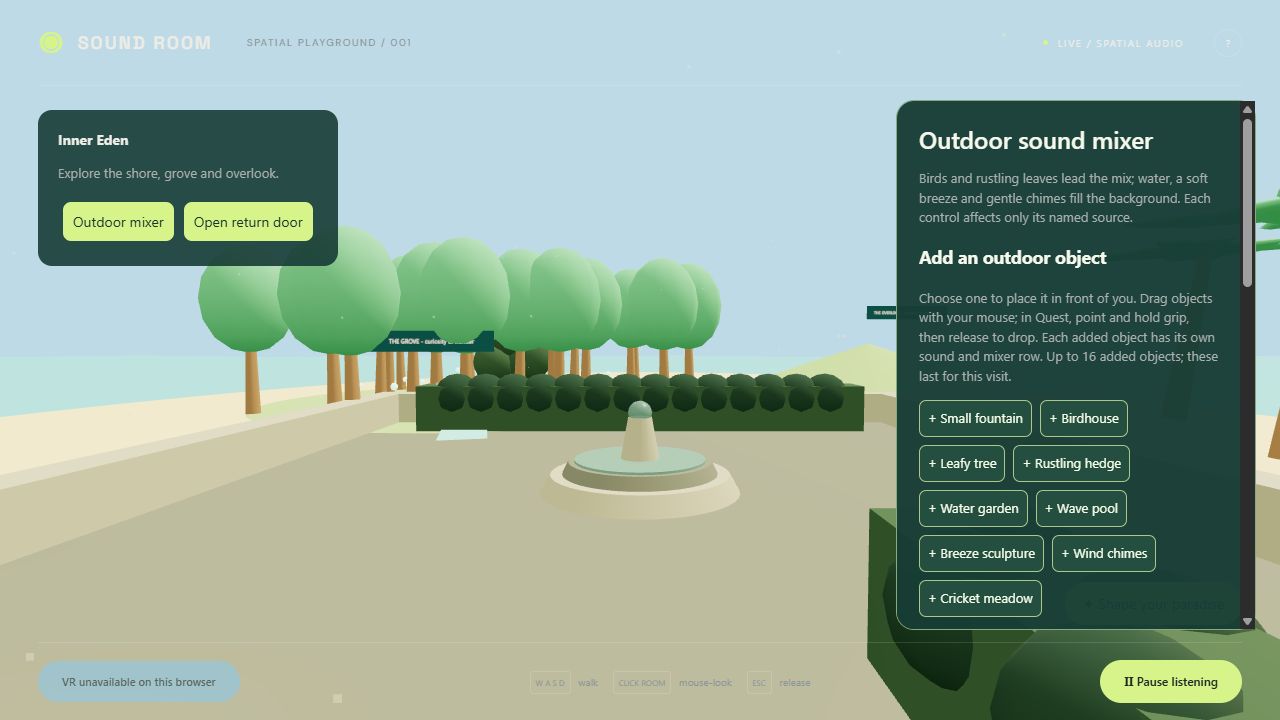
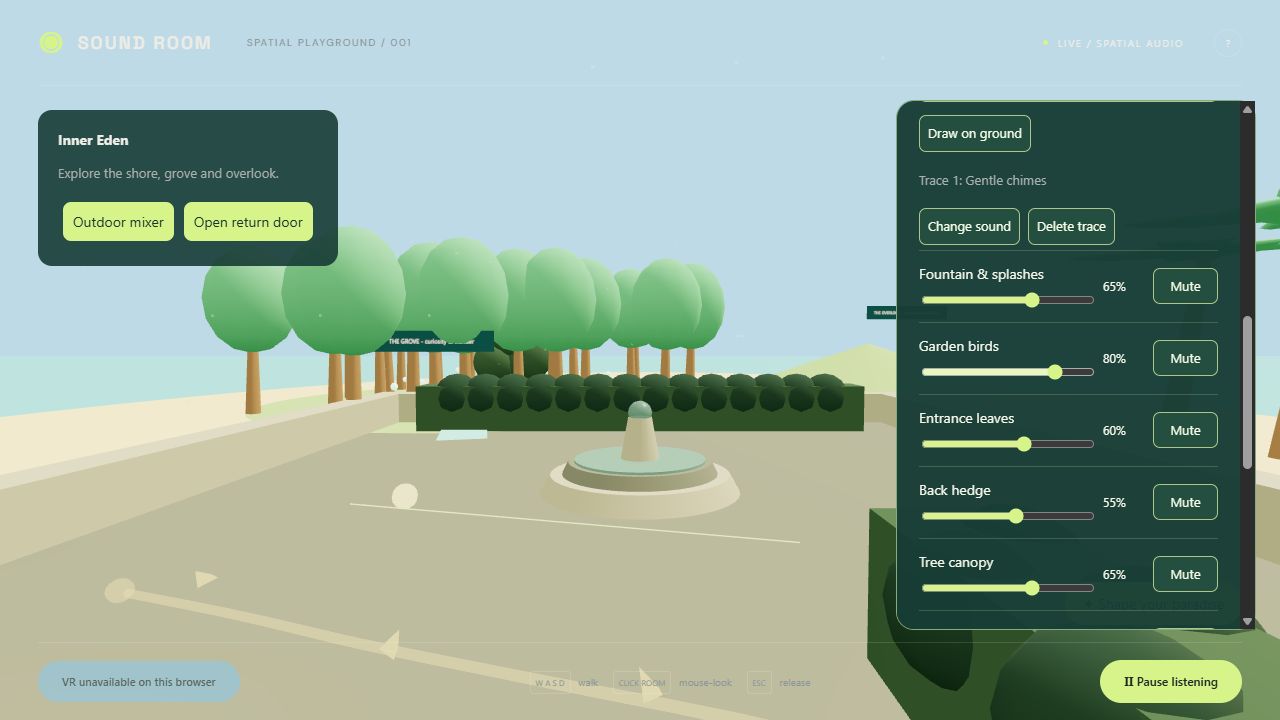
Outdoor courtyard
-
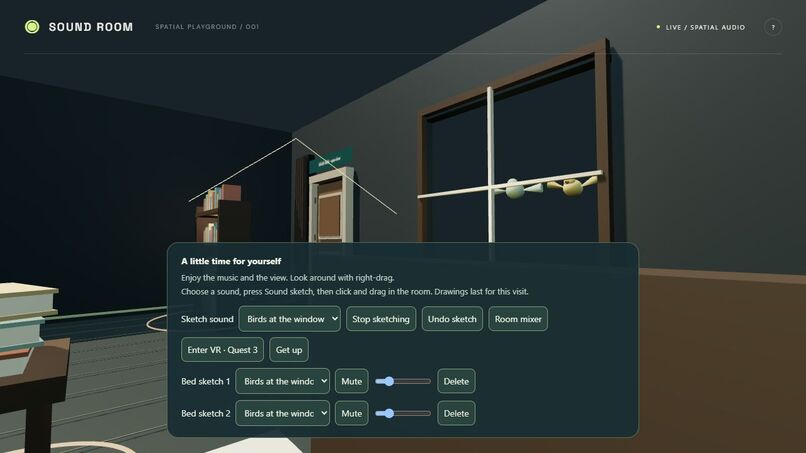
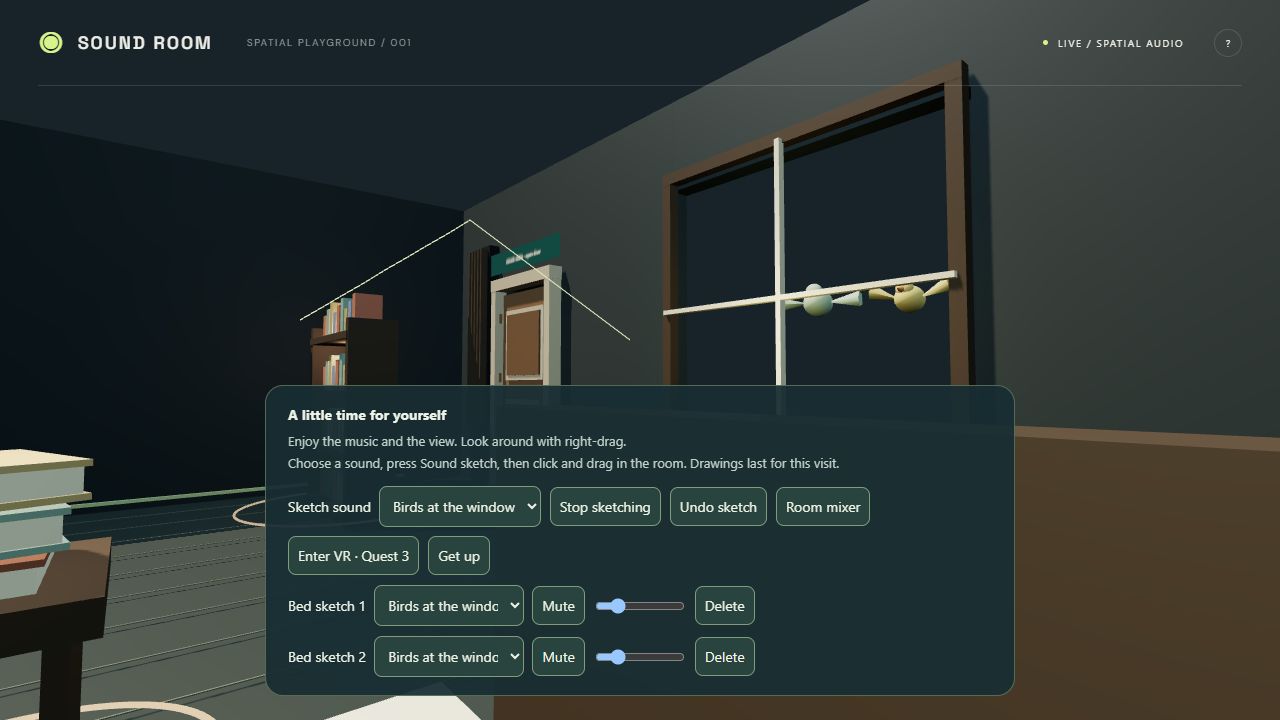
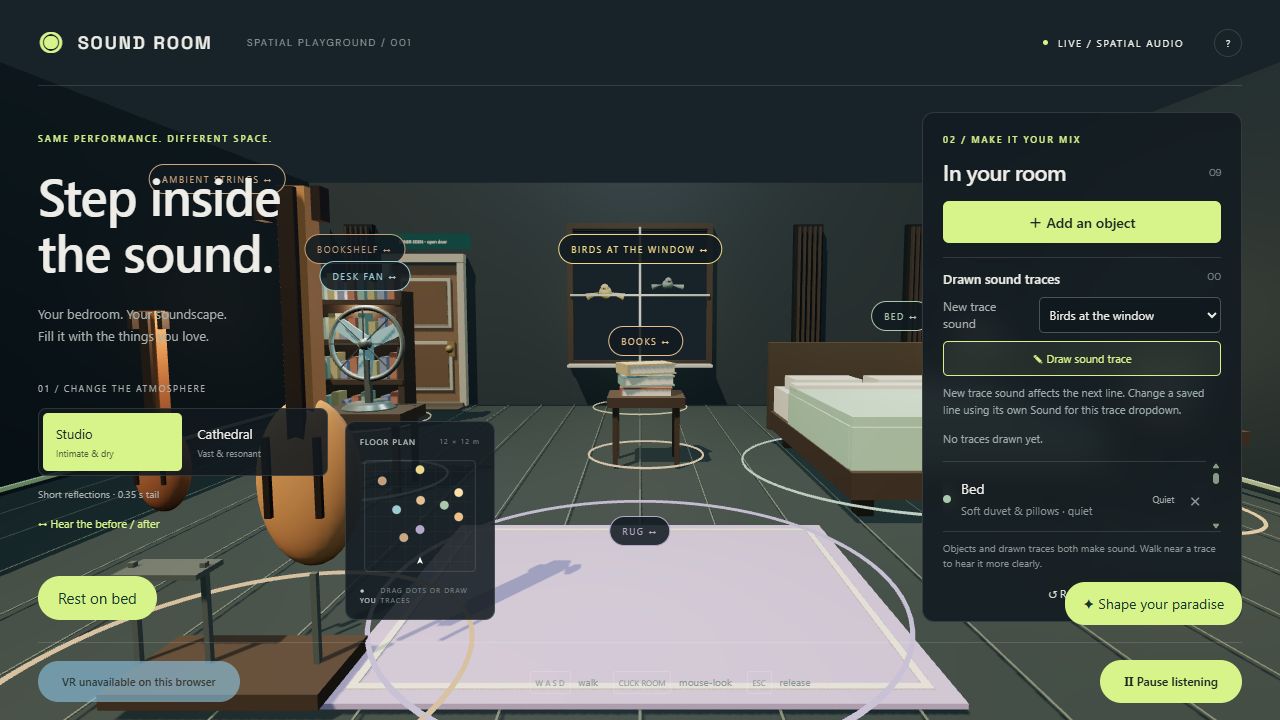
sketching in bed!
-
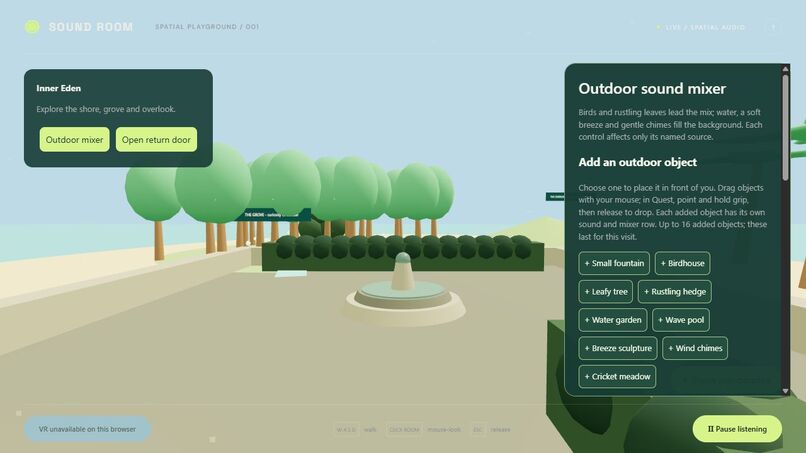
Outdoor objects and sound controls
-
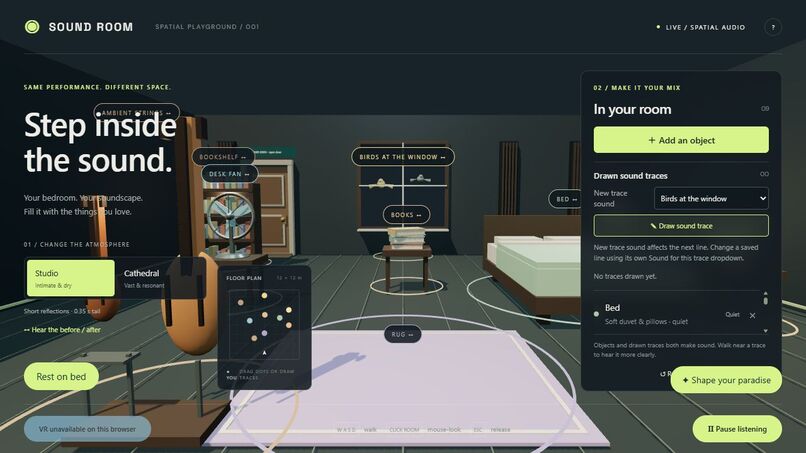
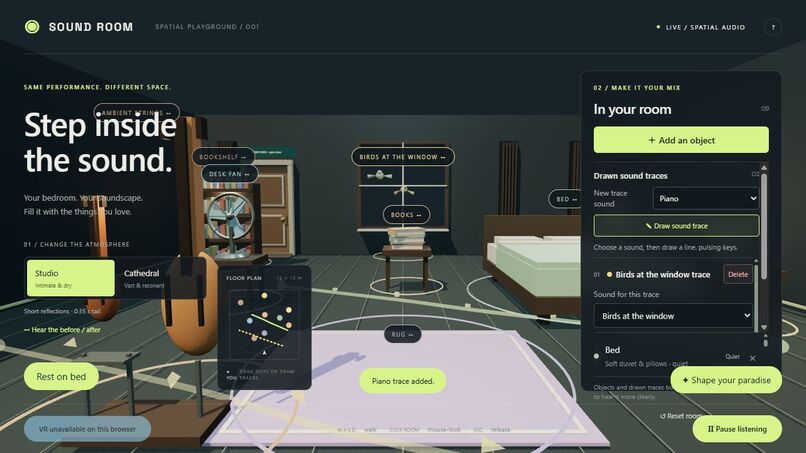
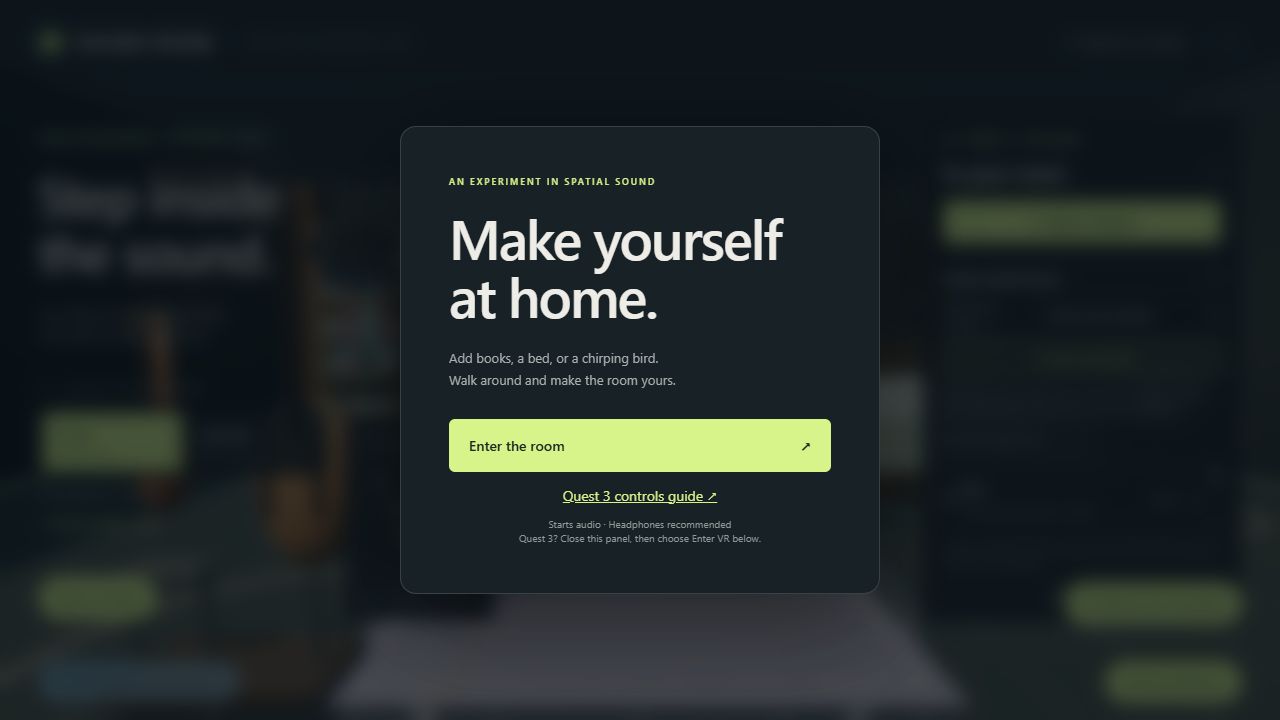
bedroom home page
-

Home page
-
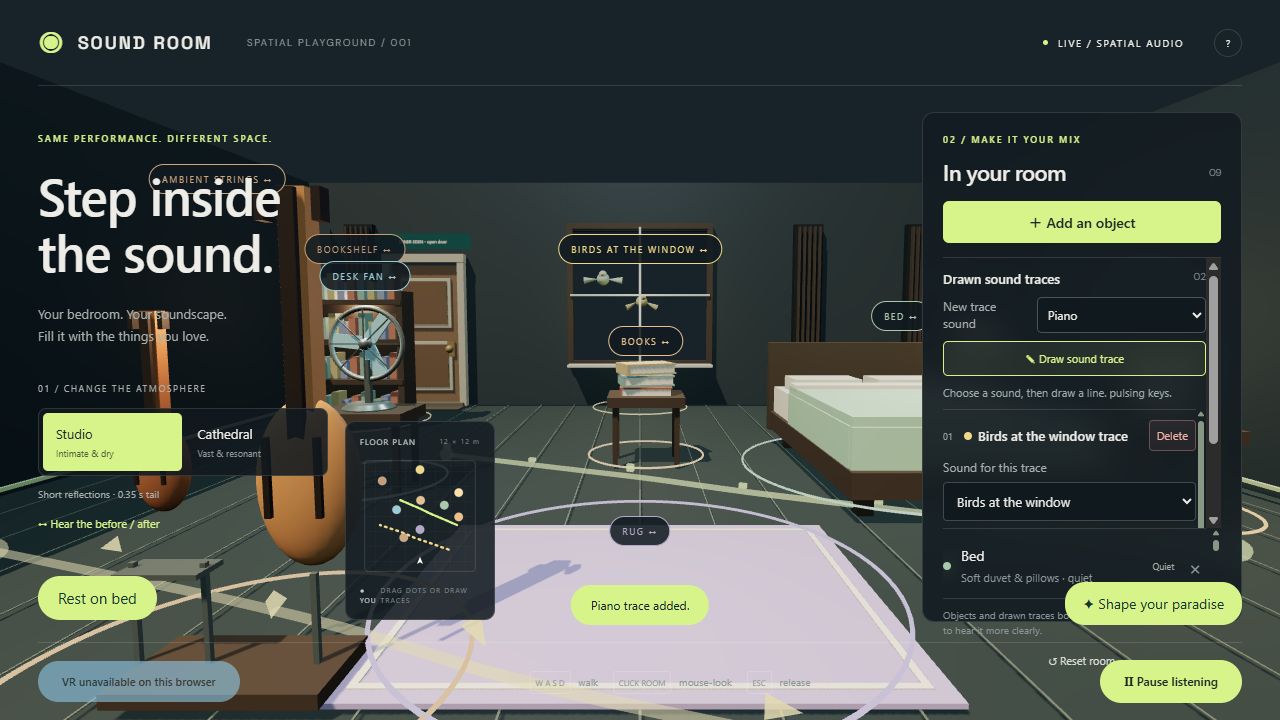
Bedroom sketching
-
Courtyard Sketching
Inspiration
We were inspired by attractor lab's audio world models. It was inspiring to us because we have never heard of Audio world models before, only visual world models, and it was so cool a concept it won us over instantly.
We wanted to create a place where you could shape your personal spaces through sound—and then enjoy being there. Rather than be in the real world where undesirable noises (neighbour shouting, construction, loud sirens and car beeping etc) are often not controllable, we allow users the ability to immerse themselves in a virtual space where they are in full control of audio. Inner Eden brings together the creativity of designing a room and the comfort of resting in a space that feels like your own.
What it does
Inner Eden is an interactive sound sanctuary for Web and Quest 3. Explore a cozy bedroom and an outdoor courtyard, place objects with positional sounds, and adjust each sound source through a mixer.
Draw curved 3D musical paths, choose the sounds that travel along them, customize your visual room and courtyard with our in-house object collection, or rest on the virtual bed and sketch glowing 3d sketches while listening (each stroke is a new sound!). Switch between creating your environment and enjoying it.
How we built it
We built Inner Eden with Three.js, WebXR, and Web Audio. Spatial audio makes sounds respond to your position, while acoustic presets change the room’s atmosphere.
We extended attractor labs' existing courtyard, preserving its authored SATIE audio while adding procedural ambience and interactive sound objects. The experience supports mouse and keyboard on desktop and tracked controllers on Quest 3, with deployment through GitHub Pages.
Try out the link! works for both Quest 3 and Web.
Challenges we ran into
Making controls feel clear across desktop and immersive VR required repeated iteration. We addressed movement keys that stayed active after release (Web), crowded menus and stretched text (in Quest 3), and how to best define controller interactions for both ego motion and sketchings.
Another challenge was keeping visuals and audio connected as objects moved, traces played, and users switched environments.
Accomplishments that we're proud of
We connected a bedroom and outdoor paradise within one immersive experience (only a door away). Users can build a personal soundscape, drag sound objects, draw musical paths, and adjust individual sources. We showed this to other hackers; we are extremely proud of how much they enjoyed building their own "Inner Eden" both on Web and on our Quest 3s.
What we learned
Spatial sound can make simple geometry feel alive. We also learned that comfortable controls, readable menus, and clear instructions matter as much as adding features—especially in VR. Giving users familiar objects and a few expressive tools can make a space feel personal without requiring complex world generation.
We also learned that Web browsers natively supports WebXR! Helped a lot.
What's next for Inner Eden
We want to refine the experience more through hands-on Quest 3 testing, improve the sound library, and add saved layouts for objects and musical sketches.
Longer term, we’d like to offer more environments and richer personalization while keeping the experience simple: create a place, make it yours, and enjoy being there. We want this to be go to experience for all people who are tired from work / school; so they can relax and enjoy their own customized world with their own ASMR, their "Inner Eden".

