-
-

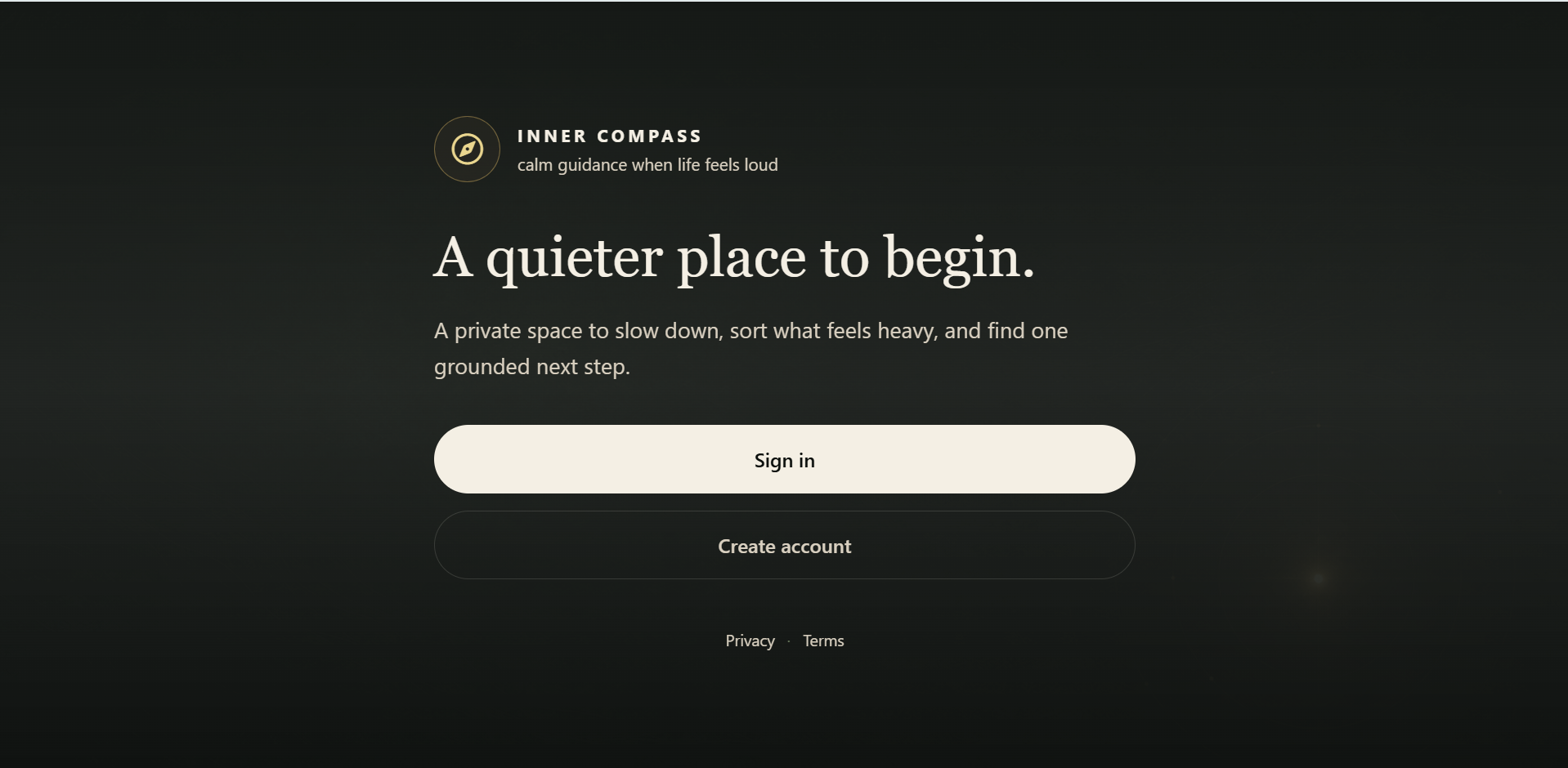
Welcome screen designed to create a calm, distraction-free space before users begin reflecting on important life decisions.
-
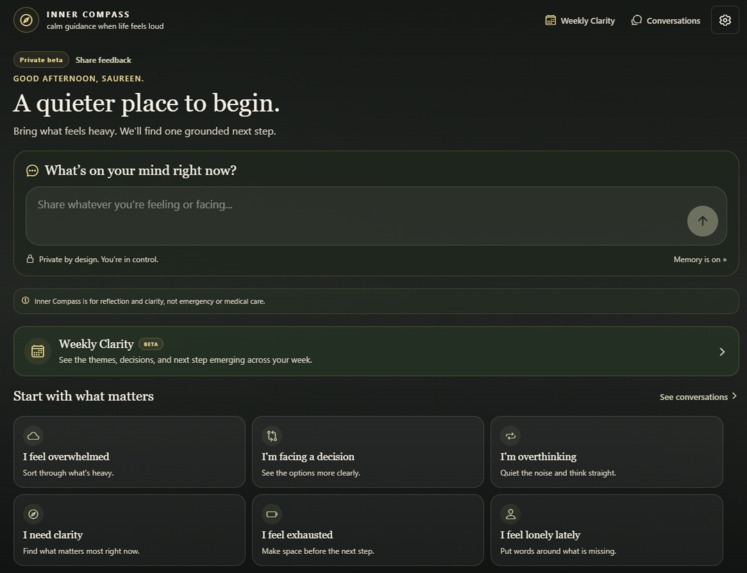
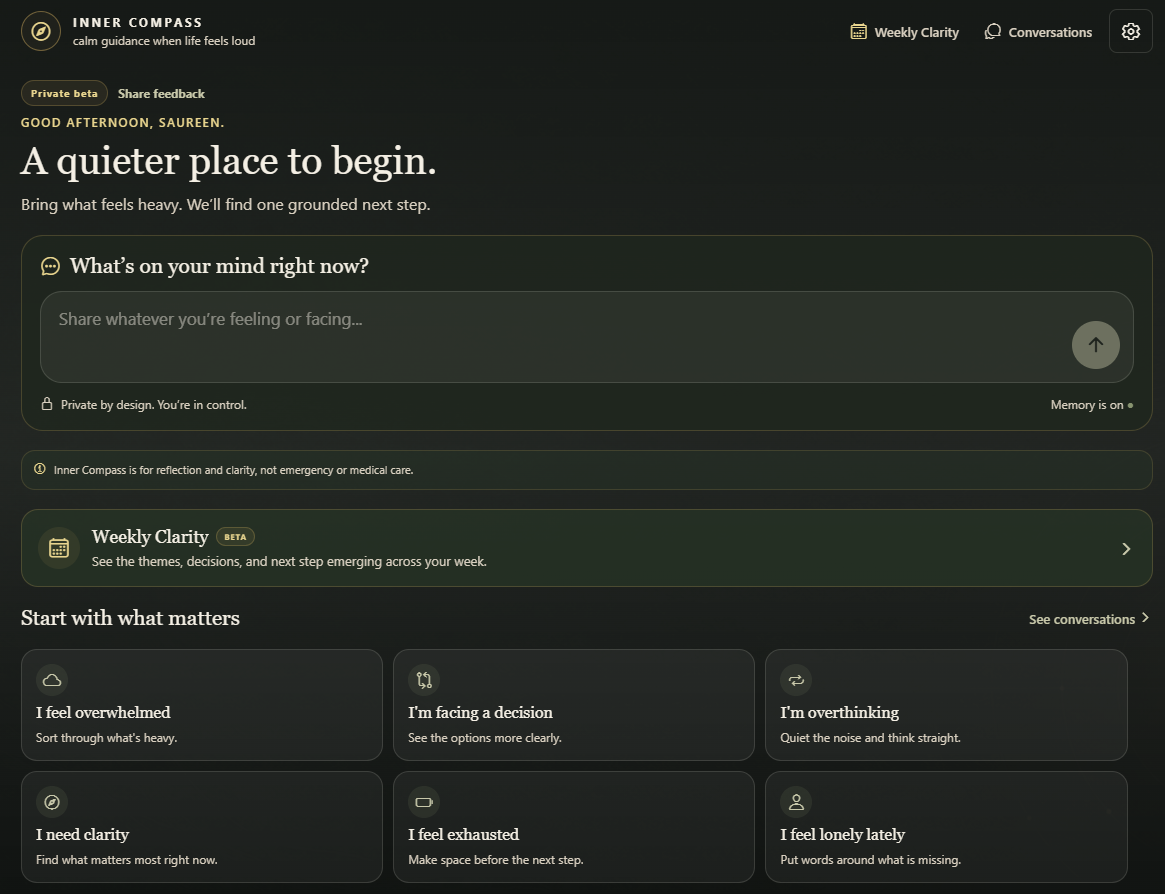
Landing page that welcomes users into a calm space for reflection before beginning a conversation.
-

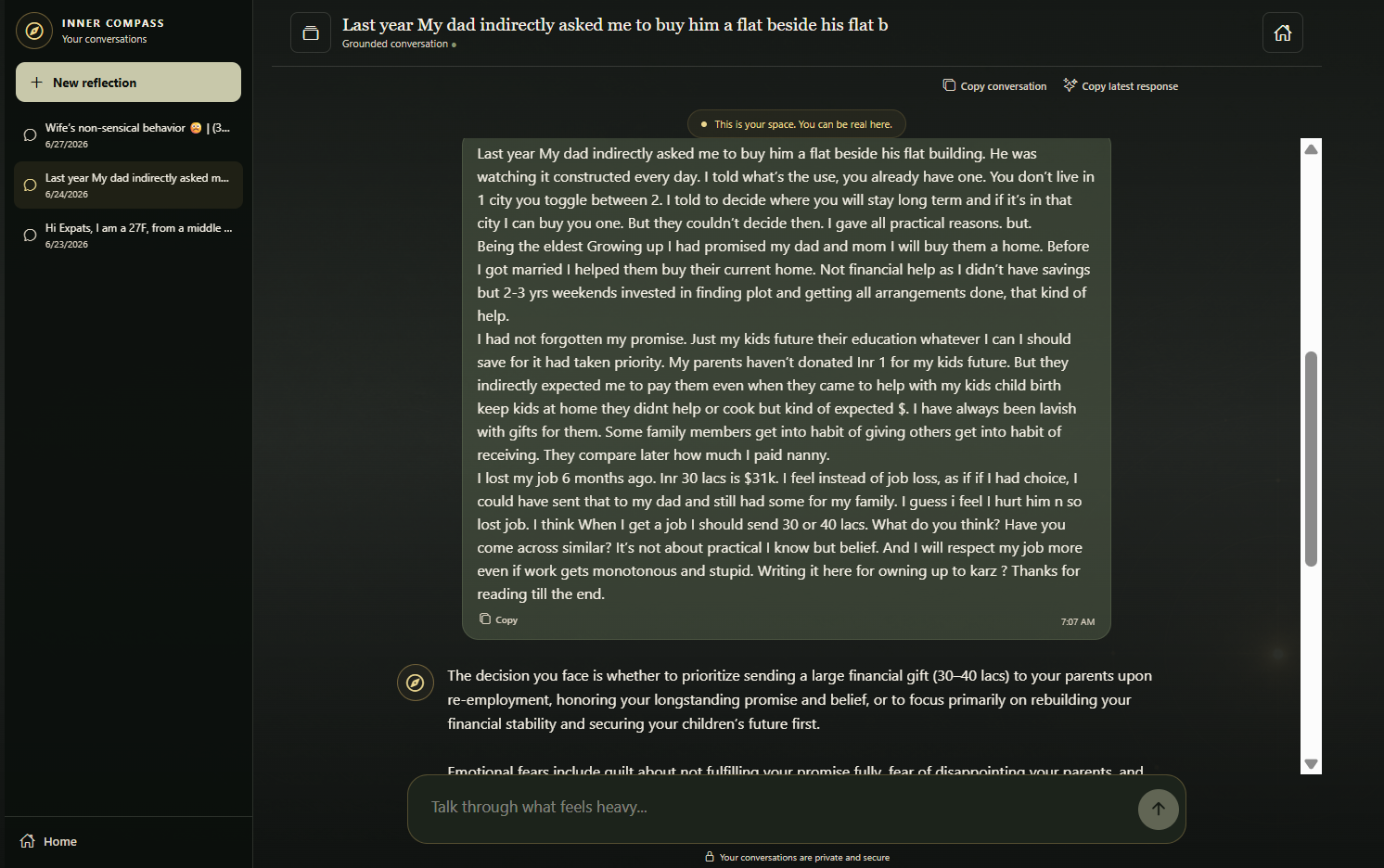
A user shares a difficult personal situation, and Inner Compass begins by recognizing the emotional burden before offering guidance.
-
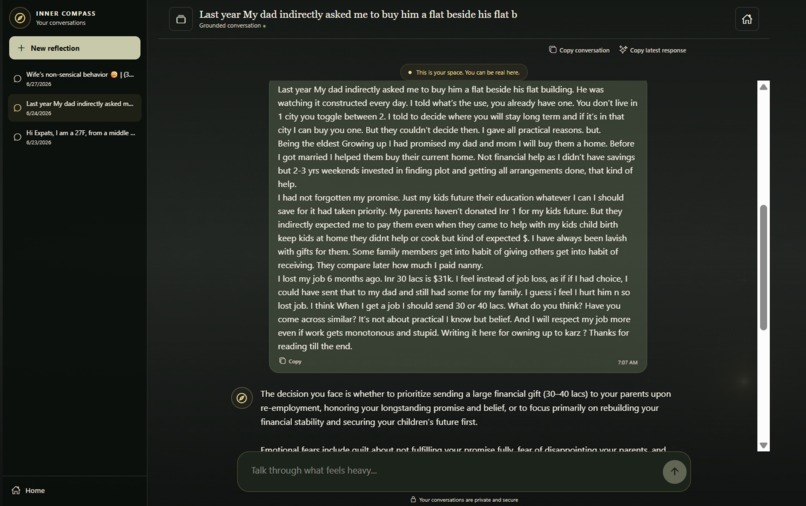
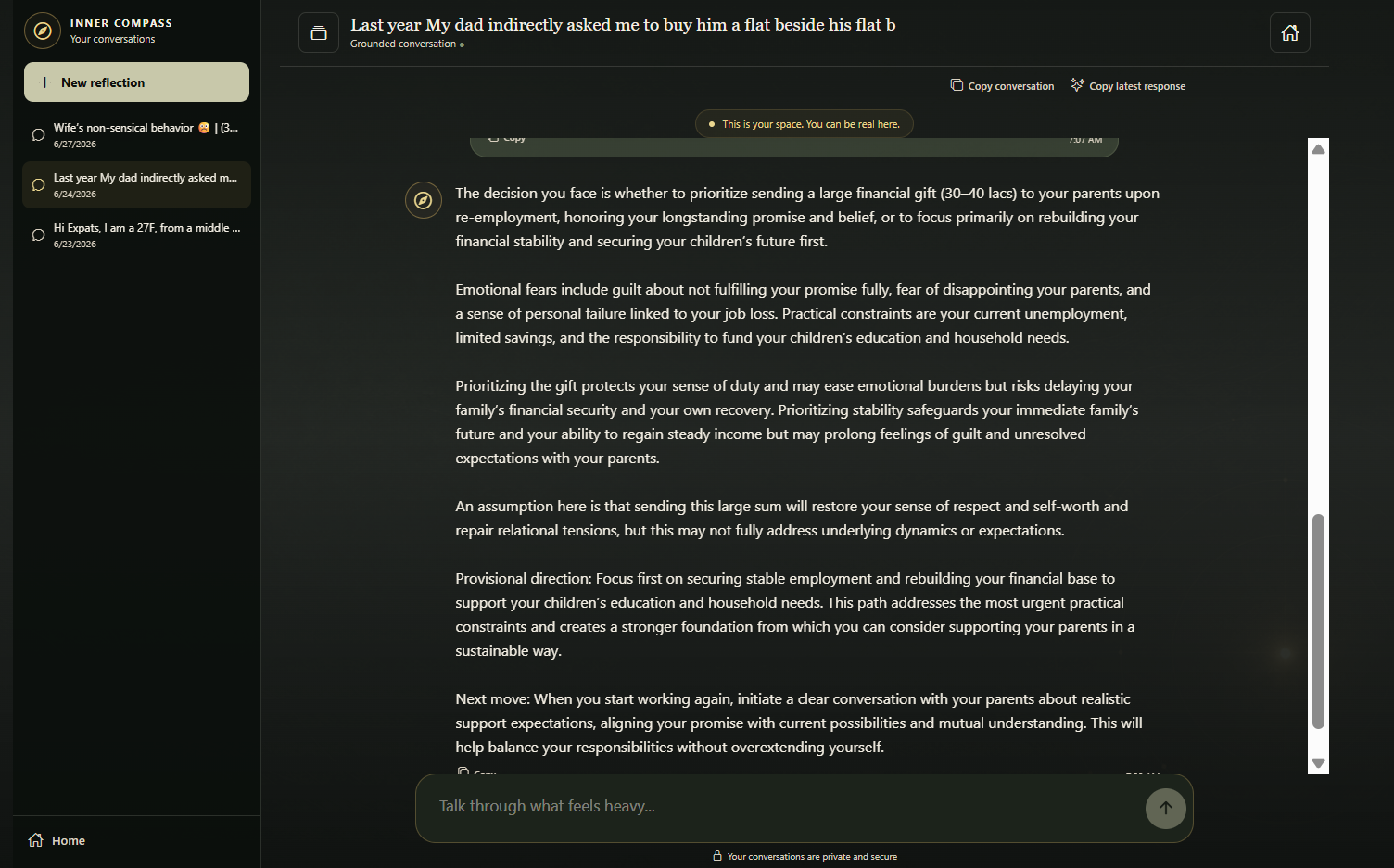
Inner Compass helps organize the situation by separating emotions, facts, assumptions, and competing priorities.
-
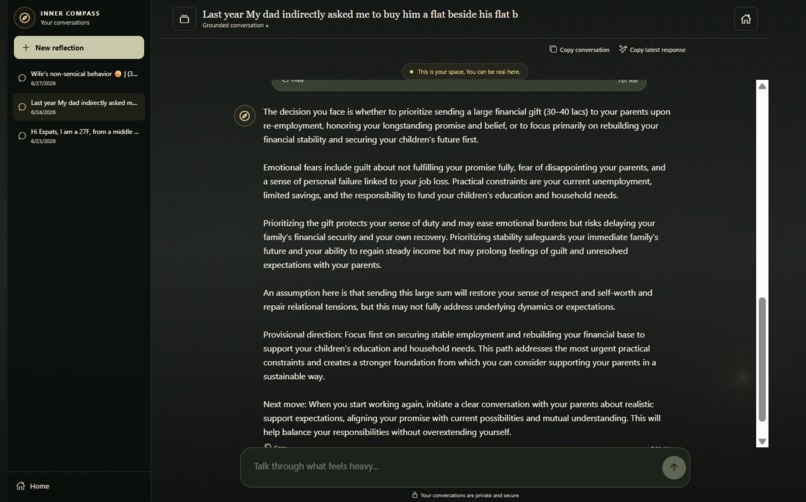
The conversation moves toward grounded clarity with practical next steps while leaving the final decision with the user.
-

Privacy and account settings that give users control over their personal information and experience.
-
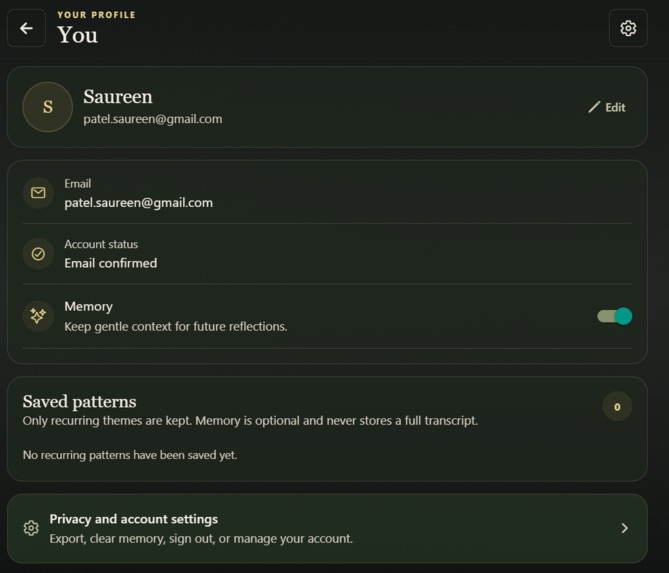
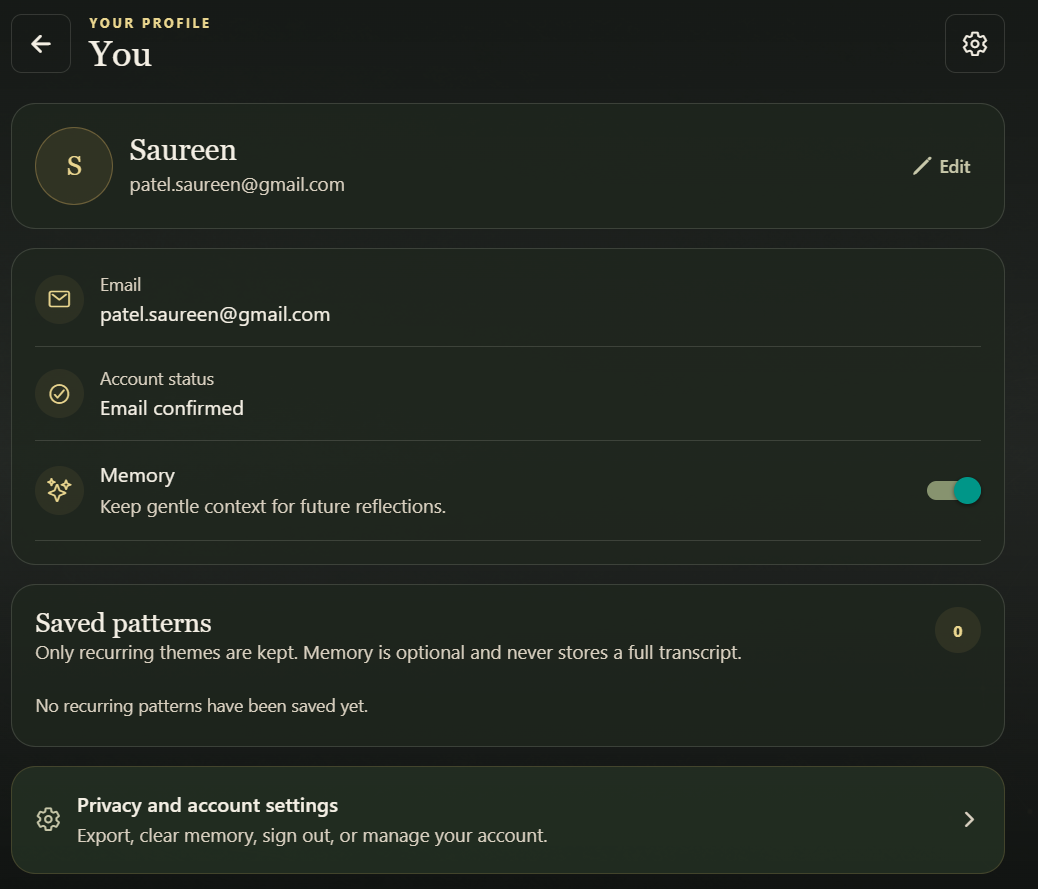
Profile page where users manage their account and personalize their Inner Compass experience.


Inner Compass
Inspiration
Every day, people face difficult decisions about relationships, careers, finances, family, health, and personal growth. While information is abundant, clarity is often missing. Existing AI tools are excellent at answering questions, but they rarely help people slow down, organize their thoughts, and make decisions they can truly stand behind.
Inner Compass was created to fill that gap.
Rather than replacing human judgment, it helps people think more clearly by combining emotional awareness with structured reasoning and practical next steps.
What it does
Inner Compass is an AI companion designed to guide people through life's difficult decisions.
Instead of overwhelming users with advice or generic motivational responses, it helps them:
- organize complex thoughts
- recognize emotional burdens influencing decisions
- separate facts from assumptions
- understand trade-offs
- identify practical next steps
- move from feeling overwhelmed to feeling clearer and more grounded
The goal is not to decide for the user—it is to help the user make better decisions for themselves.
How we built it
Inner Compass is built using:
- React Native with Expo
- Supabase Authentication
- Supabase Edge Functions
- OpenAI GPT models
- TypeScript
- Vercel
During OpenAI Build Week we focused on improving conversation quality instead of simply adding features.
Using Codex and GPT-5.6, we refined the conversation engine to:
- reduce repetitive response patterns
- improve emotional burden recognition
- better identify meaningful loss when appropriate
- produce more grounded insights
- improve conversation flow
- strengthen safety while keeping responses practical
The result is a calmer, more natural conversation experience.
Challenges
The biggest challenge was finding the balance between empathy and usefulness.
Responses that were too analytical felt cold, while responses that were overly emotional became generic or unrealistic.
Another challenge was avoiding repetitive response structures. Through iterative testing and evaluation with real conversation scenarios, we redesigned the response generation process to produce conversations that feel more natural while maintaining consistent safety boundaries.
What we learned
Building emotionally intelligent AI is less about generating longer responses and more about helping people feel understood without taking away their ability to choose.
We also learned that small prompt and evaluation improvements can significantly improve the overall conversation experience when paired with systematic testing.
What's next
Future development will focus on:
- richer long-term memory
- deeper personalization
- improved decision frameworks
- proactive reflection tools
- stronger privacy controls
- multilingual support
Our long-term vision is to build an AI companion that helps people navigate life's challenges with greater clarity, confidence, and emotional balance.
Built With
- artificialintelligence
- authentication
- codex
- expo.io
- gpt-5.6
- openai
- postgresql
- react-native
- supabaseedgefunction
- typescript
- vercel


Log in or sign up for Devpost to join the conversation.