-
-
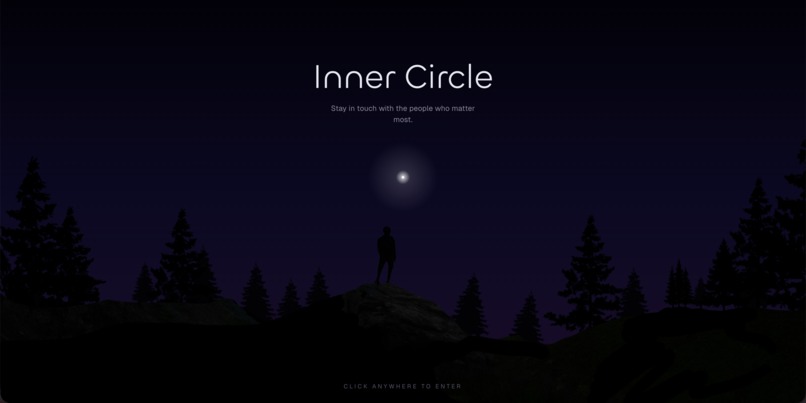
Onboarding view
-
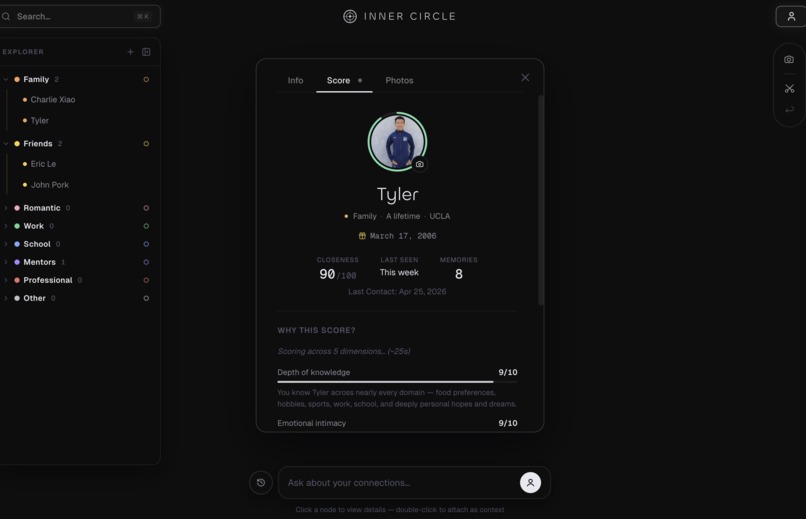
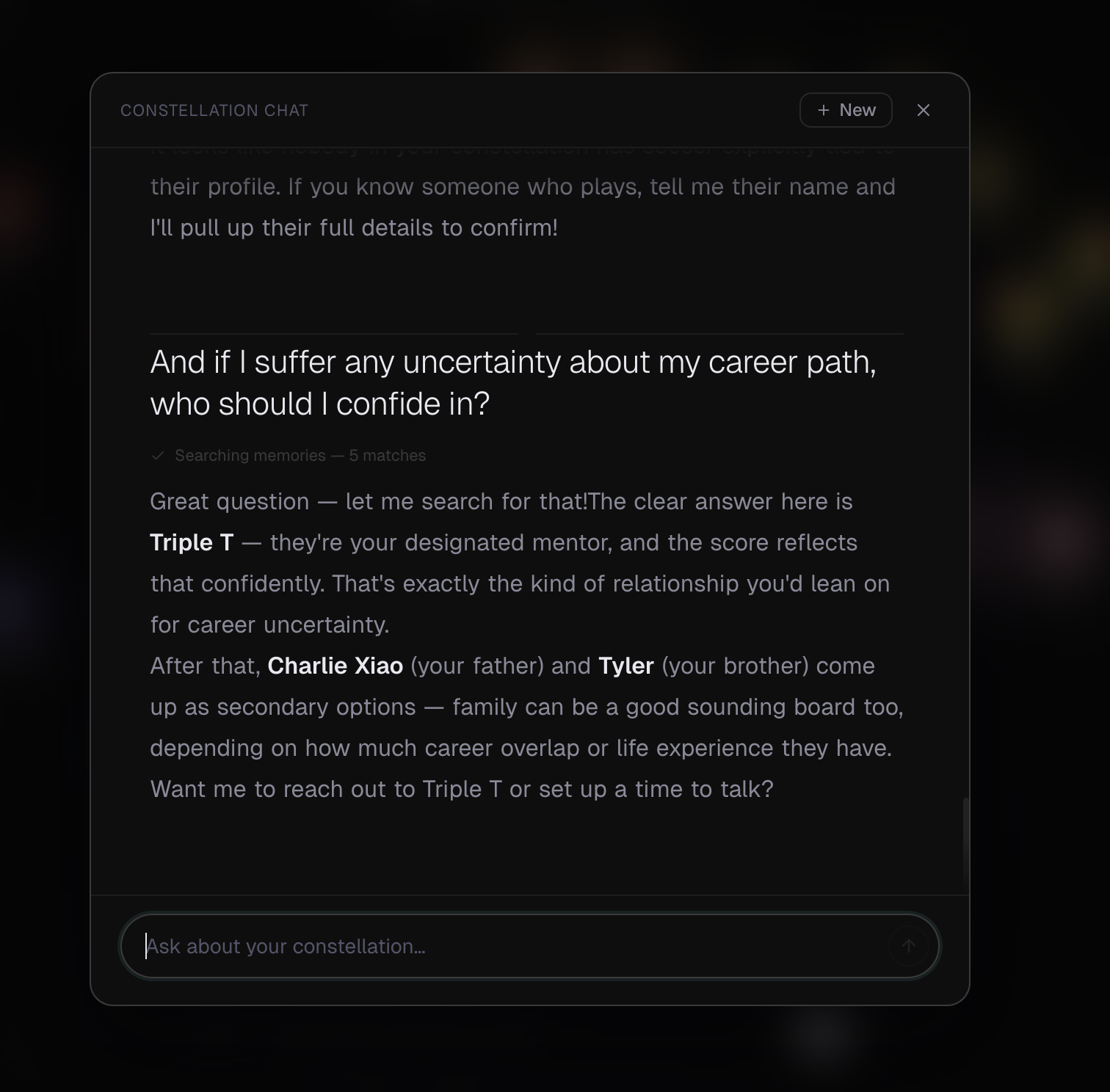
Person Closeness Scoring
-
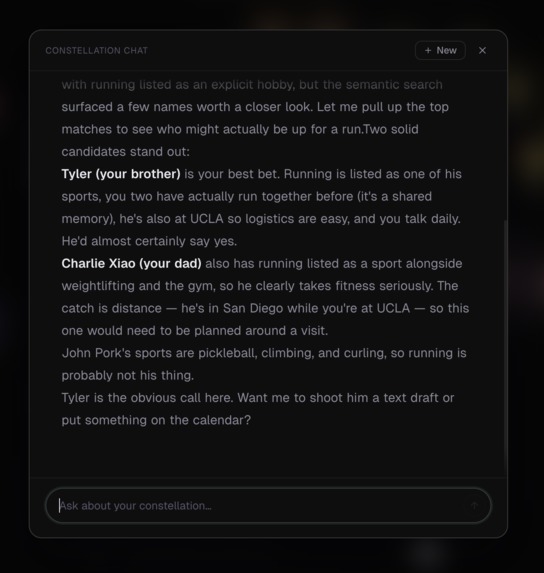
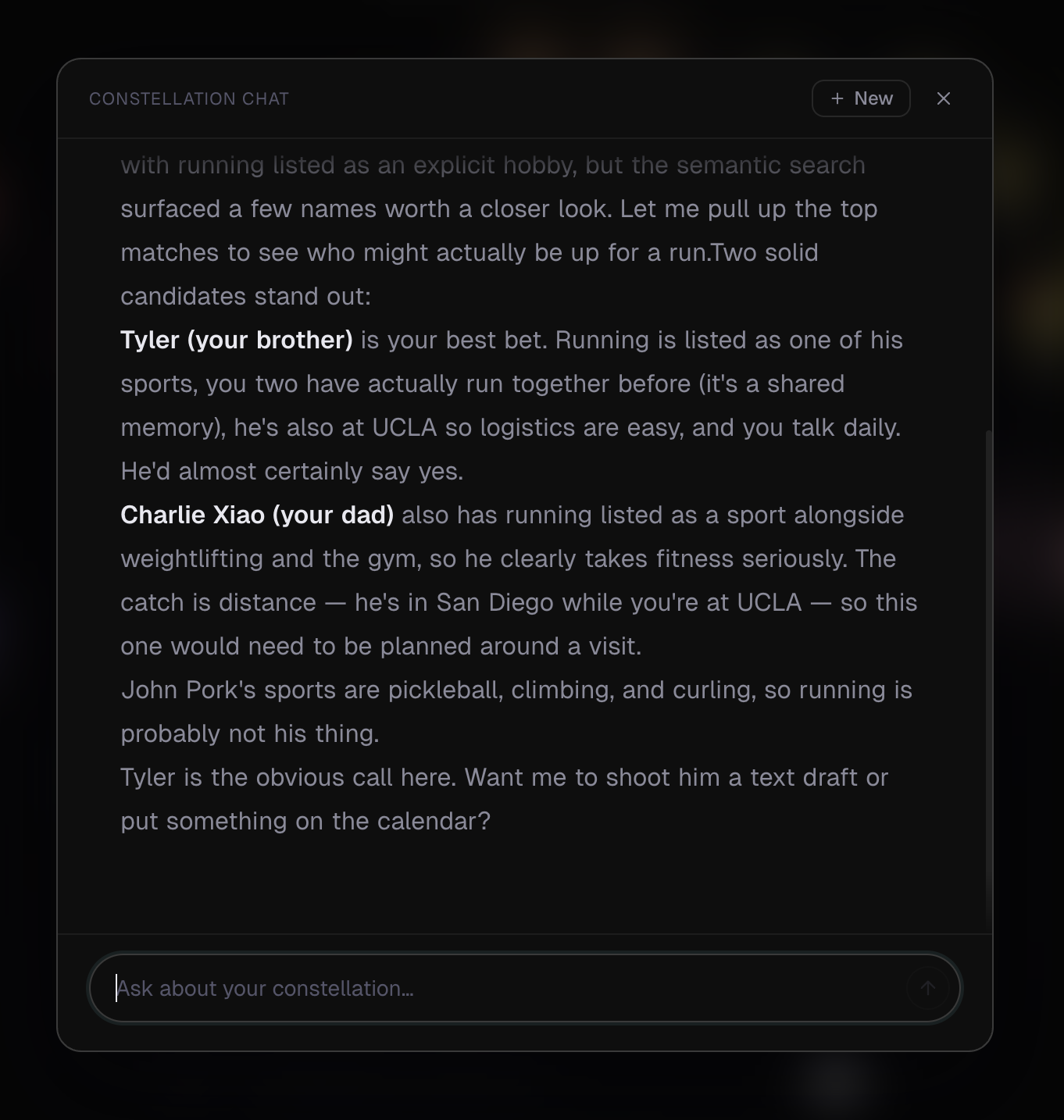
Semantic search agent
-
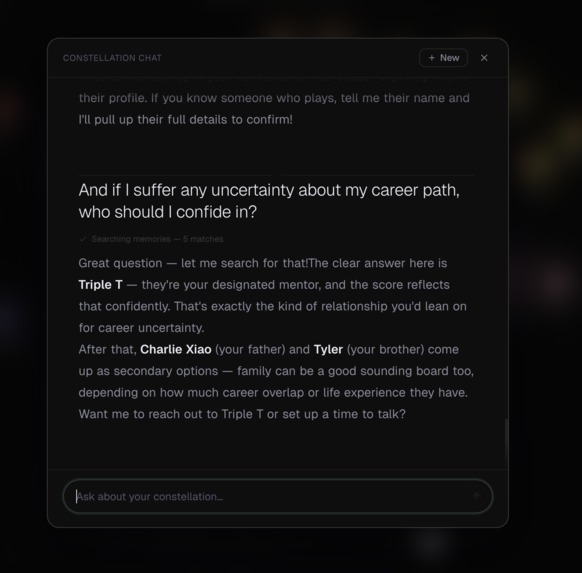
Search Agent Responses
-
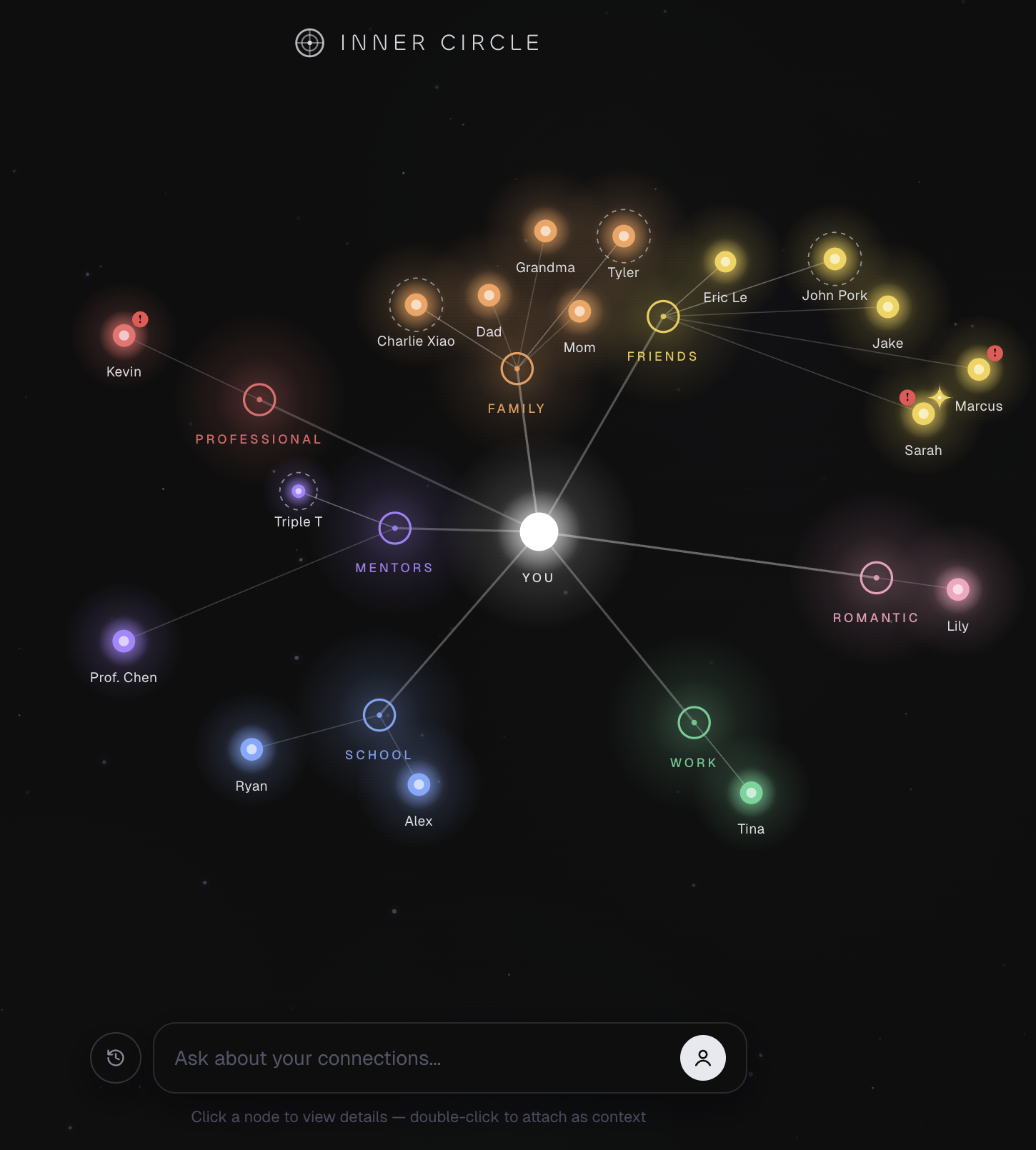
Network view
-
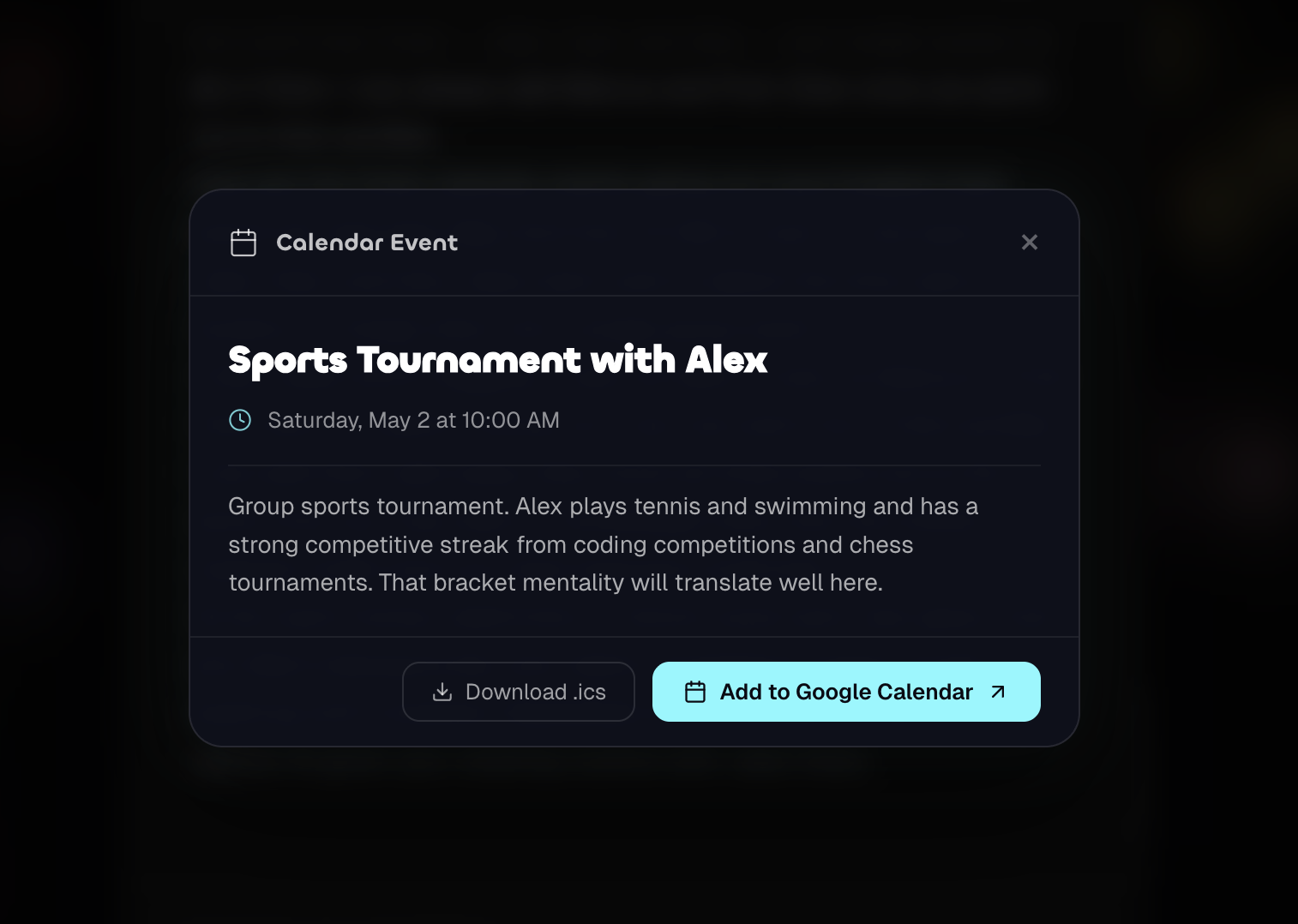
Agentic calendar scheduling
Inspiration
Good relationships are key to a happy, productive, and purposeful life. Managing old and new relationships is something that we can easily forget about amongst responsibilities and new environments. So our group developed a way to keep tabs on the status of your relationships with people you care about. No more forgetting birthdays, falling through with plans, or unintentionally burning your bridges. Inner Circle helps you stay connected to the people who care about you.
What it does
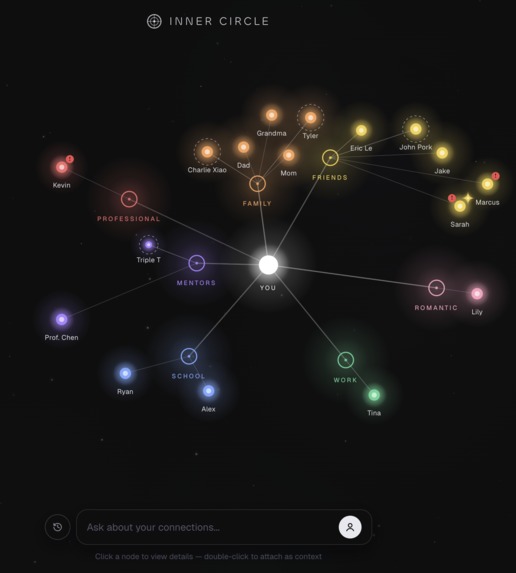
Inner Circle is an AI-native Relationship Management System that visualizes your social network as a dynamic star chart. Unlike a static CRM, it actively monitors the "pulse" of your connections—tracking birthdays, contact frequency, and emotional depth.
Dynamic Constellations: Your network is rendered as a physics-based graph where proximity represents relationship strength.
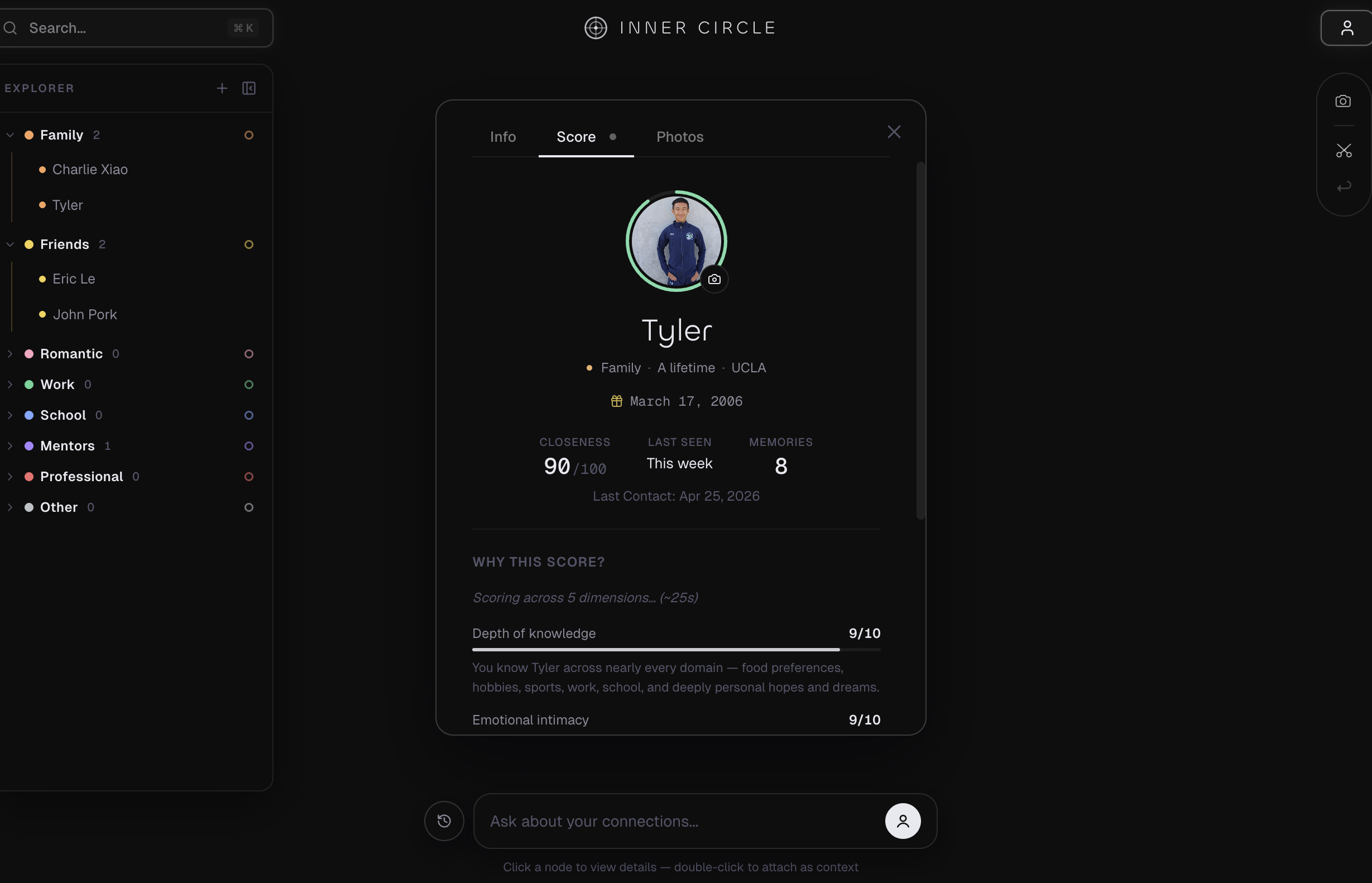
AI Pulse Checks: The system uses a sophisticated scoring pipeline to evaluate your relationships across five dimensions: depth of knowledge, emotional intimacy, recency/frequency, shared history, and reciprocity.
Context-Aware Chat: A built-in AI assistant acts as a "Social Co-pilot." It uses the data in your constellation to draft personalized emails, suggest meeting times based on shared interests, and even find "outdoorsy friends" via semantic search.
Automated Nudges: Receive daily notifications for birthdays or when a high-value relationship is "going cold" (stale for >30 days).
How we built it
We built Inner Circle with a heavy focus on reliable, agentic intelligence and a premium, dark-mode aesthetic.
The Scoring Pipeline: To ensure consistent qualitative analysis, we implemented a Self-Consistency pipeline. Every relationship is scored 3 times by Claude 4.6 Opus using Extended Thinking tokens. We then take the median score across 5 specific dimensions to eliminate LLM variance.
The RAG Engine: We utilized Voyage AI for high-performance embeddings. When you chat with the app, the agent can perform semantic search across your entire network. It doesn't just look for keywords; it understands the meaning behind "someone I met at a hackathon who likes machine learning."
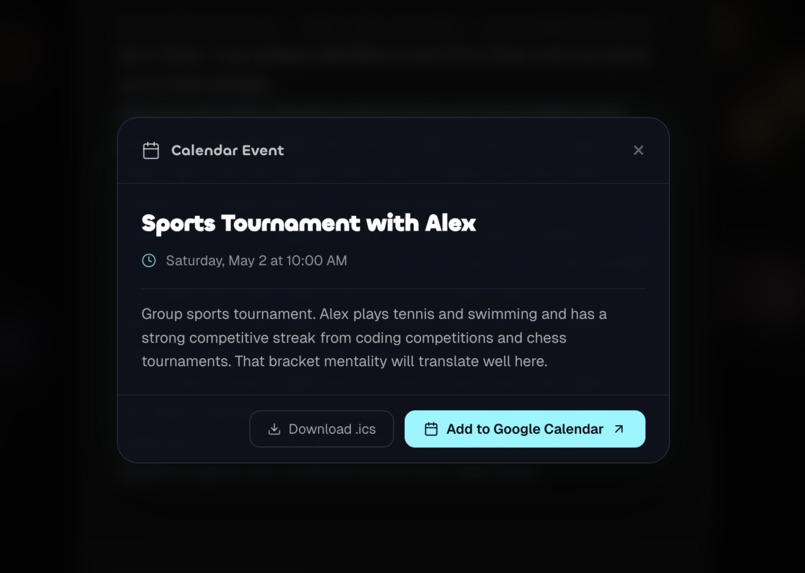
Context Injection: The Constellation UI isn't just for show. Users can "attach" nodes to the chat, which injects the full JSON context of those people into the agent's prompt, allowing for ultra-personalized Gmail drafting and Calendar scheduling.
Prompt Caching: To keep the system fast and cost-effective, we utilized Anthropic’s Ephemeral Caching. Our massive scoring rubric and anchor exemplars are cached server-side, reducing latency by ~90% for subsequent analysis.
Infrastructure: The app is a React/Vite frontend with a custom Node.js middleware layer. All AI calls are handled server-side to protect API keys, while data is persisted in Firebase Firestore.
Challenges we ran into
LLM Consistency: Qualitative scoring is notoriously "vibe-based" for LLMs. We spent days fine-tuning a rubric with anchor exemplars (calibrated at levels 2, 5, and 8) and implementing the median-vote strategy to make the AI as reliable as a human evaluator.
Data Density vs. UX: Visualizing nodes with varying metadata without overwhelming the user was a major hurdle. We solved this with a physics-based graph and "Lazy Loading" for the AI agent—it only pulls full details via tools when it actually needs them.
Image Management: Managing high-resolution avatars for every connection was solved by implementing a custom Cloudinary pipeline, ensuring fast, optimized delivery without bloating our database.
Accomplishments that we're proud of
Actionable Agents: We’re proud of moving beyond "just a chatbot." Our agent can generate ready-to-send Gmail drafts and Google Calendar invites that reference real shared memories, saving users the cognitive load of drafting.
Productivity Hacks: Features like Cmd+K navigation and the VS Code-style Explorer make managing people feel like a professional developer experience.
Visual Polish: Creating a premium "astronomical" feel with custom canvas animations and a bespoke design system.
What we learned
RAG improvements: We learned how to develop a multi-tool agent that handles both structured attribute filtering and fuzzy semantic search.
Prompt Engineering: We mastered the use of thinking tokens to resolve contradictory data signals (e.g., a "daily" contact frequency but "no interaction in a year").
Payload Management: Learned how to use structured JSON payloads to seamlessly transition from an AI conversation to a functional UI state (like an email editor or calendar card).
What's next for Inner Circle
Automatic Ingestion: Integrating with Gmail and LinkedIn APIs to automatically "score" relationships based on real interaction history.
Mobile Support: A dedicated mobile app for on-the-go "nudge" notifications and voice-based relationship updates.
Group Dynamics: Visualizing connections between nodes to help users identify bridge builders and social clusters in their network.


Log in or sign up for Devpost to join the conversation.