Inspiration
We were motivated by the increasing demand for secure and forgery-resistant authentication solutions in a more digital world. Old-school passwords and even mainstream biometrics such as fingerprints and facial recognition have become susceptible to phishing, spoofing, and deepfake attacks. At the same time, signatures and handwriting are extremely personal, legally recognized, and extremely hard to forge with accuracy — which makes them perfect for next-gen authentication.
What it does
With this project, we obtained hands-on experience in:
Behavioral biometrics, particularly handwriting and signature dynamics Machine learning for pattern recognition 3D modeling techniques for signature analysis How to couple hardware inputs (such as signature pads) with software systems Balancing security with usability in real-world applications
How we built it
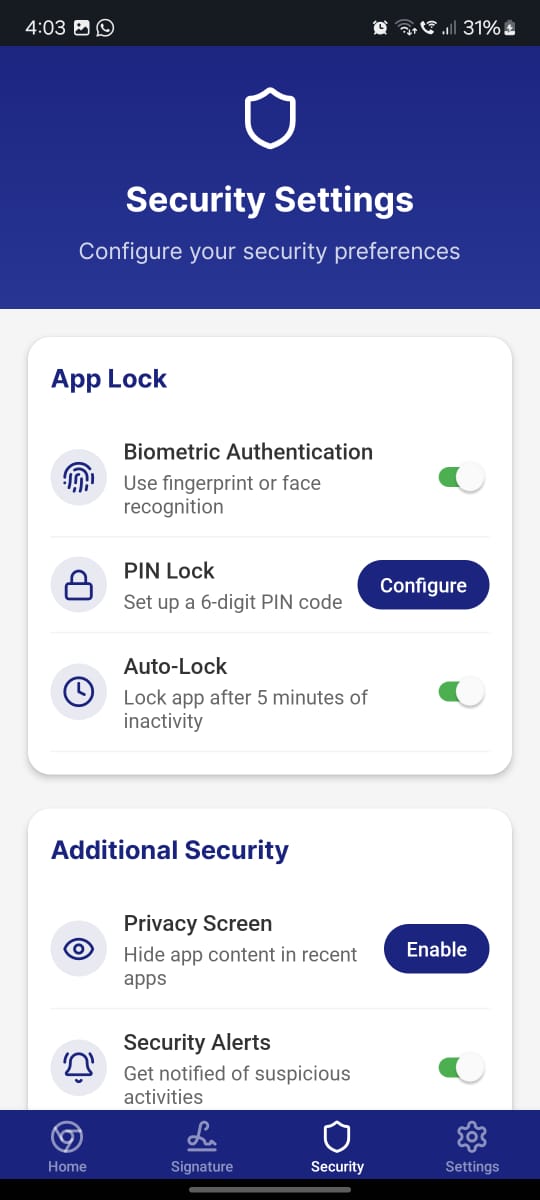
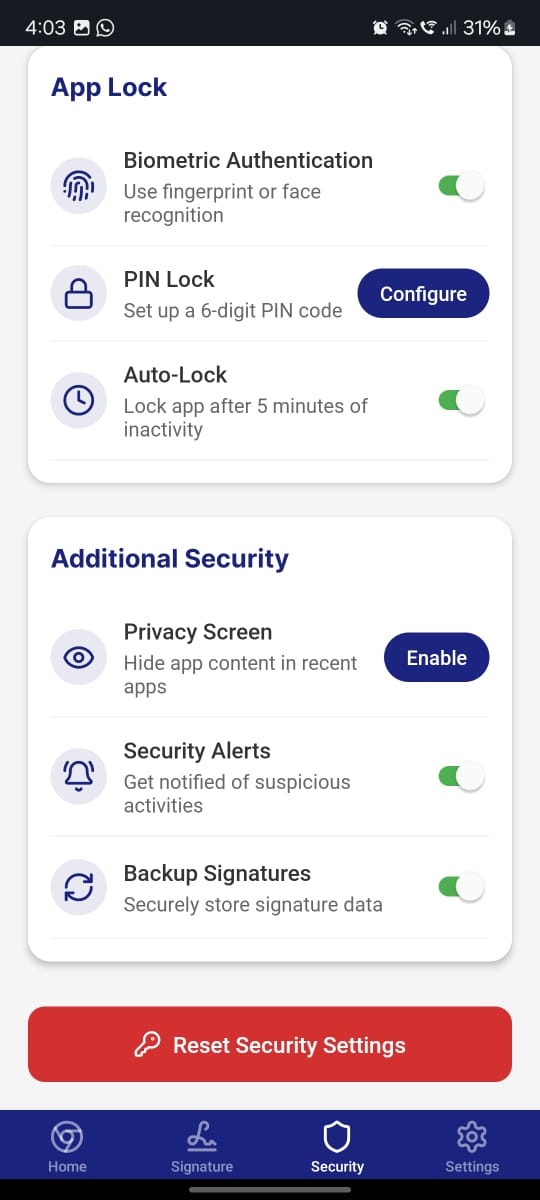
We built InkognitoSecure as a multi-layered authentication system:
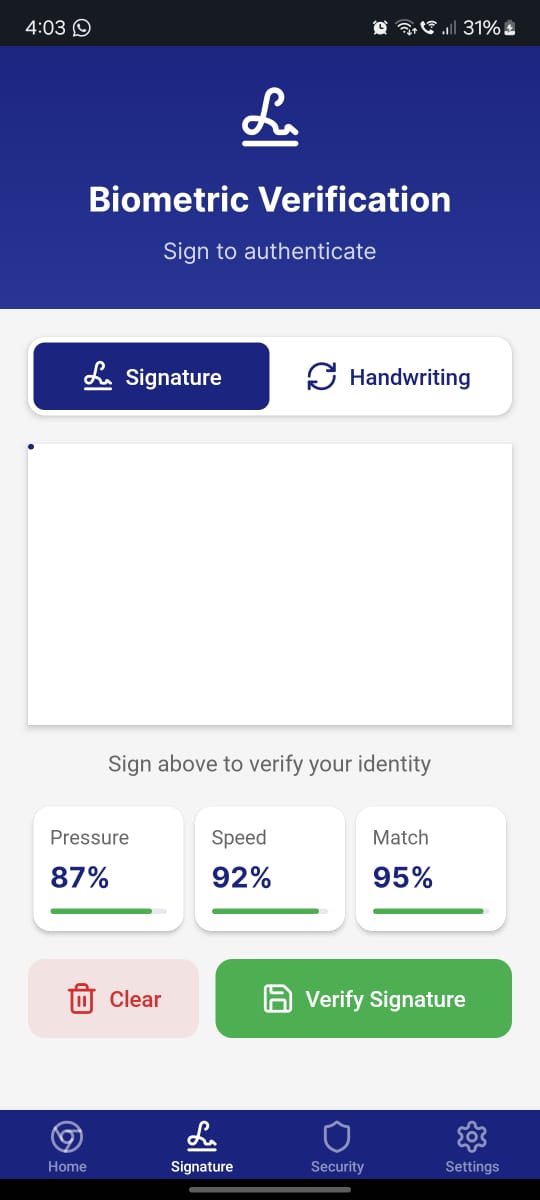
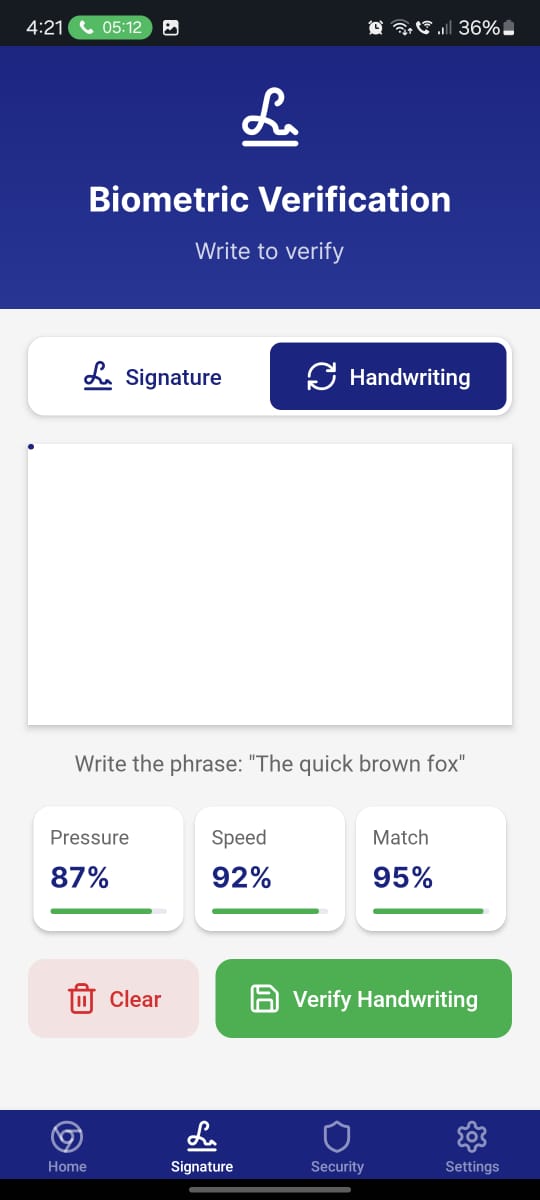
Users enter handwritten passwords on a touchscreen. Signatures are recorded using both an in-app interface and external hardware. The system translates signatures into 3D models, examines stroke pressure and layering, and employs dynamic time warping (DTW) to match handwriting stroke patterns with saved data. A decision engine aggregates the outcomes for a conclusive authentication decision.
Challenges we ran into
Dealing with handwriting speed, pressure, and angle variations.
Emulating 3D signature layering without the use of high-end forensic equipment.
Making the system remain user-friendly when incorporating intricate verification logic.
Designing a secure matching algorithm that reduced both false positives and false negatives.
In spite of these difficulties, the process allowed us to create a strong, forgery-proof system that fills the gap between technology, usability, and trust.
Accomplishments that we're proud of
Successfully built a working prototype that captures and verifies handwritten passwords and signatures using both touchscreen and external devices.
Integrated 3D signature analysis to detect forgeries through stroke layering and pressure mapping.
Implemented Dynamic Time Warping (DTW) for accurate stroke-based handwriting verification.
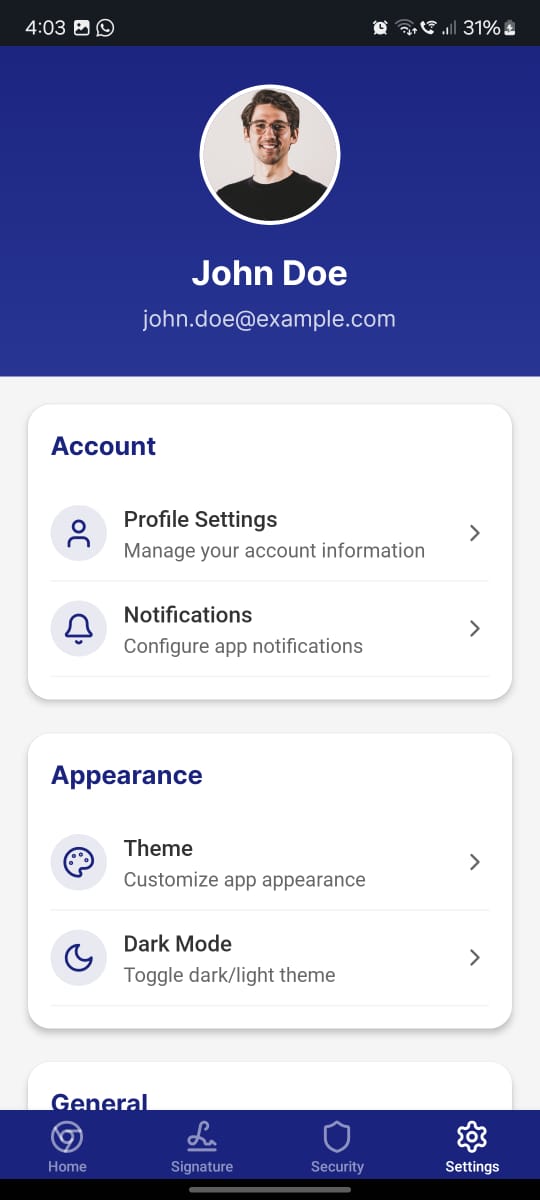
Developed a user-friendly UI while maintaining high security standards.
Achieved a strong balance between security, usability, and real-world applicability in sectors like education and law.
What we learned
Deep understanding of behavioral biometrics and how subtle features like stroke pressure and sequence can act as identity markers.
Practical experience with machine learning techniques for pattern recognition and biometric comparison.
How to work with multi-modal inputs (touchscreen, signature pads) and synchronize them with a centralized authentication engine.
The importance of user experience in security systems — security should be strong, but also seamless.
What's next for InkognitoSecure
Expand dataset for more robust model training and improved accuracy.
Integrate with educational platforms to verify handwritten assignments and exam scripts.
Collaborate with legal and fintech sectors for secure signature-based document validation.
Explore mobile hardware integration (stylus pressure sensors, tablets) for more detailed input.
Add real-time forgery detection feedback and confidence scoring for forensic analysis.

Log in or sign up for Devpost to join the conversation.