-
-

app icon
-
poster
-
screenshot

Inspiration
As a 13-year-old student, I spend a lot of time learning from notes, diagrams, equations, and explanations, and I kept noticing how much harder some ideas are to understand when everything is static.
A pendulum is easier to understand when you can actually see it swing. A graph makes more sense when you can move a variable and watch it change. And when you make a mistake in a solution, seeing exactly where your reasoning went wrong can be much more useful than just being shown the final answer.
Most AI tools also pull you away from your notes into a chat box, so I wanted to try the opposite idea:
What if the page itself could think, move, and react?
That became InkMind.
What it does
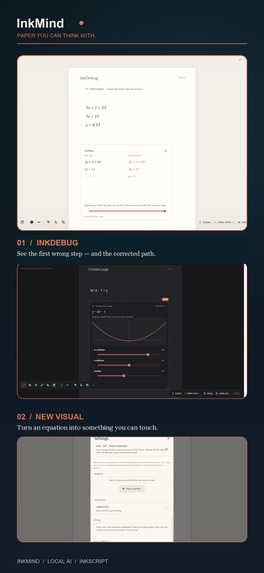
InkMind is a local-first handwritten notebook where you can animate your original ink, change simulations with handwritten modifiers, debug your reasoning, turn equations into interactive visuals, explain selected notes, and generate quizzes directly on the page.
How I built it
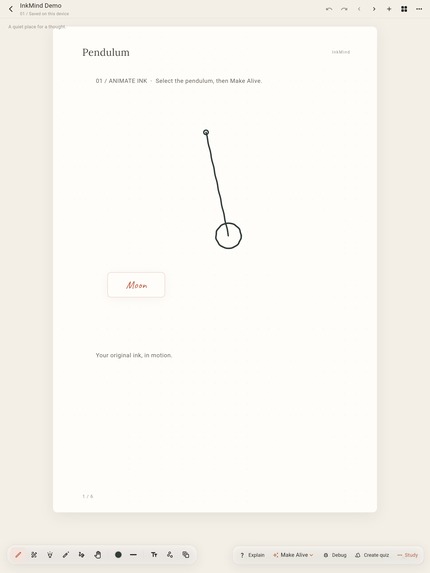
I built InkMind with Flutter and Dart. Handwriting is stored as editable vector strokes with timing data, which powers Animate Ink and InkDebug. Interactive visuals are generated through InkScript, a constrained language that is parsed, validated, and rendered by InkMind's deterministic runtime. RevenueCat manages InkMind Pro subscriptions and entitlements.
Challenges I ran into
The hardest parts were making animations preserve the user's exact original strokes, keeping local AI fast enough on limited hardware, and deciding what should be handled by AI versus deterministic code. I also had to make generated visuals safe and reliable instead of simply running arbitrary model-generated code.
Accomplishments that I’m proud of
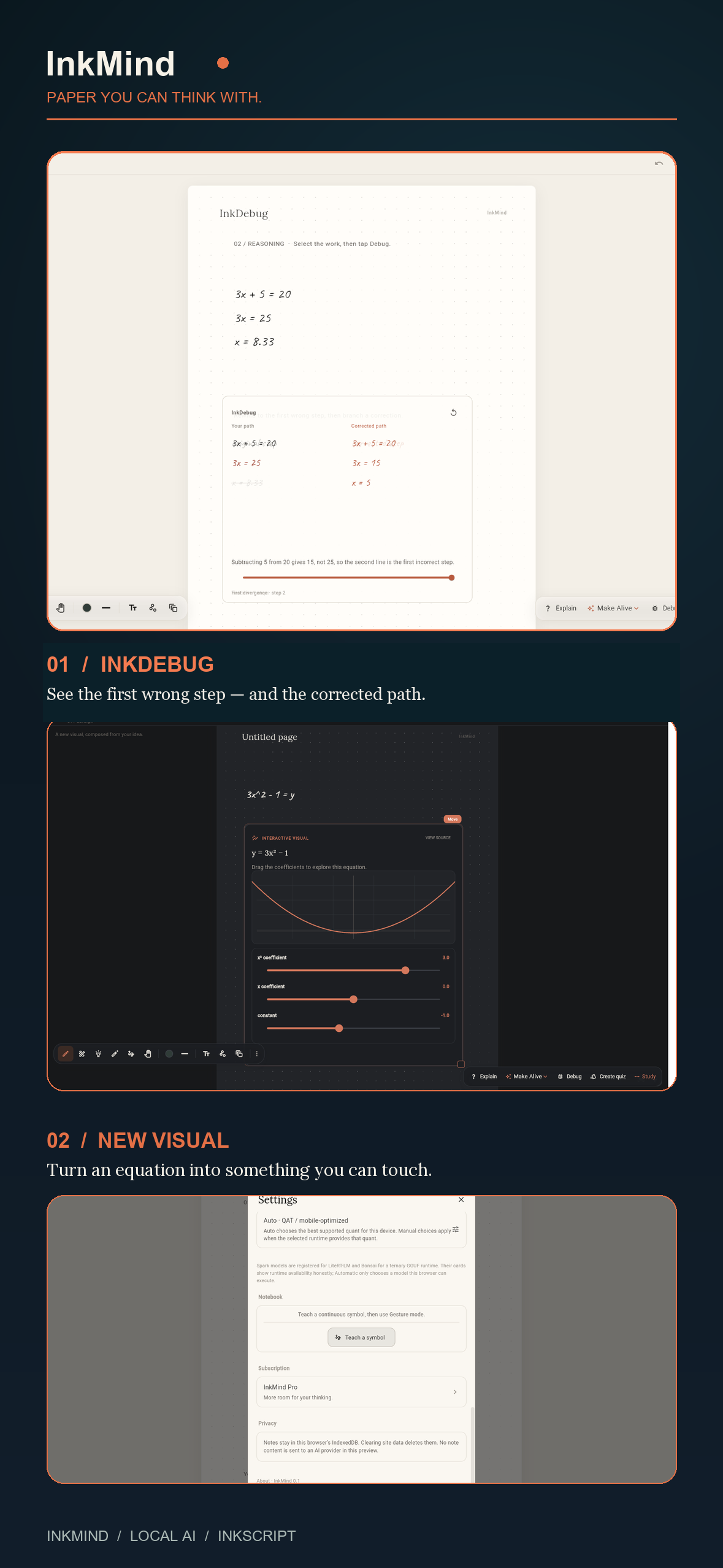
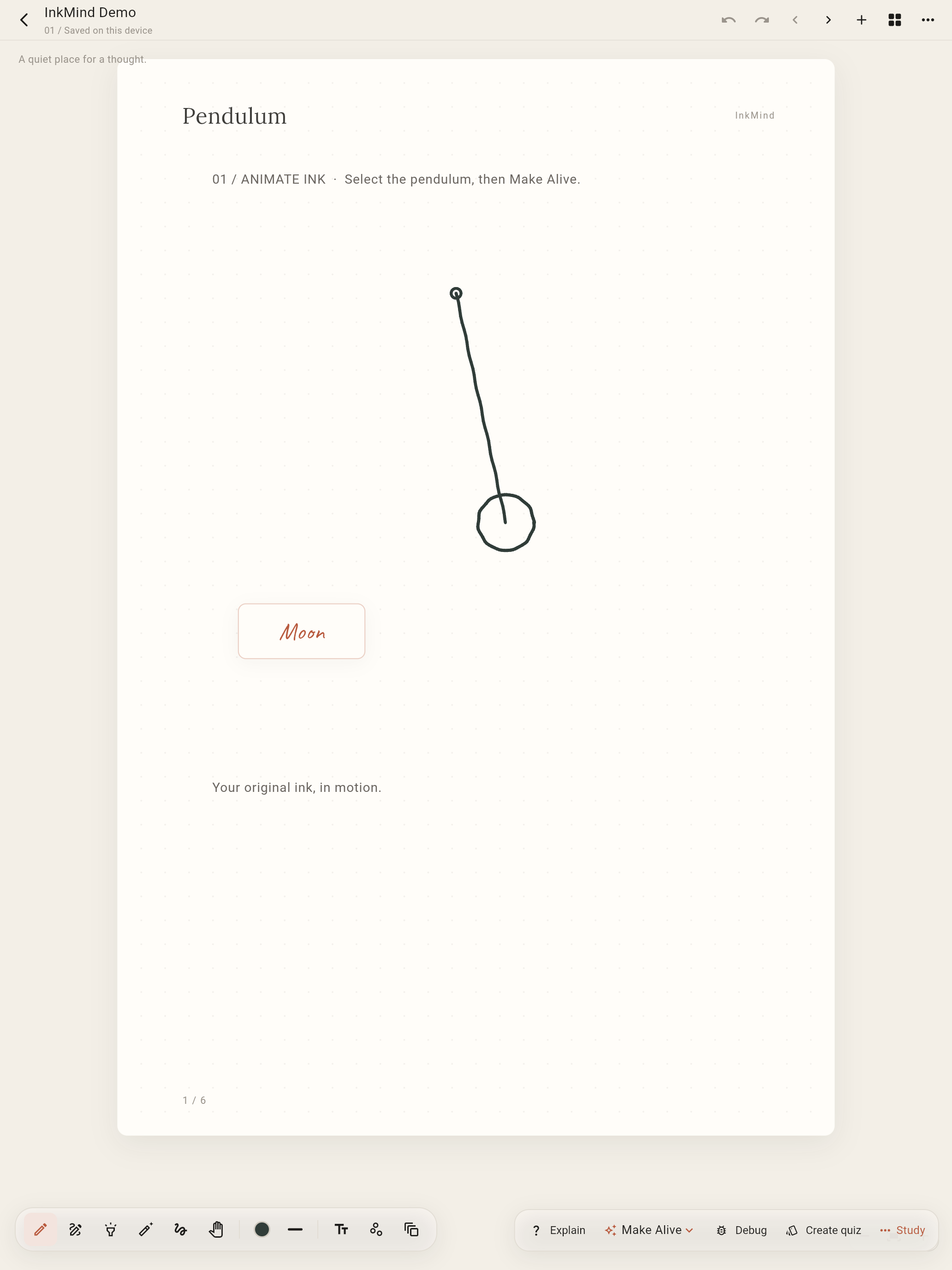
I’m especially proud of Animate Ink, InkMatter, and InkDebug. A hand-drawn pendulum can actually swing, writing "Moon" can change its gravity, and InkDebug can rewind handwritten work to the point where the reasoning went wrong.
What I learned
I learned a lot about Flutter rendering, vector graphics, physics, local AI inference, model routing, structured generation, and RevenueCat. The biggest lesson was that a smaller AI model can become much more useful when it is supported by strong deterministic tools.
What's next for InkMind
Next, I want to expand InkDebug beyond basic math, add more Animate Ink behaviors and simulations, improve local-model performance, and make InkMind an even more capable tablet-first notebook where handwriting becomes interactive computation.
Built With
- dart
- flutter
- localai
- revenuecat


Log in or sign up for Devpost to join the conversation.