-
-
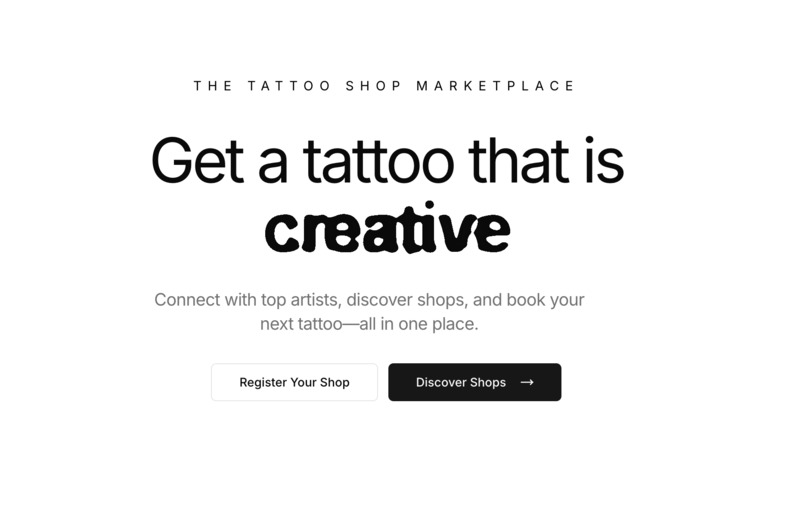
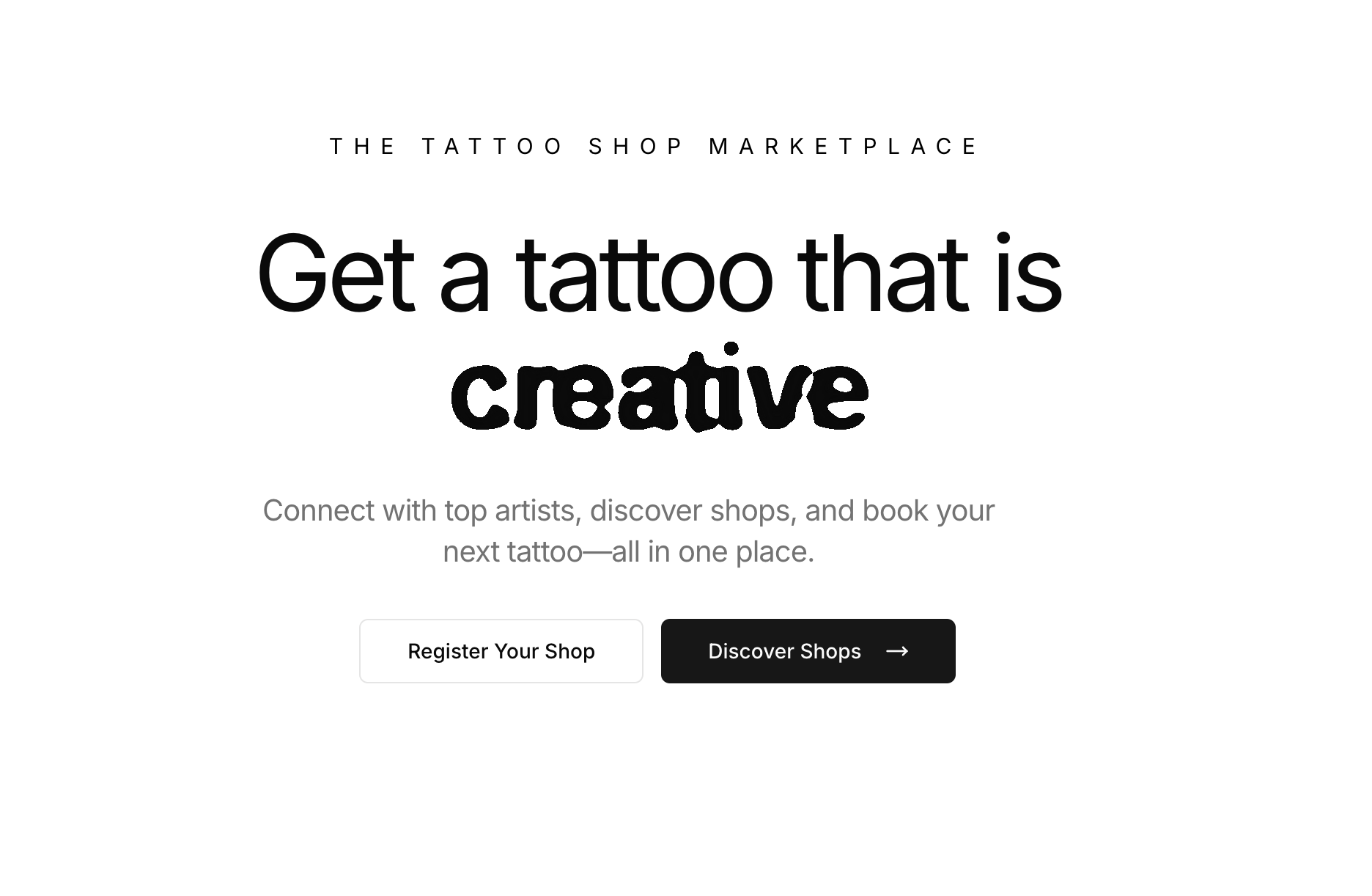
landing page hero
-
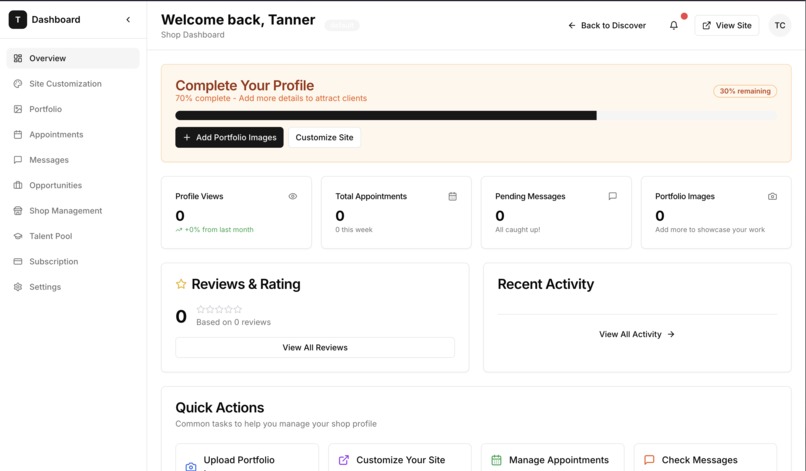
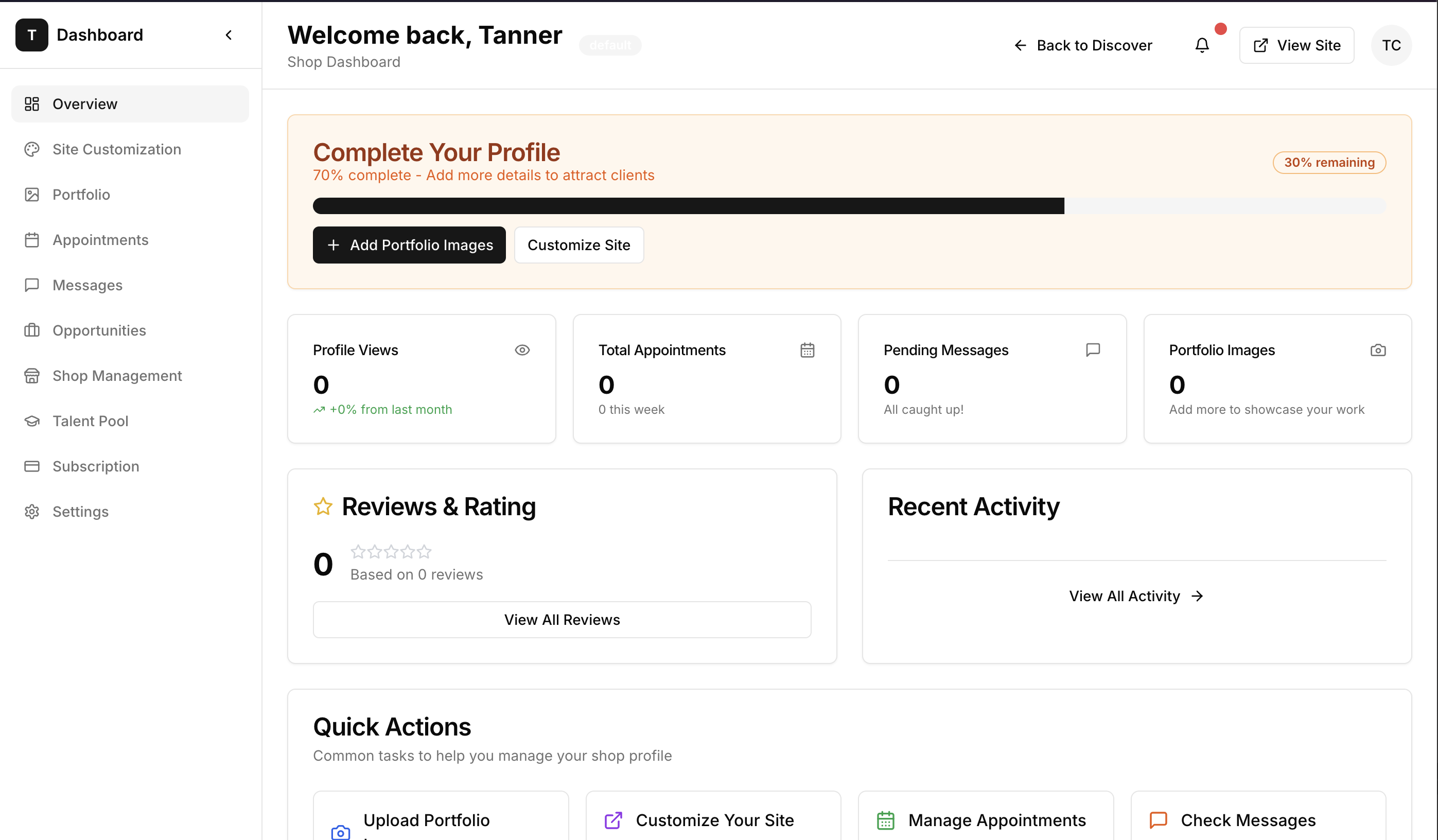
dashboard
Inspiration
This idea is a subsection of a larger idea. Ink'd Market is a central marketplace for tattoo shops. I also bought the domain and began planning "Linked Market", where each category of service provider will be a subdomain (i.e. ink.linkedmarket.com; law. ; therapy. ; etc)
The inspiration is two fold. As a consumer, I find it tedious doing mass google searches to analyze my options and trust mostly the word of the service provider. Plus it's a scoped view based on SEO so you could be missing out on your perfect fit. Yes, sites like yelp exists but it has it's own problems like a review filtering algorithm that seems to have a bias for negative reviews and a list of other complaints from the business front that deter business owners from even putting their business on yelp to begin with. so again, you're missing out on the perfect match. The second fold, from the freelance web developer front, I hate ugly websites and I can't reach every business in the world. I also learned recently from my last tattoo artist that they paid way too much just to have their website built and are still paying way too much to keep it up and running. I'd like to see a world where every service provider has a modern, attractive website at a reasonable subscription fee.
What it does
A few things. It brings a category of service providers together under one roof for easy exploration. Like a food hall for services. It also makes it very simple and straight forward for anyone to have a custom and professional looking "website" up in a matter of minutes. I put that in quotes because, at least for now, they won't be getting their own domain, the site will be nested in the platform at a custom slug (shop-name-city-st) that they can share just as easily as they would a url to their own site. These sites are prebuilt templates that can be customized in simple ways, like color palette, fonts, etc. Squarespace and other web builders make it easy but it's still time consuming and you still need to know a little about design to make it look good. There's a reason people like me still get hired to build shopify stores and brochure business sites.
A normal visitor account is straight forward, you can browse shops on the discover page, bookmark favorites, view artists, message the store or the artist, request consultations and book appointments.
Artists accounts come in two flavors, Apprentice or Professional. Apprentice accounts are invisible to the public. These accounts are for new artists (like my cousin for example) to build their portfolio and be seen by shops. The talent pool feature is still in development but will provide a new way for aspiring artists to find new apprenticeships (something that is a common struggle). The Professional artist account can opt to be Shop Affiliated, Independent/Freelance, or both. A shop artist account will not be visible in the discover page, it's a free account for managing a portfolio, availability, managing appointments, etc. The account gets connected to the store they work at. This type of account is not required for the shop to add a "static" version of the artist to their shop, it just makes it easy on the shop (less manual input of data and updating info or adding images) and gives the artist control over their gallery and information. The portfolio will automatically sync to the shop gallery. Independent artists will be seen on discover for the same price as the base tier shop account.
Shop accounts can manage artists, appointments, messages, website design/content and more.
How we built it
I initiated the project in Bolt.new to round out the base architecture and supabase schemas. Then I took it local to hone in on each specific feature.
Challenges we ran into
At some point some wires got crossed with supabase and I had a difficult time trying to figure out why things weren't playing nice. I also had a great template system for shop websites but forgot to create a new branch before experimenting and I broke it, I had to scrap the feature and start fresh. I challenged myself to rely on AI as much as possible for the project which did have it's challenges, such as how to get the expected outcome for a complex task.
Accomplishments that we're proud of
The website templating is quite nice and the "websites" feel quite authentic. I also really like the overall UI and user experience.
What we learned
Having spent my career using noSQL options, supabase was a fun new thing to learn. I also learned a good bit about AI prompting and achieving specific results.
What's next for Inked Market
I want to potentially add some social features, like live events, flash sales, design competitions, etc. I also want to add a "cost analysis" tool where users can upload a photo of their design, place it on a body in the position and size they want and then based on the given shops stored input it will calculate an estimated price based on time, complexity, etc.
Test user: [email protected] Inkedmarketdemo1!
Built With
- next.js
- supabase
- typescript

Log in or sign up for Devpost to join the conversation.