-
-
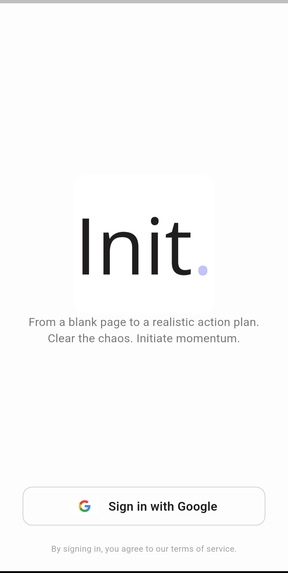
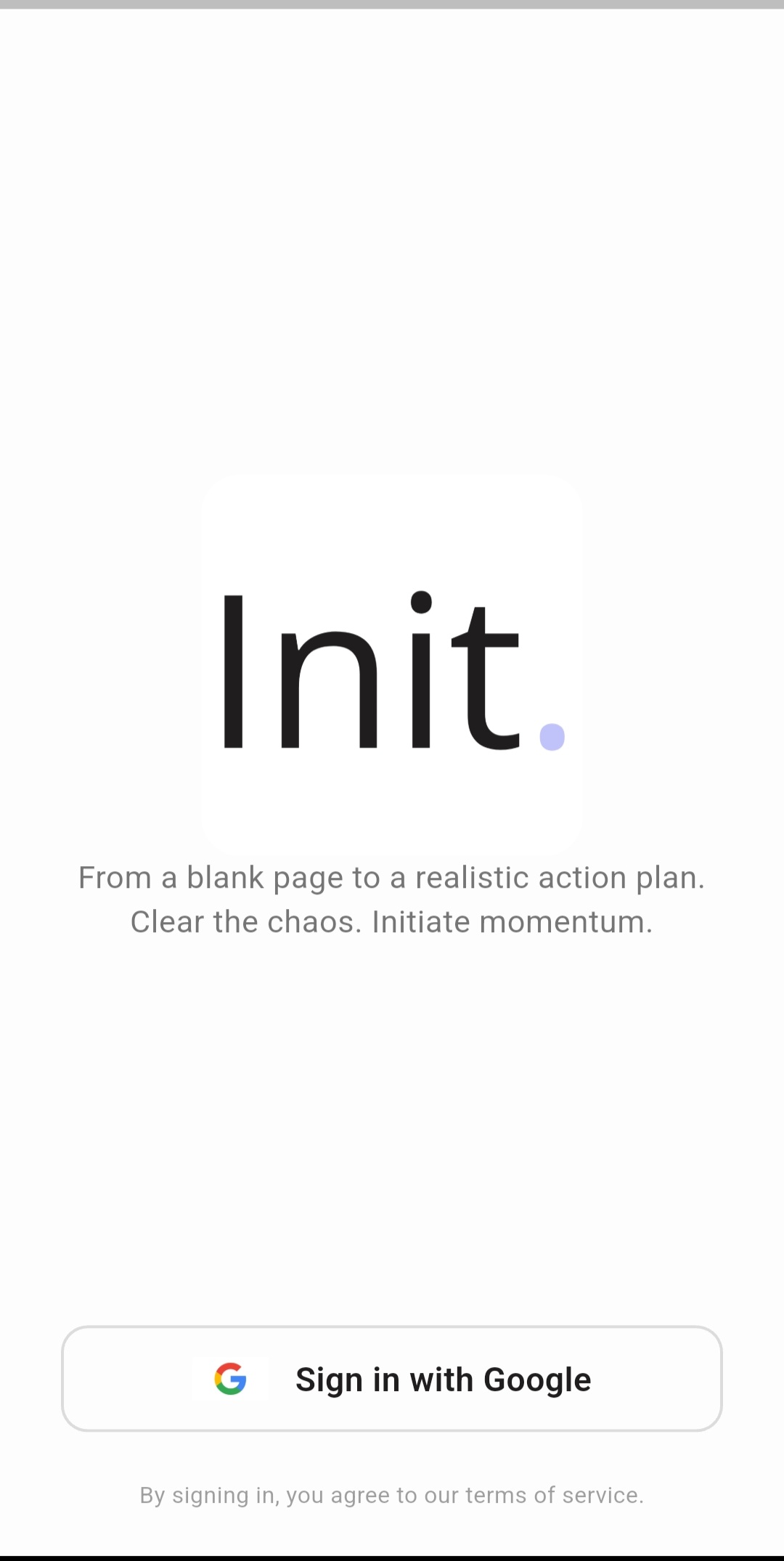
Login/welcome screen: Users sign in to access their personalized blueprint generator and get started.
-
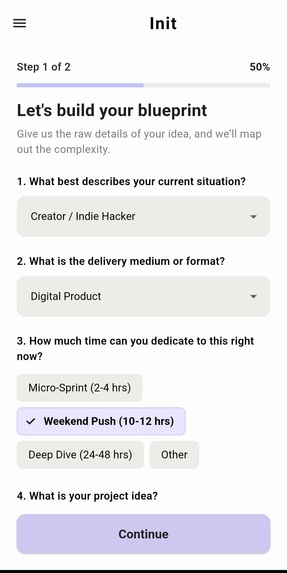
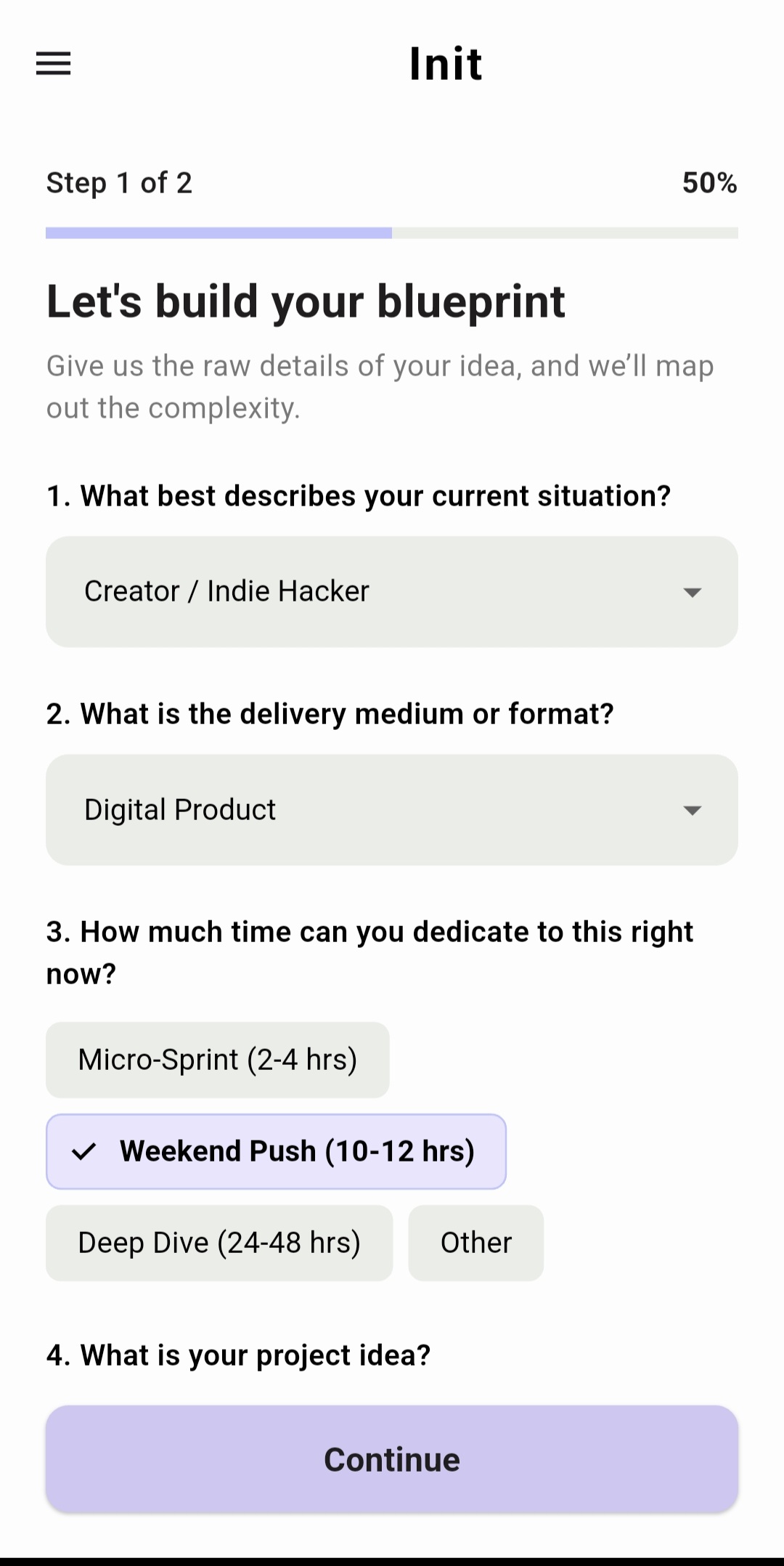
Input Page 1: Your background, project type, available time, idea, and target audience.
-
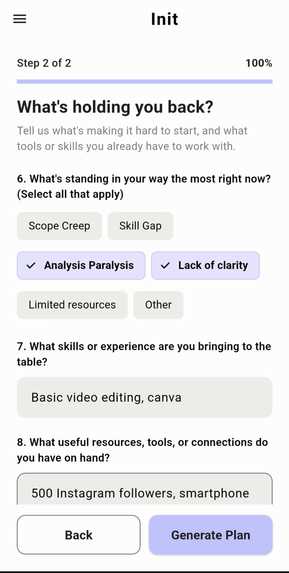
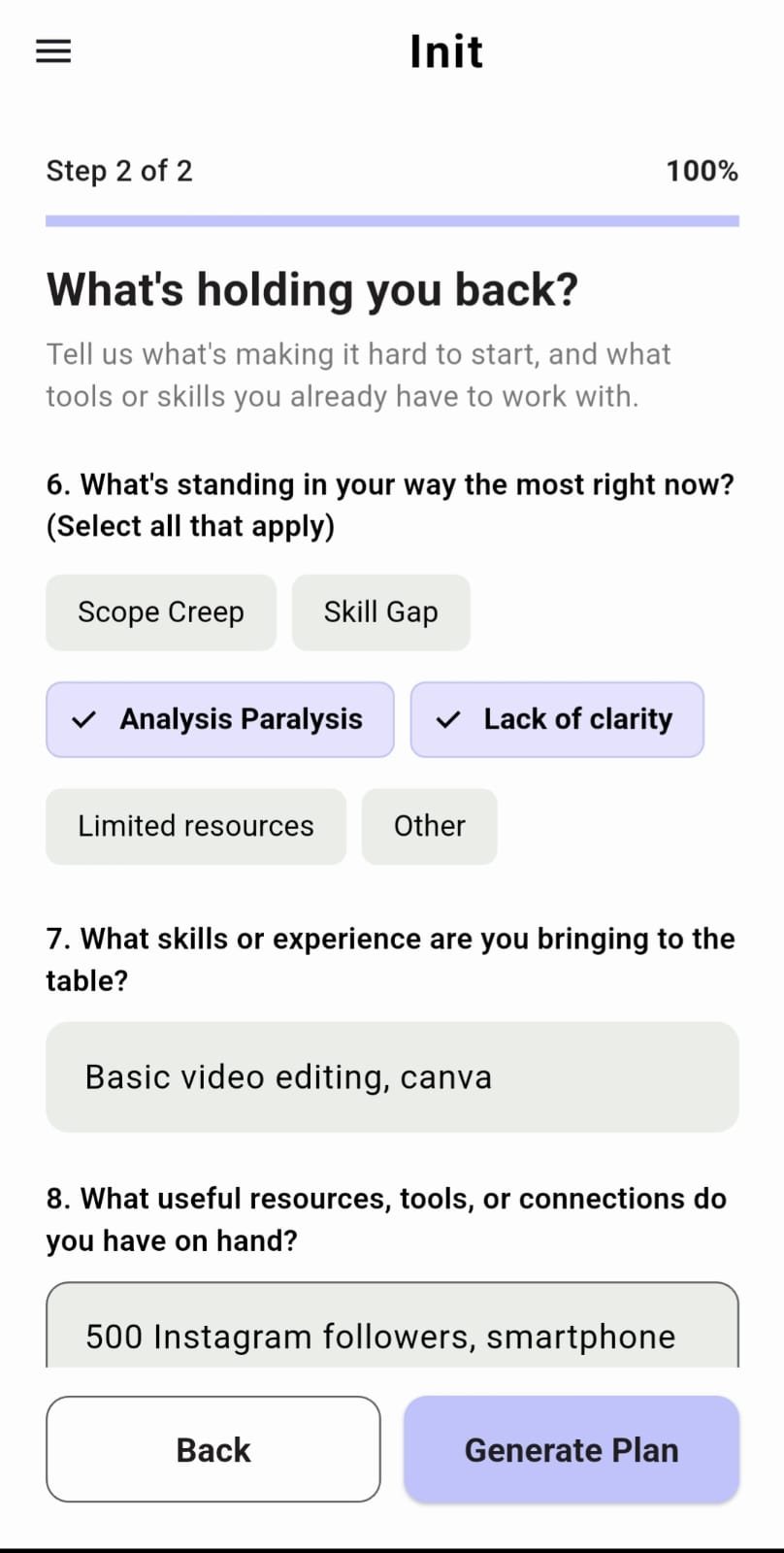
Input Page 2: Your blockers, skills, and resources — what makes the output personalized.
-
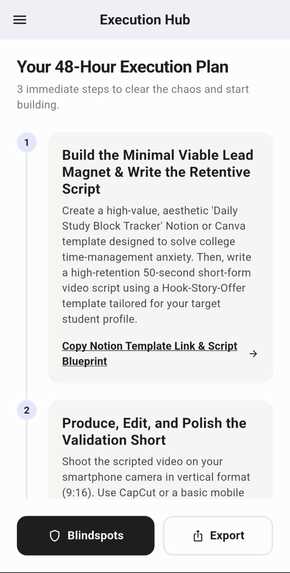
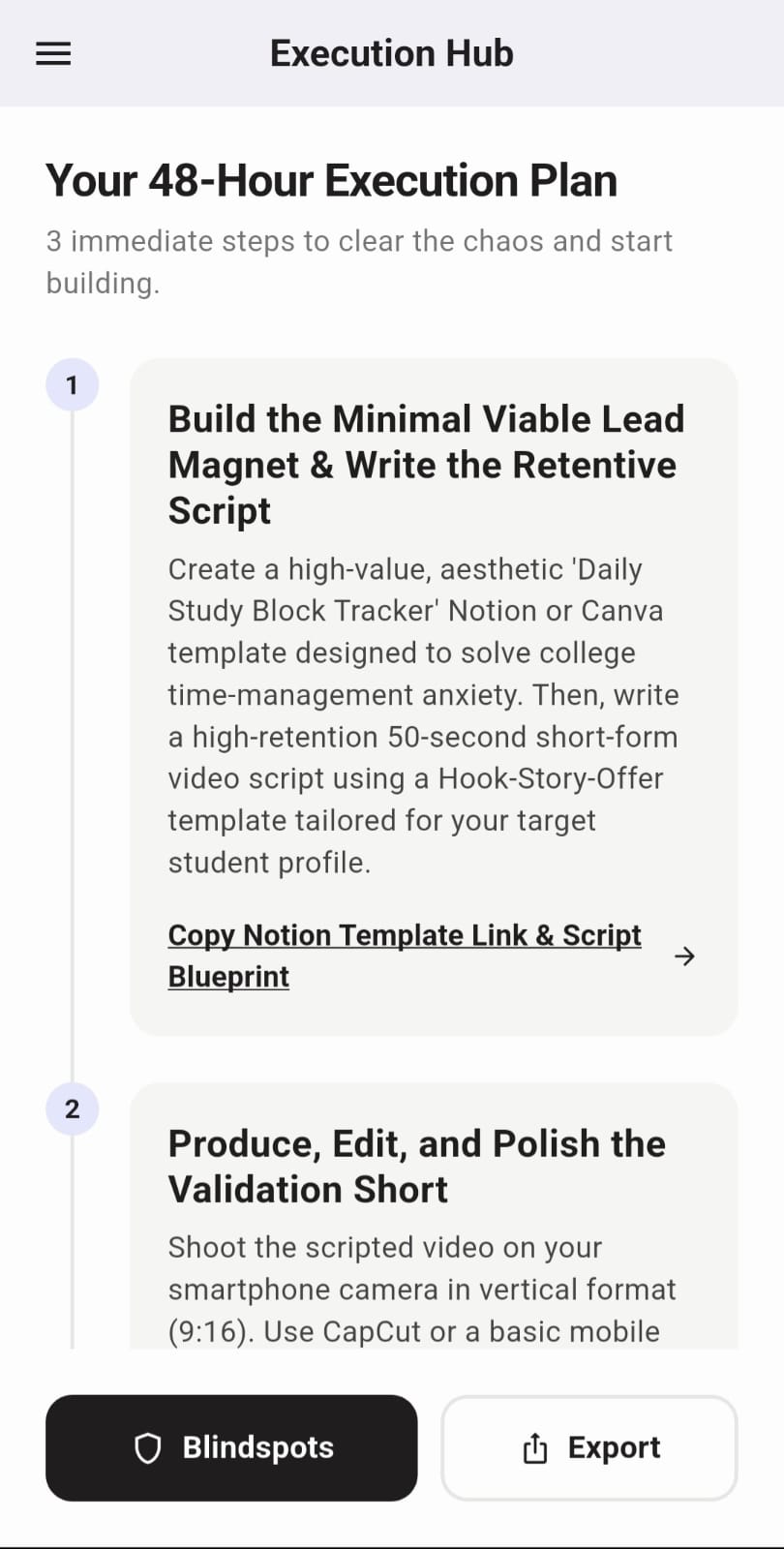
Dashboard: A fully personalized 3-step, 48-hour action plan generated in under a minute.
-
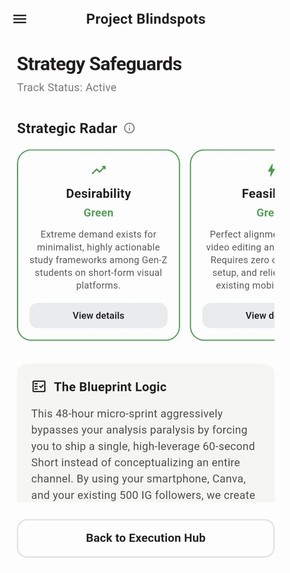
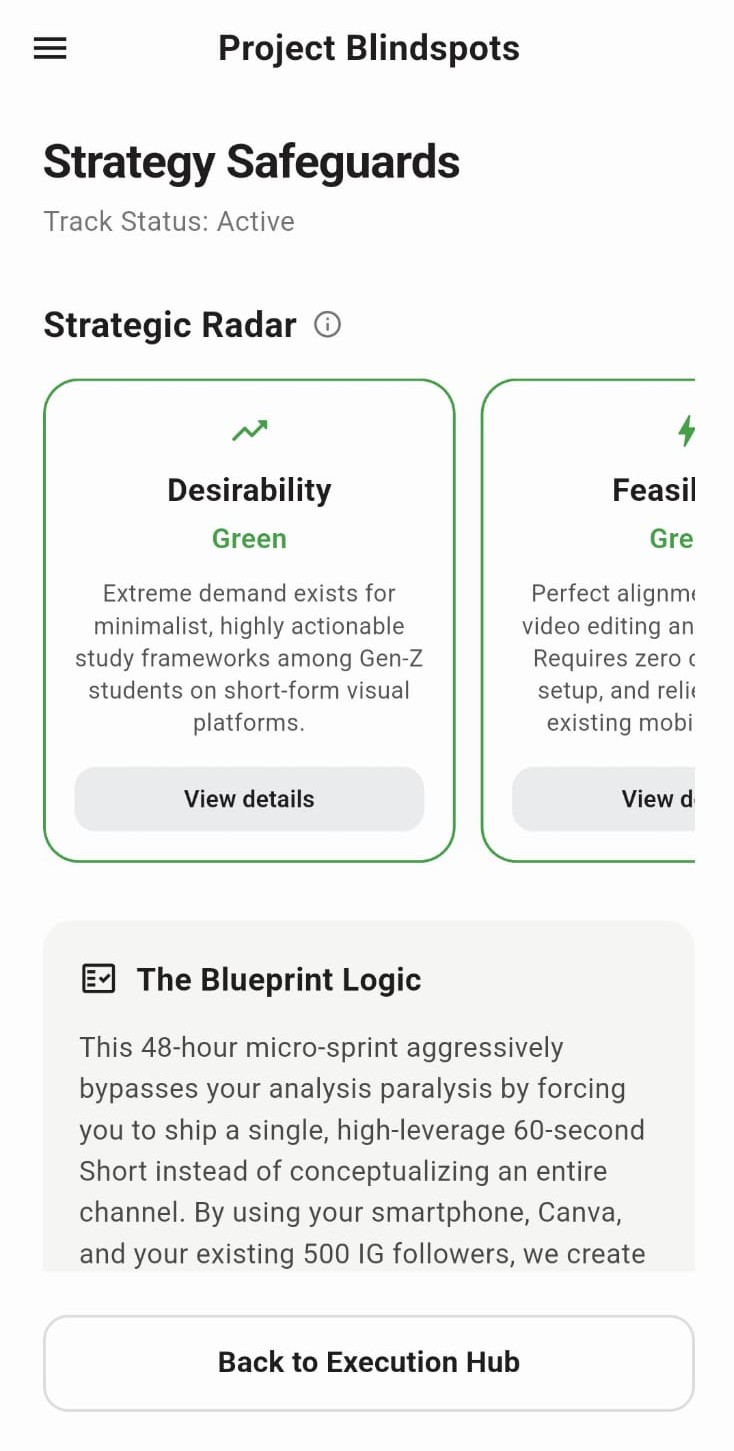
Blindspots page: Desirability, feasibility, and viability signals plus the reasoning behind your blueprint.
-
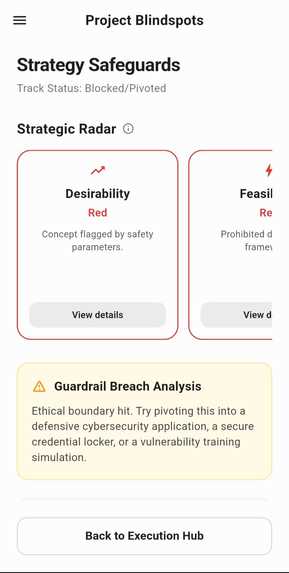
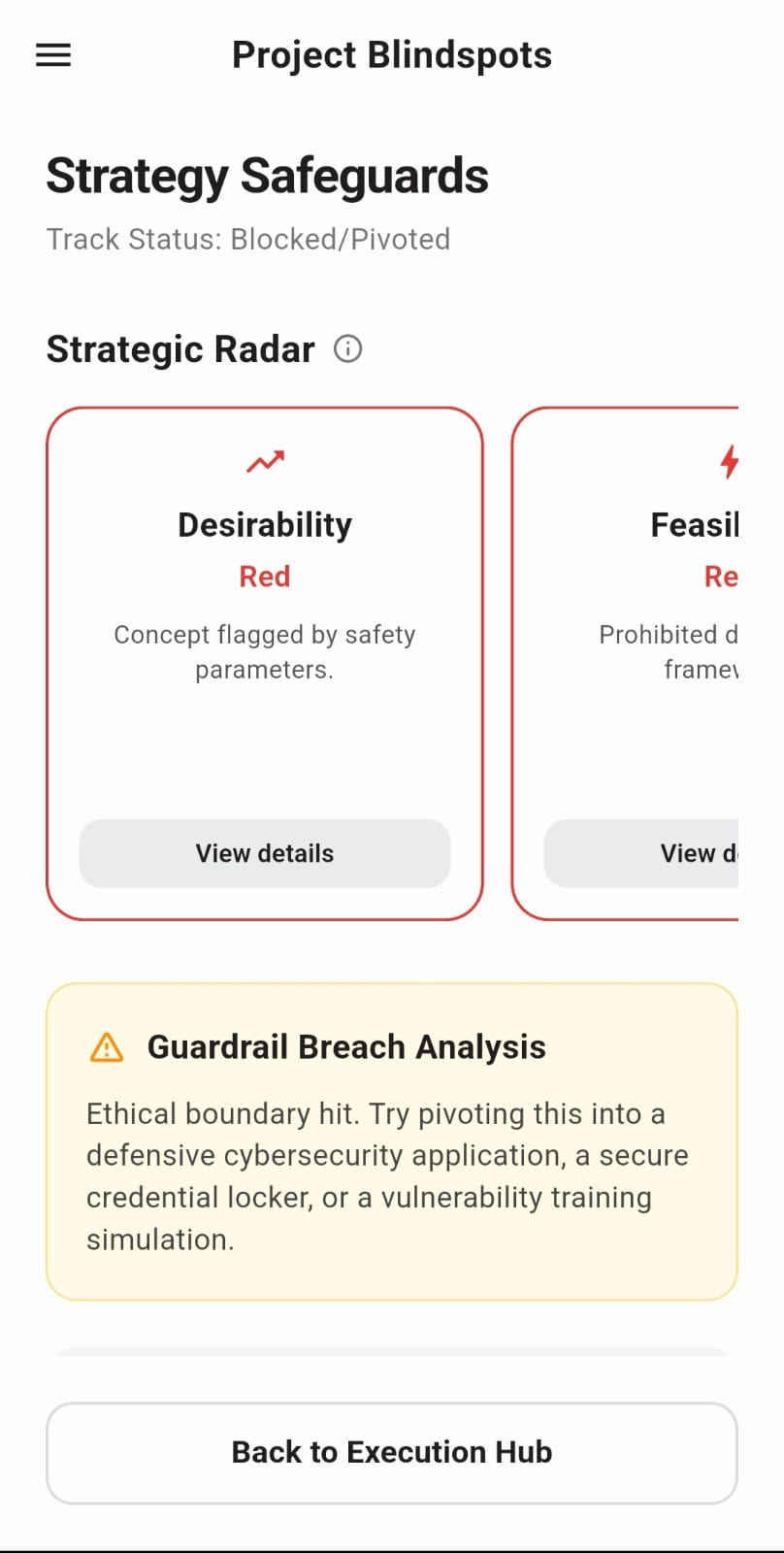
Guardrail breach: Init. intercepts harmful inputs before they reach the AI and redirects with a pivot suggestion.
Inspiration
I'd wanted to build mobile apps for years. Not weeks, years. But every time I sat down to start, the same thing happened: too many tutorials, too many frameworks, no clear entry point. So I'd close the tab and tell myself I'd start tomorrow.
It wasn't until I registered for this hackathon, with a real deadline and real accountability, that I finally forced myself to figure it out. I'd experimented with Flutter before, simple projects, nothing serious. But two months ago, I committed to actually building something real with it. And the only reason I did it was because I had no choice.
That's the problem Init. was built to solve. Not lack of motivation. Most builders have plenty of that. The real hurdle is the blank page. Too many options, no obvious first move, and the slow paralysis that sets in when you don't know where to begin. A deadline shouldn't be the only thing capable of breaking that. Init. is.
What it does
You drop in your idea and a bit of context about yourself, your skill level, how much time you have, what's blocking you, and Init. generates a realistic 3-step, 48-hour action plan in under a minute.
No generic advice. No research spiral. Just a plan built around your actual situation so you can stop overthinking and start moving.
It also flags your blind spots upfront, the assumptions and gaps most people don't notice until they're already three weeks in and pivoting. The goal is simple: get from blank page to first action as fast as possible.
How we built it
- Frontend: Flutter
- Backend/AI: Gemini 3.5 Flash (with Gemini 2.5 Flash as an automatic fallback) via Google AI Studio. The core of the app is a carefully engineered system prompt that figures out what's actually blocking the user and restructures the roadmap around that specific constraint
- Guardrails: A pre-LLM regex layer that catches harmful, fraudulent, or physically impossible inputs before they ever reach the model
- Storage: Firebase
- Testing: A custom Python pipeline to automate evaluation across around 100 test cases
Challenges we ran into
Testing was the biggest headache. We built a spreadsheet of around 100 test cases covering normal inputs, edge cases, and adversarial prompts to make sure the system prompt actually holds up under pressure. The problem was that we're on the free tier of Google AI Studio, so we kept hitting rate limits. The pipeline would crash somewhere between row 11 and 20 every single run.
We tried optimizing the script but the issue wasn't the code, it was the free tier quota itself. In the end we just worked around it by testing in batches of 10 to 20 rows at a time across multiple API keys. Not the most elegant solution, but it got the job done.
We also noticed some quirks in the prompt output along the way. The model has a tendency to over-use certain words like "SaaS" and "Analysis Paralysis" across a lot of edge cases, and sometimes responds to casual inputs with a weirdly formal tone. Nothing that breaks the app, but things we'd clean up in the next version.
Accomplishments that we're proud of
Honestly, just shipping it. Two months ago, none of us had built a full app. The fact that someone can now open this app, describe a half-formed idea, and walk away with a concrete plan in under a minute feels like exactly what we set out to build. That's the win. Building something real, even imperfect, teaches you more than planning or "learning" ever could.
What we learned
The best way to beat builder paralysis is apparently to build something about builder paralysis. Flutter clicked a lot faster once we had a real project that forced us to use it. Prompt engineering is also way harder than it looks. Getting a model to consistently detect what's blocking someone and restructure an entire roadmap around that took a lot more iteration than we expected.
What's next for Init.
- User accounts and saved roadmaps via Firebase Auth
- Progress tracking so users can check off milestone steps
- Expanded constraint detection with more nuanced roadmap branching
- Better guardrail coverage with semantic filtering on top of the current regex layer


Log in or sign up for Devpost to join the conversation.