-
-
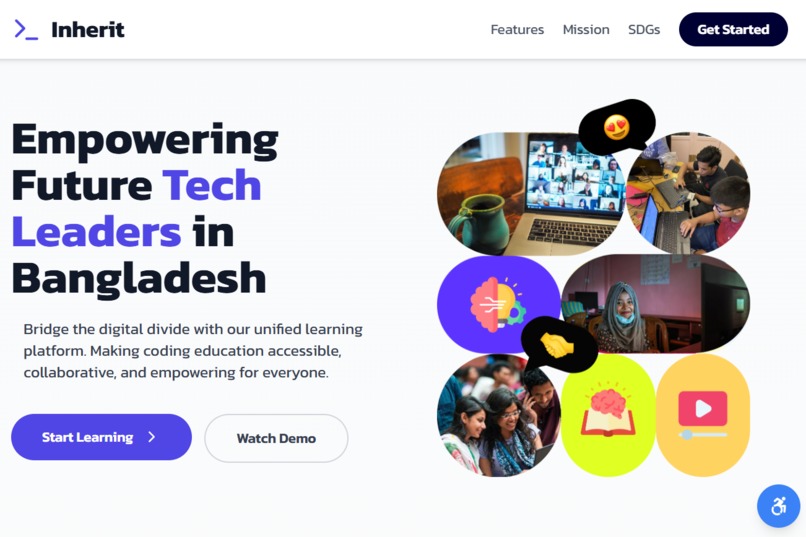
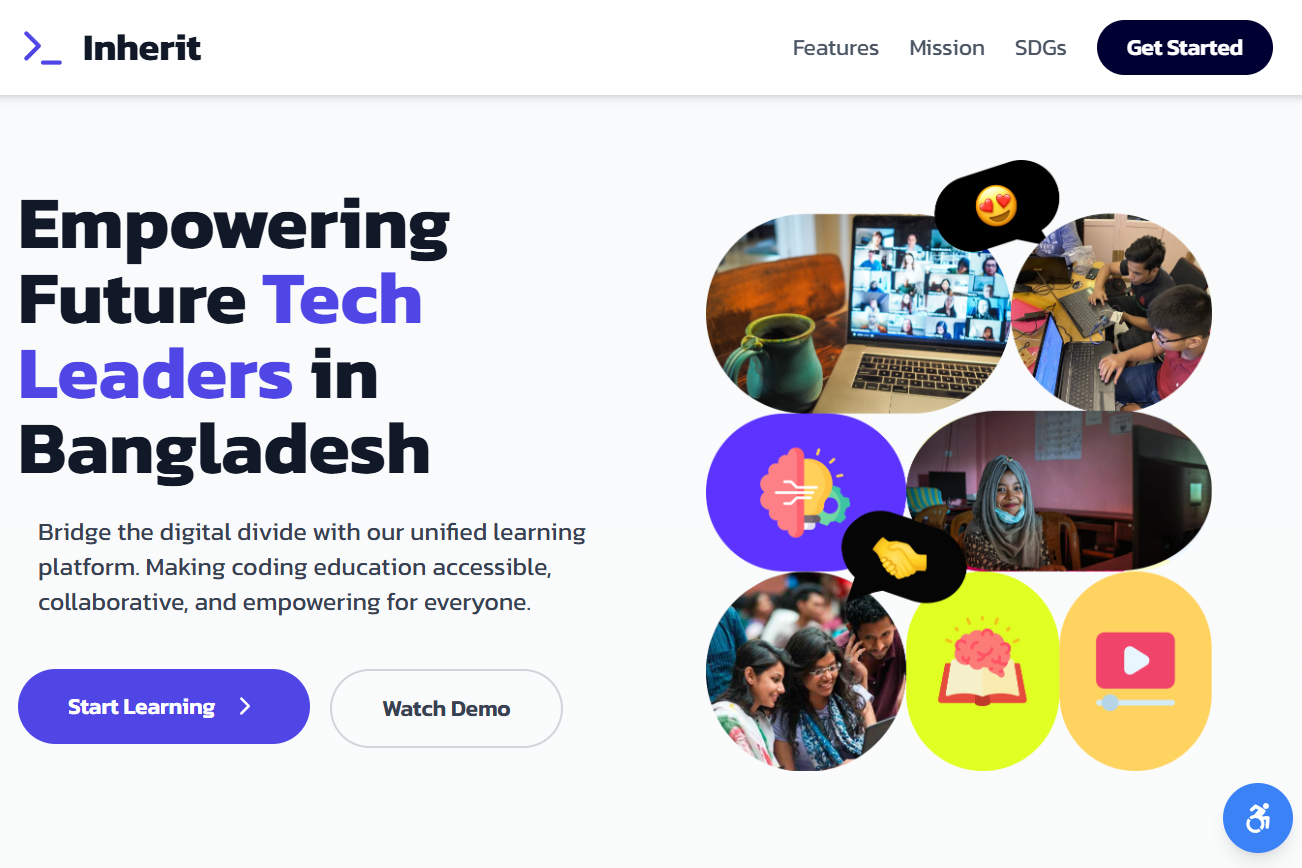
Landling Page
-
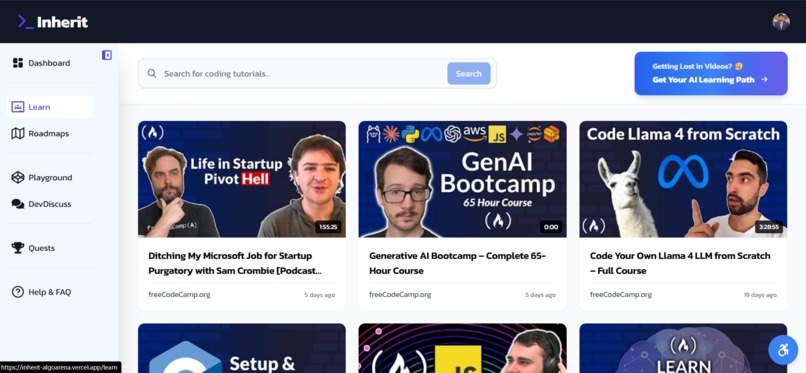
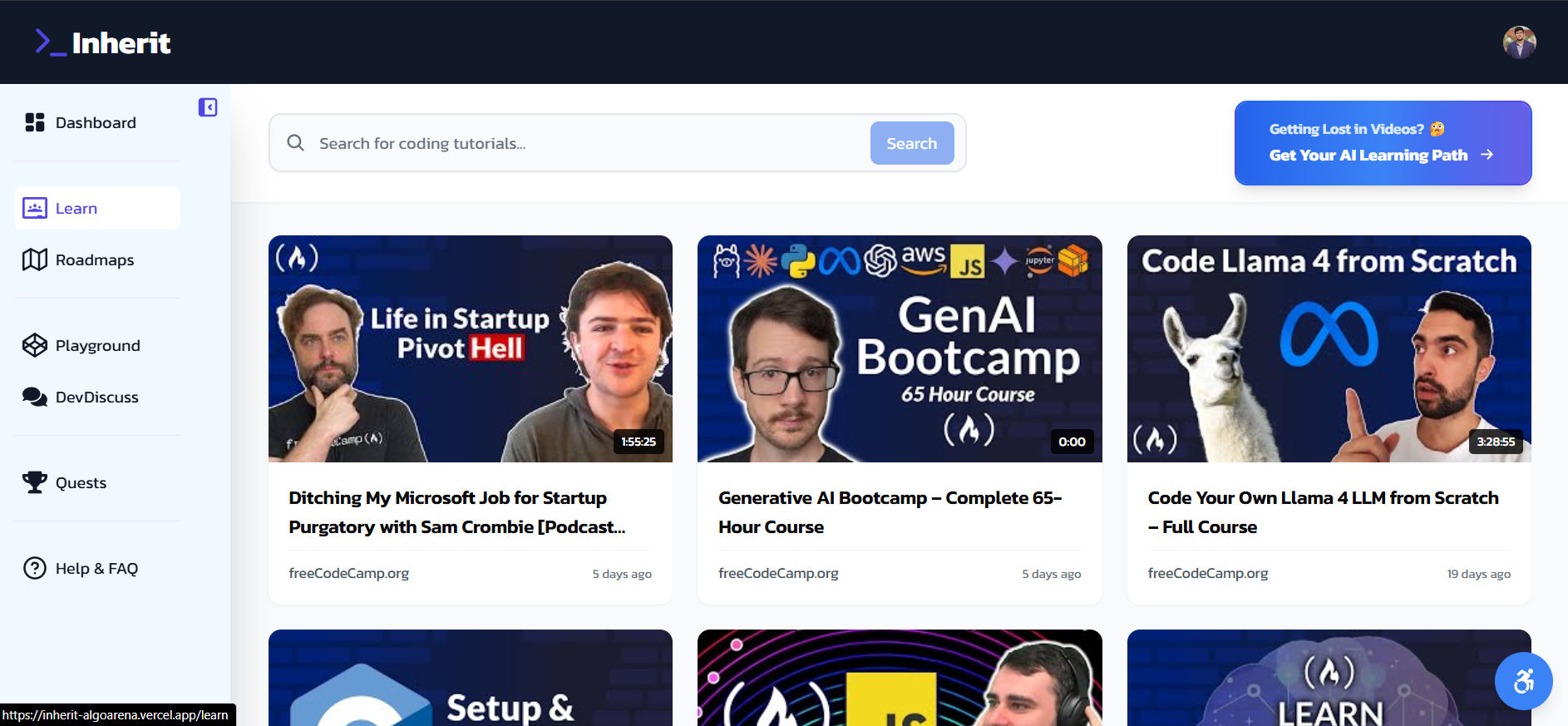
Learn Page
-
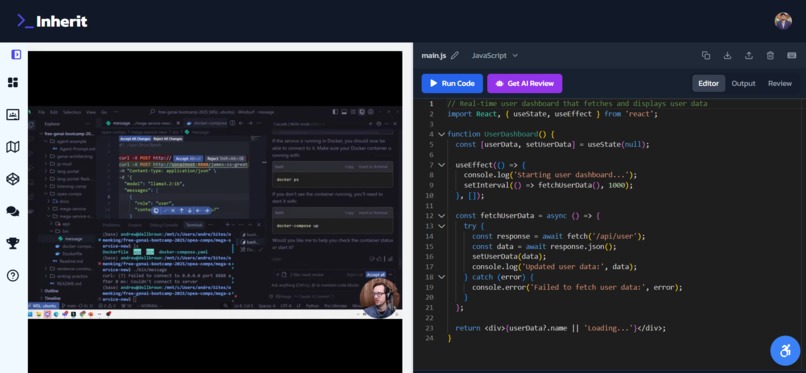
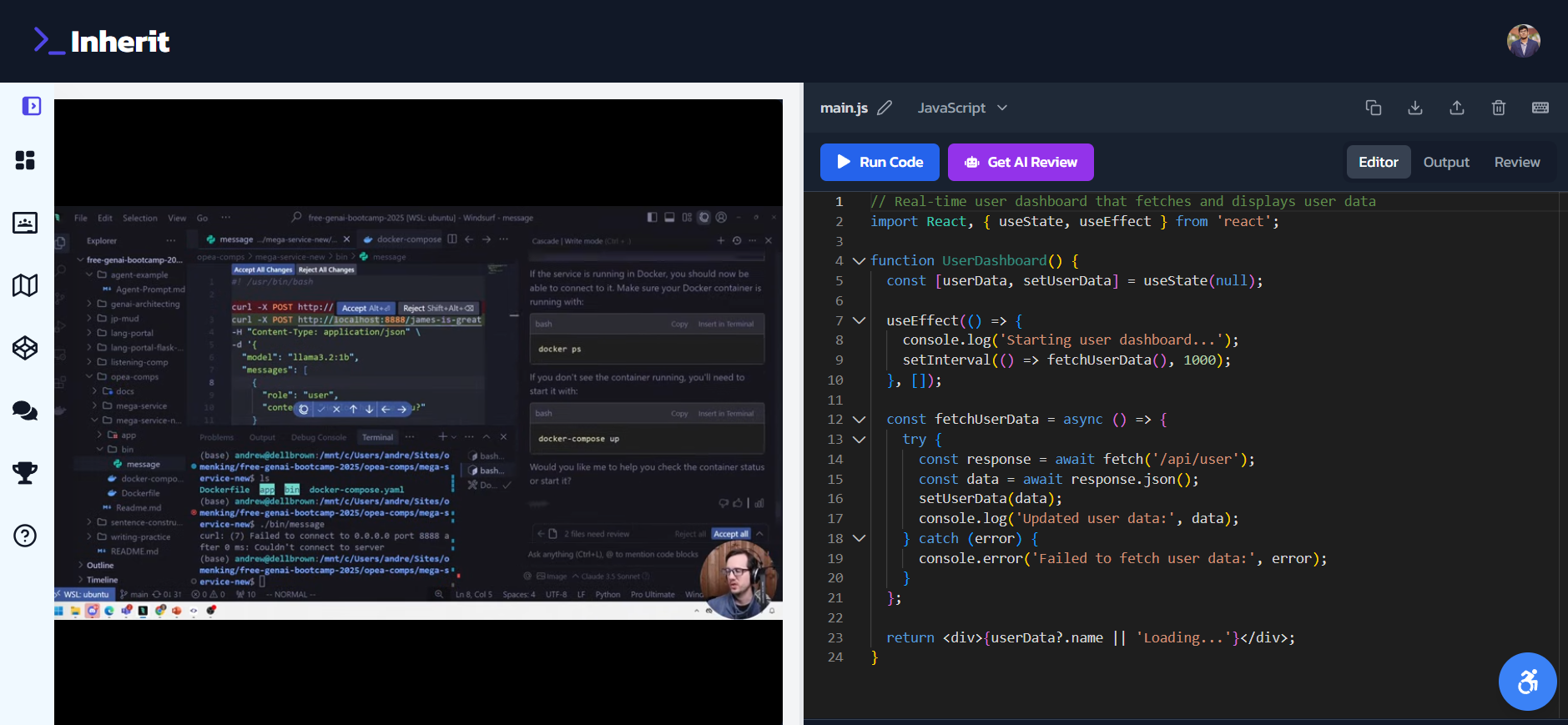
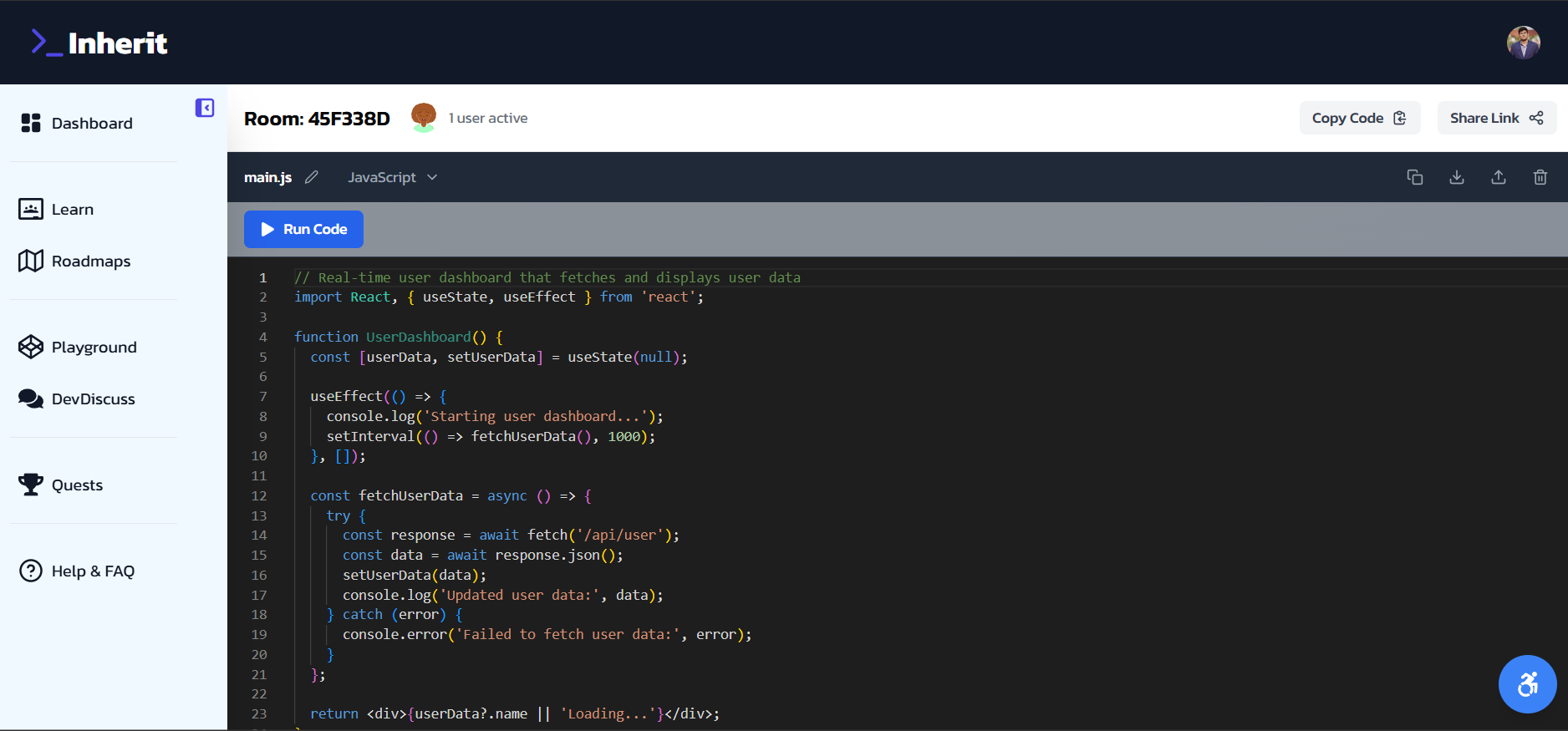
Video Page with code editor
-
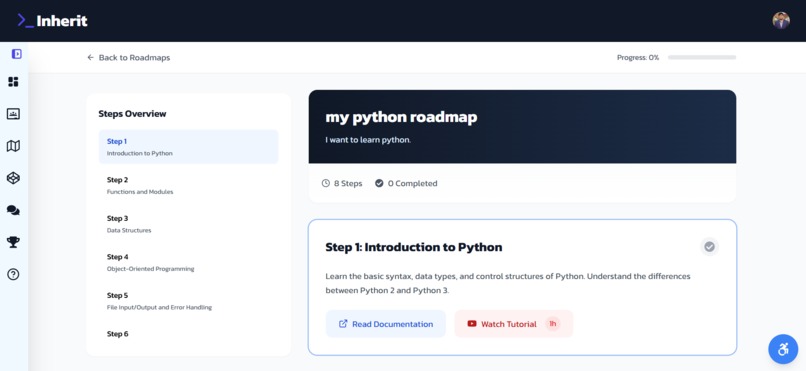
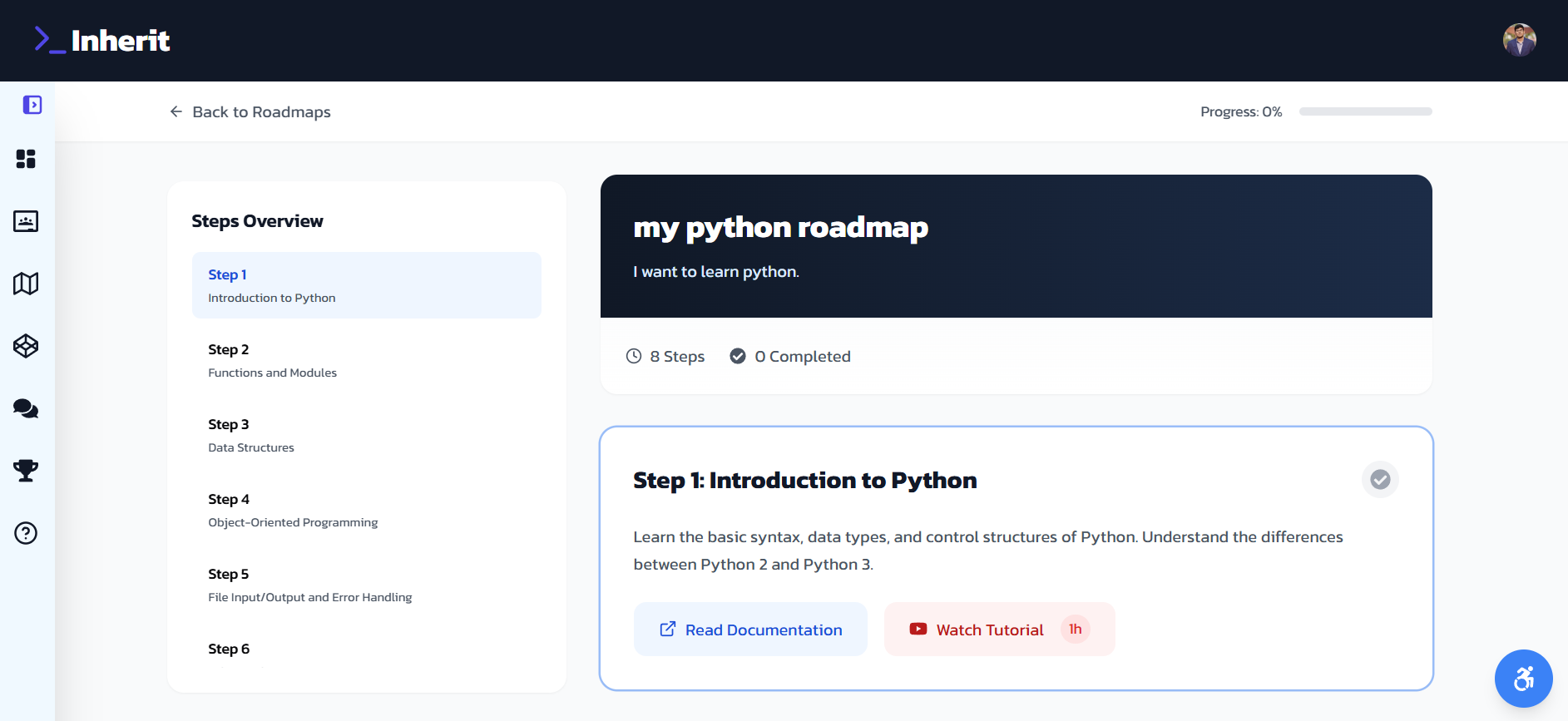
Roadmap Page
-
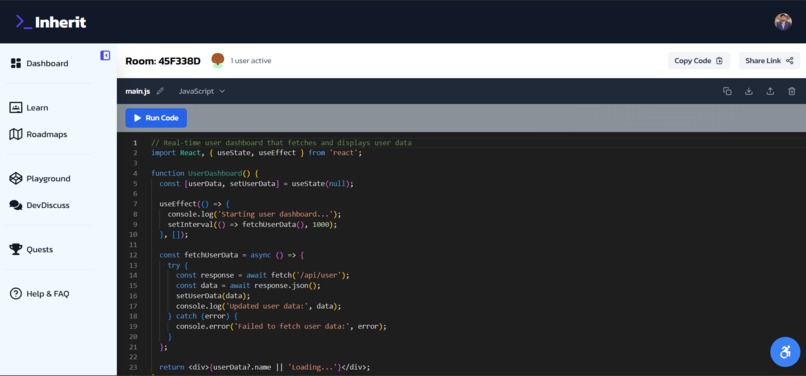
Playground Page
-
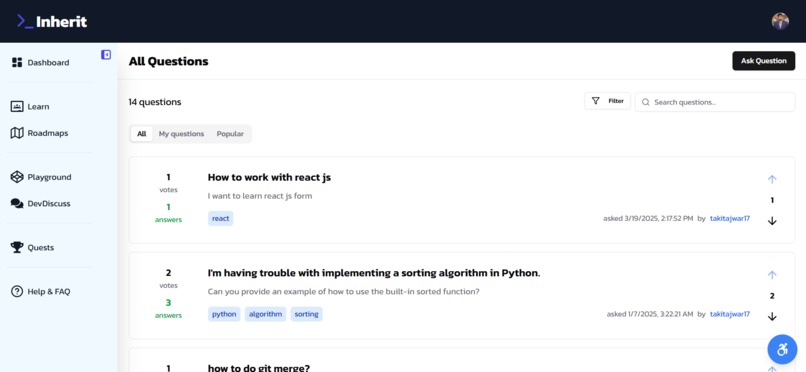
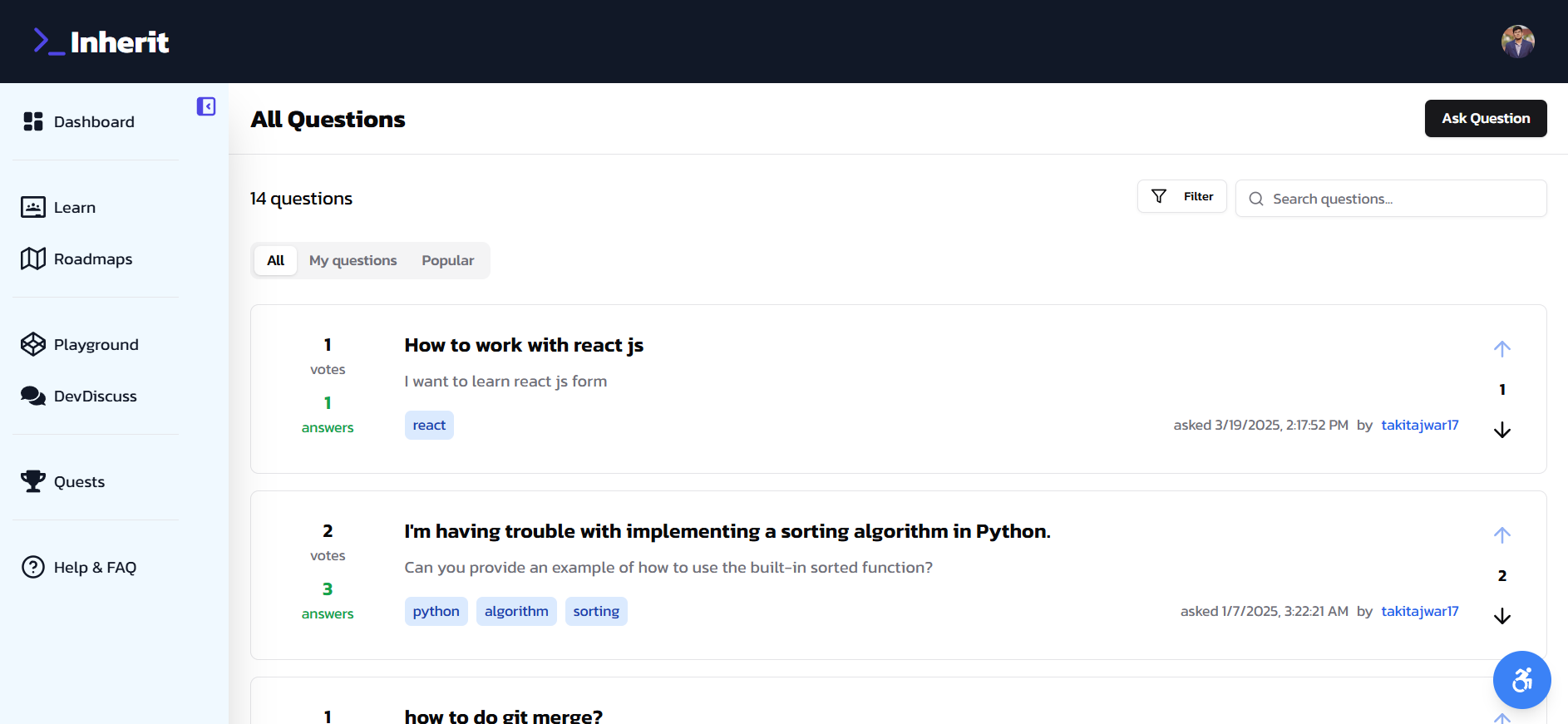
Dev-discuss Page
-
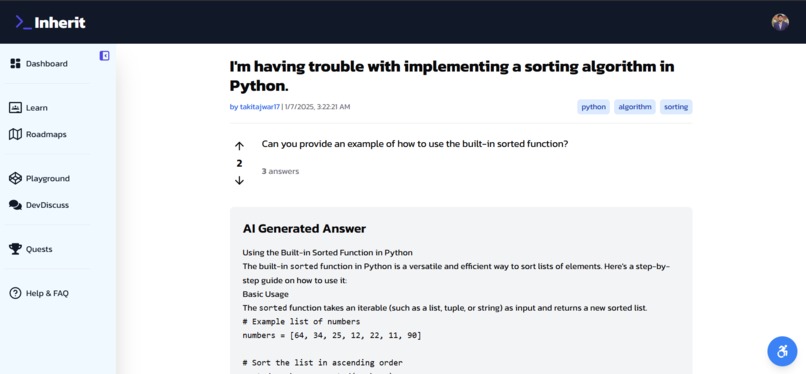
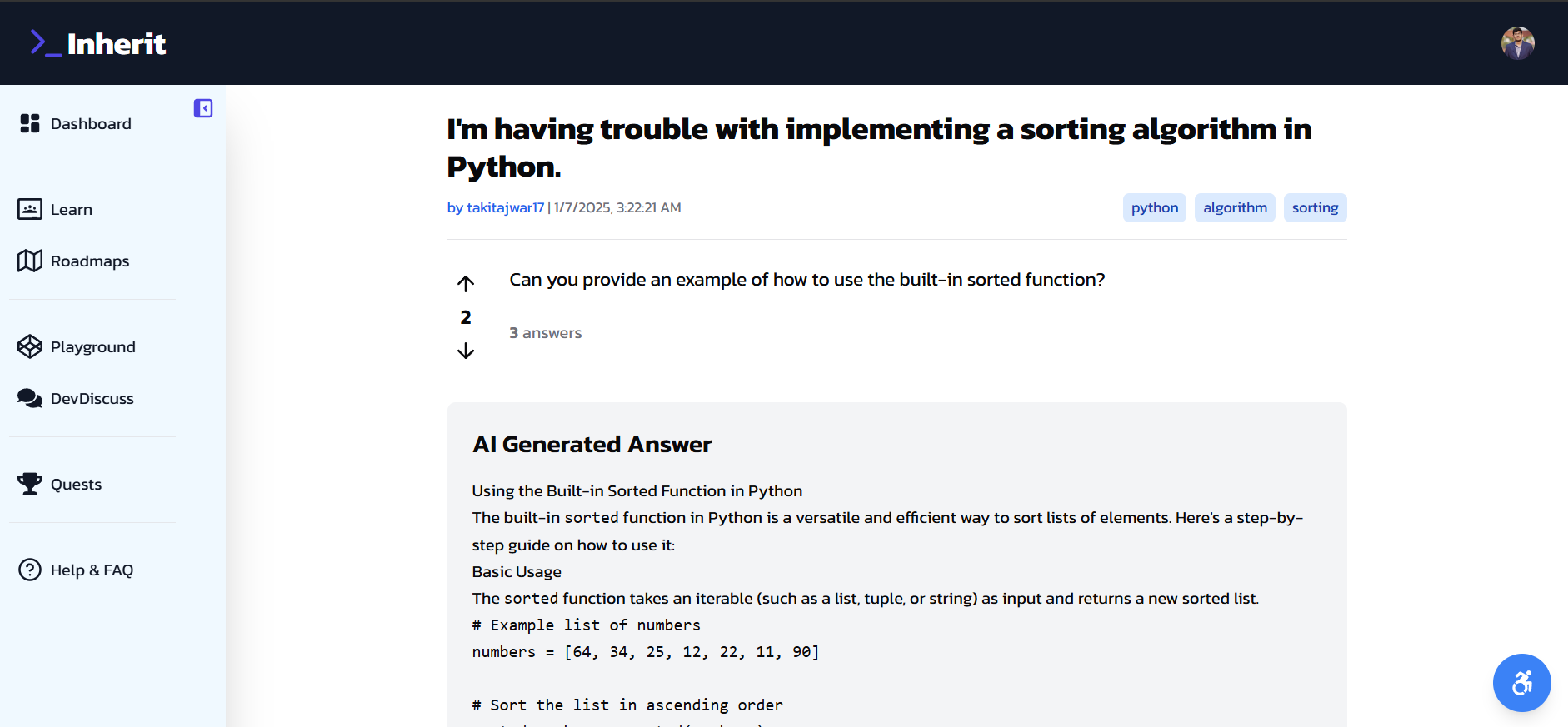
Question Page
-
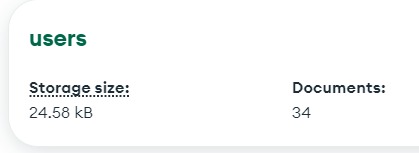
Getting early users within 10 hours of release
Inherit - Bridging the Digital Divide through Code Education
📢 Update: Inherit is now live — we've reached 30+ users within the first 10 hours of launch. Check it out: inherit-xtradrill.vercel.app
Inspiration
"Education is the most powerful weapon which you can use to change the world." - Nelson Mandela
The digital divide is a critical challenge, with the UN reporting that about 2.9 billion people globally still lack internet access. Through our research in Bangladesh and other underserved regions, we identified key barriers to coding education:
- Limited accessibility - Current platforms rarely accommodate diverse learning needs
- Language barriers - Educational content primarily in English excludes many learners
- Lack of structured learning paths - Overwhelming amount of disconnected resources
Inherit emerged as our solution to make coding education more accessible to underserved communities through a comprehensive, accessible platform.
What it does
Inherit is an open-source platform with the following key features:
| Feature | Description | Implementation |
|---|---|---|
| Interactive Dashboard | Personalized progress tracking | React with Clerk authentication |
| Code Playground | Collaborative coding environment | Real-time collaboration with Pusher |
| Learning Roadmaps | Structured learning paths | Progress tracking with localStorage |
| Quest System | Gamified learning challenges | Achievement-based learning system |
| Accessibility Tools | Voice commands & screen reader support | Web Speech API + ARIA attributes |
Our platform enables learners to:
- [x] Track their coding progress through interactive dashboards
- [x] Collaborate in real-time with peers in the code playground
- [x] Follow structured roadmaps for different programming concepts
- [x] Complete gamified quests to build practical skills
- [x] Use voice commands for hands-free navigation
How we built it
We developed Inherit using modern web technologies optimized for accessibility:
// Core architecture
const inheritTech = {
  frontend: "Next.js with React",
  styling: "Tailwind CSS for responsive design",
  authentication: "Clerk for secure user management",
  realtime: "Pusher for collaborative features",
  accessibility: "Web Speech API + ARIA attributes",
  analytics: "Vercel Analytics and Speed Insights",
  ui: "Custom components with accessibility focus"
};
Our development approach prioritized:
- Accessibility through voice commands and screen reader support
- Structured learning through roadmaps and quest systems
- Community engagement through collaborative features
Challenges we ran into
Our development process faced several key challenges:
Voice Command Implementation
Implementing reliable voice command routing required significant testing across different browsers and accents. We created a custom API endpoint for processing natural language inputs and converting them to application routes.
Progress Tracking System
Building a persistent progress tracking system that works across different learning paths required a custom local storage solution:
// Pseudocode for progress tracking
const saveProgress = (roadmapId, completedSteps) => {
  localStorage.setItem(
    `roadmap-${roadmapId}-progress`,
    JSON.stringify(Array.from(completedSteps))
  );
};
Collaborative Code Editor
Creating a real-time collaborative code environment that supports multiple programming languages (JavaScript, Python, Java, C#, C++, PHP, TypeScript) required integrating Pusher for WebSocket communication.
Accomplishments that we're proud of
Our platform has achieved several important milestones:
- Multilingual Code Editor supporting 7 programming languages
- Voice Command System for hands-free navigation
- Responsive Design that works across desktop and mobile devices
- Gamified Learning through our quest and roadmap systems
- Accessibility Features including screen reader support and keyboard navigation
What we learned
This project taught us important lessons:
- Accessibility features benefit all users, not just those with disabilities
- Structured learning paths significantly improve engagement and completion rates
- Real-time collaboration features create more engaging learning experiences
- Voice interfaces can dramatically improve accessibility in educational applications
- Comprehensive progress tracking encourages continued learning
What's next for Inherit
Our roadmap includes:
- [ ] Offline functionality for areas with limited connectivity
- [ ] Expanding language support for non-English speakers
- [ ] AI-powered personalized learning recommendations
- [ ] Mobile application development
- [ ] Community mentor matching system
Through our GPL-licensed codebase, we're building an open-source solution that makes coding education more accessible to everyone. We believe that by bridging the digital divide, we can create more opportunities for learners in underserved communities.
Join us in making coding education accessible to everyone, everywhere.

Log in or sign up for Devpost to join the conversation.