Inspiration
I often found myself confused while reading food labels. Many ingredients sounded too technical, and even though the nutrition information was there, it wasn’t easy to understand or apply to my own health needs. For people with conditions like diabetes, high blood pressure, or allergies, this confusion could be risky. That inspired me to work on IngredientSight, a tool that makes food labels simple and meaningful.
How I Built It
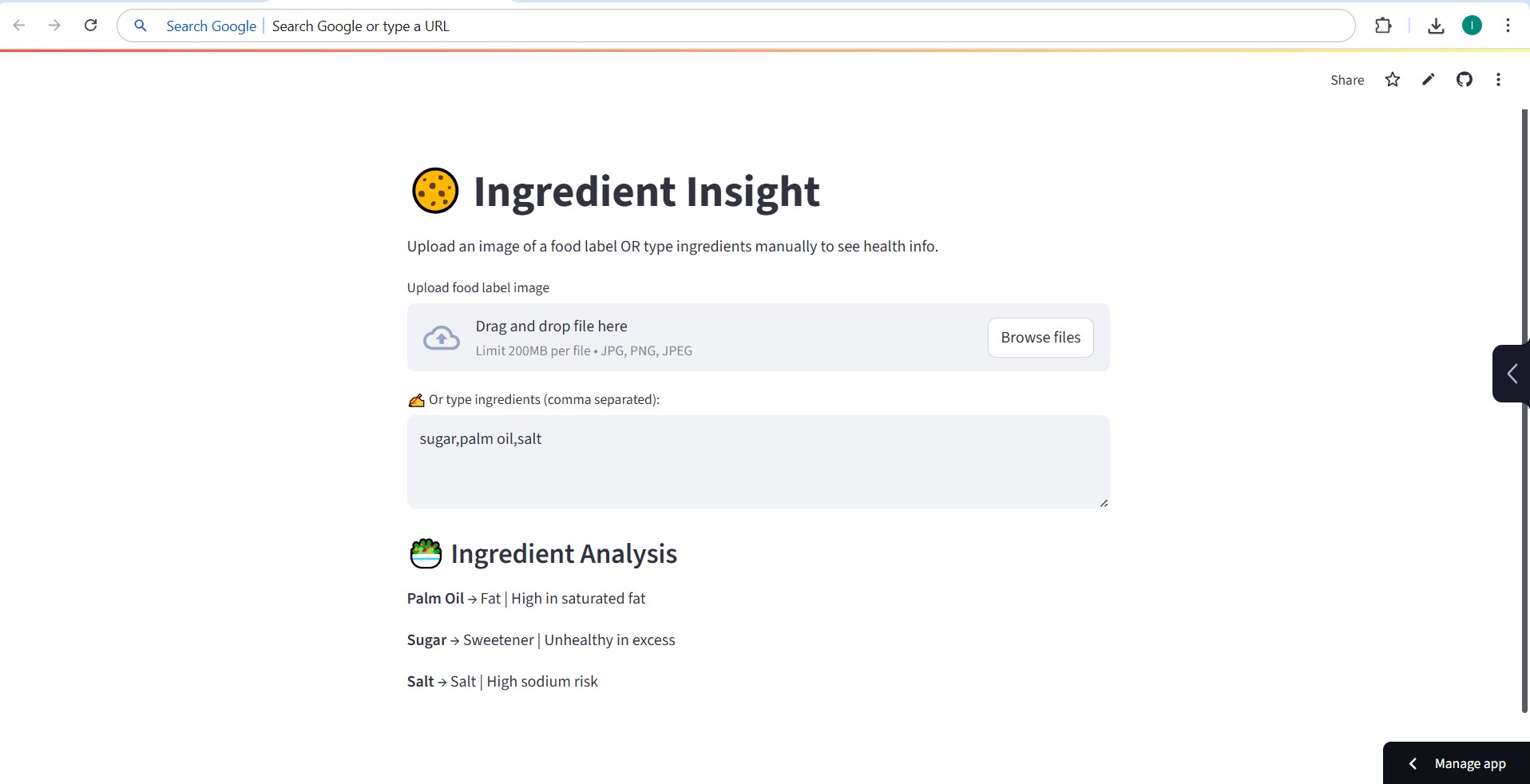
I wanted to create something lightweight and practical, so I started with simple steps: For data input, I allowed users to either scan a barcode, upload a food label image, or paste the text directly. I used EasyOCR for extracting text from images. Once the text was captured, I cleaned and split it into ingredient lists. These were matched against open datasets like Open Food Facts and USDA FoodData Central. I built a small knowledge base of common risky ingredients such as sugar, sodium, and certain additives. I also referred to FDA and WHO guidelines for healthy limits. Finally, I made a basic interface using Streamlit so users could get results instantly. The tool shows clear messages like “High sodium – avoid if you have hypertension” or “Safe for most diets.”
What I Learned
Through this project, I learned how OCR can be inconsistent, especially when labels are blurry or printed in decorative fonts, and how important preprocessing is. I also learned the value of turning raw data into plain, human-friendly insights. Using public datasets showed me how messy real-world data can be, and cleaning it up was an important skill. Most importantly, I realized that people don’t just need access to information—they need it in a form they can actually use.
Challenges I Faced
One big challenge was the inconsistency of ingredient names. The same substance could appear under different names, which made normalization difficult. OCR accuracy was another issue, especially with low-quality images. Personalization was also tricky, because dietary needs vary so much, and I had to think about how to keep the tool flexible without making it too complex. Time was also a challenge—I had to focus on building something that worked rather than trying to cover everything at once.
Conclusion
IngredientSight is my attempt to make food labels clear and easy to understand. It helps people make healthier choices without needing technical knowledge. In the future, I would like to add multilingual support, personal health profiles, and maybe even turn it into a mobile app for quicker use.

Log in or sign up for Devpost to join the conversation.